Are Delays a License to Ignore Priority Boarding?
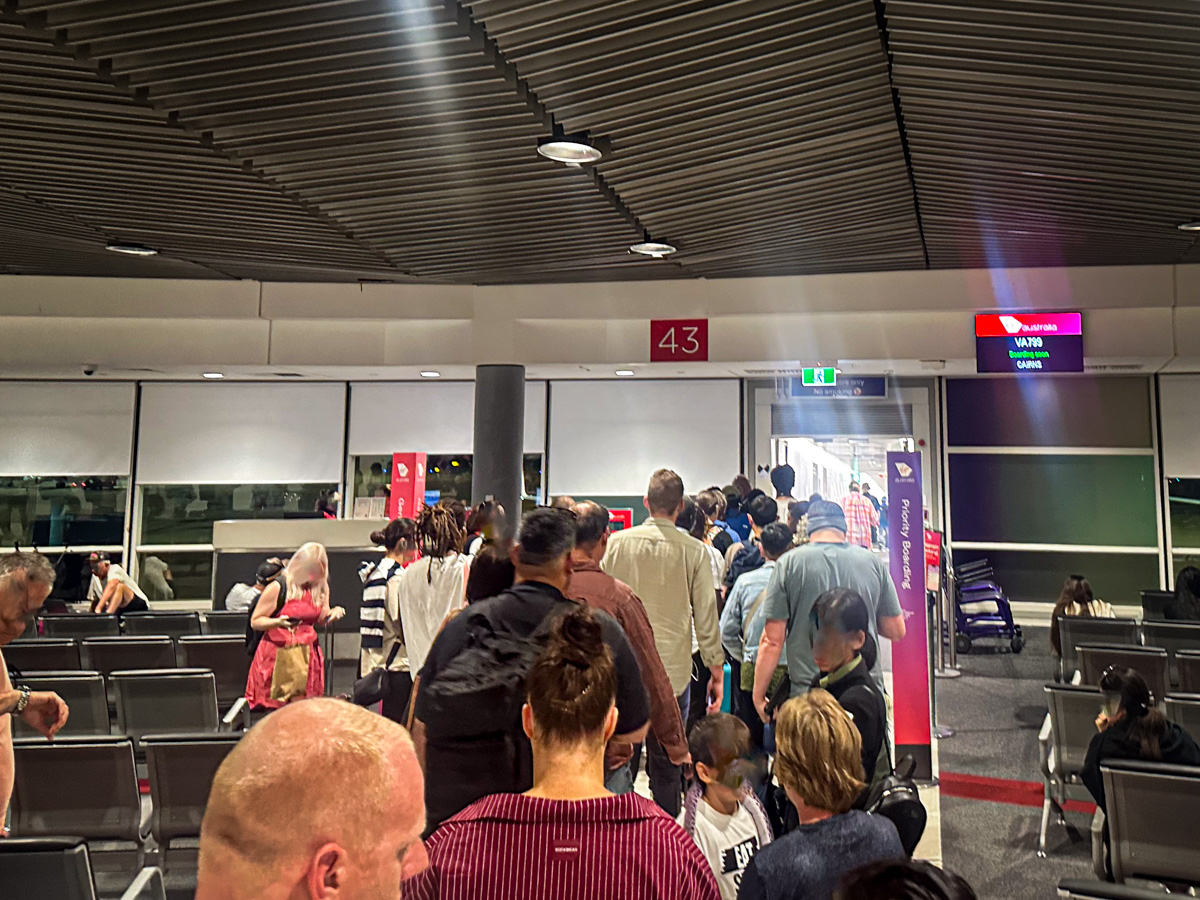
Boarding a Virgin Australia flight at a Brisbane Airport gate
Airlines often fail to deliver priority boarding if the flight is running late. Photo: Matt Graham.

Many airlines advertise priority boarding as a benefit of flying Business Class, holding status or choosing a premium seat. They deliver it with variable consistency.

Sometimes, priority boarding fails because the gate agents don’t actually enforce it and just let anyone board through the priority lane, regardless of their entitlement. Sometimes, they fail to actually give priority to the priority queue, boarding people in the general line while people who “should” have priority are still waiting. And sometimes, the airport staff simply pretend priority boarding doesn’t exist.

Priority boarding often goes out the window during delays

After more than 1,000 flights, I’ve started to notice a pattern here. Gate staff seem less likely to bother enforcing priority boarding if the flight is delayed.

I’m sure most frequent flyers would have seen this. A flight is running late and there’s a crowd of passengers waiting around the gate area. Once the flight is finally ready to board, the ground staff are generally more interested in just cramming everyone onto the plane as quickly as possible, so as not to delay the flight further. “Niceties” such as priority boarding – and sometimes even proper boarding announcements – become an afterthought.

Does priority boarding actually take up more time?

This begs an obvious question: Does the boarding process actually take significantly longer when staff follow the correct priority boarding procedures?

As Mythbusters famously proved in 2014, there can be a big variation in the amount of time it takes to board a plane depending on the method used.

Perhaps it does add a bit of time of to the boarding process if you call groups to come forward in multiple stages. And a higher proportion of those people boarding first are sitting close to the front of the plane. It could also add time if you have to turn away people at the gate who’ve incorrectly joined the priority line.

But I don’t think the extra time is really that significant. We’re talking seconds, or a few minutes at most.

In any case, I doubt that ignoring priority boarding is a deliberate tactic to try to get people on faster. More often, I suspect the gate staff simply forget or can’t be bothered to enforce it when they’re under pressure to get the plane on its way quickly.
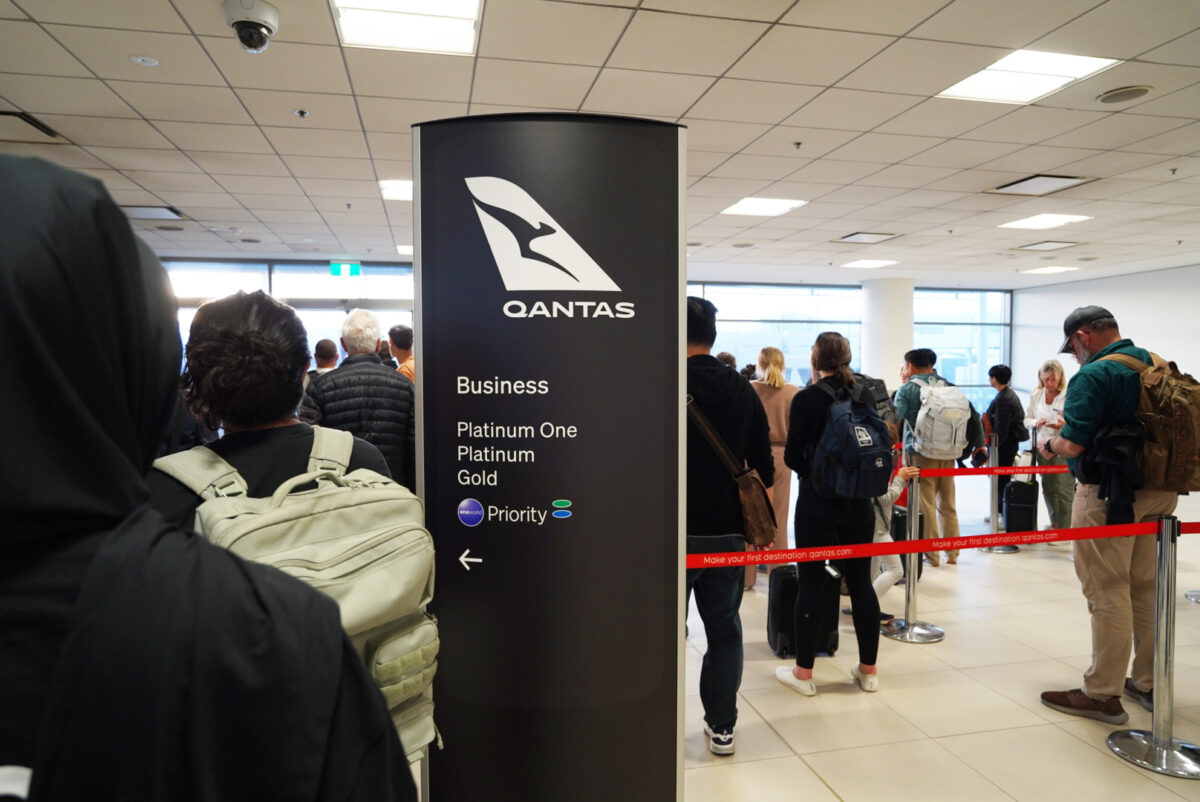
Qantas’ international-domestic transfer in Sydney can often get congested. Image: Brandon Loo

The trade-off here, of course, is that the airline annoys its most valuable customers. And when priority boarding is an advertised benefit of buying Business Class, Economy X or Economy Plus, failing to provide the service devalues those products. Passengers entitled to priority boarding through status have paid for it, too – albeit indirectly.

As much as some frequent flyers might not like to admit this, I think that getting to board first through a dedicated queue also makes some people feel special. It’s an intangible thing, but that feeling reinforces why it’s worth continuing to attain status with that airline. Conversely, if you’ve spent many thousands of dollars to earn status and then end up just queuing behind everyone else anyway, you might really question why you bothered.

Should priority boarding come with fine print?

If airlines are simply forgetting to offer priority boarding any time a flight is delayed – which happens a lot – that’s sloppy.

And if it’s a deliberate tactic to try to get everyone on board faster, perhaps airlines should add a disclaimer when advertising priority boarding as a benefit. “Not guaranteed if the flight starts boarding late,” such a disclaimer might say. At least that would be more transparent.

________________________

Related Articles

Community Comments

Loading new replies...

Are Delays a License to Ignore Priority Boarding?

IMO no!

I dont think giving F/J and Status pax a 1-2 minute lead time on boarding would lead to further significant delays; and benefits sold as part of class or status should always be honoured.

One benefit of QF adopting boarding groups for domestic is that the computer says no if you try to jump the queue, nothing better than watching a walk of shame from a NB who tried to queue jump.

Reply 3 likes

Whilst regular delays I believe no, it shouldn't affect boarding groups.

The one exception I want to ask (and experienced on Sunday night) was last flight out of MEL bound for SYD. Racing to make curfew due to the delay (aircraft arrived at 20:50 original departure of 21:00). They chose to start boarding group 4/5 (middle of the plane) at the same time as group 1/2 and asked people to try and expedite everything if possible.

Just for reference, they were preparing all pax for boarding before they could start (form line groups here, here etc) and were trying to expedite everything. Pushed everyone from the lounge 10mins before boarding could even start. I don't think I've seen QF try to be this organised before a flight to get everyone onboard and leave asap.

Reply 4 likes

click to expand...

Whilst regular delays I believe no, it shouldn't affect boarding groups.

The one exception I want to ask (and experienced on Sunday night) was last flight out of MEL bound for SYD. Racing to make curfew due to the delay (aircraft arrived at 20:50 original departure of 21:00). They chose to start boarding group 4/5 (middle of the plane) at the same time as group 1/2 and asked people to try and expedite everything if possible.

Just for reference, they were preparing all pax for boarding before they could start (form line groups here, here etc) and were trying to expedite everything. Pushed everyone from the lounge 10mins before boarding could even start. I don't think I've seen QF try to be this organised before a flight to get everyone onboard and leave asap.

Yeah - thanks to the SYD curfew being a hard stop to operations, having an aircraft and crew out of position at the end of the day is a massive pain for airlines and probably quite expensive as well (i.e., crewing and passenger accommodation).

Given all the padding built into the schedules now, it's still pretty embarrassing that domestic airlines can't operate to a schedule as the day goes on. It definitely feels like priority boarding goes out the window once the aircraft is running late, and the later in the day it is, the less likely that priority boarding will be done, or done half-coughd, or not done at all.

At the moment, the difference is that Qantas ground agents have very little leeway for varying group boarding as it's implemented by default at larger airports (maybe all airports?) with the "computer says no" programmed at the boarding gate, whereas Virgin may have gone from having very strict and proactive enforcement pre-Covid, to poor or sometimes no enforcement of priority boarding now (although I don't fly with them as often so open to others opinions who do fly with them more frequently).

It would be interesting to hear from air crew and ground crew at both airlines to see what metrics are being measured, and what is being punished or rewarded. I would expect the metric of turnaround times and on-schedule departures to be more likely as measurable KPI's that are monitored by management rather than the implementation of priority boarding, so its totally unsurprising that priority boarding goes out the window if there was fog in Melbourne, an ATC called in sick or a shower of rain in Sydney earlier in the day, which is all it takes to throw airline schedules into chaos.

Reply 1 like

click to expand...

Concur with the above.

Even if delayed, QF still uses priority boarding, and group numbers.

Reply 1 like

Arguably if delayed you've got even more elites actually there to board., rather than rushing from the lounge at second call.

The only reason I could see in doing open boarding is if one is tight on curfew and boarding from both the rear and front.

Reply Like