Airlines Are Not Very Good At Personalising Offers

Overloaded by irrelevant emails
Image: Adobe Stock.

When checking in online for a recent flight, TAP Air Portugal’s website offered to sell me extra services including lounge access and airport fast-track. I already had complimentary access to both of those things through my Star Alliance Gold status – something that TAP had even just flagged on the previous page of its own check-in process.
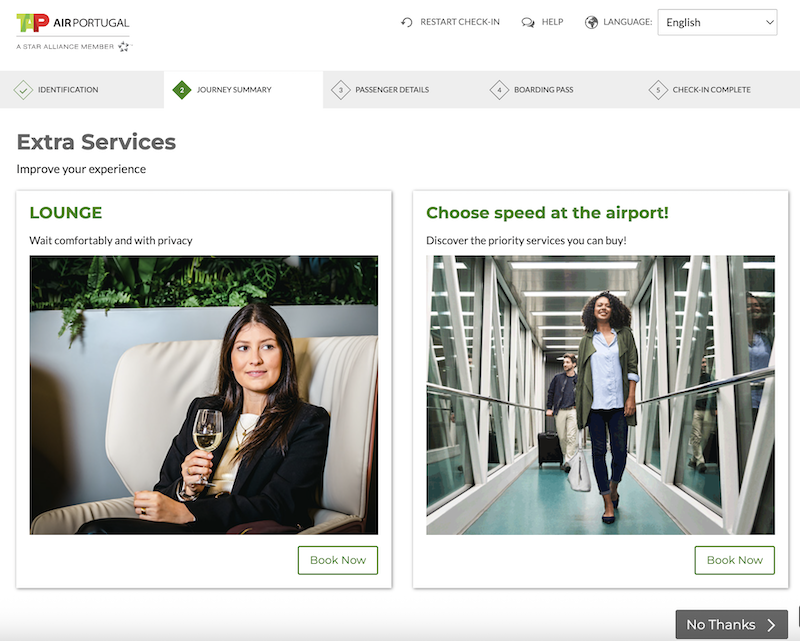
TAP website offering extra services like lounge access and priority during online check-in
TAP Air Portugal tries to upsell Star Alliance Gold members checking in on its website with services they already get for free.

United’s website similarly tried to sell me “Premier Access” for a recent flight, even though my Star Alliance Gold status already entitled me to that for free.

And when booking a day trip from Brisbane to Sydney on the Qantas website, Qantas asks if I need a hotel in Sydney. Clearly I don’t, because I’m flying back to Brisbane on the same day!
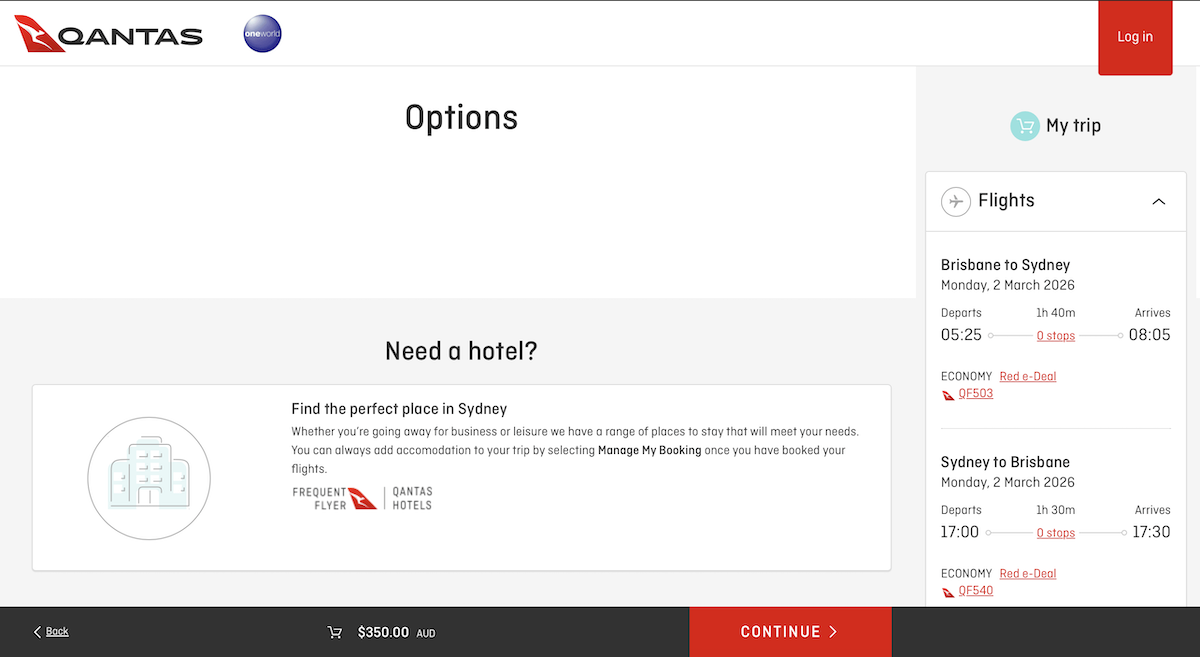
Hotel upsell on the Qantas booking website
When booking a same-day return flight, the Qantas website still asks if you need a hotel.

Airlines are getting better at offering ancillary services that customers value. These paid add-ons make up an increasingly higher proportion of their revenue. But airlines are still pretty bad at targeting upsell opportunities to people who are actually interested.

Airlines collect lots of data and use some of it

Airline loyalty programs collect a lot of data about their members. They know where you live, when your birthday is, where you travel to, what kinds of tickets you book, and so on. If you have a co-brand credit card, they might even be able to see what you buy.

And some loyalty programs give their members the option to literally tell them what they like – from their seating preferences to their hobbies.

Even if you’re not a member of the airline’s own loyalty program, the airline would still know what cabin you’re flying in, when your return flight is, and if you have status with one of its partner airlines.

Yet, airlines continue to try to sell things to customers that they already have or don’t need. For example, when viewing a trip in First Class or on a partner airline in the Qantas app, the app still displays a “Request upgrade” button. Upgrade to what, exactly?

Get Star Alliance Gold status without flying…

HSBC Star Alliance Credit Card – Fast track to Star Alliance Gold Status
Earn
1

Star Alliance Rewards Point on everyday purchases

Signup Bonus

Fast Track to Star Alliance Gold Status

Annual Fee
$0 in the first year, $499 p.a. thereafter
View Offer

Some loyalty programs send a lot of emails

Like many Australians, I’m a member of a lot of loyalty programs. As a result, I get a lot of emails (and sometimes even text messages or letters) from the programs I’ve joined.

Some companies seem to like sending every single promotional email to every single member – regardless of whether they’re relevant to that member or not. For example, I recently got several offers for bonus points if I bought pet insurance or shopped at a particular pet store. I don’t own a pet and never have.

When customers get bombarded with emails and offers that are not relevant to them, they just switch off. They’ll probably stop paying attention, and in the case of emails, might just unsubscribe. Loyalty fatigue is real.

Can personalisation be more than a buzzword?

At the very least, airlines probably shouldn’t be trying to upsell Business Class passengers with paid access to things they already get included with their fare. (Yes, many still do.)

But in 2026, I think airlines and loyalty programs can do even better than that. They collect a lot of data about their customers. I think customers would be pleasantly surprised and even delighted if they used that data to create offers that were genuinely attractive to them – while actively avoiding bombarding them with irrelevant communications. This could even have a very real impact on an airline’s bottom line.

For example, there’s little point trying to upsell someone who’s booked Business Class with extra legroom seating or a lounge pass. Instead, why not offer them valet parking, an upgrade to the First Class lounge, or bonus status credits? Or something else that the individual might actually value and be prepared to pay extra for?

Obviously, doing this manually for millions of members would be an onerous task. But it should still be simple enough to target offers based on specific criteria, rather than just sending one-size-fits-all email blasts. And these days, there are plenty of AI tools that claim they can create personalisation for each individual customer.

Wouldn’t it be nice if airlines used all that data they collect, and the tools available to them, to turn personalisation into more than just a buzzword?

________________________

Related Articles

Community Comments

Loading new replies...

The corporate button pushers are typically not technologically savvy enough to work out these things. And no new tech entrepreneur is silly enough to run an airline.

Maybe one day Amazon Air will be a thing and we'll see this.

Reply Like

In most cases they’re not collecting the data to help you, the traveller. They’re collecting the data to on sell you: you’re the product.

Reply 2 Likes

Agreed they could be a lot smarter in what they do..

Indeed the Australian founded business Rokt, now head by ex-Jetstar CEO Bruce Buchanan makes its money doing exactly this, with it's post purchase ad network.

Qantas at least seems to target it's offers based on where you live, or where they guess you live.
Unlike Scoot, who continually bombards me with sales highlighting the cheap flights from Perth, as though they have some relevance.

Reply Like

@trippin_the_rift has posted / written about similar topics and would know

Reply 2 Likes

In most cases they’re not collecting the data to help you, the traveller. They’re collecting the data to on sell you: you’re the product.

Except that most airlines, including both VA and QF, are not very good at it. Even to Matt's point - the worlds biggest airlines are kinda pathetic at it as well. United, the worlds biggest airline, tries to sell me lounge access for an extra $75++ on every flight, even though I'm Star Gold. Don't get me started on US airlines trying to flog crdeit cards to non-US residents.

Instead, for most airlines, there is a focus on contextual factors, such as using it for ad retargeting and partner insights (to justify the cost of points), etc.

Agreed they could be a lot smarter in what they do..

Indeed the Australian founded business Rokt, now head by ex-Jetstar CEO Bruce Buchanan makes its money doing exactly this, with it's post purchase ad network.

Qantas at least seems to target it's offers based on where you live, or where they guess you live.
Unlike Scoot, who continually bombards me with sales highlighting the cheap flights from Perth, as though they have some relevance.

Only 1 airline has sent me relevant emails: Emirates. It's "business & first class deals from xx_", where xx_ is the city where most of my flying is out of.

QF - Continues to send me Australian-only offers, despite having not lived in Australia, or purchased an ex-AU fare, or holding a QF points-earning credit card for almost 15 years.

I mean, it's embarrassing to have acquired and invested $10 M in analytics firms/projects, only to tell the world you're great with data, yet it seems like the easiest of easy wins are ignored. There are multiple reasons why this is happening, but ultimately it comes down to how the industry operates.

I could share other airline examples (hotels are guilty of this, too), but instead of focusing on the negatives, I view this as a giant opportunity.

Imagine how much more $$$ airlines would make with minor tweaks that would show actual, relevant offers??

Post-booking ad network is great.

@trippin_the_rift has posted / written about similar topics and would know

<3

Reply 2 Likes

click to expand...

I find it reassuring our data is not yet with being fully leveraged.

TBH, probably the supermarkets seem to do it the best - with good reason - mostly high frequency purchases with regular repeat purchases.

For airlines, most passengers are unlikely to be frequent repeat purchasers of the same flights, although for many I am sure a pattern emerges (eg OOL or DPS regulars). At in individual consumer level (i.e. non-business travel) the VFR market probably lends itself more to targeting by airlines for the airline itself than the leisure market, although the latter lends itself to destination based offers (which happen anyway).

Reply Like

Hotel chains aren't much better. I get an endless string of "personalised offers" for inclusive resorts in Thailand from Marriott Bonvoy. I don't care for resorts and I've never so much as searched for Thai hotels. Apparently repeat stays in the BNE Westin (and nowhere else) haven't given them the hint.

Reply Like

TBH, probably the supermarkets seem to do it the best

Woolies are pretty average too. Im always getting shopping offers wanting me to spend 2-3 times what I normally do and they have ample evidence these are never taken on. Not to mention the bonus points on catgories Ive never purchased from i.e. Baby products (nappies, formula, baby food), Pet Food and Apple Gift cards and for Big W when there isnt a Big W store anywhere near where I live or shop.

I do find it annoying when airline website spruik upgrades when you are already flying the highest class available on that plane/route, try to sell extra luggage when you already have more included that you could ever use due to status or lounge access.

I imagine QF like the banks make more from selling aggregated anonymized data to other partners than using it themselves directly for marketing. Although there have been instances on targeted offers like Double Points offers only for certain status'.

Reply 1 Like

click to expand...

If you had talked about Jetstar in the article then the title of this article might be completely different.

Reply Like