What’s the Best Way to Fly from Australia to Europe in 2026?
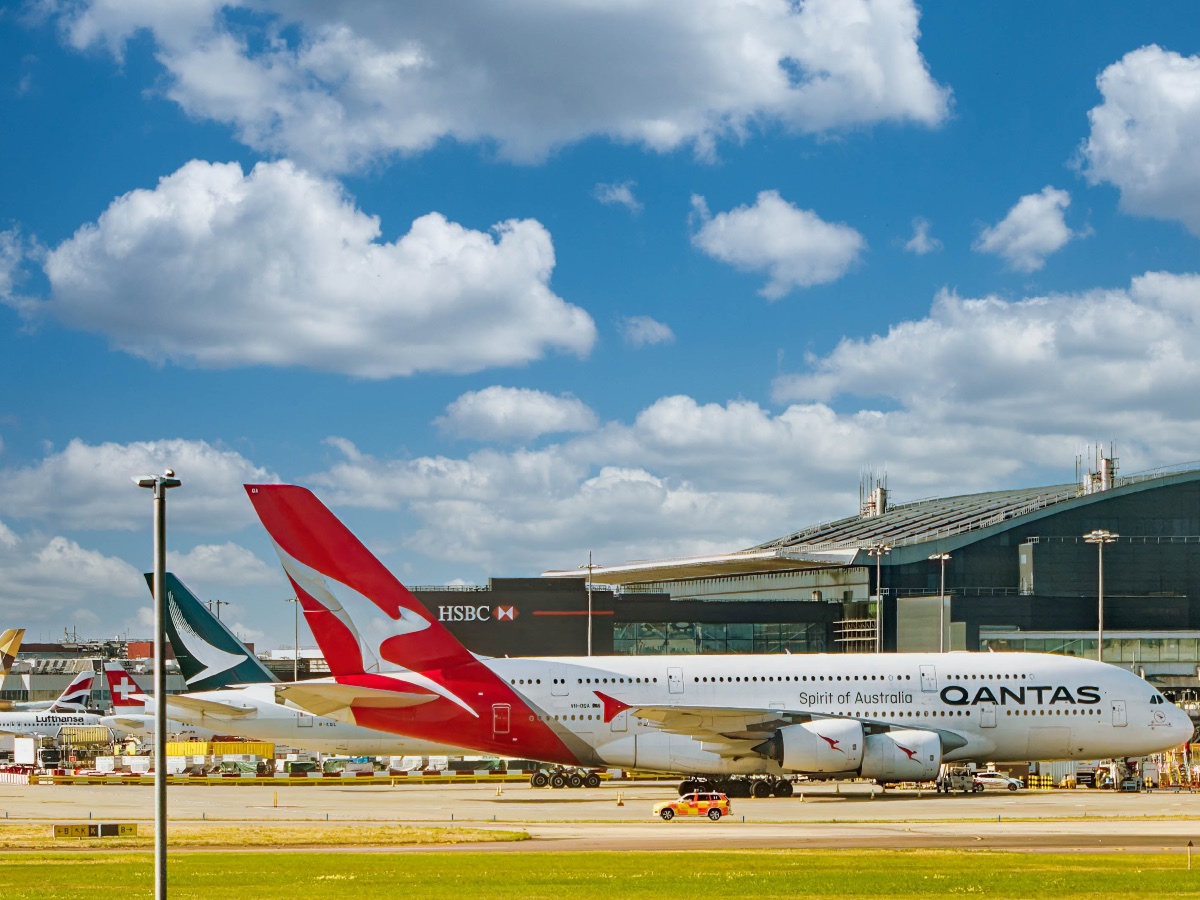
Australians have become accustomed to transiting through the Middle East when flying to Europe. But given the ongoing disruptions caused by the Iran War, many are now considering alternative routes.
In this article, let’s take a closer look at your options for flying between Australia and Europe in 2026…
Can you still fly via the Middle East right now?
Airlines including Emirates, Etihad and Qatar Airways have resumed running some flights, but with reduced schedules. Virgin Australia flights to Doha are cancelled until at least mid-June, but that could be extended.
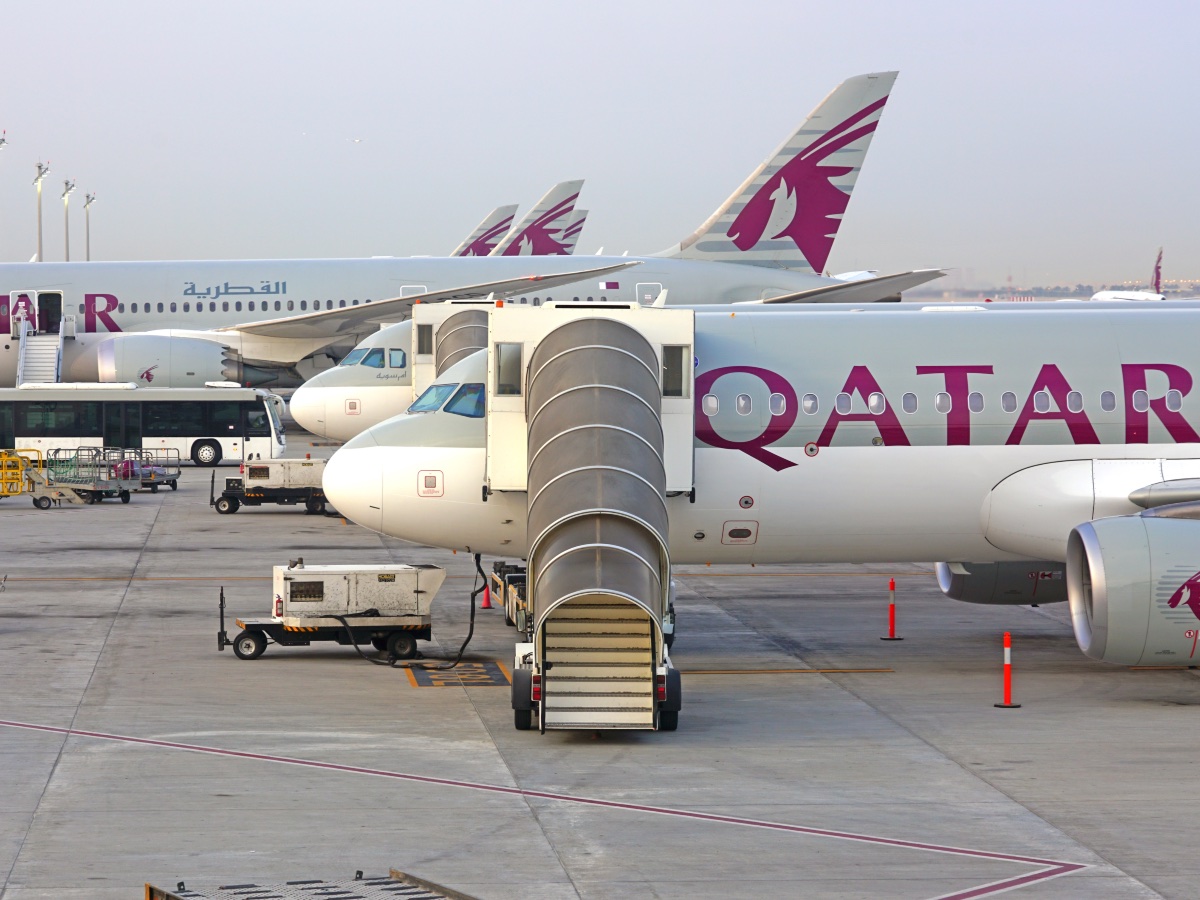
Airfares via the Middle East actually seem to be quite reasonable at the moment, with Etihad selling tickets especially cheaply. But there’s a reason for this.
Given the current situation, Middle Eastern airlines could be forced to cancel flights at short notice. This could even happen if you’ve already started your trip. So, there’s a risk you might get stuck in transit in Dubai, Abu Dhabi or Doha, unable to continue your journey to Europe for an extended period.
Some people who are booked to fly through the Middle East over the coming months have resorted to booking backup flights to Europe in case their original itinerary gets cancelled.
If you do get stuck in the UAE or Qatar, your travel insurance probably won’t cover you because the Australian government has current “do not travel” warnings in place for those countries (among others). The official Australian government advice from Smartraveller says:
Advice to ‘do not travel’ also applies to transit and layovers in affected locations. Even if you don’t plan to leave the airport, do not transit through these countries.
Airports, hotels, roads, bridges and other infrastructure in the region have been struck with missiles.
If you transit through a ‘Do not travel’ location you may be unable to leave. Your safety will be at risk.
At the time of writing, Oman and Saudi Arabia are not on the “do not travel” list. Commercial flights through Muscat, Jeddah and Riyadh continue to operate as scheduled.
However, some travel insurers won’t cover you there either, due to the Australian government’s current “Reconsider your need to travel” advice for Oman and Saudi Arabia. If in doubt, check with your insurer as some policies do cover travel to countries with that advice level.
What are the alternatives?
One of the worst things about flying from Australia (or New Zealand) to Europe is the tyranny of distance. These continents are pretty much on opposite sides of the world, so it’s always a long trip. The upshot is that you can fly in pretty much any direction… and you’ll end up in Europe!
This means there are alternatives to overflying the Middle East. They may cost a bit more time and money, but you’ll still get to Europe.
Non-stop flights from Australia to Europe
In addition to its Sydney-Singapore-London route, Qantas normally operates the following non-stop routes from Australia to Europe:
- Perth-London
- Perth-Paris
- Perth-Rome (seasonal route running between May and October)
Because of the longer flight paths currently being taken, Qantas has had to add a temporary refuelling stop in Singapore to its Perth-London flight. But the return leg from London to Perth remains non-stop as it’s helped along by tailwinds.
Meanwhile, the Sydney-Perth-Paris service will switch to Sydney-Singapore-Paris from 20 April until 25 July 2026.
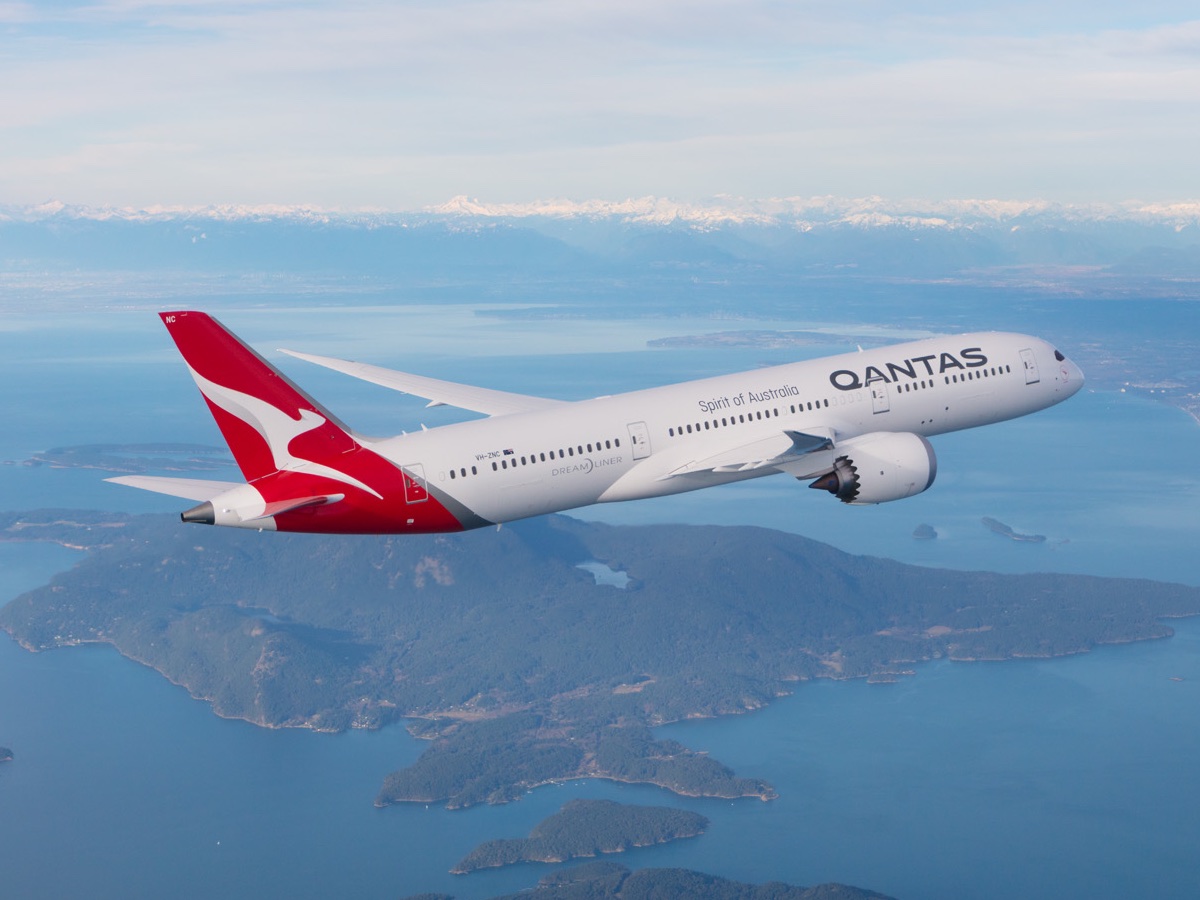
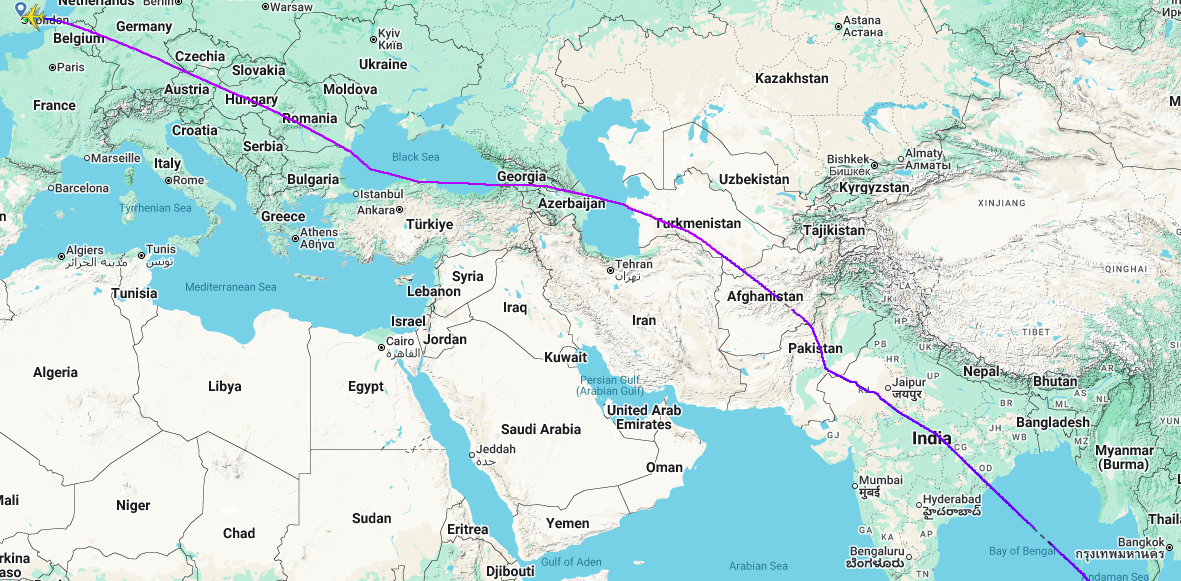
These flights take the same route over Central Asia as most of the other flights currently running from Southeast Asia to Europe. They’re convenient, but they’re among the most expensive options.
Flights via Asia
The obvious alternative to flying via the Middle East is to take a one-stop routing via an Asian hub like Singapore, Kuala Lumpur, Bangkok, Hong Kong, Seoul, Taipei or Colombo. These flights are very popular at the moment, so they might be more expensive than usual.

Most airlines flying from those airports in Asia to Europe are currently taking a flight path over Central Asia, the Caucasus and Türkiye. This avoids the airspace over Iran to the south and Russia to the north, so it’s a very popular route at the moment.
One of the cheapest options via Southeast Asia is Royal Brunei, which flies from Melbourne to London via Bandar Seri Begawan, Brunei.
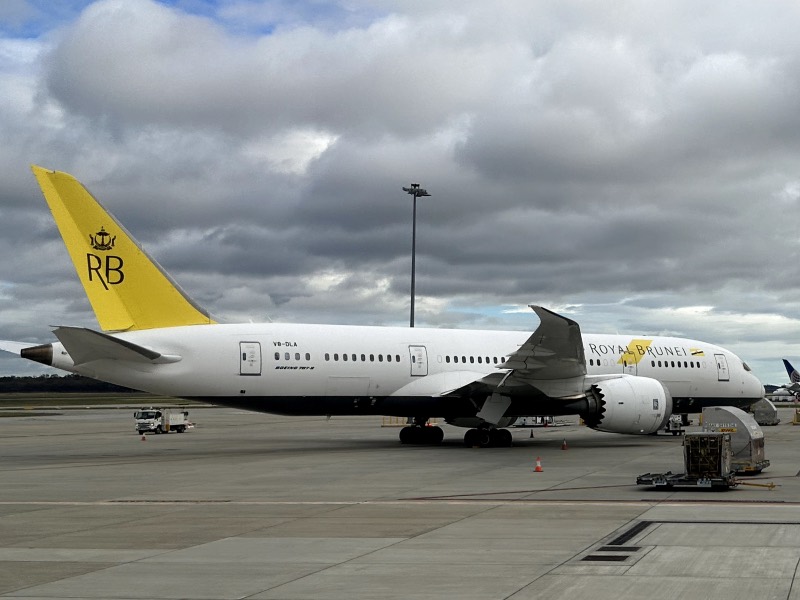
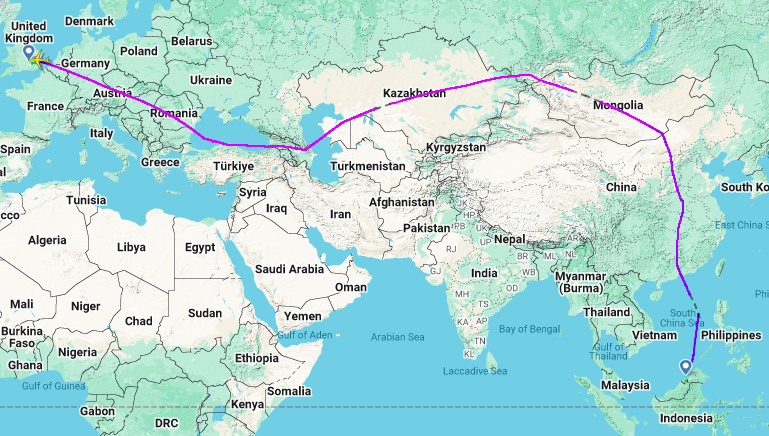
The Bandar Seri Begawan-London service normally stops in Dubai. However, Royal Brunei is skipping the Dubai stop until at least May. Instead, for some reason, Royal Brunei is currently overflying China, Mongolia and Russia en-route from Brunei to the UK.
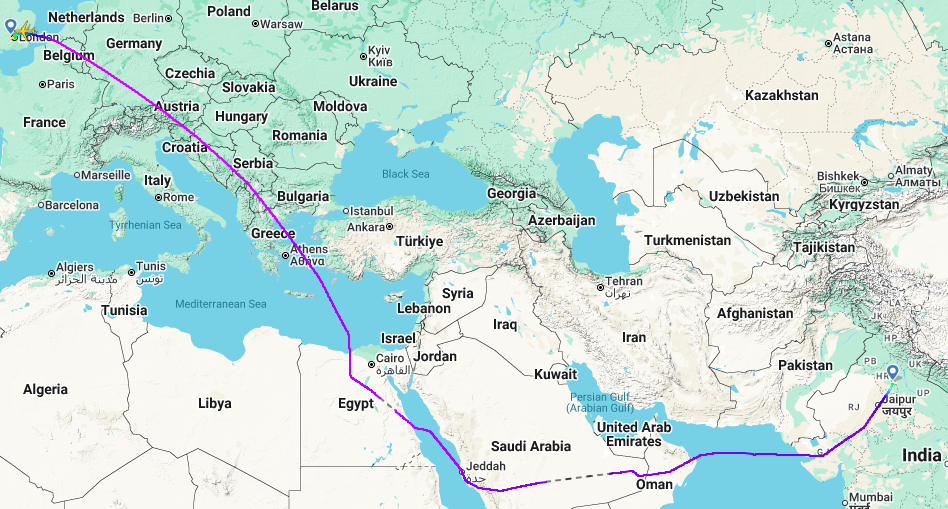
Another one of the cheaper options is Air India, which can get you from Sydney or Melbourne to Europe via Delhi. Air India’s flights to Europe are currently using a route over Saudi Arabia and Egypt, to the south of the conflict zone. Just beware that transiting through Delhi is not as seamless as other Asian airports.
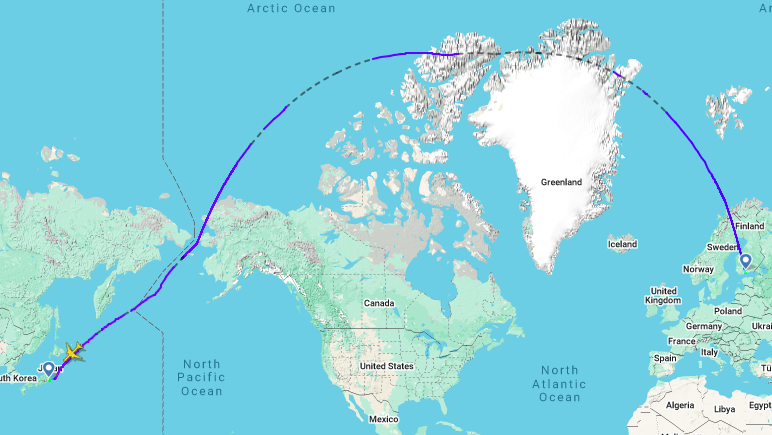
Most of the flights from Japan to Europe are currently overflying the North Pole, avoiding Russian airspace. In the other direction, some flights from northern Europe to Japan are also taking the polar route – but it depends on the day. For example, the most recent Japan Airlines flight from Helsinki to Tokyo took this route:
The mainland Chinese airlines continue to offer relatively affordable one-stop connections from Australia to Europe via China. Most of their flights from China to Europe overfly Russia.
Flights via America
I personally don’t think this is necessary… but if you really want to avoid flying anywhere near the Middle East, you could transit through the USA, Canada or even Chile.
United Airlines or Air Canada will sell you a one-stop itinerary to Europe via San Francisco, Los Angeles or Vancouver. The travel times are a bit longer, but not that much longer.
Note that most Australians would need to get an ESTA or visa to enter the USA, as the United States does not offer airside international transits. Canada does have international transit facilities, but you’d still need an eTA to transit through Canada.

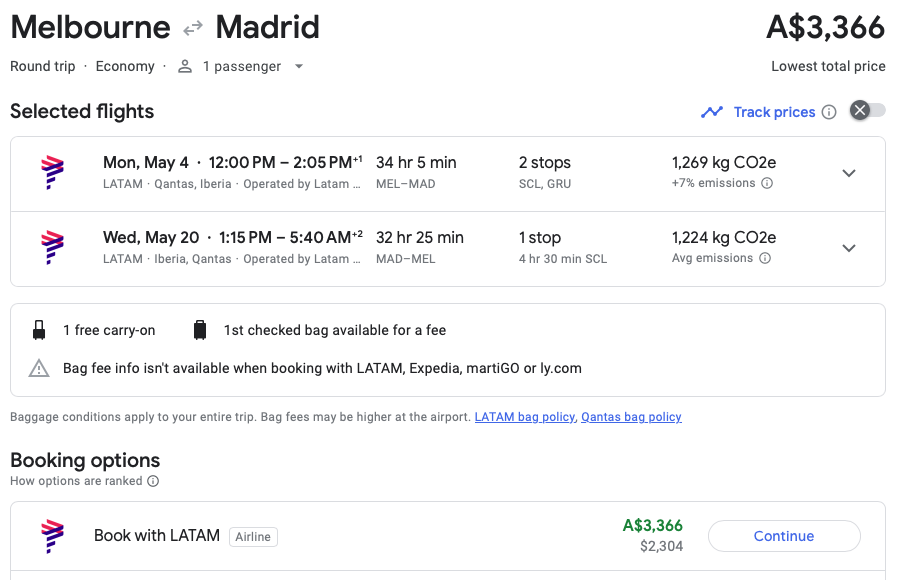
As a left-field alternative, LATAM Airlines will sell you a ticket from Australia to Europe via Santiago, Chile. It’s not exactly cheap, and the travel times are long… but if you wanted to stop over in South America, it does the trick.
Other left-field options
The other ways to get from Australia to Europe would be to fly via South Africa or Mauritius.
In the past, Qantas could sell you an itinerary flying Qantas from Sydney to Johannesburg, and then British Airways from Johannesburg to London. The travel times were reasonable, and this wasn’t actually that much more expensive than just hopping on QF1. Sadly, this fare doesn’t seem to be available any more and current prices via South Africa seem high.
Air Mauritius flies from Perth to Mauritius, with onward connections available to London and Paris. This sounds quite fun to me, but the fares are pretty high too and the layover times in Mauritius are long.
What’s your preferred route to Europe?
In light of current global events, what would be your preferred way to get from Australia to Europe in 2026? Let us know on the Australian Frequent Flyer forum:
Related Articles
-
 29 October, 2023Qantas
 -
 30 September, 2026Qantas
 -
 3 July, 2024Qantas
Community Comments
Loading new replies...
Join the full discussion at the Australian Frequent Flyer →