Should Airlines & Hotels Offer Last-Minute Discounts?
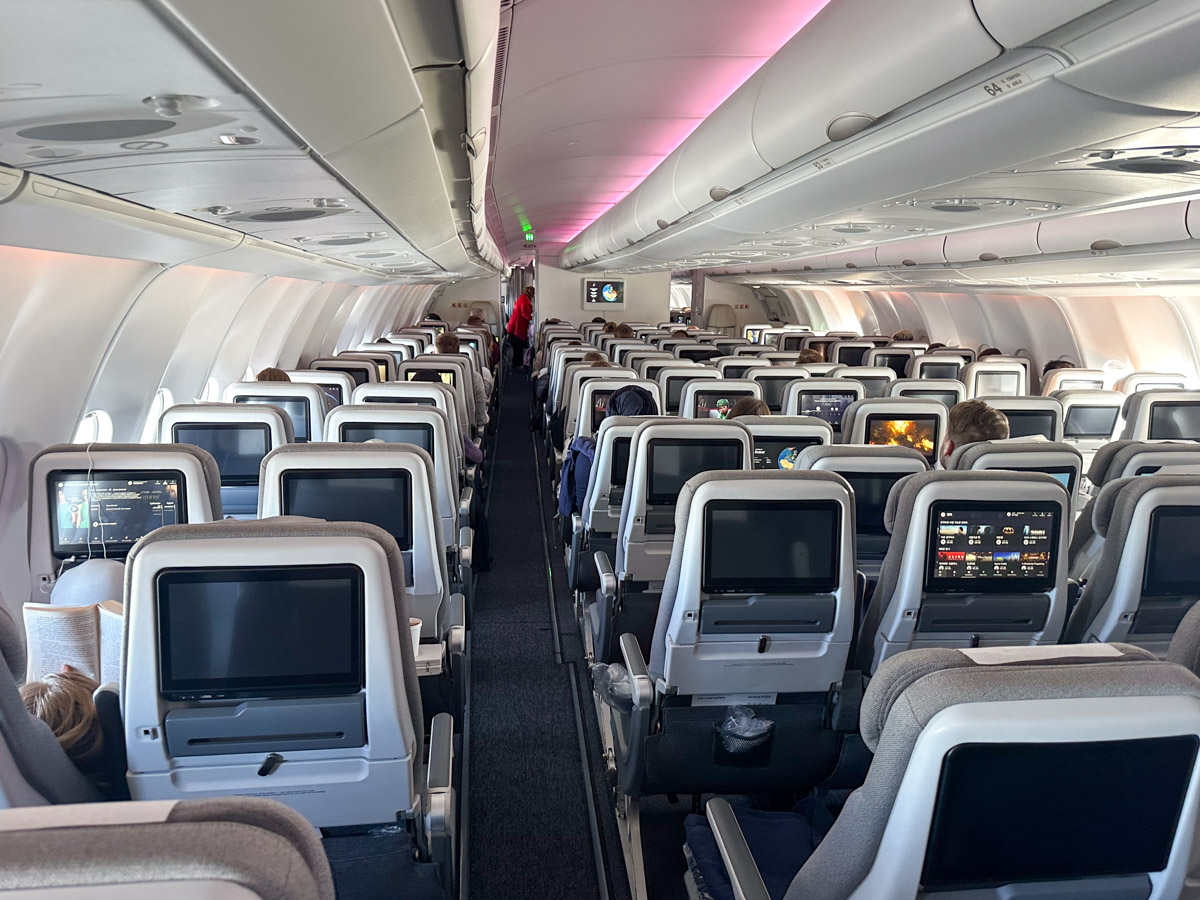
Airline seats and hotel rooms are perishable goods. Once a flight departs with an empty seat, the airline will never have another opportunity to sell that seat. And a hotel will never be able to generate revenue from a room that sat empty the previous night.
Of course, airlines and hotel owners want to maximise their revenue as much as possible. They have a certain number of seats (or rooms) to sell on any given flight (or night). They’d ideally like to fill all of them at the highest prices each customer would be willing to pay. This is the fundamental challenge of “revenue management”.
During busy periods, flights and hotels might completely sell out days or even weeks in advance. But what if an airline has lots of unsold seats on a flight that’s departing in a few days? Or if a hotel is at just 20% occupancy for the coming night? Should they drop their prices at the last minute in order to fill that “distressed inventory”, as it’s known in the industry?
Discounting perishable goods makes sense… sometimes
In almost any industry, it makes sense to discount perishable goods when they’re getting close to their expiration date. Supermarkets often do this to reduce food wastage.
When I was a teenager, I worked for several years at a donut shop. The donuts were freshly made each morning, and any leftovers couldn’t be sold the next day. So, at the end of the day, we would either take home or throw away any unsold donuts. (This is why I now rarely eat donuts, and in fact can barely stand the smell of them… but that’s a story for another time!)
On one particularly quiet day, we had so many unsold donuts an hour before closing time that I bought a sandwich board and a marker. I wrote “3 donuts for $5” on the board in big letters and stood with it out the front of the shop, trying to sell what I could to anyone who walked past. We completely sold out within 15 minutes. Sure, we didn’t make as much money as we would have if we sold all the donuts at full price, but that wasn’t going to happen anyway.
My boss was so thrilled with the success of my sandwich board experiment that he got someone to do the same thing the next day. And then the next. And then pretty much every other day for the next two years. In fact, he ended up hiring someone specifically just to hold the sandwich board and walk around the shopping mall promoting our end-of-day discounting.

The discounting became so predictable that regular customers came to expect that we’d sell off the donuts at a low price at the end of the day.
As a result, a certain proportion of customers actually stopped buying our products at full price and would specifically wait until they went on sale. We’d trained them to do so… a bit like Qantas has inadvertently “trained” some frequent flyers to wait for a double status credit offer before booking flights.
But donuts are primarily an impulse purchase. Nobody really needs them so much that they would have gladly paid quadruple the usual price for a box when we were about to close for the day. Travel is a bit different.
Discounting works differently in the travel industry
If a particular flight is close to selling out, it totally makes sense for an airline to charge a high price for the last few seats. But what if a flight departing imminently is relatively empty?
Economic logic says that the airline should respond to that mismatch between supply and demand by discounting those empty seats. After all, making something for those seats is better than nothing at all.
Or is it?
Some hotels and low-cost airlines do indeed drop their prices close to departure if sales are below expectations. But many do the opposite.
When does it make sense to discount at the last minute?
Budget airlines may lower prices close to departure because they have a very different business model to full-service airlines.
Low-cost carriers make a much larger proportion of their revenue by upselling ancillaries to passengers who’ve already bought a seat. Their goal is usually to fill the plane so that they have as many opportunities to upsell to as many people as possible. That’s why airlines like Ryanair might even offer airfares for just a few dollars. They’d rather fill the seat and get the benefit of a larger captive audience willing to buy checked baggage, seat selection, food, and so on.

Some hotels also routinely discounted rates for same-day bookings if they have high vacancy. They don’t rely as heavily on ancillary revenue as budget airlines, but the marginal cost of filling an empty room isn’t that high. Again, they’d rather get something for the room – and perhaps the guest will also dine at the hotel’s restaurant or use the minibar.
Hotels are also a bit different because there’s usually a lot more competition. There might be hundreds of hotels competing for last-minute bookings in a given city, but only one or two airlines flying a given route.
If you want to see which hotels offer last-minute discounts, simply search for hotel prices for tonight (assuming it’s not a peak period). You might be surprised to see how low the rates are at some quality hotels!
ALL Accor+ Explorer members can also access some great deals on last-minute Accor hotel rates with Red Hot Rooms deals.
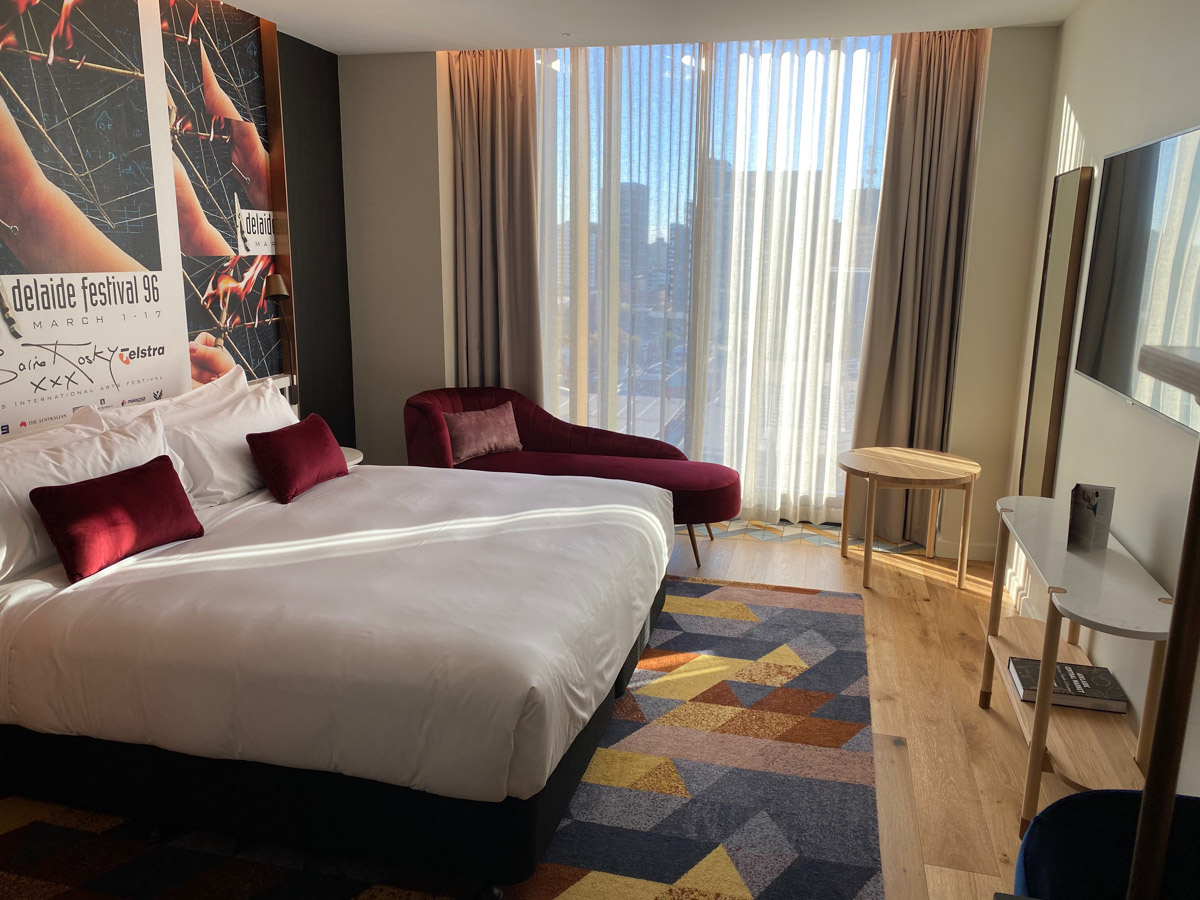
When dropping the price at the last minute, there’s a risk that existing customers who already paid a higher price might cancel their reservations and rebook at the lower price. This cannibalises the business’s own revenue.
However, most budget airlines sell non-refundable tickets or have hefty cancellation fees. And flexible hotel rates can usually only be cancelled for a refund until the day before check-in. So when a hotel discounts rates for that same night, their existing bookings remain locked in.
Like in the donut example, though, this strategy can backfire if customers come to expect prices to drop at the last minute! They’ll simply wait to book as late as possible.
Why most airlines raise prices on empty flights at the last minute
Airlines know that people booking a flight at the last minute are often prepared to pay more. They’re more likely to be either desperate to travel or a business traveller. Either way, they’re probably less price-sensitive.
Airlines have calculated that they can make more money by selling 10 last-minute seats for $500 each than 50 last-minute seats for $100 each. They would rather let seats fly empty if it means they get a lot more revenue for those seats that they do sell at a high price.
Airlines also want to encourage people to book early as this helps them to forecast demand, and therefore allocate aircraft and resources more efficiently.
Airlines may use other methods to fill empty planes
Rather than discounting last-minute tickets, some airlines try to fill underperforming flights by releasing extra reward seats. That’s great news if you have frequent flyer points to spend! They’re willing to do this because it’s unlikely to cannibalise revenue from business travellers.
Great Cards for Amex Membership Rewards Points
- Card Name
- American Express Essential Rewards Credit Card – 30,000 Membership Rewards Points
- Earn
- 1
- Signup Bonus
-
30,000 Membership Rewards Bonus Points *
- Annual Fee
- $9 per month
- Read more
- View Offer

point on everyday purchases
- Card Name
- American Express Explorer Credit Card – 75,000 Membership Rewards Bonus Points
- Earn
- 2
- Signup Bonus
-
75,000 Membership Rewards Bonus Points¹
Apply by 3rd Nov 2026
- Annual Fee
- $395 p.a.
- Read more
- View Offer

points on everyday purchases
- Card Name
- American Express Platinum Card – 200,000 Bonus Membership Rewards Points on year 1 + 100,000 Bonus Membership Rewards Points on year 2
- Earn
- 2.25
- Signup Bonus
-
Earn up to 300,000 Bonus Membership Rewards® Points
Apply by 3rd Nov 2026
- Annual Fee
- $1,450 p.a.
- Read more
- View Offer

points on everyday purchases
If you’ve been following the frequent flyer points game for a while, you might already be familiar with some of the airlines that often release award availability in the weeks or even days before departure. Some examples include:
- Emirates
- Japan Airlines
- All Nippon Airways
- American Airlines
- Lufthansa (and other Lufthansa Group airlines)
- Cathay Pacific

To boost bookings without dropping airfares, airlines could also offer higher commissions to travel agents. Or bonus points or status credits to their frequent flyers.
Undersold flights might also get filled a bit by airline employees using staff travel.
You can use this knowledge to your advantage
Ultimately, there’s a lot of game theory involved here. But by understanding how the system works, you have a better chance of beating it! 😉
Related Articles
-
 7 March, 2026Airlines, Miles and Points, Points Inspiration
 -
 13 October, 2023Other Airlines, Points Inspiration
 -
 4 June, 2025Qantas
Community Comments
Loading new replies...
Join the full discussion at the Australian Frequent Flyer →