Starlux Airbus A330neo Business Class Review
It is not often that you cut short a family holiday in Japan to fly on a particular airline. But when a Starlux award seat popped up, that is exactly what I did to not miss out on a chance to try out this luxury carrier.
Starlux is a Taiwanese airline founded in 2018 by Chang Kuo-wei, the former chairman of EVA Air, who departed the airline following a boardroom struggle after his father, EVA Air’s founder, passed away. Starlux launched commercial operations in January 2020, just weeks before the COVID-19 pandemic brought international aviation to a standstill. Despite this timing, Starlux survived and has since grown to become one of the three major airlines in Taiwan. In 2025, it was officially named as a Skytrax 5-Star Airline, becoming the fastest airline in aviation history to achieve this rating.
With Starlux announcing its first Australian service – Taipei to Sydney launching in 2027, here is a glimpse of what to expect when Starlux arrives in Australia.
Flight Details
| Flight number | JX 821 |
| Origin | Osaka (KIX) |
| Destination | Taipei (TPE) |
| Aircraft type | Airbus A330neo (A330-900) |
| Class of travel | Business Class |
| Seat number | 8K |
| On-time performance | Departed 50 minutes late and arrived 20 minutes late (due to a typhoon) |
| Star rating |  |
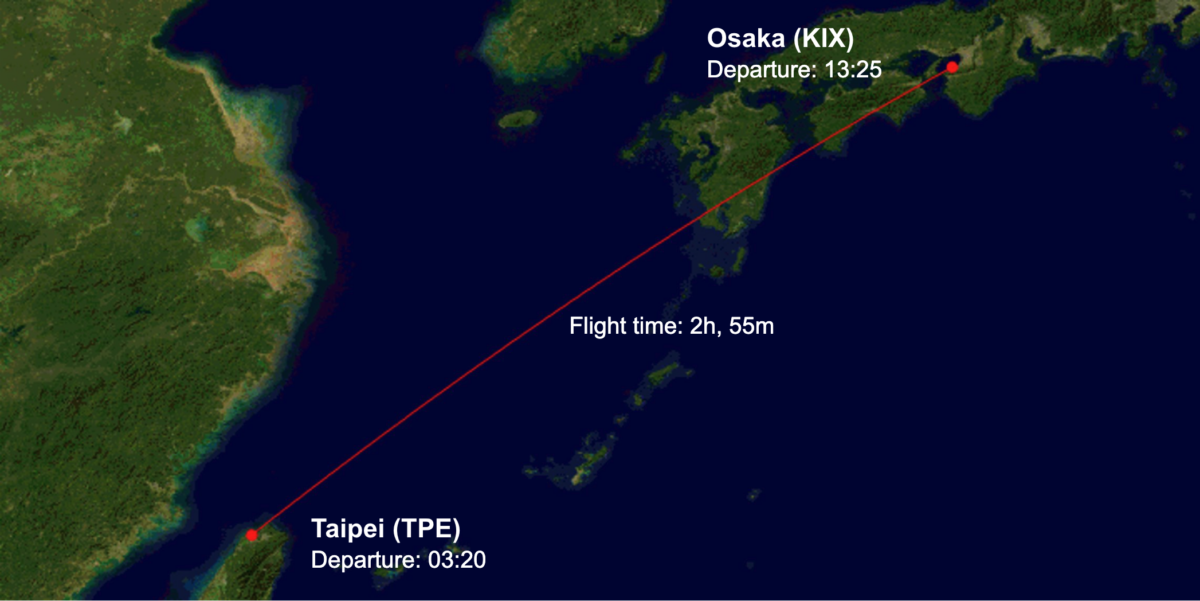
The Route
Flight Cost
Starlux has a reciprocal partnership with Alaska Airlines’ Atmos Rewards program. I had a small balance of Alaska Atmos Rewards points from a previous Alaska Airlines points purchase sale, and used 15,000 Atmos Rewards points for this redemption. The taxes and fees were USD 45.30.
Alternatively, the cash price on the route is usually around $800 in Business Class (D). You can credit that booking to Alaska Atmos Rewards and earn 1,323 points.
Airport and Check-in Experience
Osaka’s Kansai International Airport (KIX) sits on an artificial island in Osaka Bay, around 50km southwest of the city. The Haruka Express train connects the airport to central Osaka in around 40 minutes.
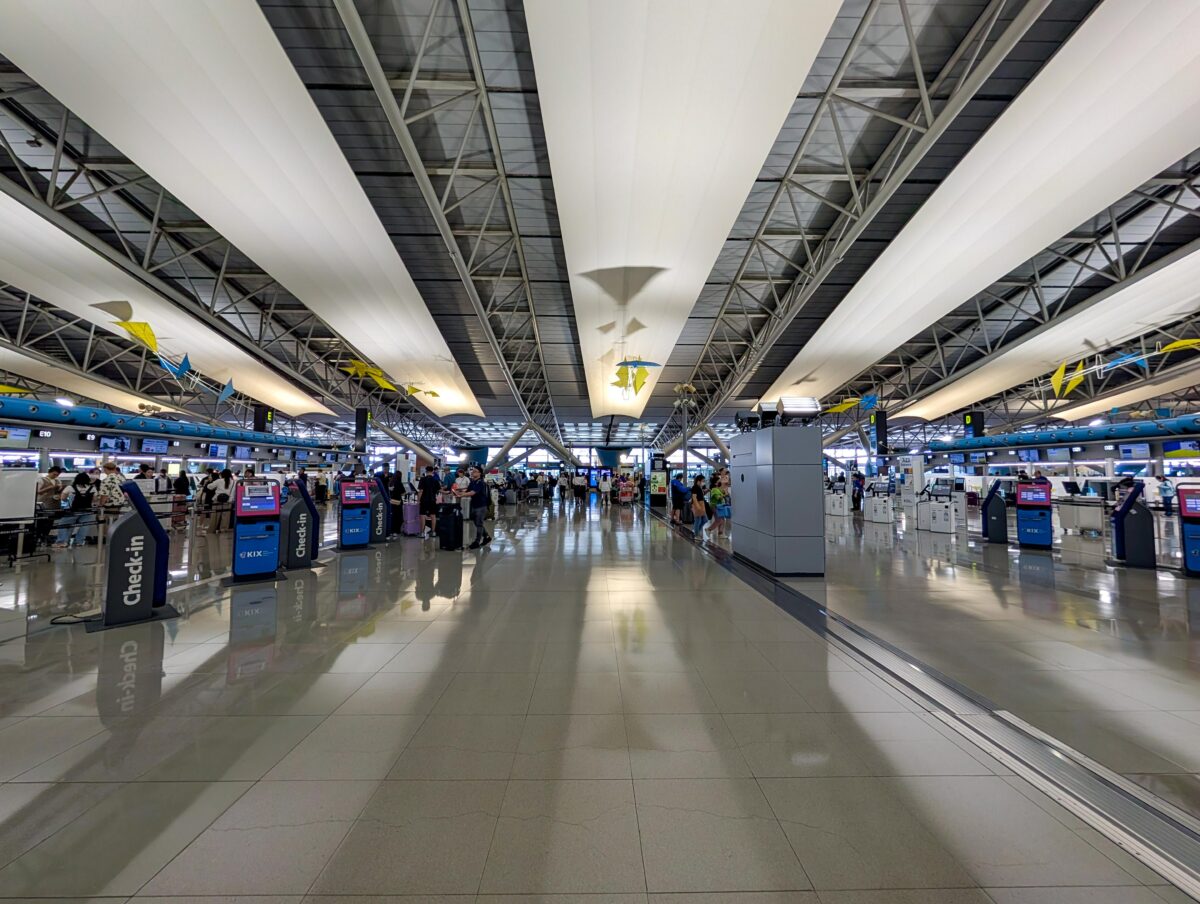
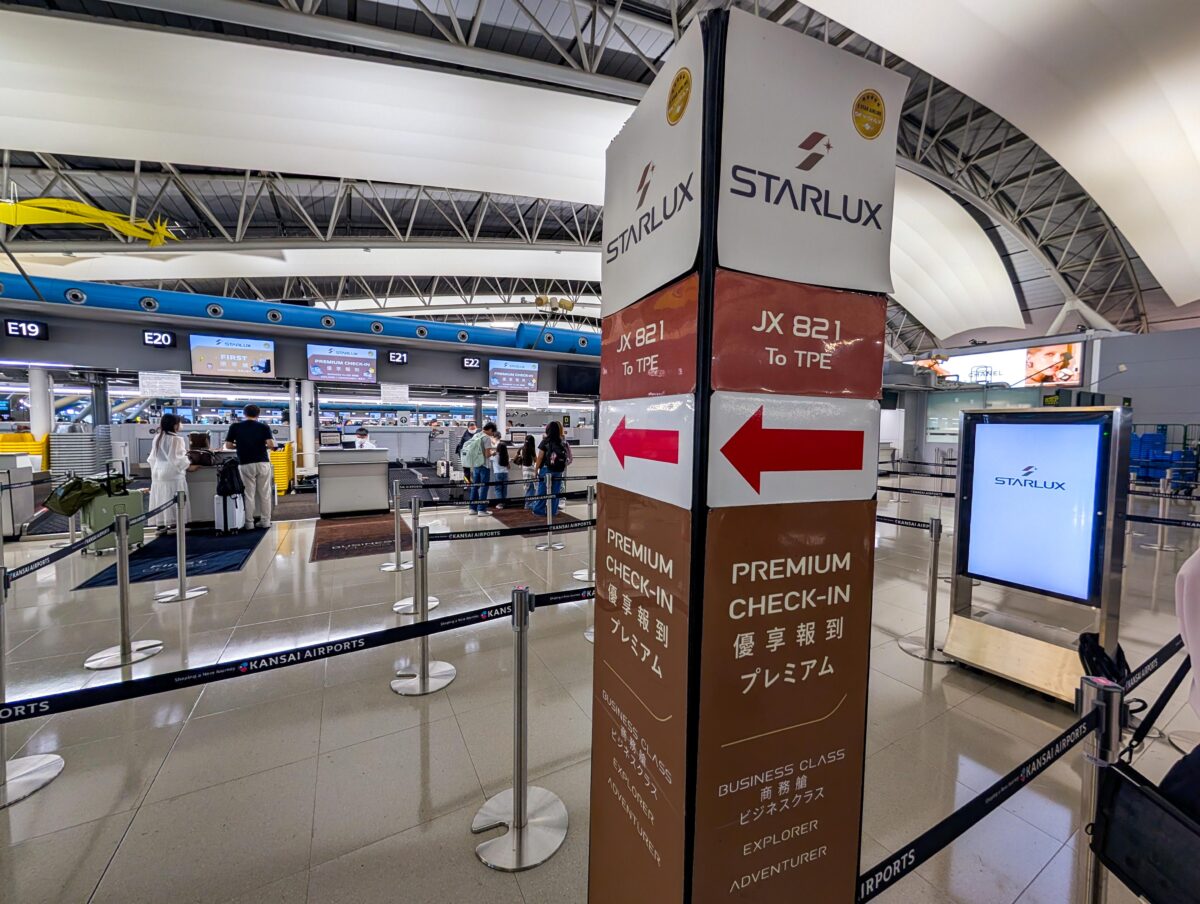
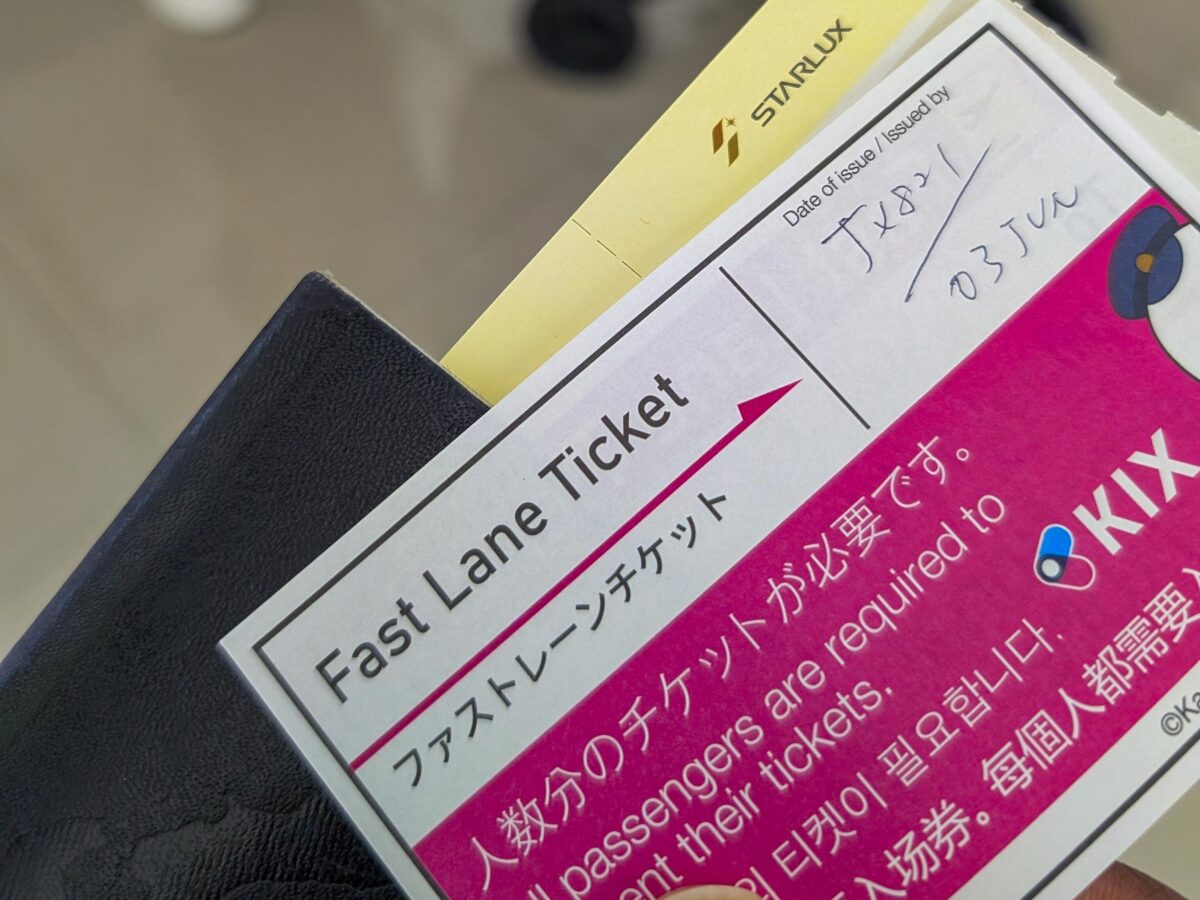
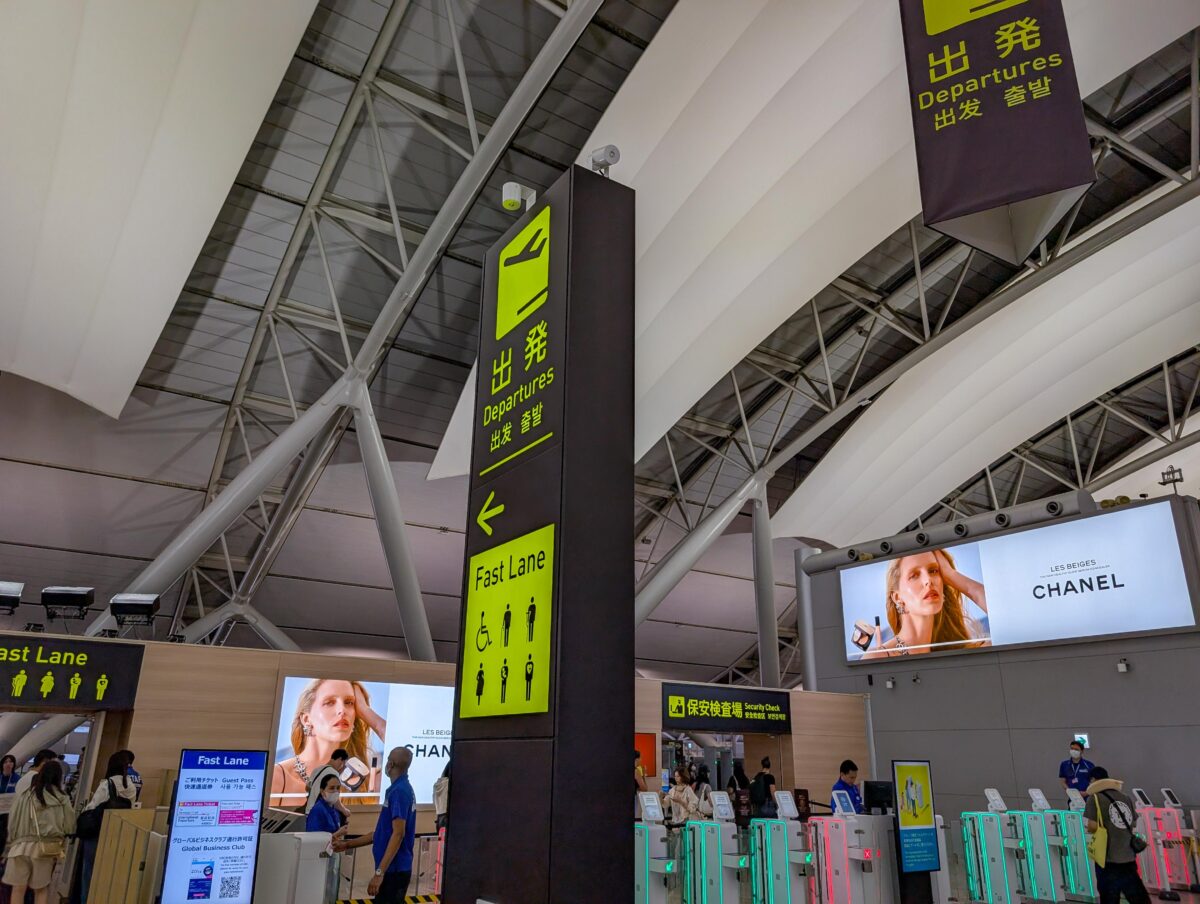
Check-in was quiet and efficient. Starlux operates dedicated Class check-in counters for First and Business Class, complete with carpeted lanes. The ticket included a checked baggage allowance of two pieces, each weighing up to 32kg. Fast Lane tickets were handed out for priority security screening and immigration.
Lounge Experience
Starlux directs its Business Class passengers to the KIX lounge, a shared facility used by Business Class passengers of most airlines that service the airport. Airport-operated lounges can be hit or miss, but this was surprisingly good.
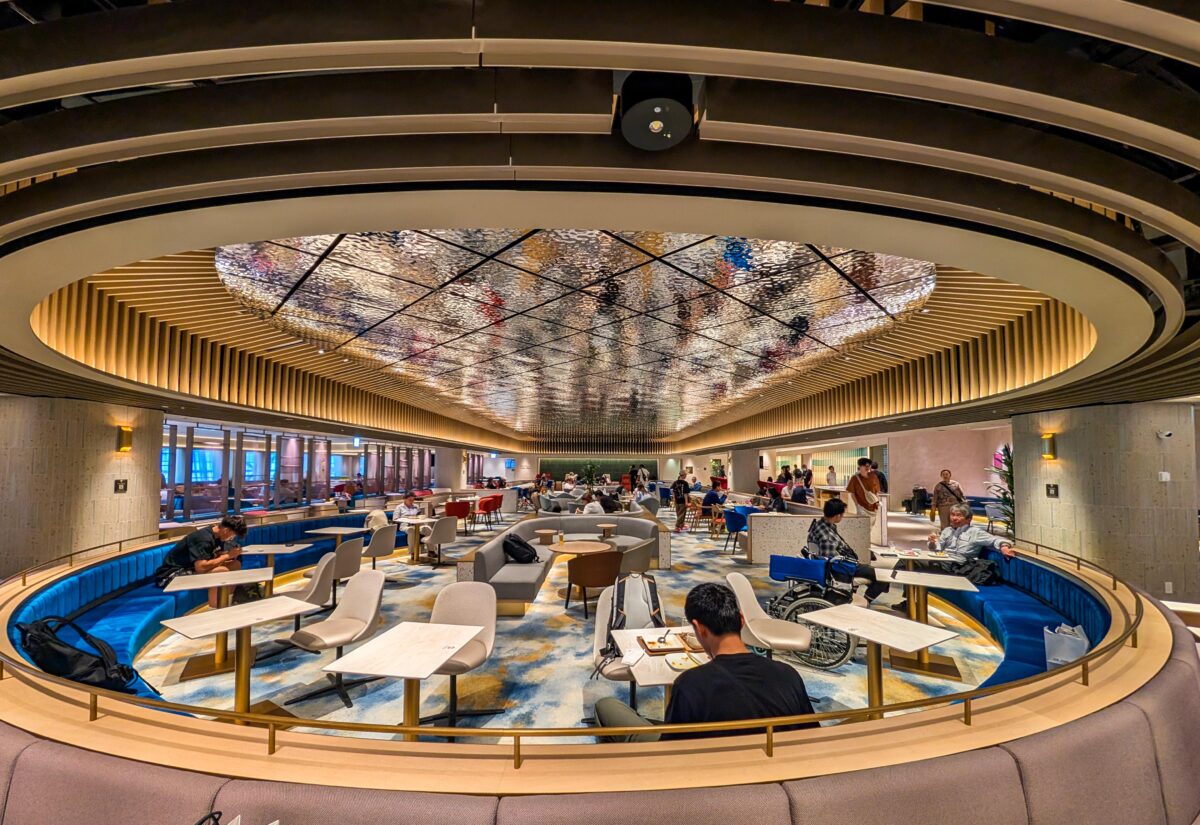
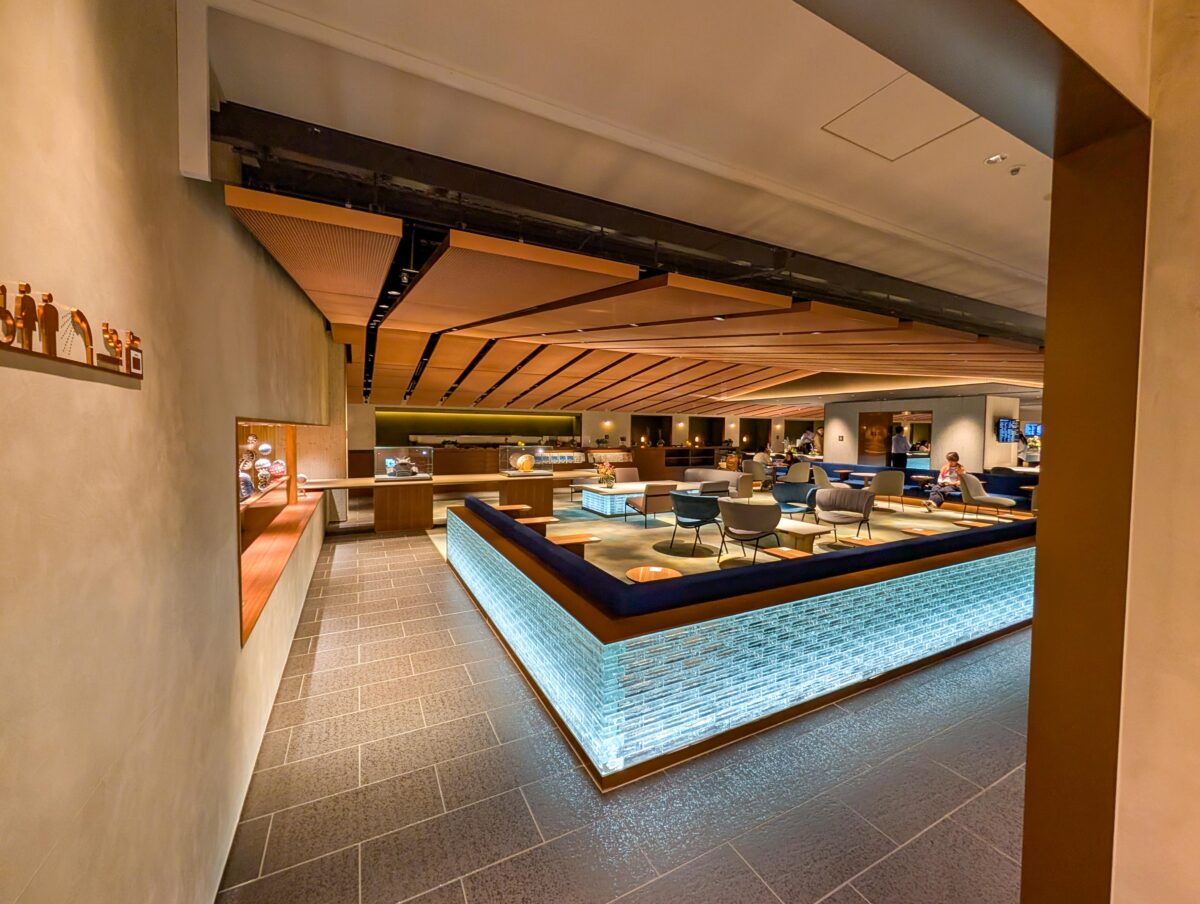
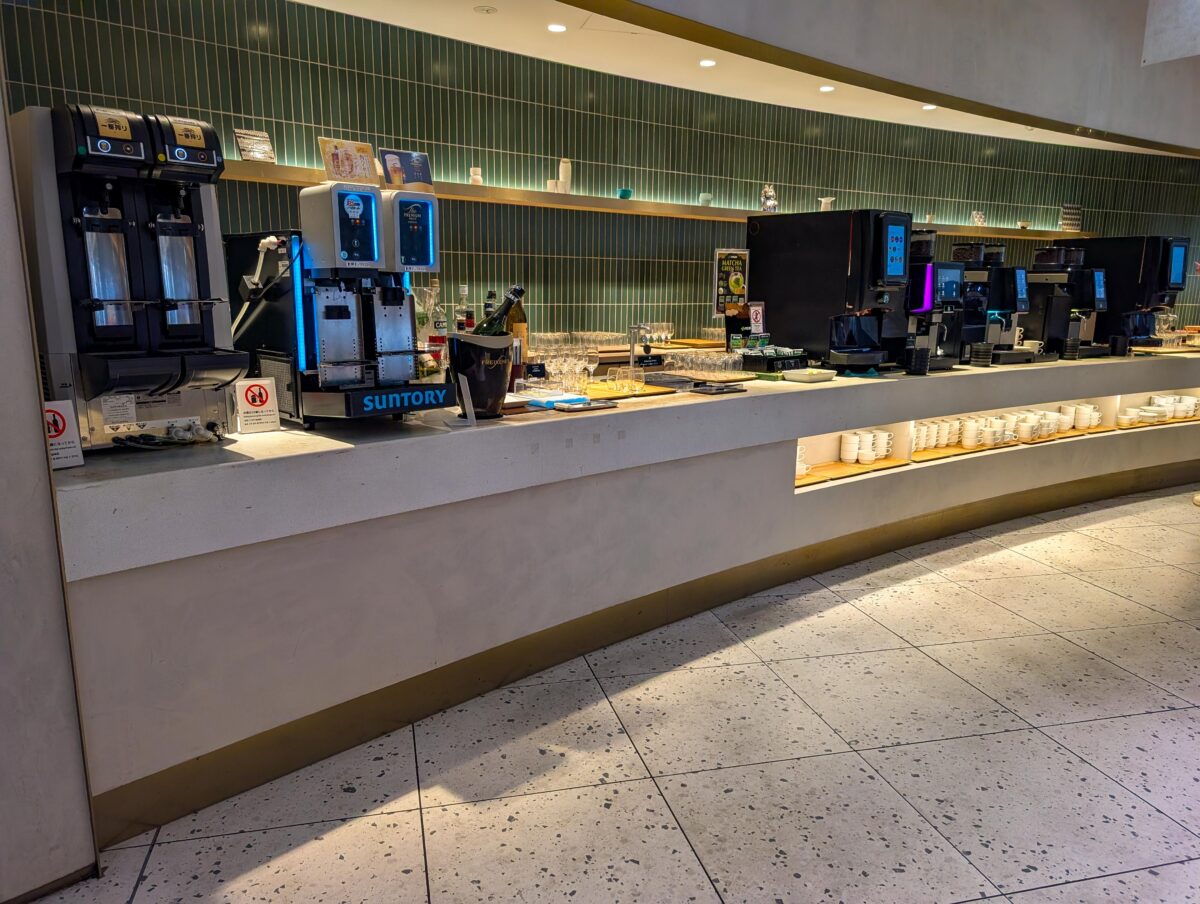
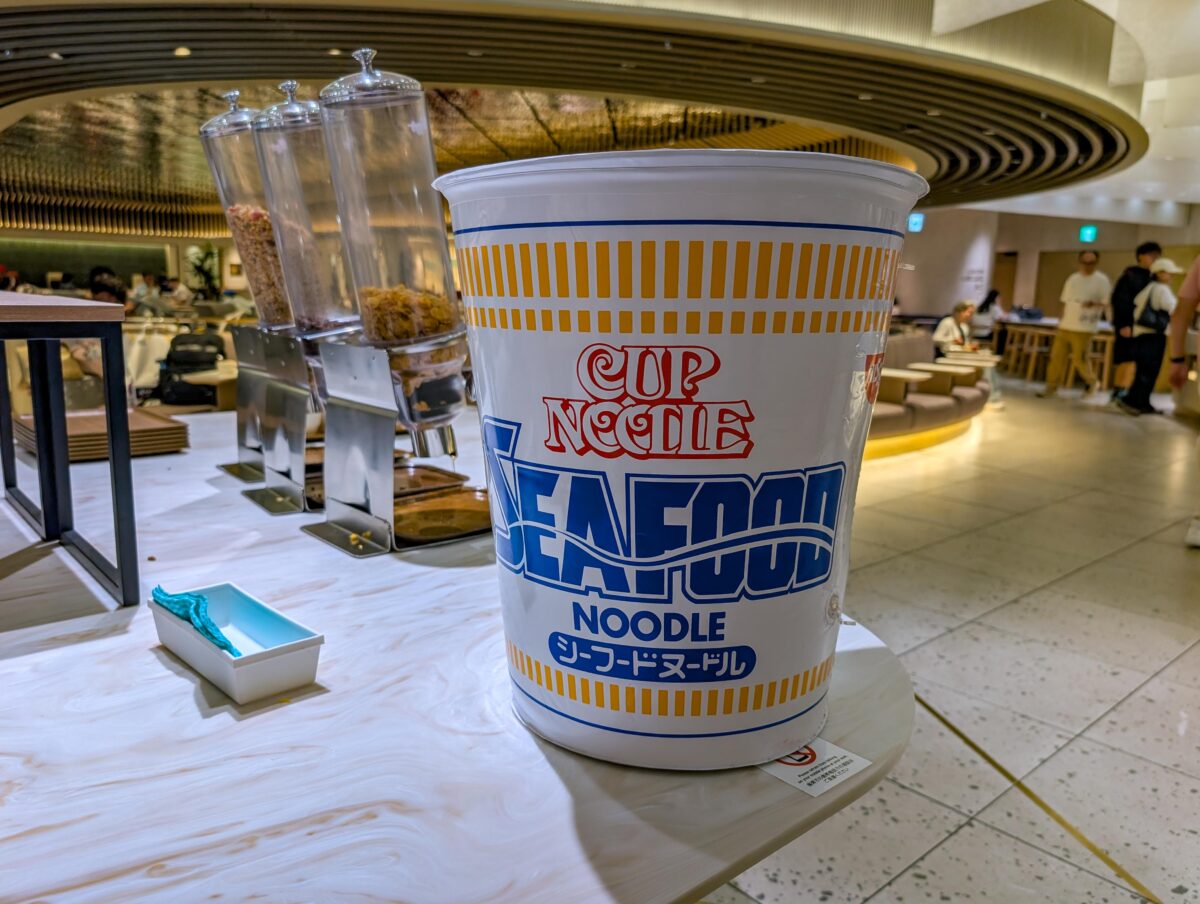
The lounge spans 3,000 square meters with over 600 seats. The space consists of two distinct sections: the north side houses a buffet-style food-and-beverage area, while the south side offers a quieter environment for working or resting. The food and beverage selection was varied and more than adequate. The standout, however, was this giant Cup Noodle figure, a nod to Osaka’s status as the birthplace of instant noodles.
The Hard Product
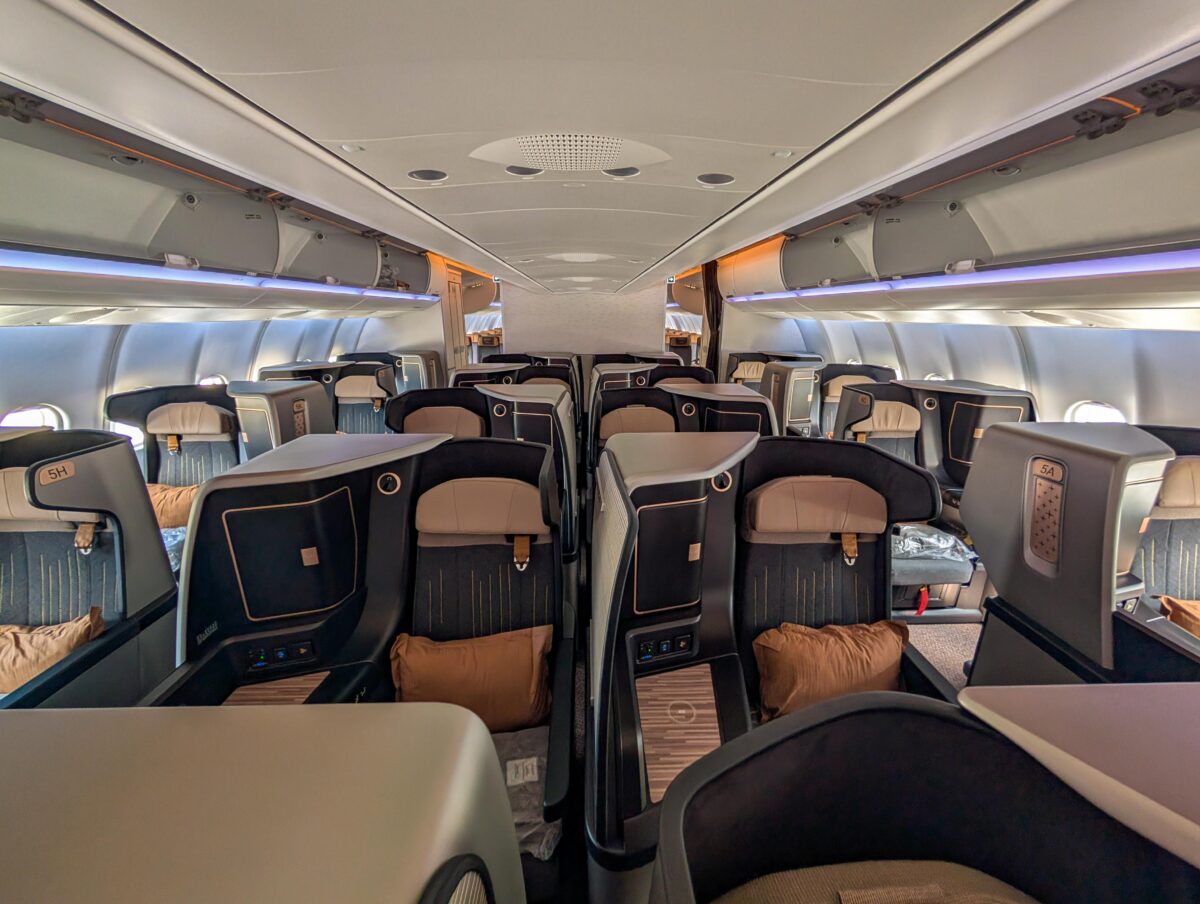
Starlux operates the Airbus A330neo on this route. The aircraft on the day was less than three weeks old, and this was very apparent when I stepped onboard. I want to say “it had the new-plane smell”, by which I mean everything was pristine. The cabin felt fresh, and not a scuff or mark anywhere to be seen.
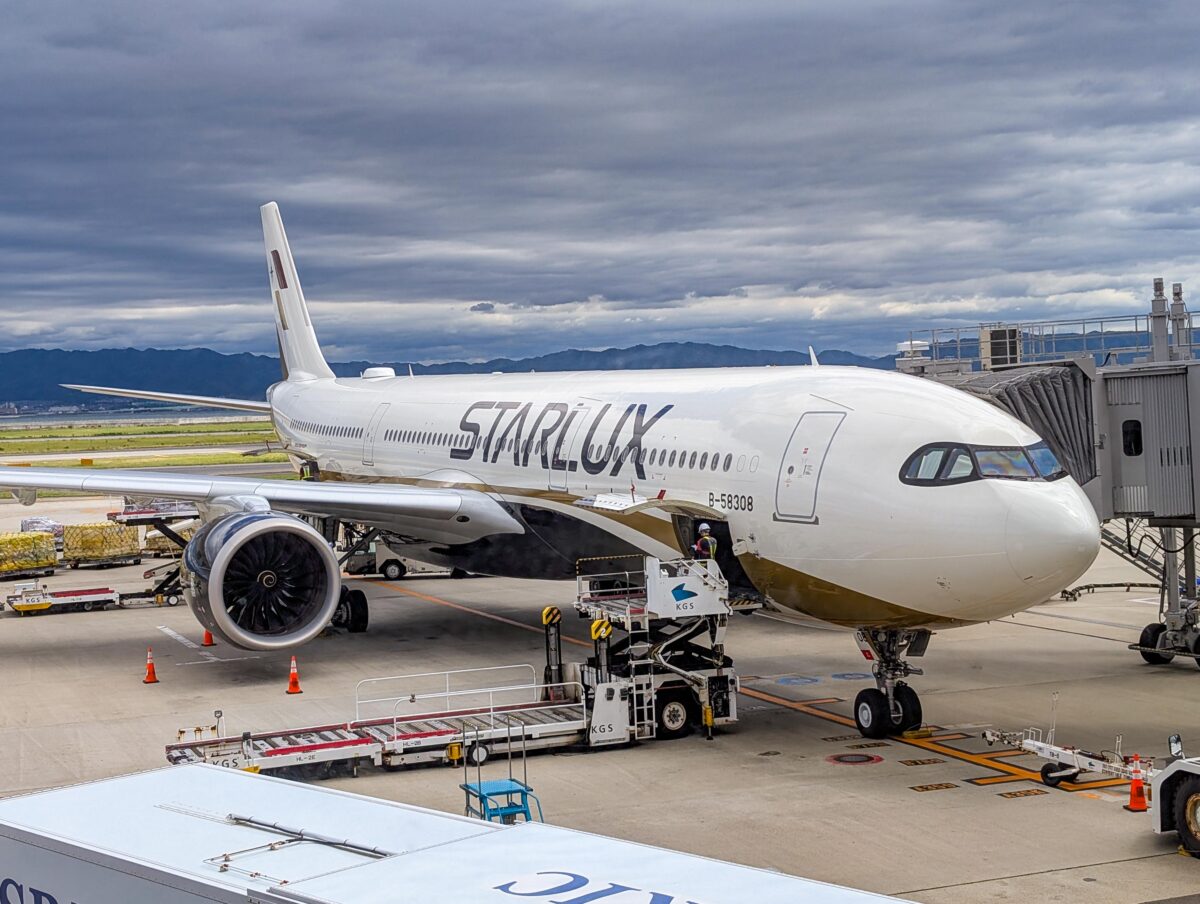
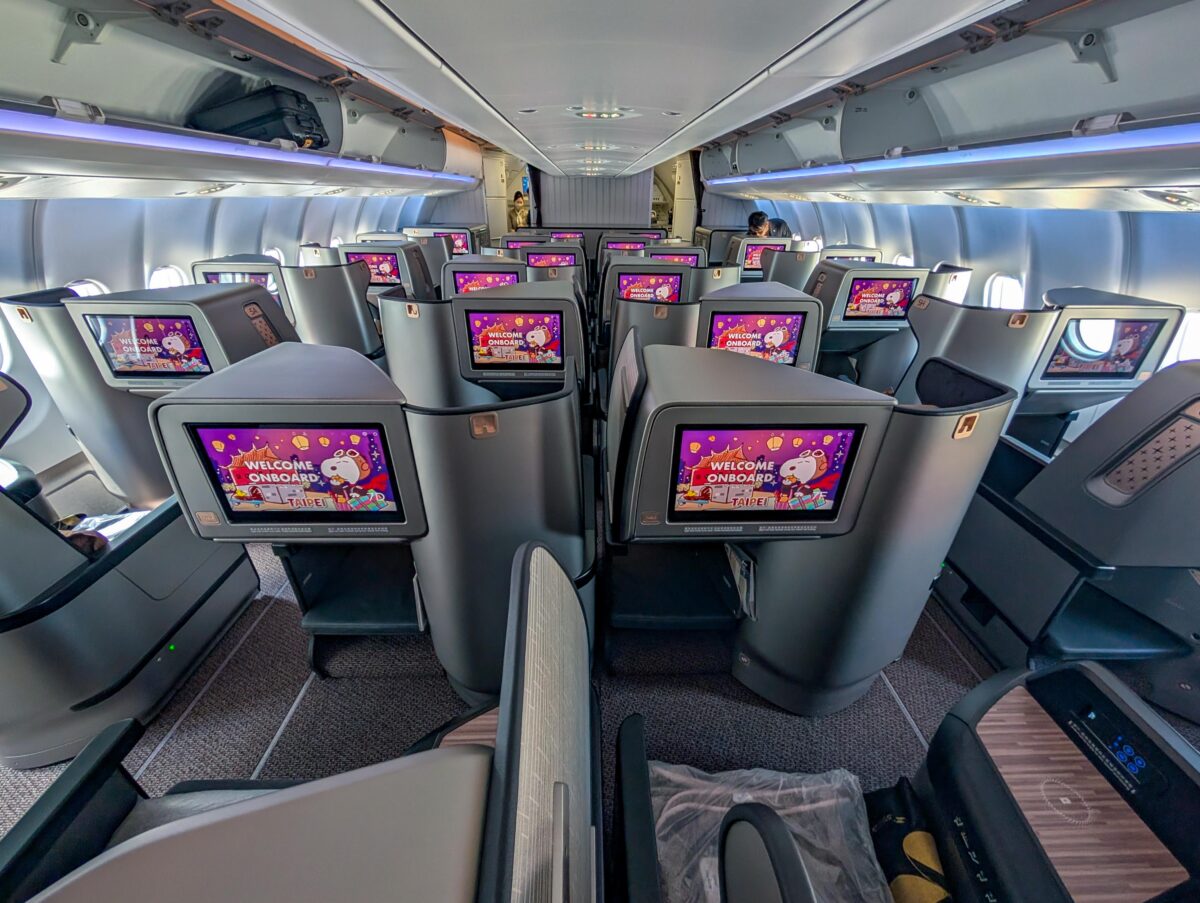
All of Starlux’s Airbus A330neo aircraft feature a two-class layout, with 28 seats in Business Class. The Business Class cabin uses the Safran Skylounge Core seat in a staggered 1-2-1 configuration. Starlux is the launch customer for this seat type, and the customisation handled by BMW Designworks shows. The dark charcoal shells with fine gold trim lines, caramel leather headrests and warm wood-effect consoles give the cabin a boutique feel.
The window seats alternate between positions closer to the window and closer to the aisle, but each seat has direct aisle access regardless.
Seats
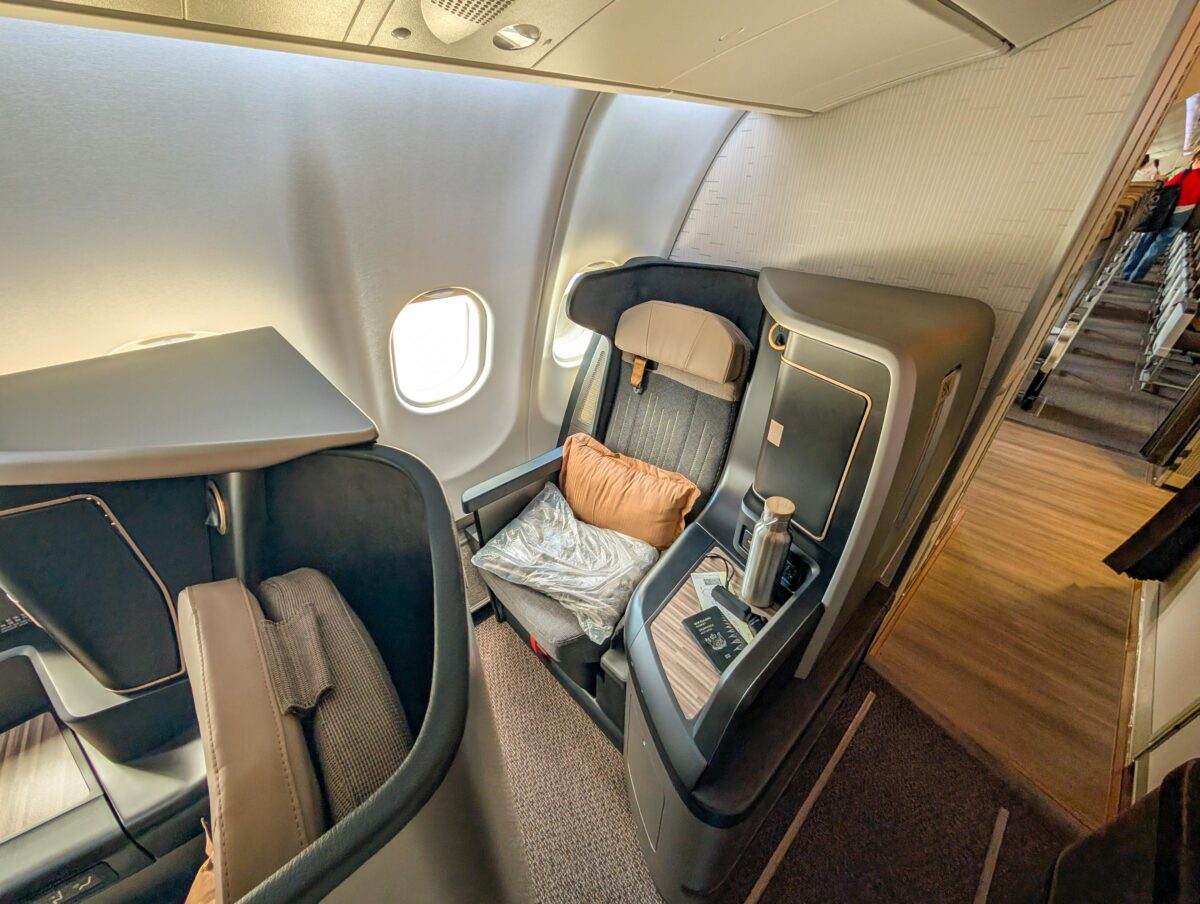
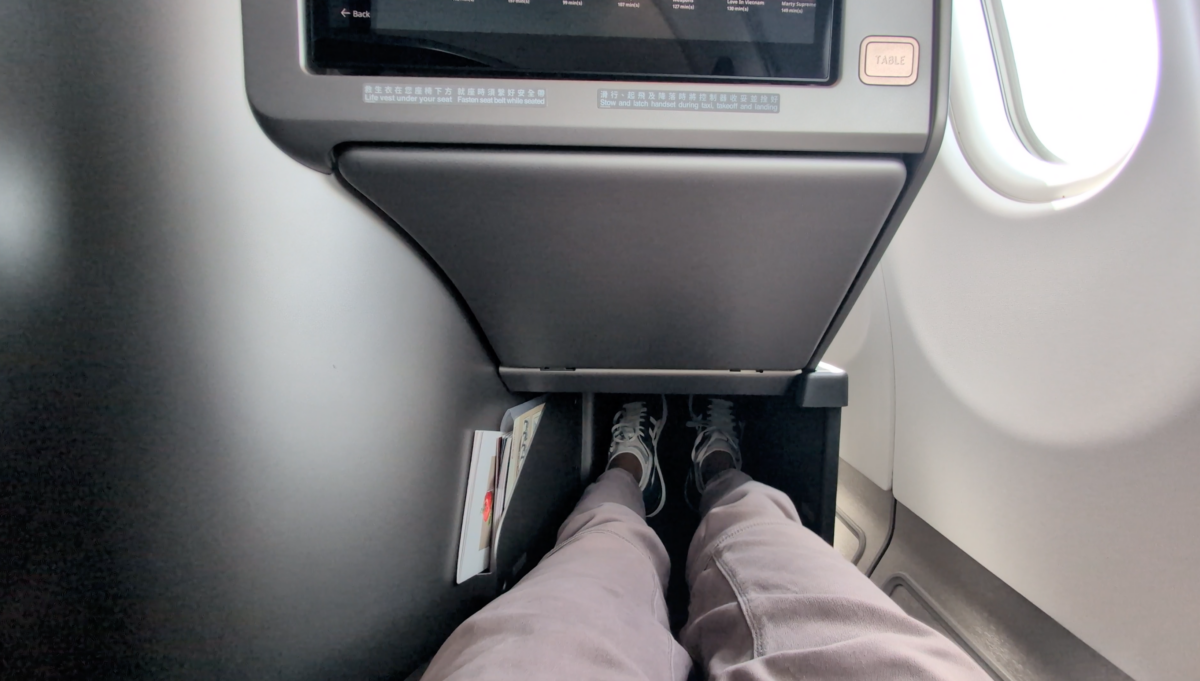
The seat is 20 inches wide with a 44-inch pitch, which is consistent with other A330neo Business Class products, such as those on Malaysia Airlines. The seat reclines to a fully flat bed. One caveat worth noting is that the footwell is quite narrow. Considering that the longest route Starlux operates this aircraft on is less than 5 hours, it probably isn’t a big deal.
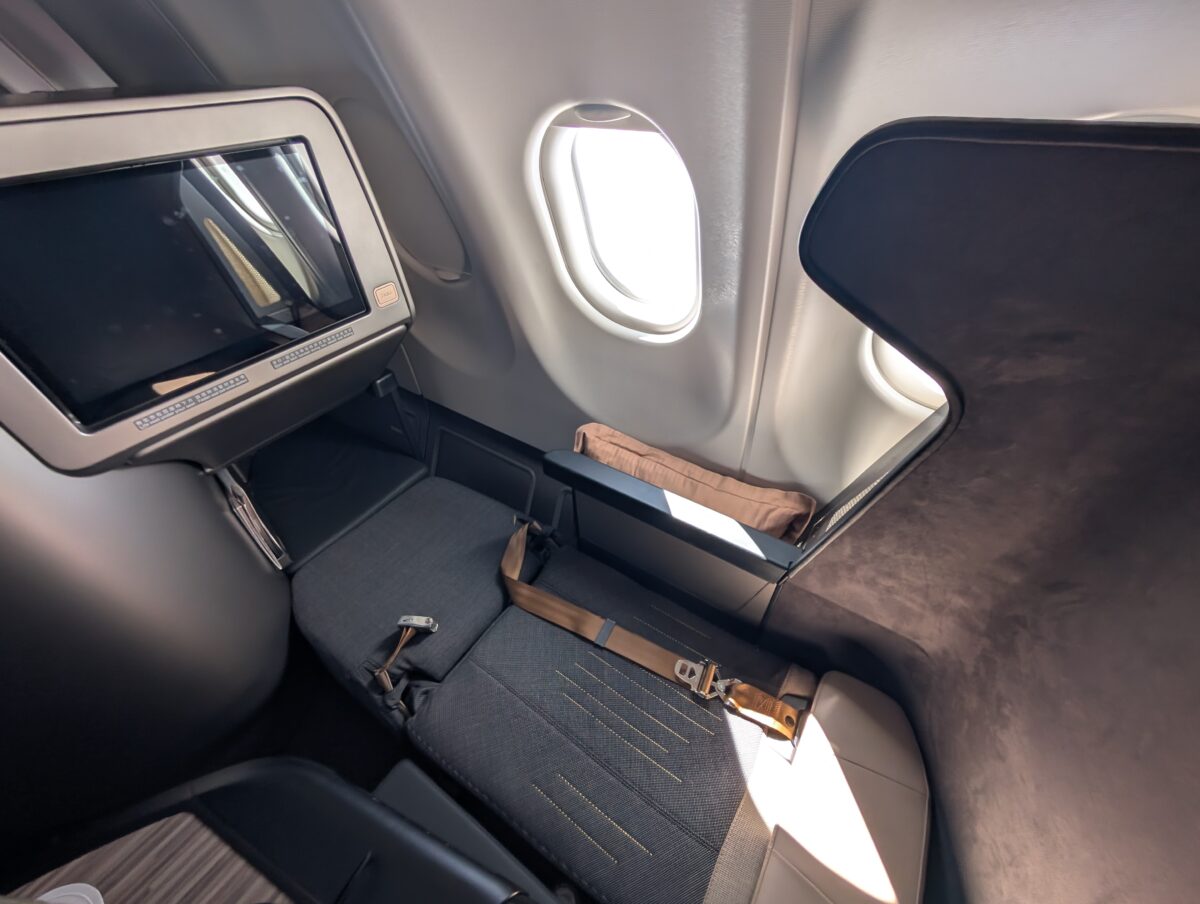
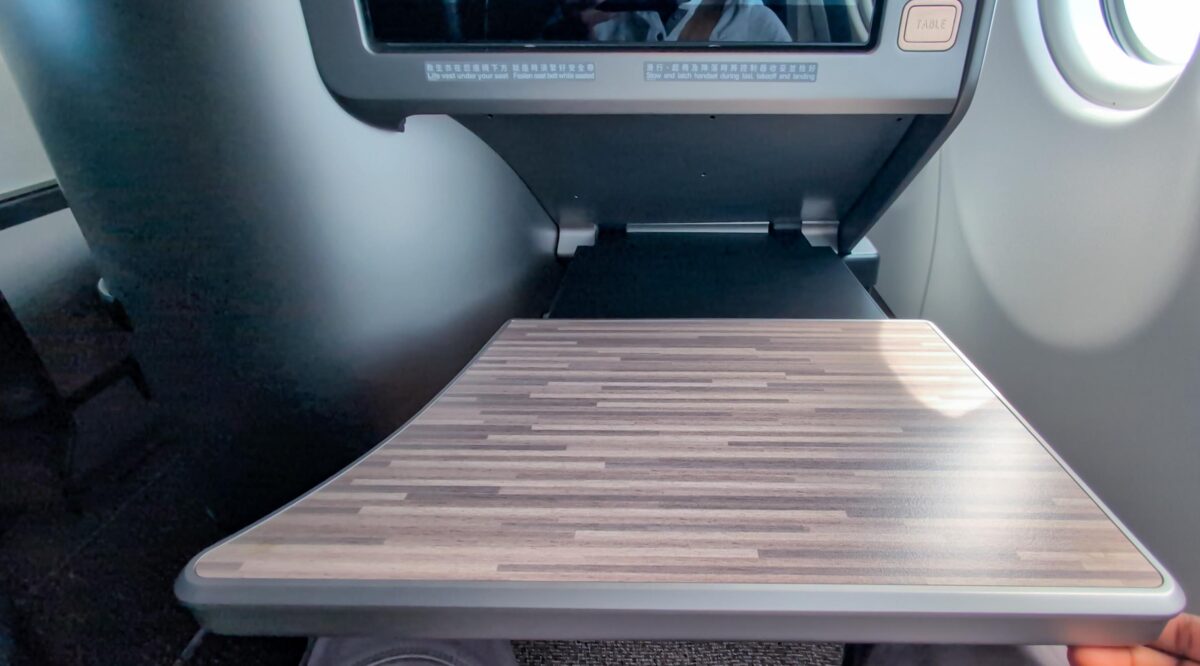
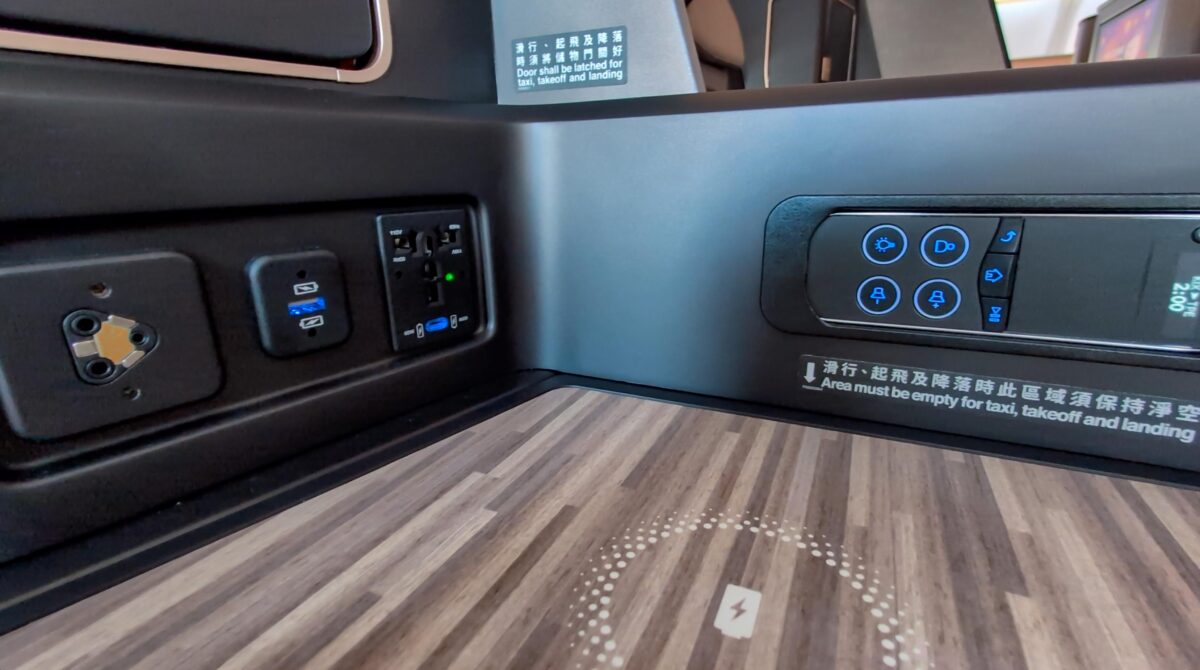
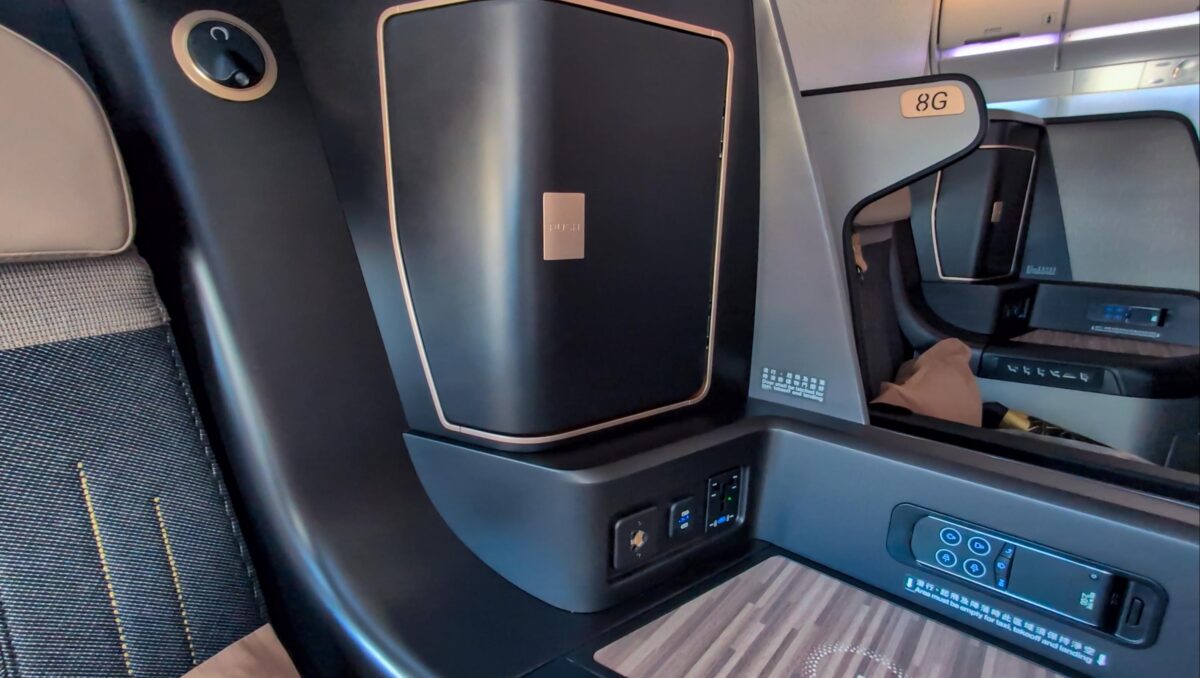
The tray table extends from under the in-flight entertainment screen and is generously sized. It can be pushed away to allow easier exit during meal service. The side console features a large Qi wireless charging pad alongside Universal AC, USB-A and USB-C ports. Storage is handled by a large cabinet in the side console.
In-flight Entertainment and WiFi
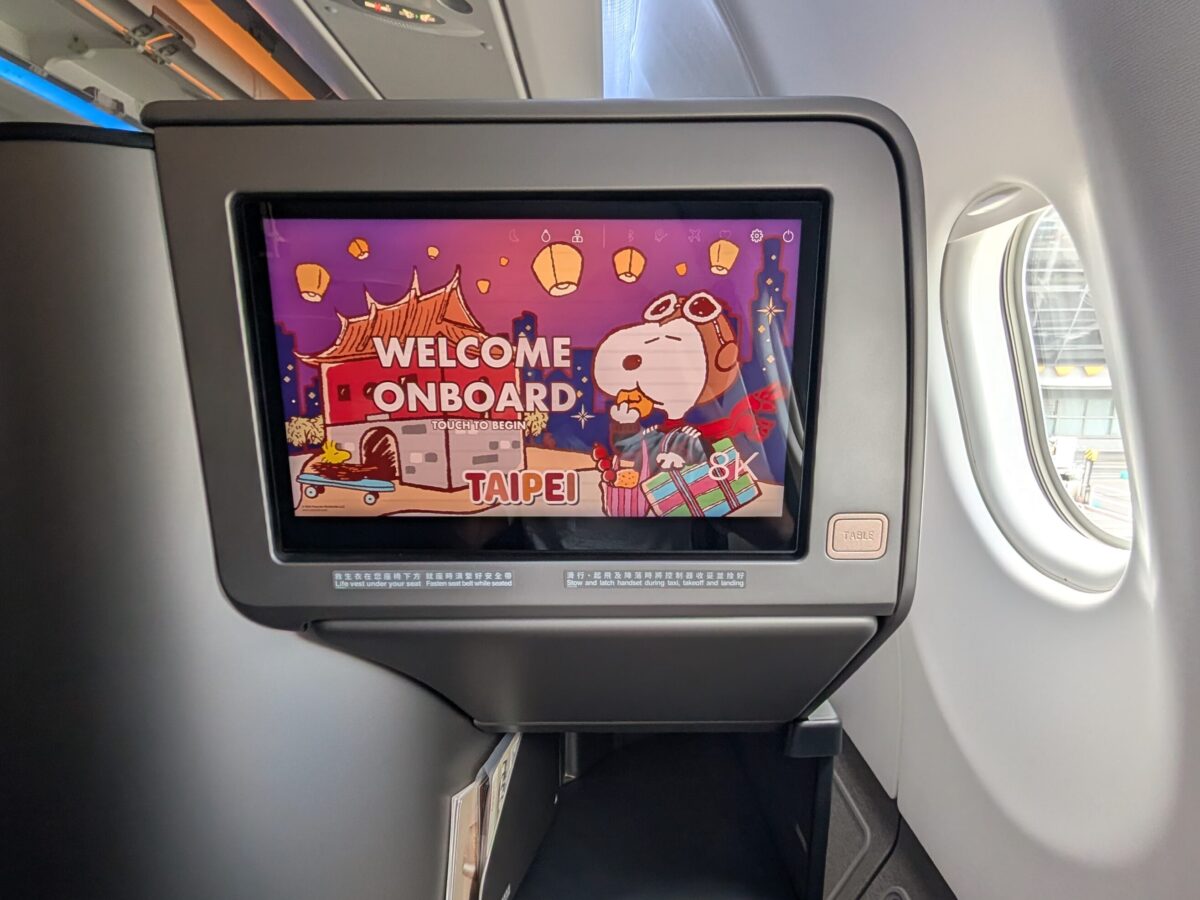
The 17.3-inch 4K UHD touchscreen is one of the standout features of the seat. The screen is sharp and responsive, and the content library is extensive.
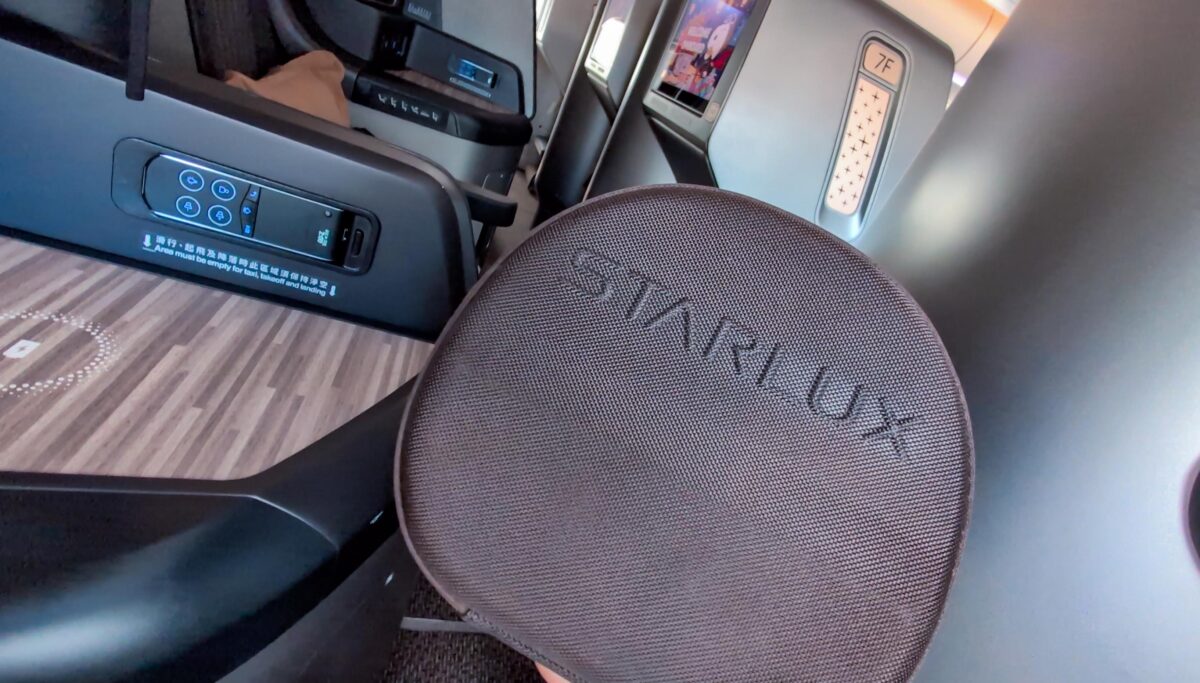
Noise-cancelling headphones were provided in the storage cabinet. The system also supports Bluetooth audio pairing for those who prefer to use their own pair of headphones.
Wi-Fi was available throughout the flight. The speed test came in at around 1.5 Mbps, which is adequate for messaging and light browsing but not suitable for video streaming.
Soft Product
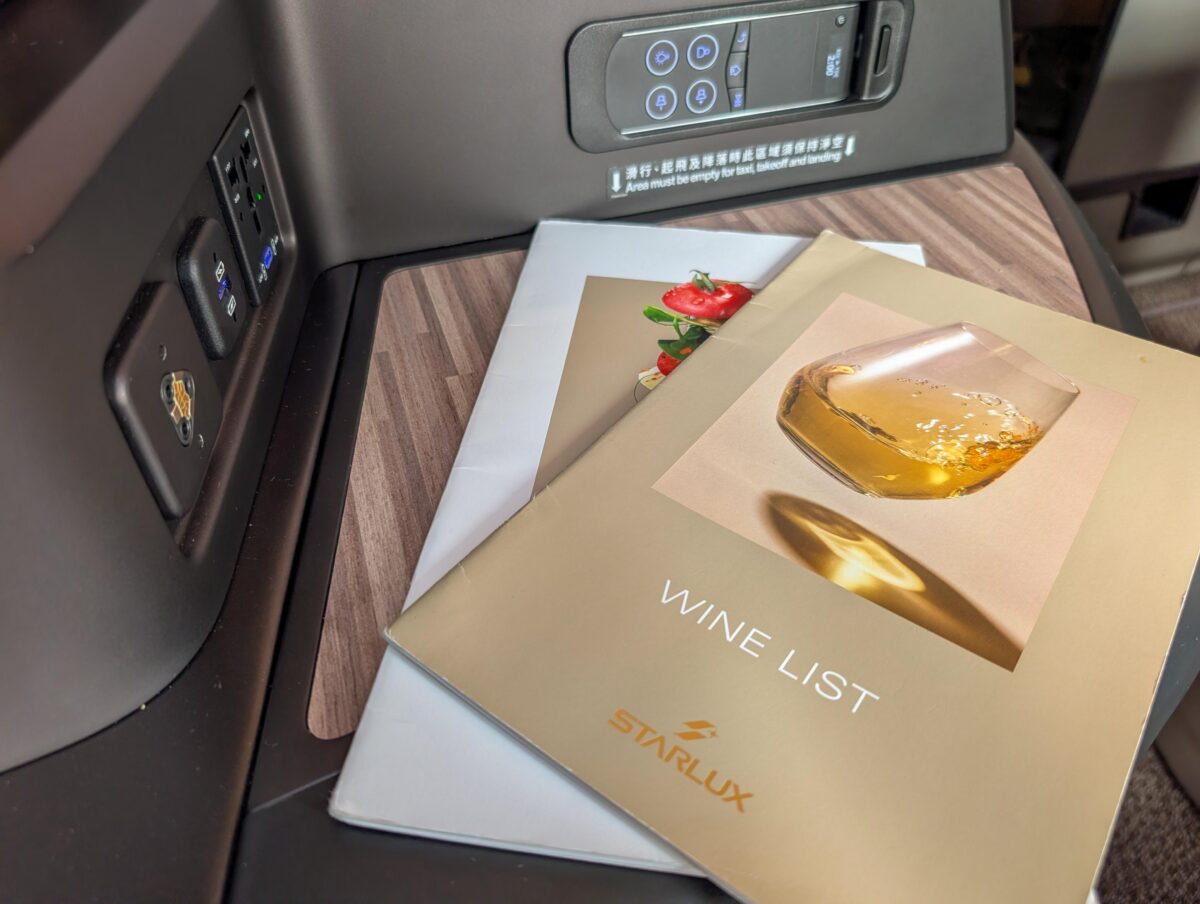
The soft product is probably where Starlux shines the most. A pillow and blanket were waiting at the seat upon boarding. There was also an amenity kit with slippers inside. Before pushback, there was a hot towel and pre-departure drink service. The meal selection was also taken at this time. While there was a paper menu for food and drinks, the same was also available online ahead of departure.
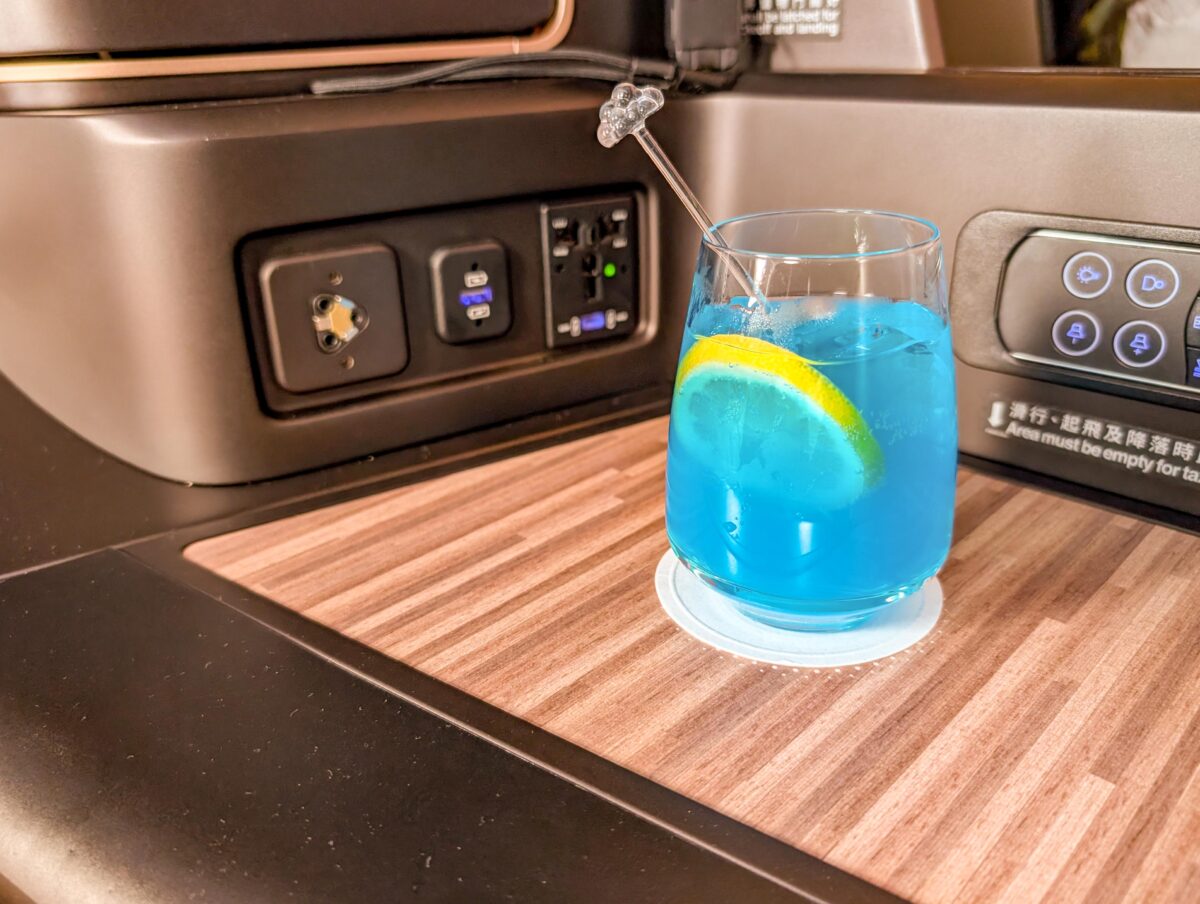
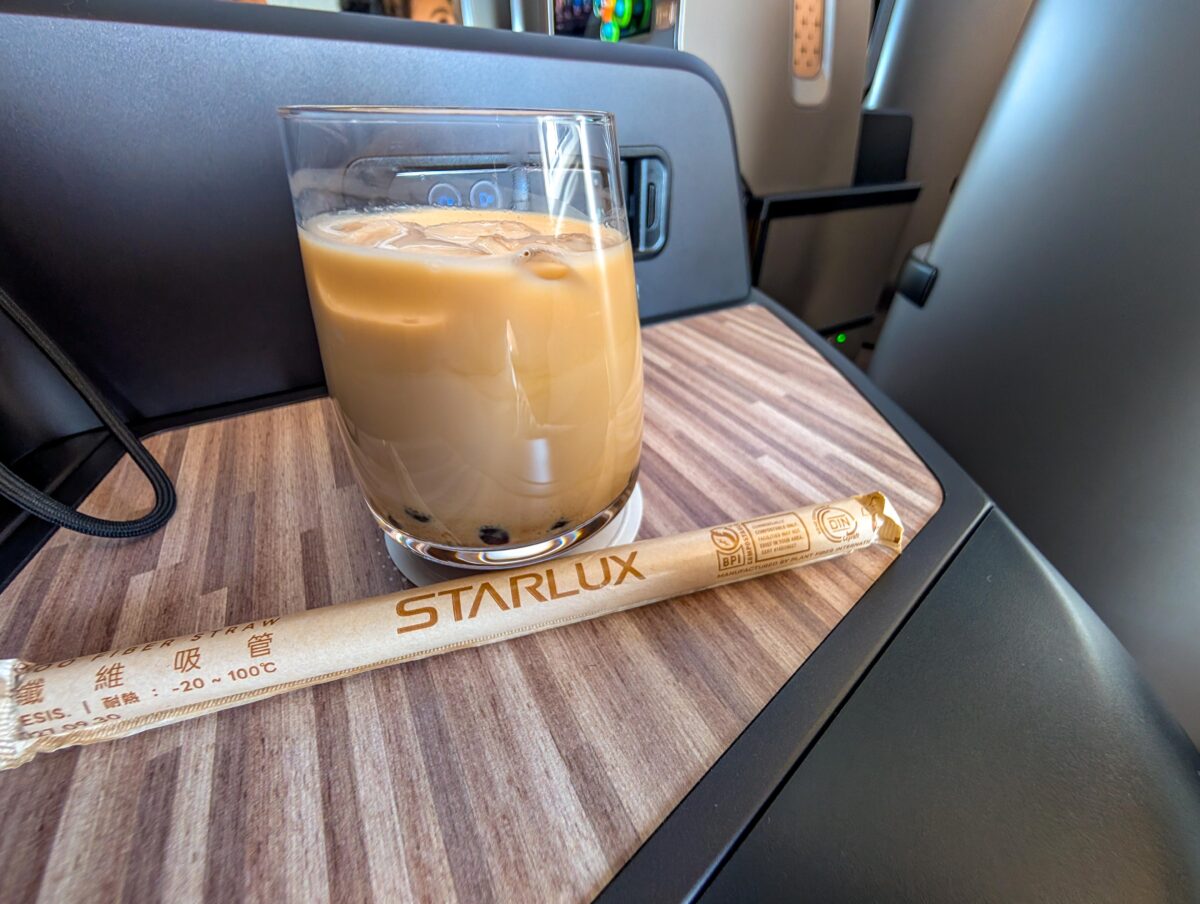
Post-takeoff, we were offered another drink service. Starlux serves Taiwan’s signature Boba latte onboard. It is unique to sip a Boba latte at 35,000 feet.
Apart from this, the drinks menu was fairly extensive, featuring 1 champagne (Laurent-Perrier La Cuvée Brut), 2 whites, and 3 reds. There was also a signature cocktail selection.
Lunch Service
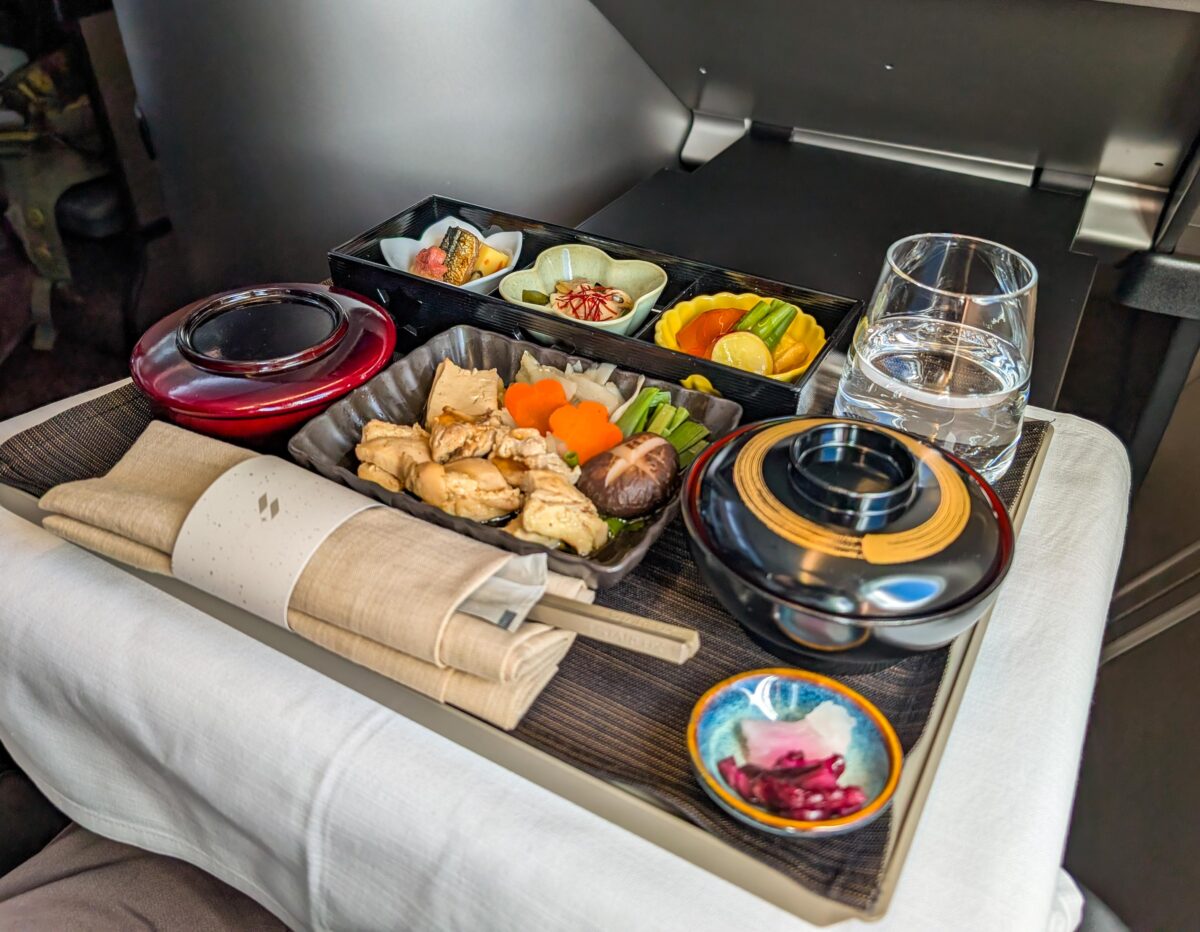
The meal service consisted of a Japanese set meal that I had pre-selected online. The presentation of the Kansai-style chicken thigh sukiyaki was beautiful, and it was accompanied by a lacquer bento box of smaller dishes. The meal was generally tasty, although the chicken was a bit on the tougher side.
Dessert arrived on a separate tray consisting of a matcha panna cotta, a fresh fruit plate and some sweets. Not many airlines offer a separate dessert tray on such short sectors. I did not know this at the time, but the Amedie Porcelana chocolate that accompanied it is apparently one of the most sought-after dark chocolates. Starlux has thought carefully about every element of the soft product.
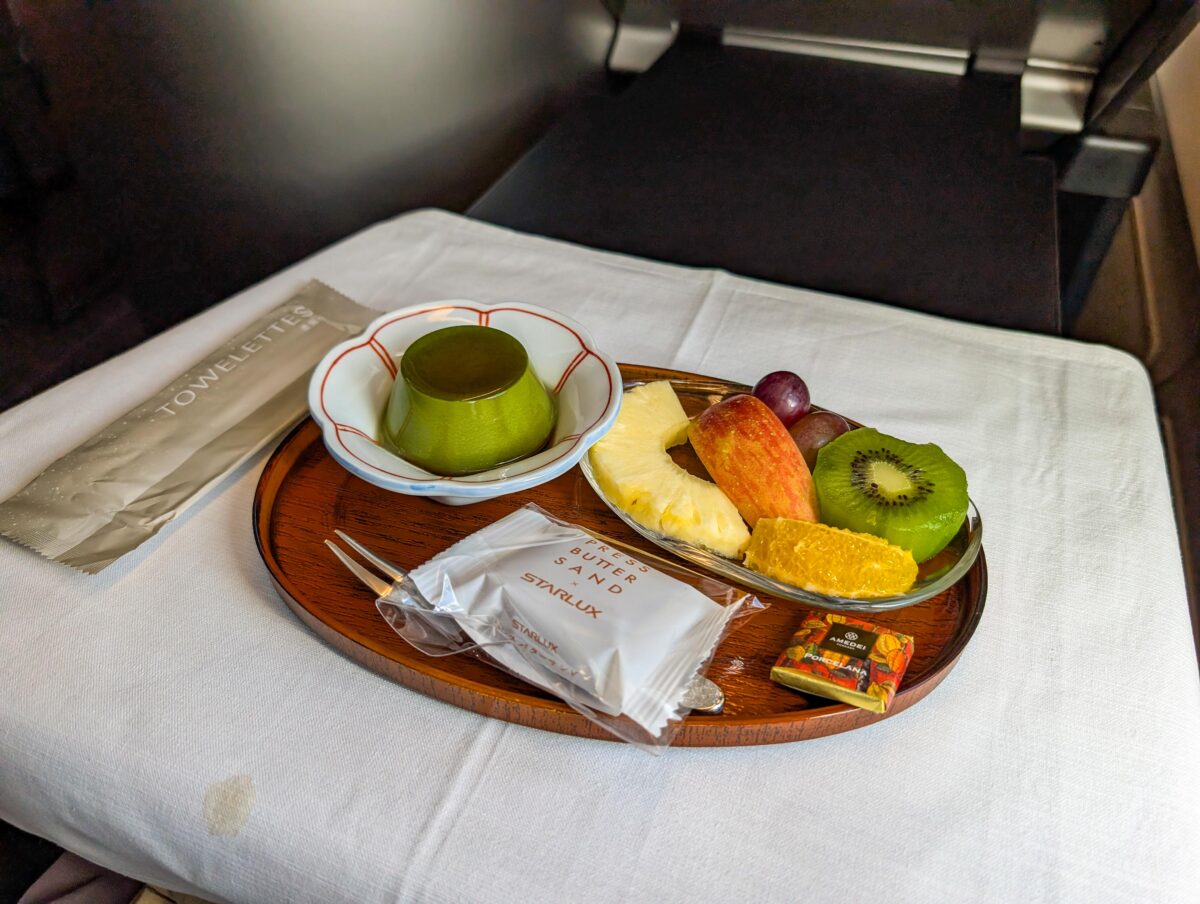
Service was attentive throughout. The crew were a highlight and checked in on us frequently, though it is worth noting that the cabin was largely empty on this sector. Either way, the interactions with the crew were warm and genuinely enthusiastic.
What’s in store for Sydney?
The more exciting story for us down under is what comes next. If the Airbus A330neo regional experience is this good, the Taipei-Sydney service launching in 2027 will be worth watching closely, especially if it is served by Starlux’s Airbus A350
Cutting short a family holiday to fly a new airline is, objectively, a questionable decision. Having done it, I have no regrets. And spending a few days in Taipei on the way home wasn’t too bad either.
Related Articles
-
 7 October, 2025Flight Reviews, Qantas
 -
 18 April, 2024Other Airlines
 -
 27 November, 2025Airlines, Miles and Points
Community Comments
Loading new replies...
Join the full discussion at the Australian Frequent Flyer →