Qantas Plays it Safe With New Business Class
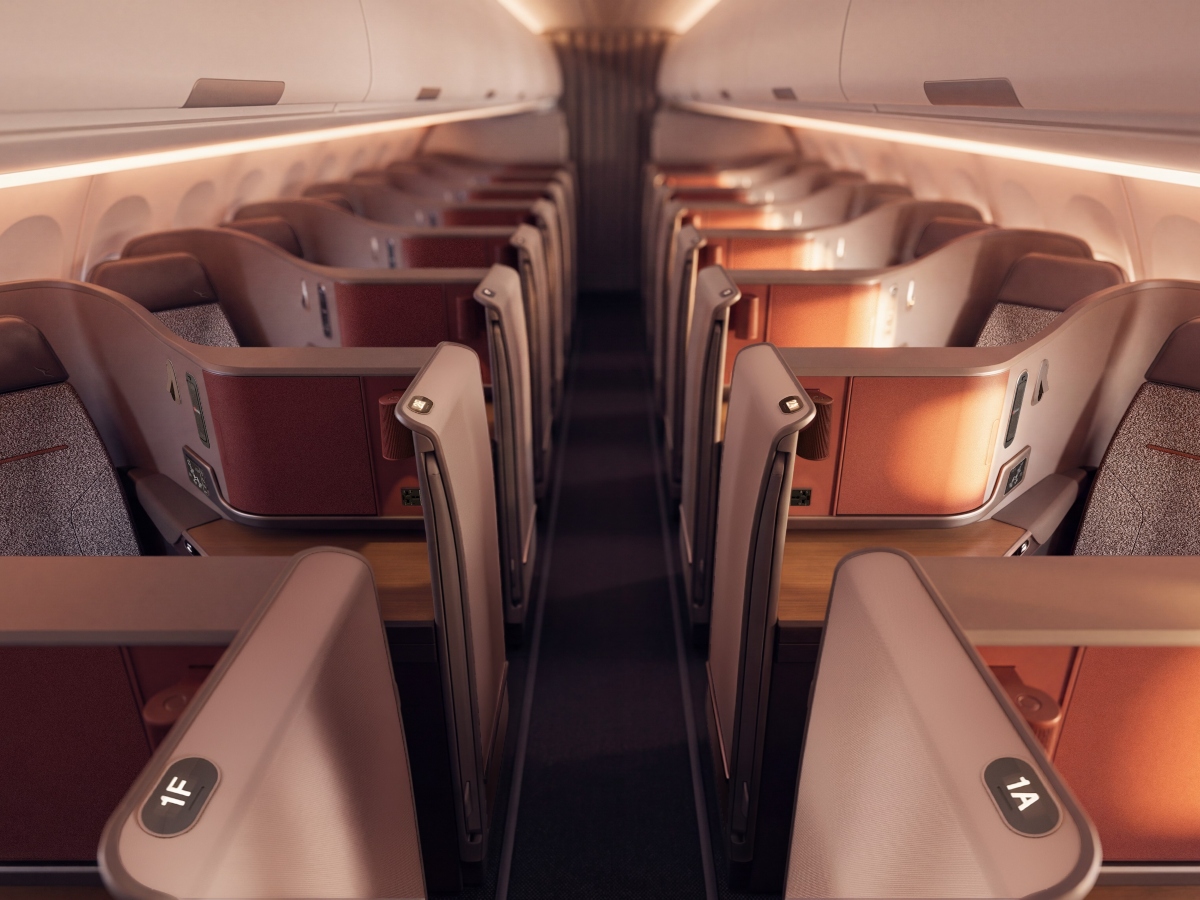
Qantas has finally revealed the lie-flat Business Class seat that will feature on some of its Airbus A321XLRs – although not until 2028.
For Qantas, this is a genuinely new product – the first time the airline has offered a lie-flat Business Class seat on a single-aisle aircraft. The airline also revealed an updated Business Suite for its next batch of Boeing 787-9 Dreamliners.
There’s nothing wrong with what was chosen. But to me, the decisions feel a bit, well, safe.
Qantas’ Chosen A321XLR Lie-Flat Business Class
Qantas will install lie-flat Business Class on 16 of its 48 Airbus A321XLRs it has on firm order.
These aircraft will start arriving in 2028 and are intended for longer domestic flights, including transcontinental routes, as well as short and medium-haul international services. The A321XLRs delivered in the meantime will continue to feature recliner Business Class seats.
The new suites will be in a 1-1 layout, which follows a similar approach to many of the premium A321XLRs now entering service around the world. Each seat will have a fully-flat bed and a sliding privacy door. There’s also a 19-inch entertainment screen, wireless charging and USB-C power.
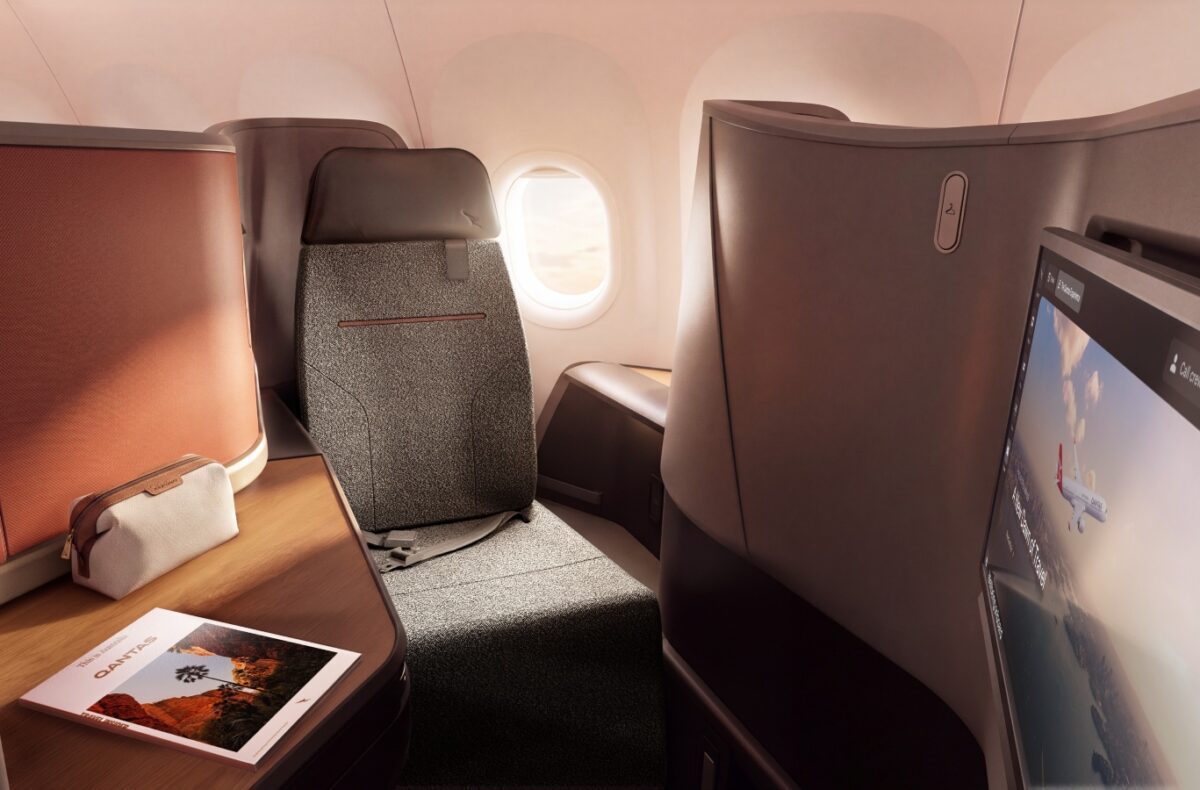
However, these seats are in a herringbone layout, where your head is closer to the window while your body angles towards the aisle. That’s the opposite of the reverse-herringbone seats now common on many wide-body aircraft, where passengers face towards the window instead.
So, while you’ll technically be sitting next to a window, it won’t exactly be positioned for gazing outside. You will, however, get a lovely view of your neighbour’s feet across the aisle – similar to Air New Zealand’s older Business Class.
The product itself is one of either the Thompson VantageSOLO, used by airlines such as JetBlue and Iberia, and Collins Aerospace’s Aurora, which American Airlines and Air Canada have selected. Qantas haven’t actually confirmed the seat manufacturer, although both are broadly similar.
What Qantas Could Have Chosen Instead
Qantas wasn’t short of options for alternatives to the configuration it chose.
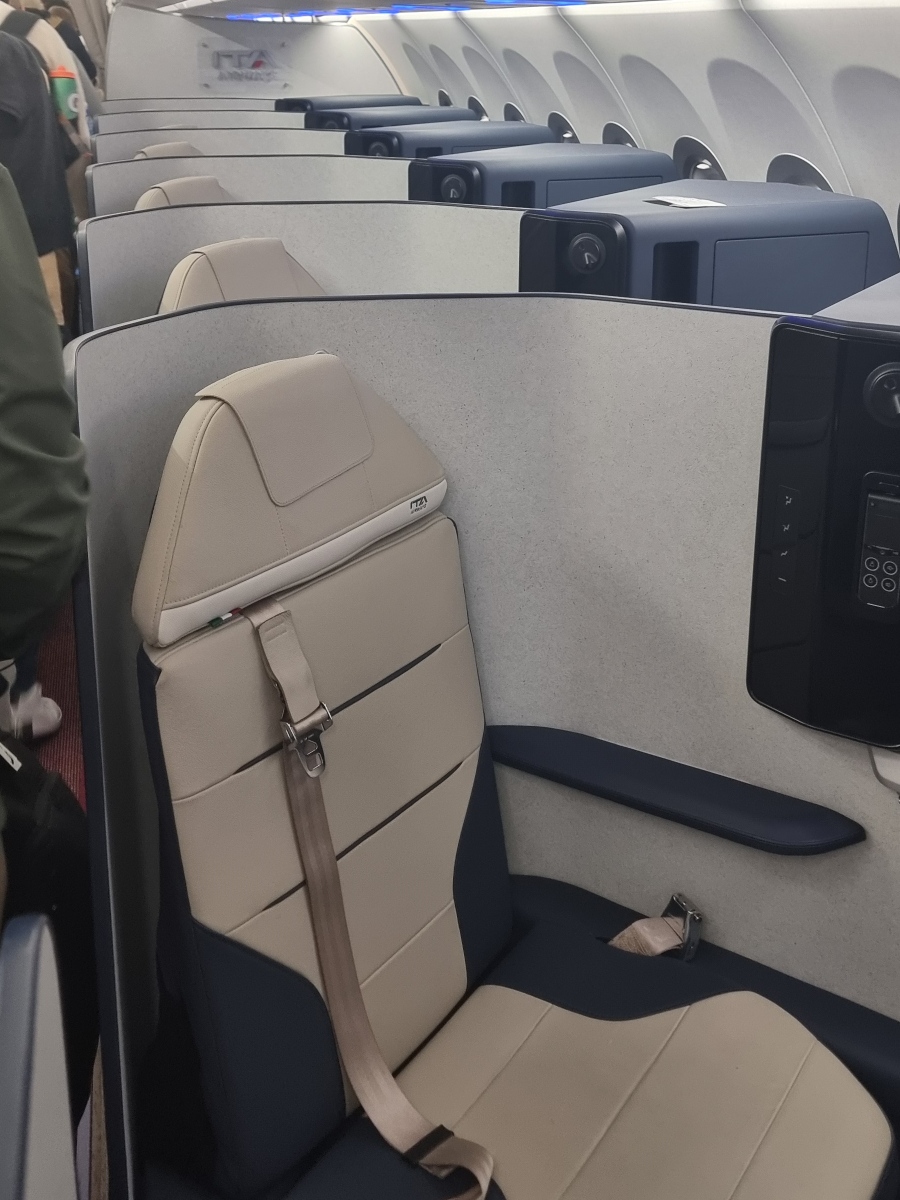
For example, ITA Airways uses the Stelia OPERA seat on its A321neo, while Etihad has installed a customised version on its new A321LRs. Both face passengers towards the window in a reverse-herringbone setup, and both products have been very well received.
Safran’s VUE is another interesting option, which is now flying on flydubai’s Boeing 737s. Qantas also already has a relationship with Safran, with its Unity seats selected for the upcoming Project Sunrise Airbus A350-1000s.
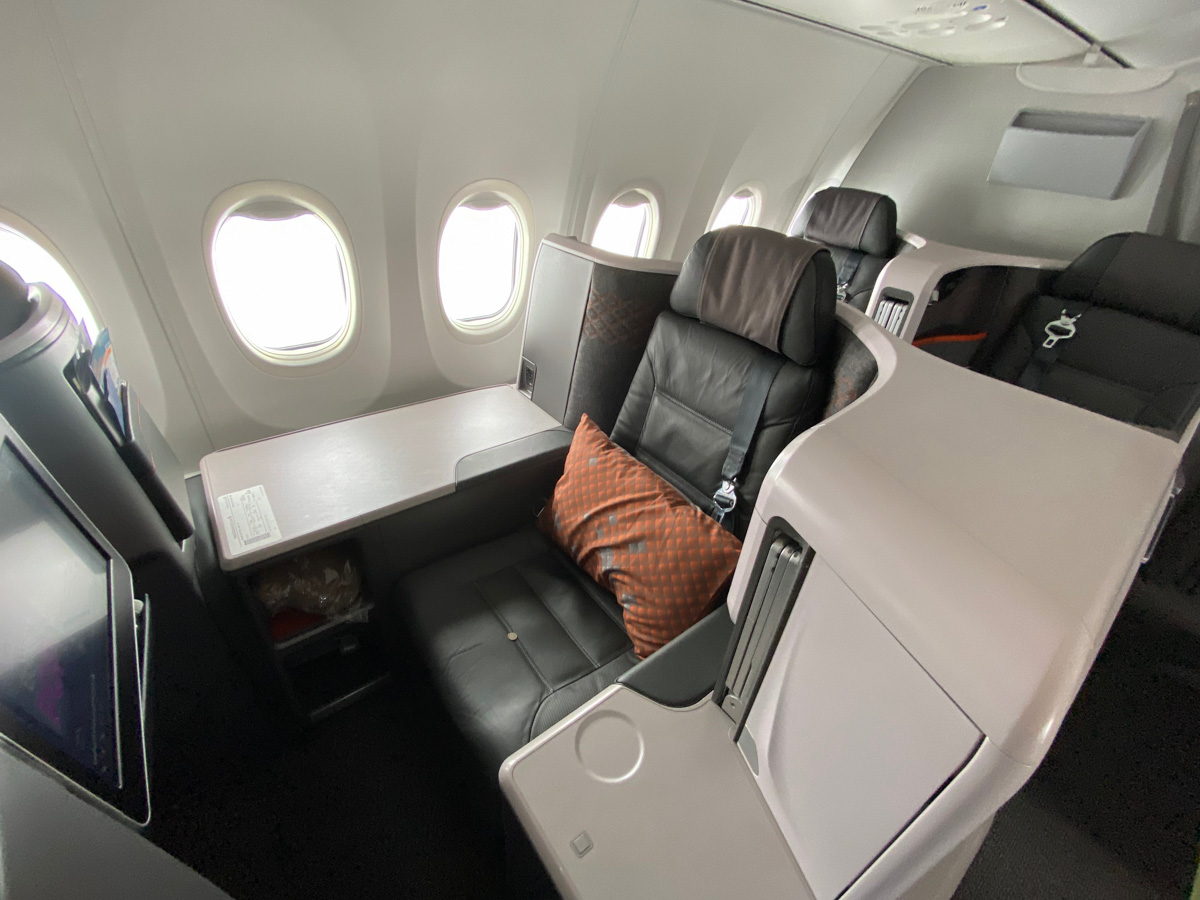
Of course, Qantas could have gone in a completely different direction. Aer Lingus uses the more conventional Thompson Vantage staggered layout on its A321XLRs. This sacrifices direct aisle access at some seats but can create more spacious “throne” seats in parts of the cabin.
Similar staggered products feature on long-haul Airbus A321s operated by TAP Air Portugal and Singapore Airlines’ Boeing 737-8s.
Qantas could even have gone with a 2-2 lie-flat arrangement, like the Collins Diamond-style layouts found on La Compagnie’s all-Business Class A321neos and American Airlines’ older premium transcontinental A321s.
That would have been a clear downgrade in privacy and aisle access, but potentially a decent option for couples travelling together.
Why Qantas Probably Chose Herringbone
The simple answer is economics. A single-aisle aircraft simply doesn’t give airlines much cabin width to play with, and reverse-herringbone seats generally need more space than inward-facing herringbone products. On a wide-body, that trade-off is easier to absorb.
For example, ITA’s A321neos fits 12 reverse-herringbone seats – while in a similar space, Iberia fits 14 herringbone seats. A 16% increase in seats for very little extra cabin space matters hugely to airlines. When many other airlines are heading in the same direction, it’s easy to see why Qantas followed.
Also, by the time Qantas’ lie-flat A321XLRs enter service, the seat will have been active for a few years, allowing any teething issues (such as the doors on American’s A321XLRs) to be fixed.
It’s worth saying that a fully-flat bed, direct aisle access and a privacy door will still be a large improvement over the recliner seats Qantas currently offers on its Boeing 737s and domestic A321XLRs.
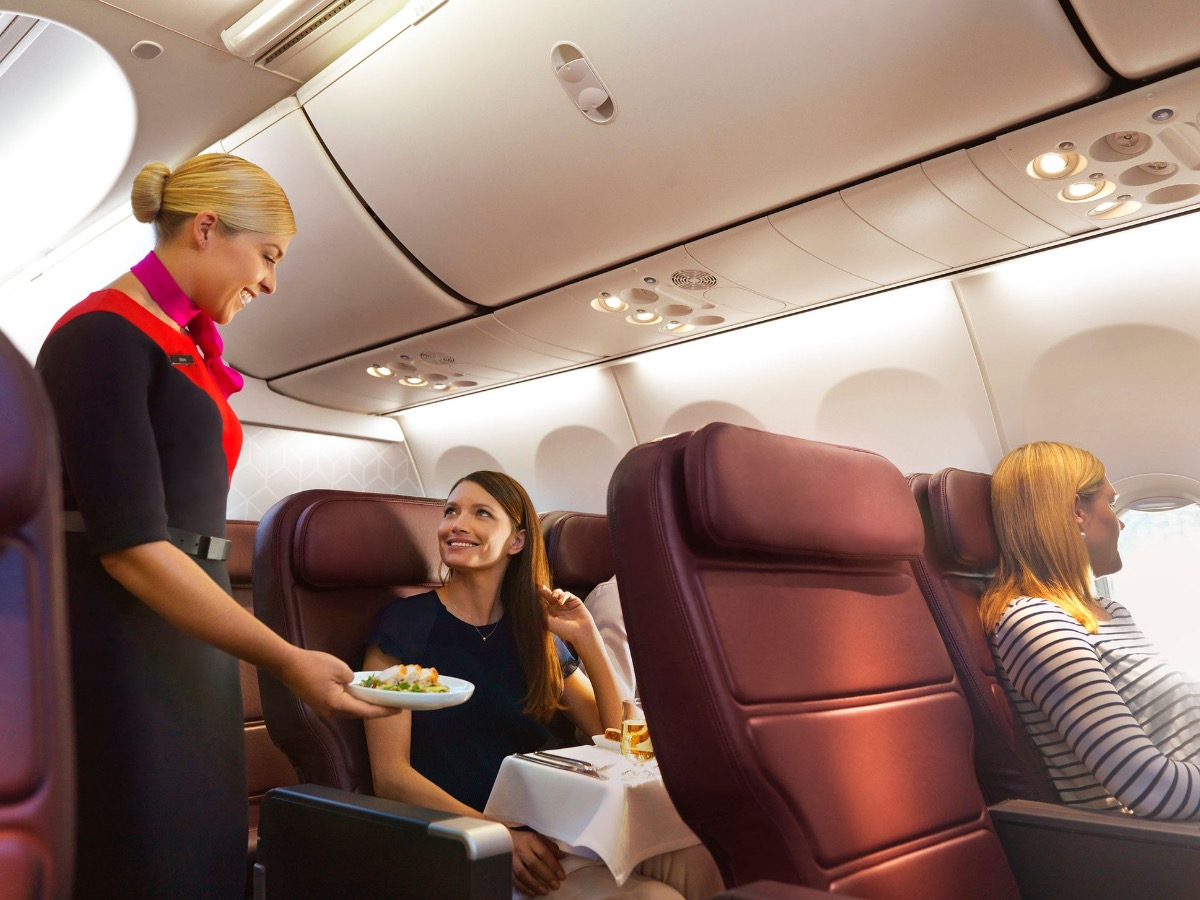
However, some herringbone seats have received mixed reviews so far – with critiques around the narrowness of the seat and placement of the entertainment screen. It is important to note that these planes could be flying routes over eight hours long – routes currently served by the much more comfortable A330s.
So, we’ll have to wait and see how Qantas’ seats perform in service.
Qantas Boeing 787 new Business Class
Qantas also announced a new Business Class for the four additional Boeing 787-9s on order. These will retain 42 Business Class suites – the same number as on the airline’s existing Dreamliners – in a 1-2-1 staggered configuration.
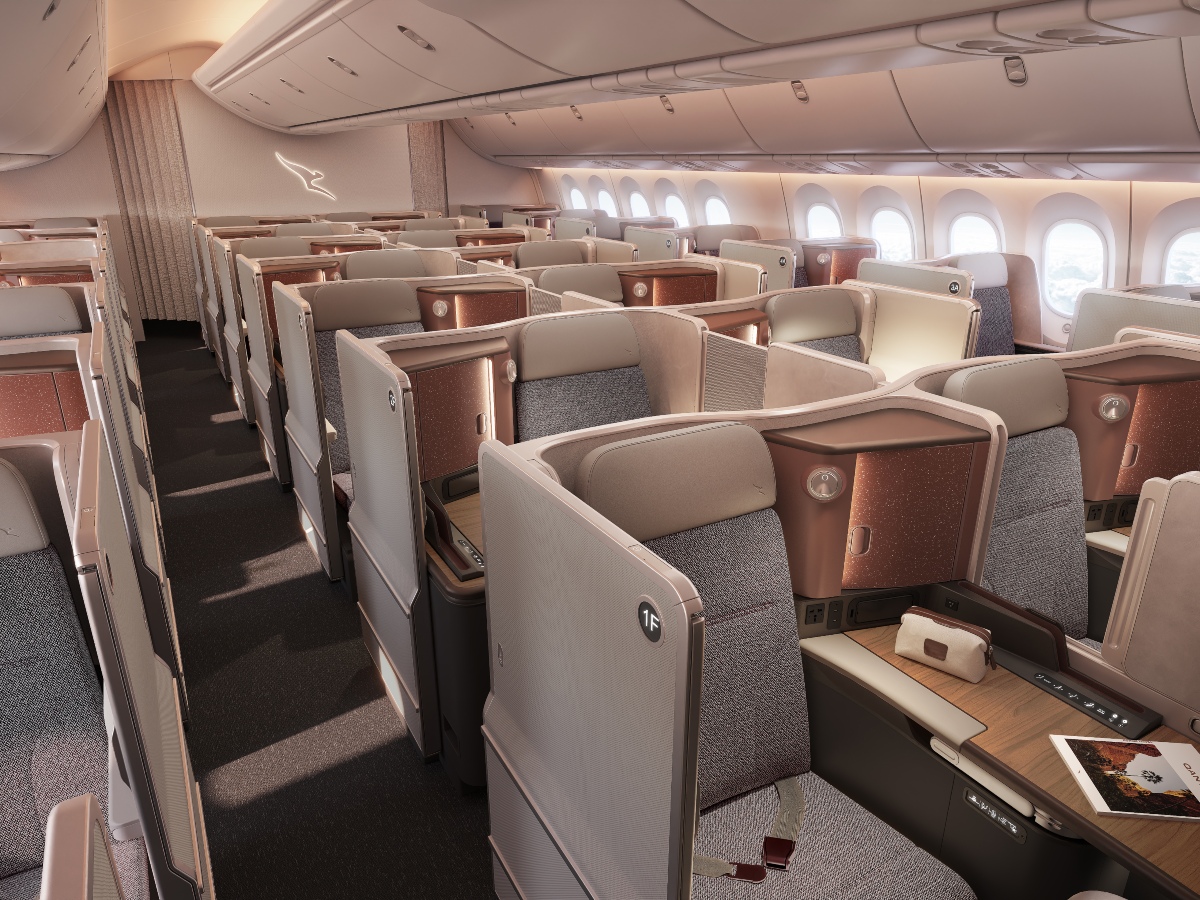
The basic layout is the same Thompson Vantage XL, launched on its Airbus A330s in 2014. However, there’s some nice upgrades. Each suite gets a sliding privacy door, a larger footwell, a new 19-inch entertainment screen and redesigned storage. I’d also guess that extra tech will be added, such as wireless charging and perhaps bluetooth. All in all, it looks very similar to Delta’s A350-900 Delta One Suites.
Qantas could have looked at a different product, such as the Safran Unity seats equipping the Project Sunrise A350s. But ultimately, it chose not to change things too much on its Dreamliners.
The four additional 787-9s are due to start arriving from 2028, while another eight 787-10s are also on order. It would make plenty of sense for those 787-10s to eventually receive the same product, in order to maintain fleet consistency. Also, Qantas hasn’t announced any plans to retrofit the new suite onto its existing 14 Boeing 787-9s.
Neither of Qantas’ new Business Class products is particularly adventurous. On the A321XLR, it has simply followed the relatively mainstream crowd. On the 787, it has taken a proven seat and modernised it. But is this really a bad thing? Let us know in the AFF forum!
Related Articles
-
 7 October, 2025Flight Reviews, Qantas
 -
 27 October, 2025Flight Reviews, Qantas
 -
 12 March, 2026Qantas
Community Comments
Loading new replies...
Join the full discussion at the Australian Frequent Flyer →