International Travel Totally Relies on Physical Passports: Is There a Better Way?
The year is 2026. We can send astronauts into space. Artificial intelligence is advancing rapidly. There are payment systems that let you pay by scanning your palm, finger or eyes. At major airports like Hong Kong or Los Angeles, facial recognition technology lets passengers board flights without scanning a boarding pass.
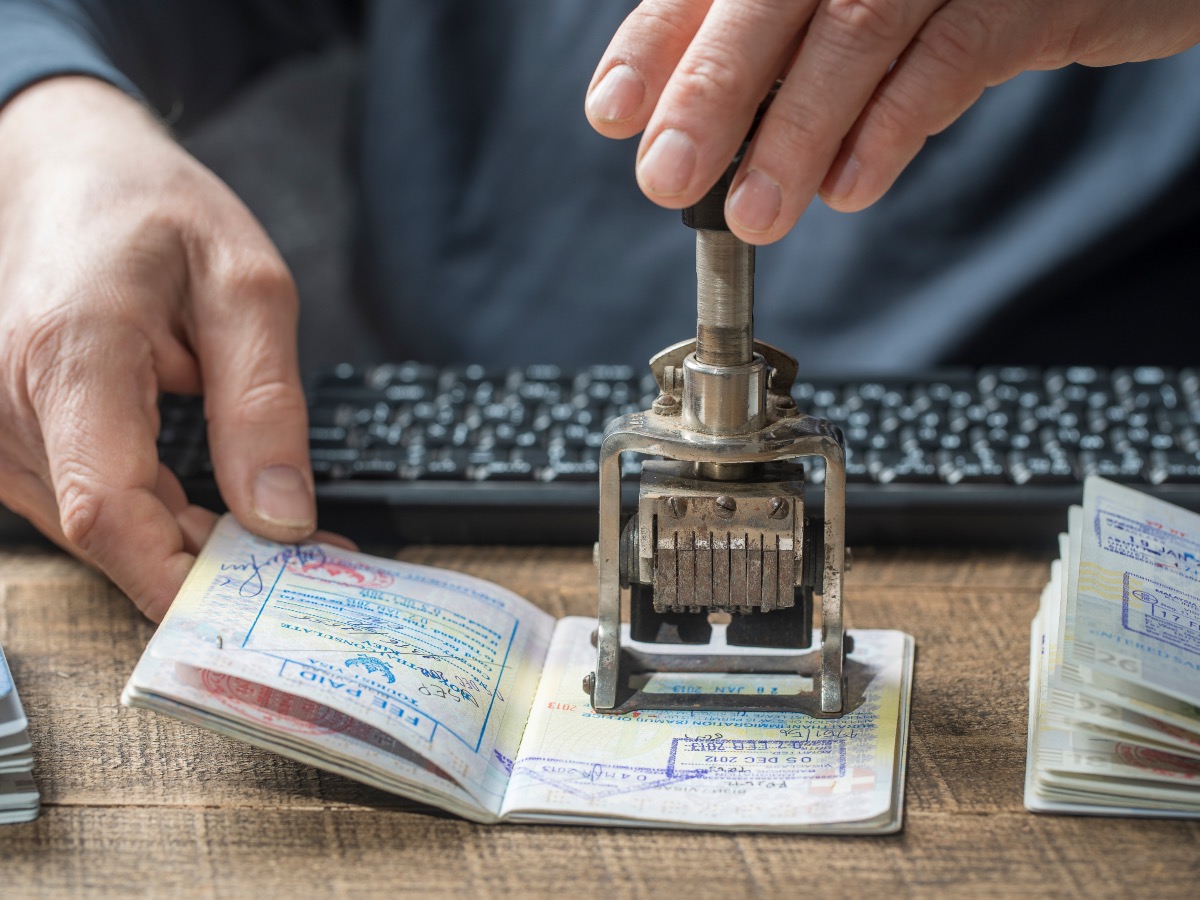
Yet, the entire international travel ecosystem still relies totally on people holding physical, paper passports.
Sure, there is something to be said about the security of a physical document that can’t be hacked and is very difficult to forge. And there is something nice about collecting passport stamps as a “souvenir” from past trips. (Although, stamps are now being phased out in many countries).
But if that single, irreplaceable document gets lost, stolen or damaged while you’re overseas, the consequences can be dire.
Losing your passport overseas is a nightmare
I once accidentally left my passport on a plane and didn’t realise until several hours later, long after I’d left the airport. It was totally my fault – I was tired and simply forgot I’d put it in the seat pocket. Yes, it’s a foolish mistake – but humans are fallible.

This can happen to anyone. Judging by the number of lost passports I saw in the police station at Schiphol Airport, it’s more common than we might realise.
Once I realised my passport was missing, I spent the rest of the day trying to track it down. It was an extremely stressful day.
For a while, I didn’t think I would get my passport back, so I started making contingency plans. I was in the Netherlands, so getting a replacement Australian passport would not be simple. Either way, the solutions were very expensive and extremely disruptive to my travel plans for the coming months.
At least I would have had some options, though – and in my case, there was a happy ending as my passport was recovered. Other people who accidentally misplace their passports might not be so lucky.
The worst lost passport story I’ve heard
I recall reading a post on a Facebook group for travellers by a German tourist who had just flown from Kazakhstan to South Korea, and accidentally left his passport on the plane. He didn’t realise until he arrived at the front of the immigration queue at Incheon International Airport – by which time his plane was already on its way back to Shymkent.
That particular airline didn’t have another flight back to Seoul for several days. In the meantime, this poor German tourist was stuck in limbo in the arrivals area of the airport. He was unable to enter, and unable to get on another flight out of the country without a passport. The German embassy in South Korea couldn’t really help either. I sincerely hope this person found a solution, because that story sounds like an absolute nightmare.
Separately, a few years ago, I met a Danish man staying at a hostel in Addis Ababa. He had been violently beaten and robbed while walking through the city at night, and the thieves had taken everything including his passport. Still traumatised by the incident, at the time I met him, he couldn’t leave Ethiopia until he got an emergency passport. That process took several weeks.
After my own experience, and hearing stories like these, I now constantly worry about losing my passport when I travel.
Is there a digital solution?
There was a time when physical, paper passports were genuinely the best way to identify people and keep track of their international movements. But surely, in 2026, there is scope to develop a universal digital identification system for travellers. Or even, at the very least, a secure digital backup of the original, paper passport that someone could use if they lost their physical document.
I guess a few things would need to happen for this to work. Firstly, every country would need to agree on the new system and how it would be managed. A global organisation such as IATA or the United Nations might need to get the ball rolling. I do understand that this is easier said than done given the current state of global geopolitics.
Secondly, whatever the agreed digital solution may be, it would need to be solid. It must be secure and reliable.
Perhaps linking every passport issued around the world to a secure database of biometric data could be one option. Or, perhaps there could be some sort of secure way to store a backup of your physical passport on your phone. I’m sure someone smarter than me can suggest a better option – these are just some examples.
Whatever the solution may be… surely, in 2026, the world can come up with a better way to identify travellers. The current system of relying totally on a single, physical paper booklet that could get lost, stolen, dropped in a lake, accidentally put through a washing machine cycle, eaten by a dog – or anything in between – has its flaws.
Related Articles
-
 15 April, 2026Planning & Booking
 -
 22 July, 2025Travel Tools & Technology
 -
 30 June, 2025Travel Lifestyle
Community Comments
Loading new replies...
Join the full discussion at the Australian Frequent Flyer →