Emirates Boeing 777-300ER Economy Class Review (Singapore-Dubai)
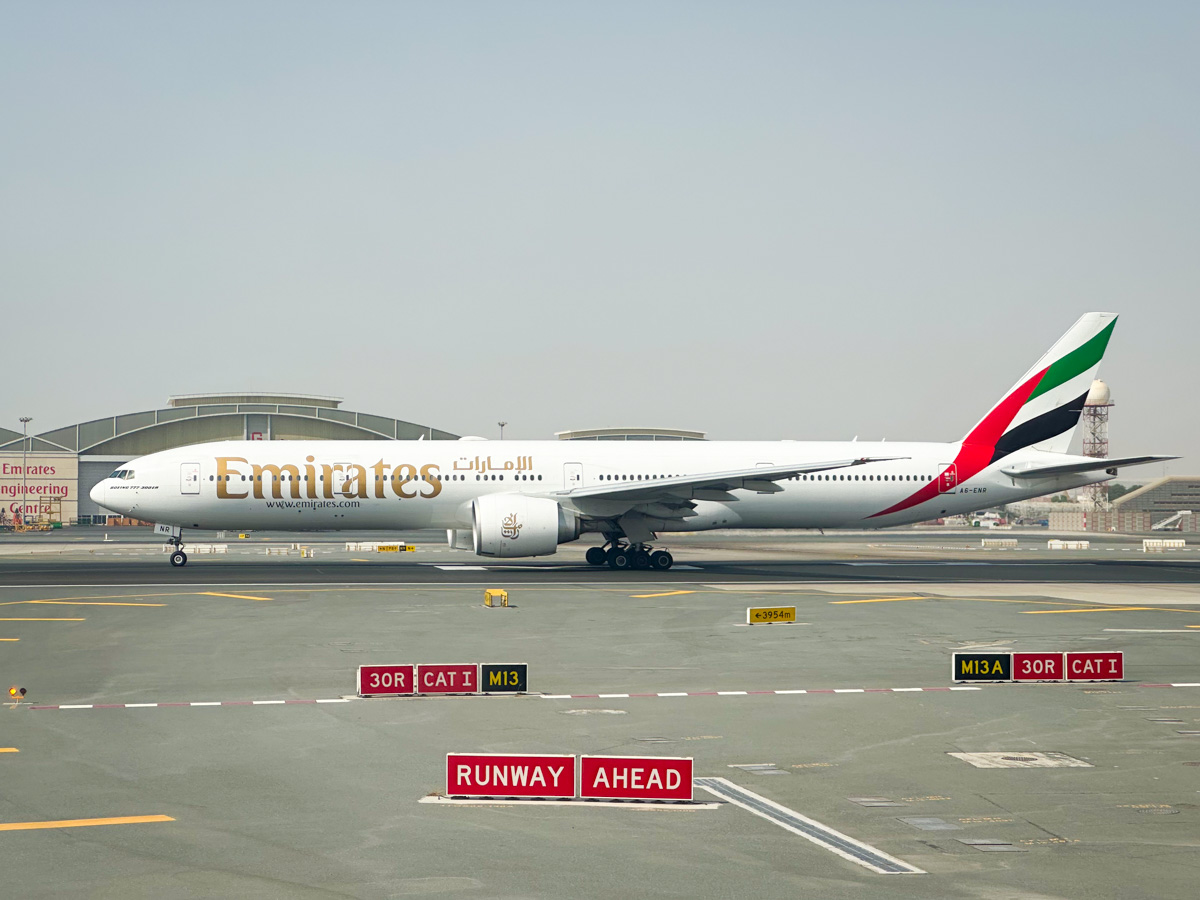
Emirates exclusively flies wide-body planes, with its most common plane being the Boeing 777. While it doesn’t get as much media attention as the Airbus A380, some Boeing 777s have Emirates’ newest First and Business Class products on board. Even Economy Class has noticeable differences to the A380.
If you’re flying from Melbourne or Brisbane to Dubai, or onwards to Europe and Africa, there’s a chance you’ll be flying on a Boeing 777. This review details what the Emirates Boeing 777-300ER Economy Class experience is like on this flight from Singapore to Dubai.
Flight Details
| Flight number | EK349 |
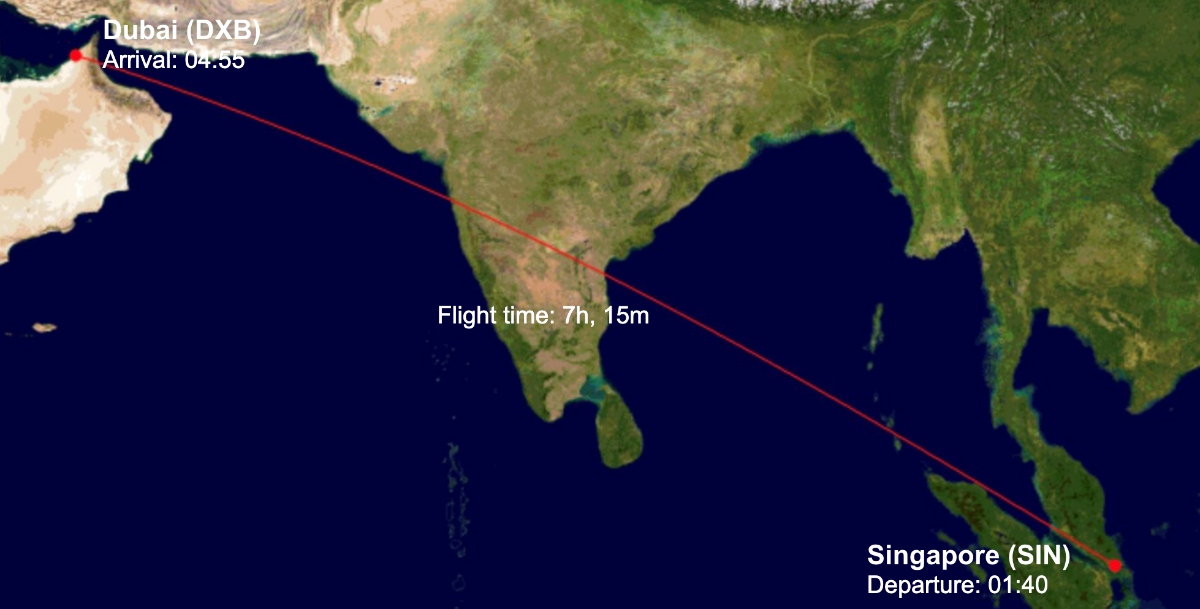
| Route | Singapore (SIN) – Dubai (DXB) |
| Aircraft type | Boeing 777-300ER |
| Class of travel | Economy Class |
| Seat number | 20A |
| On-time performance | We arrived on time |
| Star rating |  |
The route
Flight Cost
I paid SGD508 (~$AU612) for a one-way Economy Class ticket on Emirates, from Singapore to London Gatwick via Dubai.
For this flight between Singapore and Dubai, I earned a total of 800 Qantas points and no status credits.
If you’re flying from Australia, you can book via the Qantas website to fly on a “QF” marketed flight – to earn a higher amount of points and status credits.
Airport Experience
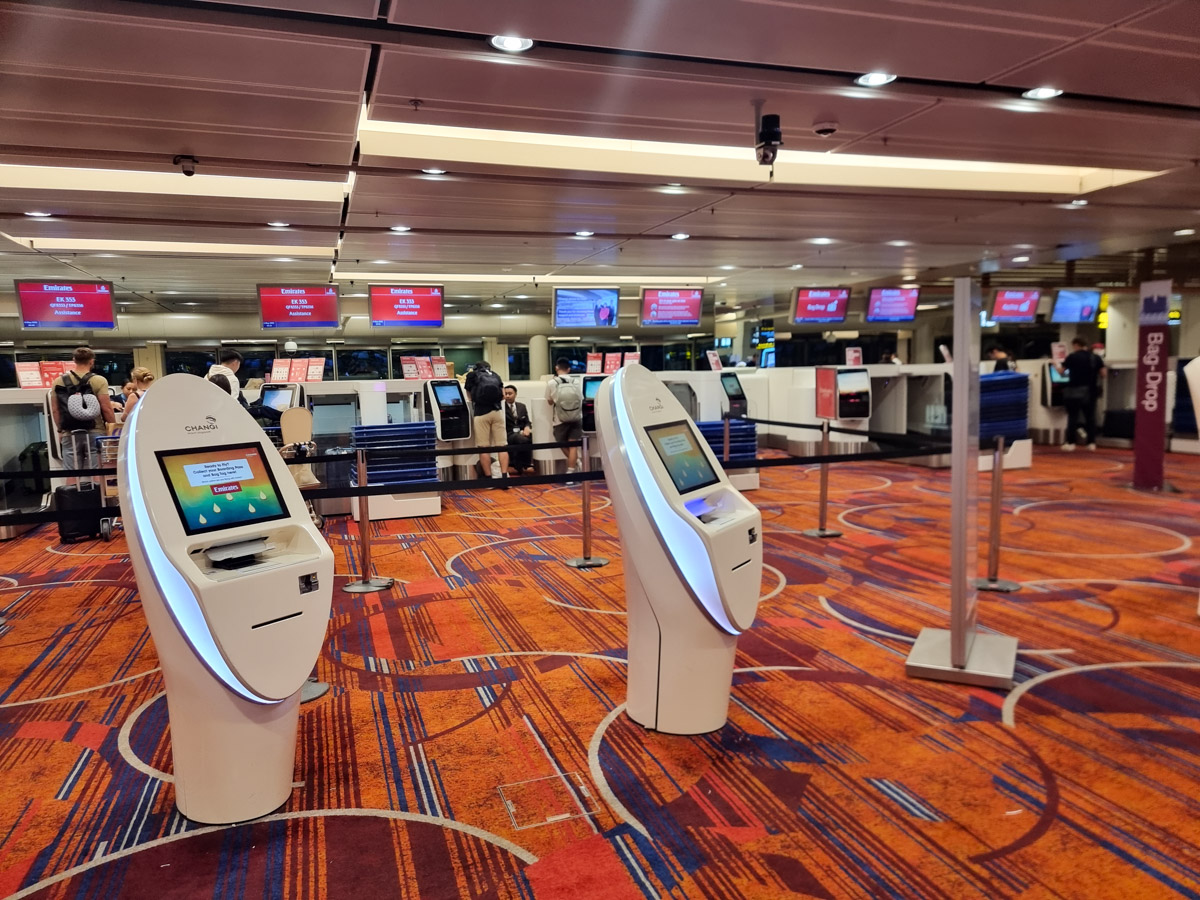
In Singapore, Emirates mainly uses self check-in desks. These were easy to use, and they recognised my Qantas status and corresponding extra baggage limits.
After customs and departure immigration, I made my way towards the Emirates Lounge. This isn’t included in an Economy Class ticket (I could access it thanks to my Qantas Platinum status), so this isn’t factored into my review rating.
In Singapore, security is at the gate. Unfortunately, one of the two x-ray machines broke down. This turned into a mess, as they somehow had to process an entire Boeing 777-300ER worth of passengers one at a time.
In the gate area, there’s a separate zone for Gold, Platinum, Business and First Class passengers. Staff boarded Economy Class by zones, which they enforced well.
The Hard Product
Emirates has six different configurations of the Boeing 777-300ER. I was flying on an older plane with the following configuration:
- 8 First Class seats in a 1-2-1 configuration
- 42 angle-flat Business Class seats in a 2-3-2 layout
- 304-310 Economy Class seats in a 3-4-3 configuration
Note Emirates is refurbishing much of its Boeing 777 fleet with more modern seats in Business and Economy Class, and adding a Premium Economy cabin.
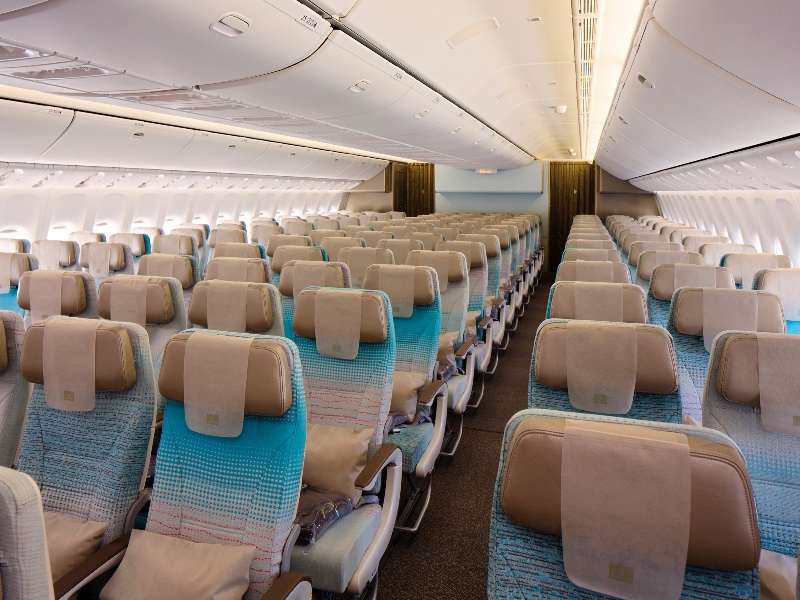
I selected 20A, a standard seat in the front mini cabin. This is technically a preferred seat, which usually costs extra, but is free with Qantas status.
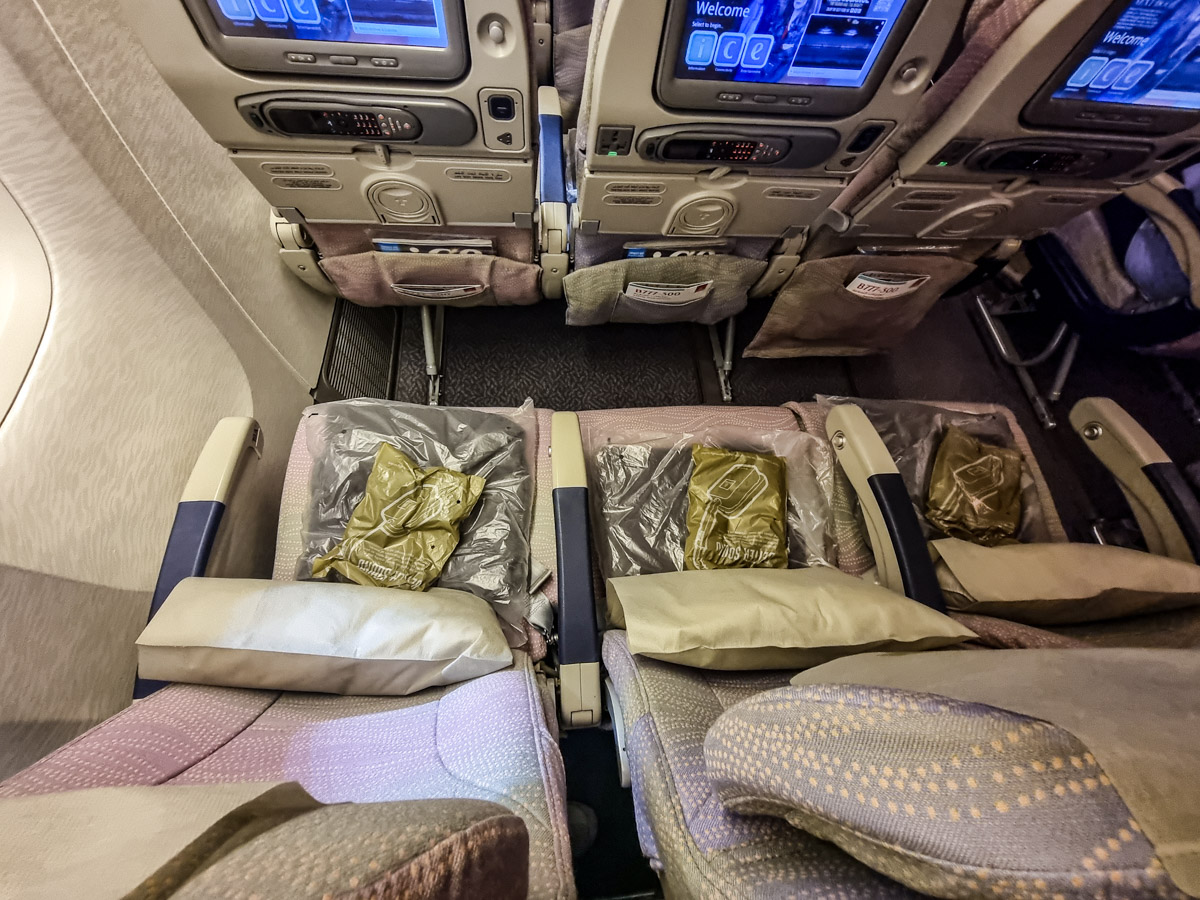
Note that you have to wait a couple of hours after booking to use your Qantas status for free seat selection – the Emirates website specifically warns about this when booking.
The seat itself is pretty old – well padded but bulky. The seat pitch (distance between the backs of each seat) is 32 inches, while the seat width is 17.1 inches.
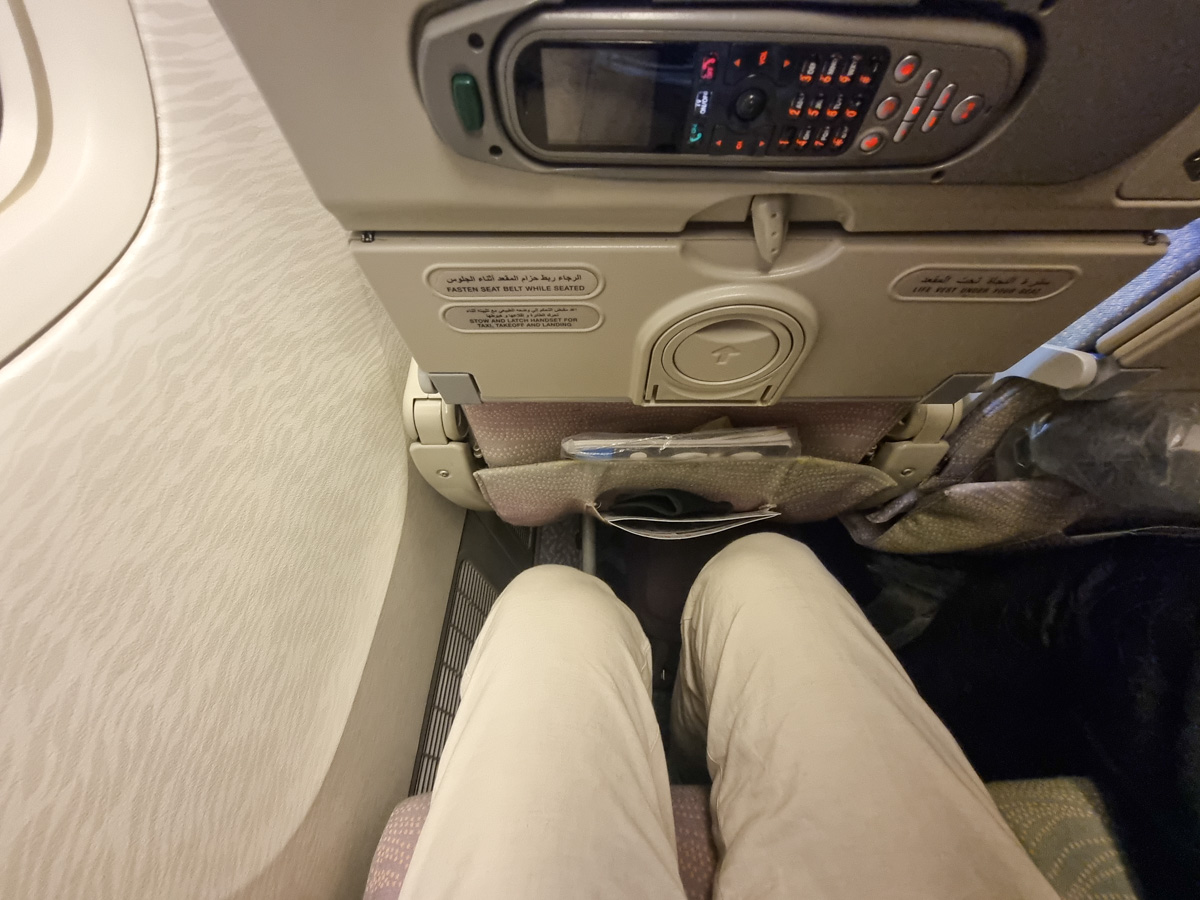
Ostensibly, this is actually more legroom than most 777s – such as my flight on a KLM Boeing 777 – but the KLM seat is modern and slimline, while I felt quite cramped on the older Emirates Boeing 777-300ER. This is also due to the seat width, as 10-abreast on a Boeing 777 is quite tight.
Entertainment and power
The entertainment system, named “ICE” for “Information, Connectivity and Entertainment”, has an extensive library of content. You certainly aren’t getting bored!
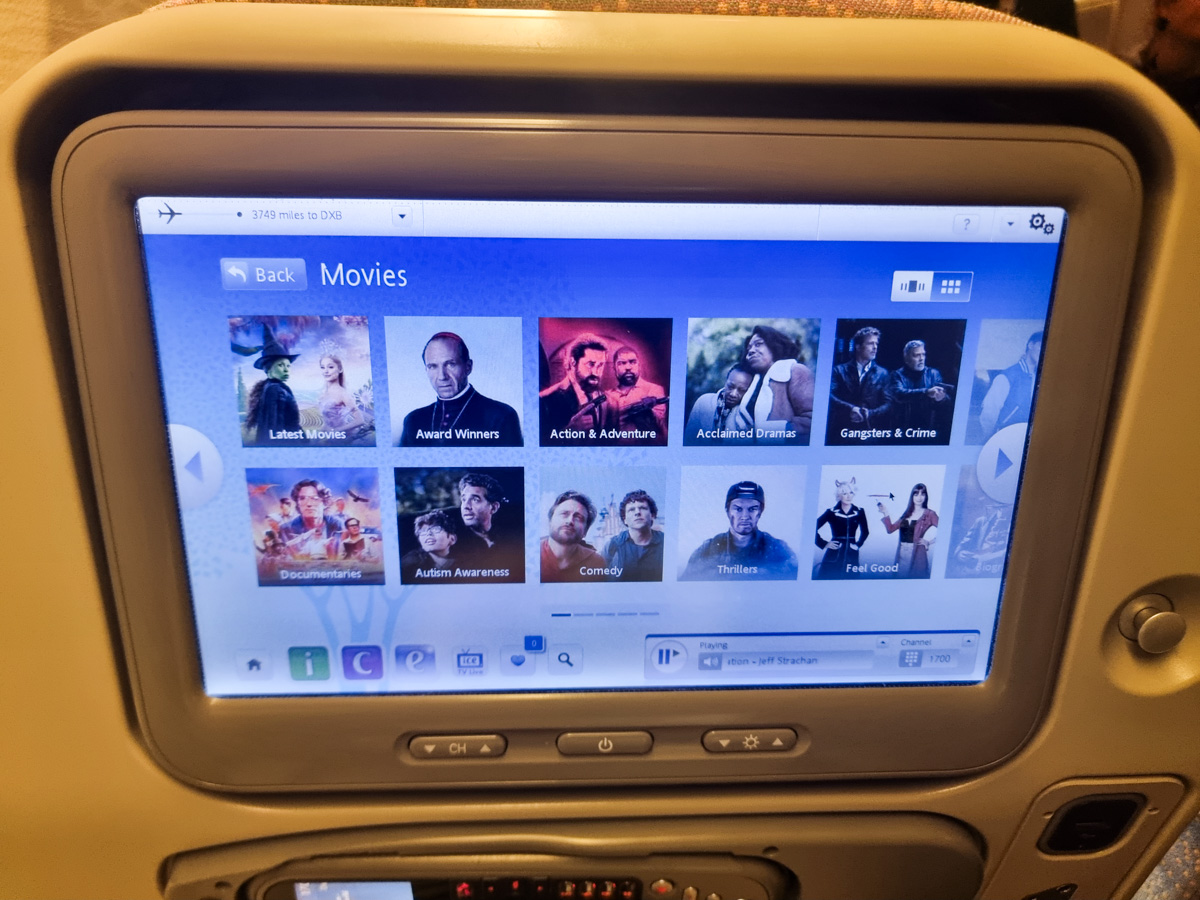
The screen itself is old, and takes its time to load. The quality isn’t quite up to scratch now, but it’s still good enough to not ruin your flight.
Two power outlets are shared between the row of three, but are only attached to the middle and aisle seats. As such, it’s a bit of an awkward arrangement, as the only way for me to use a power outlet was to run my cables over my neighbours tray table area. USB-A ports are available at every seat.
Wi-Fi is available, with Skywards members getting a small amount of data for free. A full flight pass costs USD16.99 (~$AU24), although as this was an overnight flight I didn’t bother.
The Soft Product
We departed about 20 minutes late (due to the slow security process). During boarding and taxiing, the cabin was kept extremely warm for some reason.
Waiting at my seat was a thin blanket, pillow and headphones. Like in Emirates Premium Economy, the pillow cover felt more like a laundry bag.
For this 1.40am departure, the first meal service is a small snack, with a full breakfast served later in the flight.
This snack service began 40 minutes after take-off, with a choice between a chicken or vegetable pastry and a chocolate mini muffin, which looks exactly like those you find at Coles or Woolies.
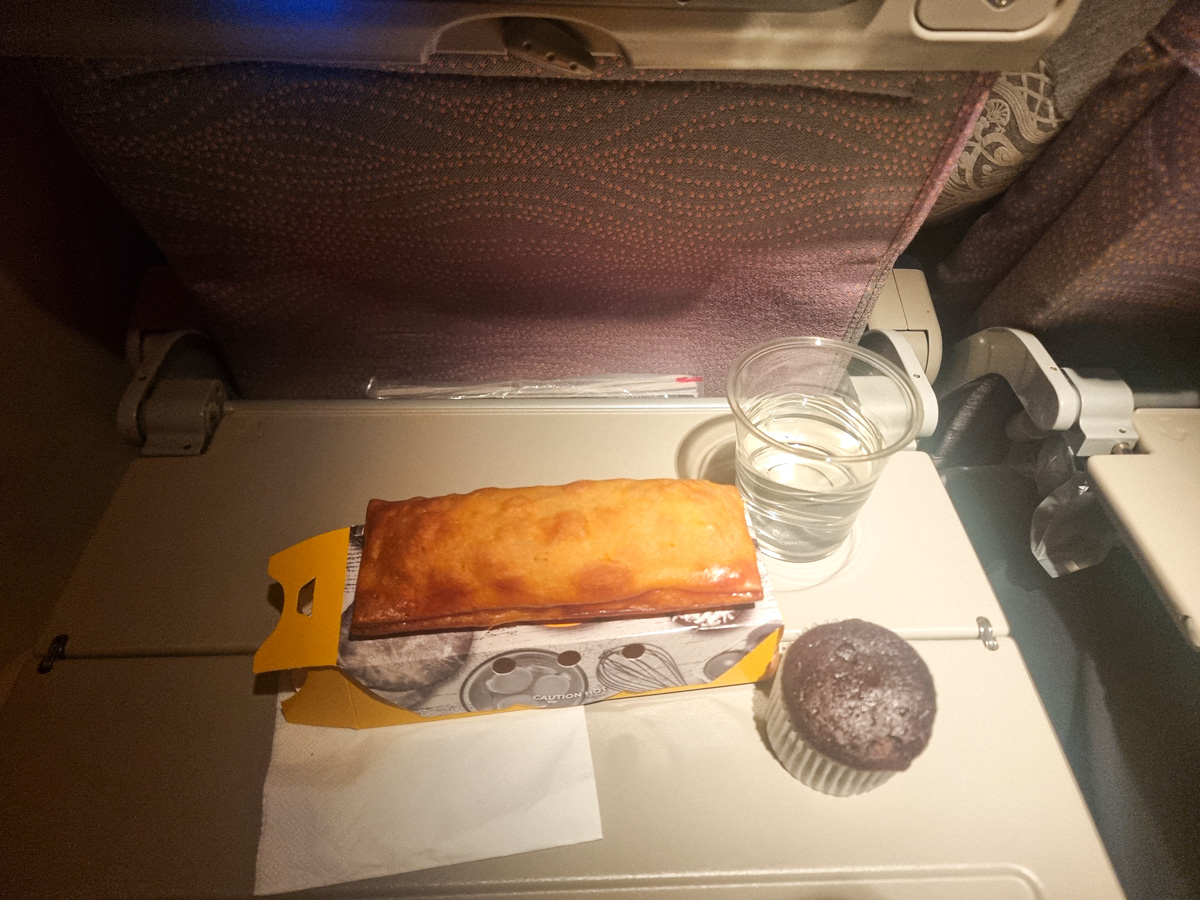
The crew offered a full drink service including alcohol, although I was happy with just water.
As soon as the meal service concluded, the crew dimmed the lights – these weren’t brightened even as they cleaned up the meal.
I fell asleep pretty quickly (this was my third flight in 14 hours), and slept for about three hours, waking up for the breakfast service.
For breakfast, the options were a cheese omelette or rice noodles with tofu – I chose the latter. This came with yoghurt, fruit, a muesli bar and bread. For a drink, I chose an orange juice.
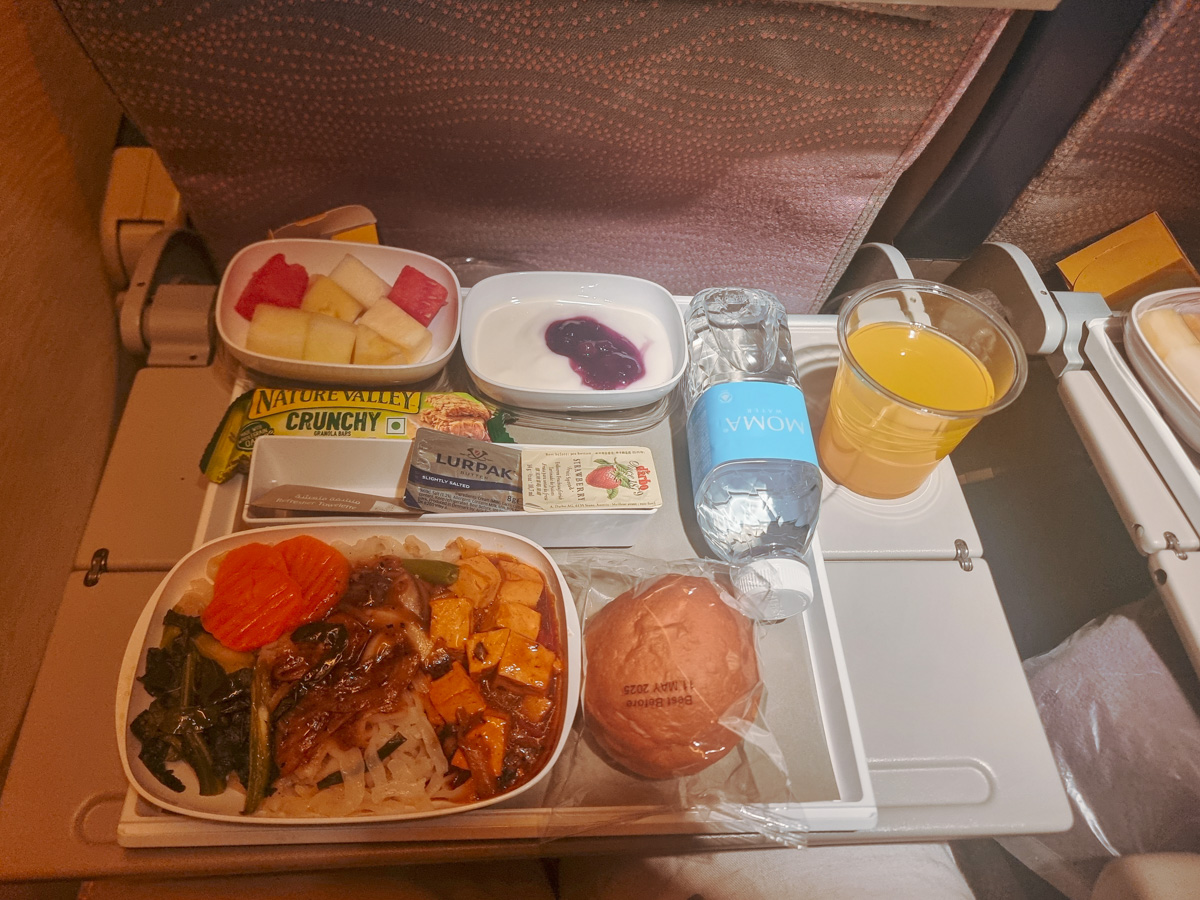
The dish was reasonably good, although the sauce on the rice noodles was a bit overpowering. The accompaniments were okay – I did really appreciate the fresh fruit.
After clearing the meal trays, flight attendants also offered coffee or tea.
The crew were prompt and efficient, although I had pretty limited interactions with them, as it was a relatively short overnight flight – which kept them pretty busy. But the one time I did use the call button the crew attended to me straight away.
We landed slightly behind schedule, with buses taking us to the terminal.
Emirates Boeing 777-300ER Economy Class
-
Airport Experience
-
Hard Product
-
Soft Product
Final thoughts
This was actually my first ever Emirates flight, and I left it feeling a little underwhelmed. The food was decent, and the entertainment offering was great, although the hardware needed an update. The seat itself was well padded, but the lack of seat width and legroom meant I felt quite cramped.
While a refurbishment program is good news, I don’t think the tight 3-4-3 configuration on a Boeing 777 in Economy is comfortable – regardless of whether it’s a modern seat. I’d much prefer to be flying Emirates’ A380 or A350 in Economy over the Boeing 777.
You can leave a comment on the Australian Frequent Flyer forum.


Community Comments
Loading new replies...
Join the full discussion at the Australian Frequent Flyer →