Good: Velocity Will Close Inactive Accounts

As is all too common these days, I got an email this week advising that my personal information had been exposed in a data breach. The most frustrating thing about this is that I’d only ever used this company once, and it was more than six years ago. There was no reason they still needed to have my personal information on file at all.
Like me, the Australian government believes that more needs to be done to protect Australians’ privacy. Data breaches, while not inevitable with the right safeguards in place, do happen. When a company retains way more data than it needs to, this broadens the impact of such breaches. It also makes the company’s data a bigger target for would-be hackers.
The Privacy Amendment (Personal Data Protection) Bill 2026 is currently making its way through federal parliament. Among other things, this will mandate that companies can only retain customer data in a way that is fair and reasonable. Key principles of this include:
- Minimising the data that is collected,
- Giving individuals genuine choice about what of their data is stored, and
- Ensuring a reasonable person would understand why and how their personal information is being used.
Although it hasn’t yet been introduced to parliament, the imminent legislation is prompting many Australian companies to update their privacy policies. One of those is Velocity Frequent Flyer.
Update to Velocity’s Terms and Conditions
On 30 October 2026, Velocity Frequent Flyer notified members of a change to its T&Cs that will take effect from 28 November 2026. Velocity says it is making this change “to help appropriately manage and protect Members’ personal information”.
From 28 November, Velocity will close accounts that have been inactive for eight consecutive years. This means that for 8+ years a member has not earned any Velocity Points or status credits (even as part of a family pool), contributed to a family pool, or redeemed or transferred any Velocity Points.
Closed Velocity Frequent Flyer accounts cannot be reactivated. Any remaining points or benefits, as well as lifetime status credits, will be forfeited.
Why eight years?
Former Flybuys Chief Operations Officer and loyalty expert Phil Hawkins believes Velocity’s change treats long-inactive members more appropriately. However, he says that eight years may still be an unreasonably long amount of time to retain the information of inactive members.
“While most people fly less often than they, say, go to the supermarket or do other regular shopping, eight years seems a grossly excessive period in order to determine inactivity,” Hawkins said.
“After all, frequent flyer members would have had their points expire way before that – within 2 years for Velocity, and 18 months for Qantas. It seems unreasonable for a frequent flyer program to retain the benefit of holding personal information while providing nothing to the inactive member in return.”
The big implication for loyalty programs
While Velocity’s change will help the program to remain on the right side of Australia’s new privacy laws, it will also reduce the total number of members that Velocity can say it has in its frequent flyer program.
For years, Qantas and Velocity have boasted about the number of members they each have in their programs, citing growth in member numbers as a key success metric to investors. However, these numbers are relatively meaningless as they include duplicate and inactive accounts – including of people who have died.
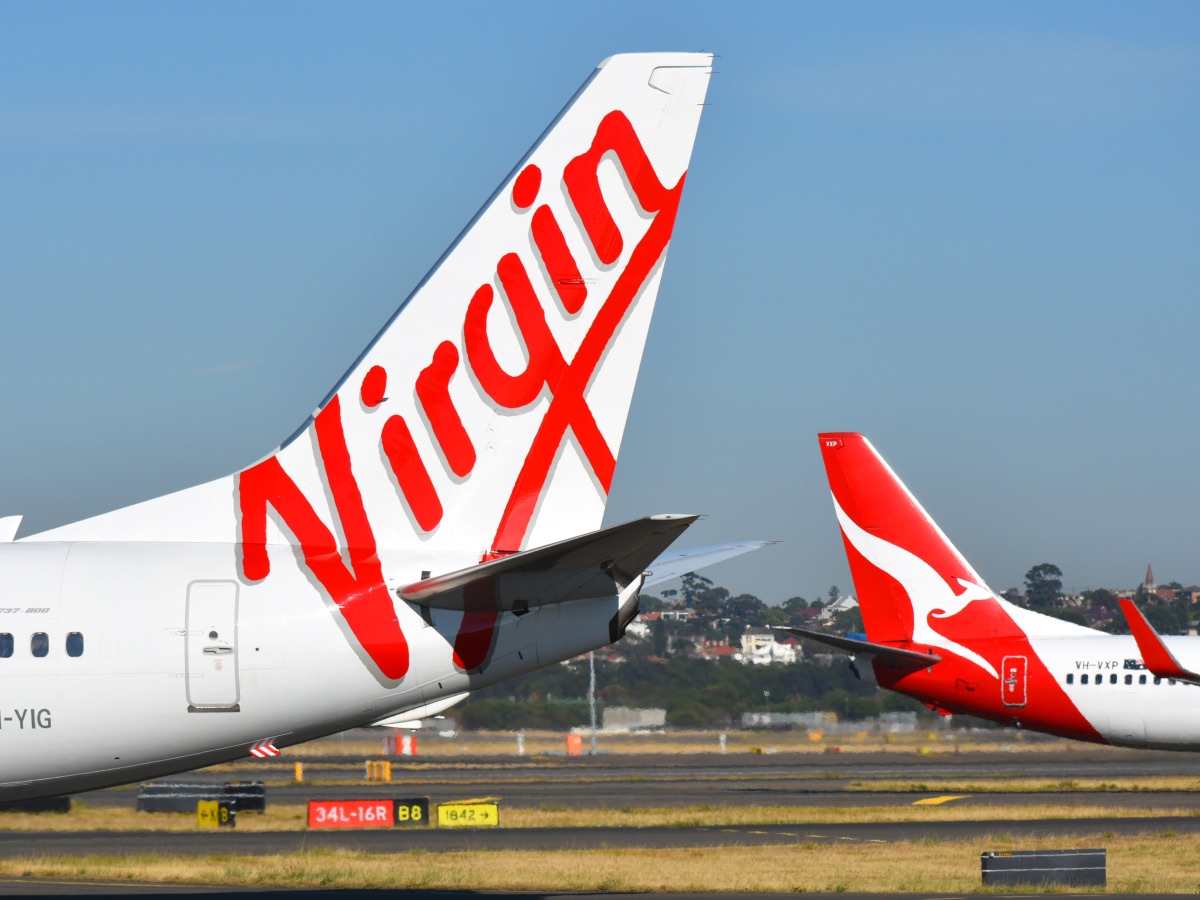
Qantas Frequent Flyer claims to have had 18.9 million members as of 30 June 2026 – which it says is a 7% increase over the previous financial year. Meanwhile, Virgin Australia’s Investor Centre website currently claims that “the [Velocity] program boasts over 13 million members”.
Over the years, we’ve seen regular press releases from Velocity boasting about hitting milestones like 10, 11 and 12 million members.
It’s unlikely that Velocity will still be able to claim over 13 million members once it starts closing inactive accounts. The program will either need to provide a more accurate number of members who have actually been active in the past 8 years, or stop publicly revealing its membership numbers altogether.
Will Qantas follow?
Qantas Frequent Flyer is (at least in terms of reported member numbers) Australia’s largest loyalty program. Qantas does not currently close inactive frequent flyer accounts unless a member explicitly requests it or Qantas believes the account is fraudulent.
Mr Hawkins believes Qantas should follow suit, but also acknowledges that it has the most to lose in terms of its public reputation by doing so.
“Qantas and Velocity have refused to follow the example of all other major Australian loyalty programs by publicly quoting active membership, but rather stubbornly continue to publish ‘ever-joined’ membership numbers, which distort and mislead,” Hawkins said.
“Given it has collected members for 39 years, I expect it would be uncomfortable and embarrassing for Qantas to report to the market a significant drop in ‘total’ members if it follows Velocity in removing long-inactive members. It will be interesting to see which side of the fence it falls on.”
One major Australian loyalty program that won’t be as affected by the changes to privacy laws is Flybuys. That’s because Flybuys already closes member accounts after just 12 months of inactivity.
Join the discussion on AFF
What do you think: Should loyalty programs permanently close inactive accounts? And if so, how long should it wait to do so?
You can share your thoughts on the Australian Frequent Flyer forum:
P.S. If your Velocity account is at risk of closure due to inactivity, you can easily extend its life by simply earning at least one Velocity Point. There are many ways to do this – even just buying a coffee at 7-Eleven counts. (You don’t have to actually drink the coffee!)
Related Articles
-
 27 October, 2025Qantas, Virgin Australia
-
 8 July, 2024Air Canada, British Airways, Virgin Australia
-
 5 December, 2024Air New Zealand, Virgin Australia