Turbulence: What Causes It & How to Deal With It
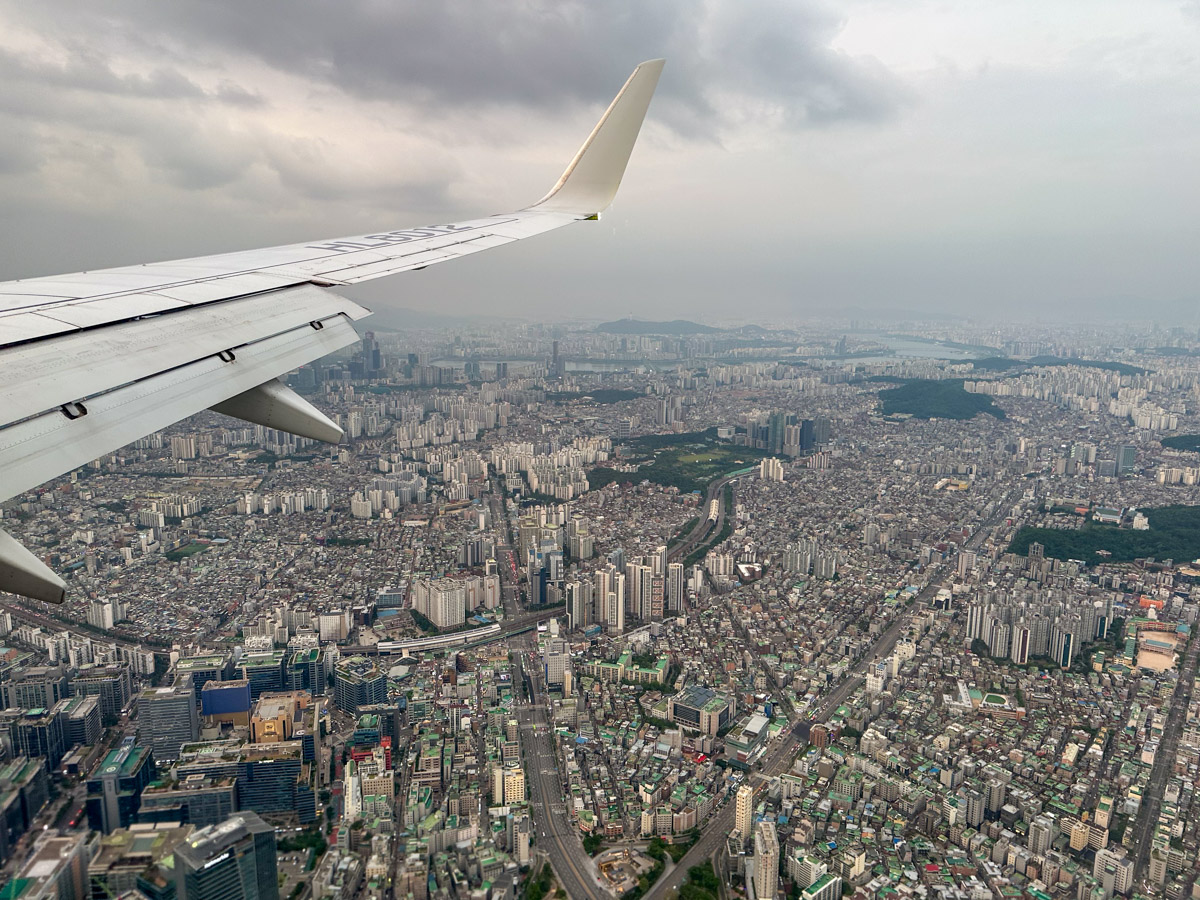
I have a confession to make: Although I fly a lot, I don’t really like turbulence.
It’s not that I’m a nervous flyer, per se. I did flying lessons as a teenager, and I’ve watched pretty much every episode of Air Crash Investigations. I know how planes work, and I know that turbulence isn’t going to make a plane fall out of the sky. As long as I’m wearing a seatbelt, I know that I’ll be safe.
But I do find turbulence physically uncomfortable at times. If it gets particularly strong, it can even make me feel a bit sick.
This hasn’t always been the case. But over the years, I’ve had a few particularly rough flights which have made me reconsider my love of flying. Most of those have been flights around thunderstorms on turboprop planes. Another memorable one was an Airbus A319 hop a few years ago from Berlin to Brussels, which also flew through a thunderstorm strong enough to make some passengers scream.
My worst ever flight
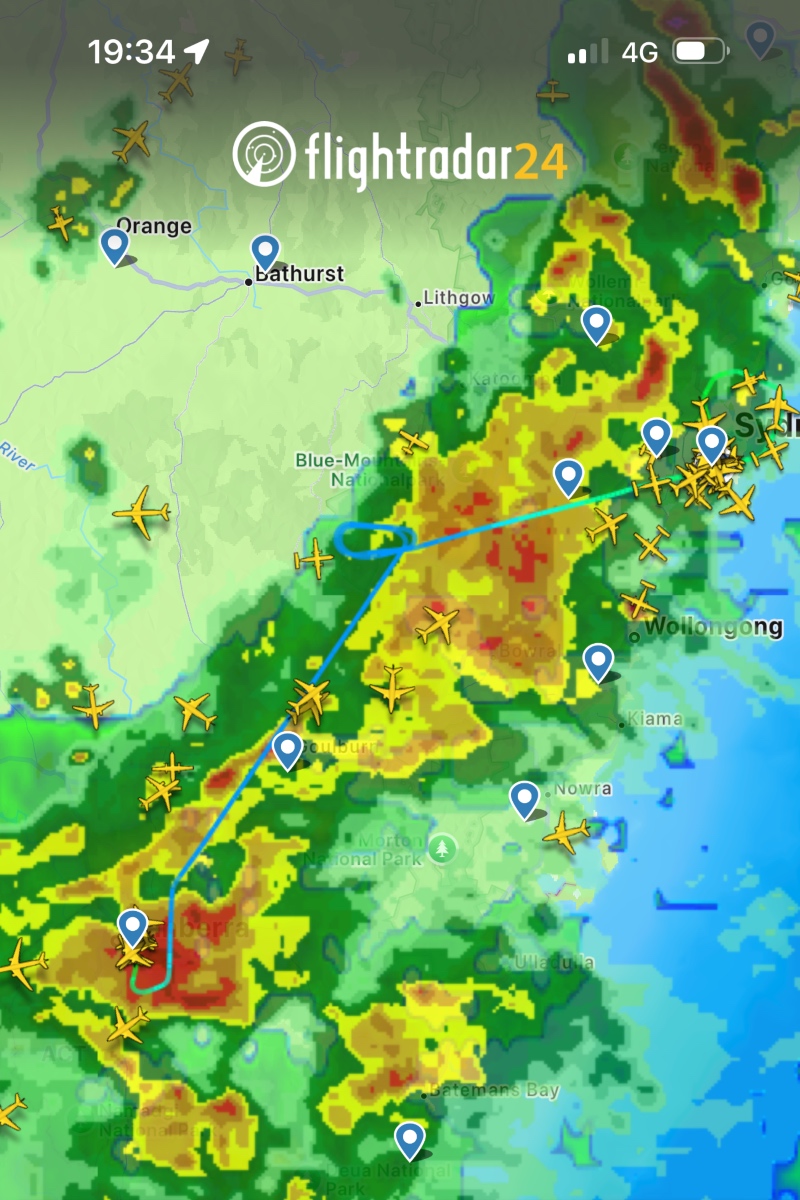
My worst ever experience of turbulence was in September 2025. I was flying from Canberra to Sydney on a Dash 8 Q400, on an evening when Sydney was getting battered by thunderstorms. I felt like I was sitting in a washing machine. This was made worse by the fact it was a night flight, and that we were flying through cloud most of the time – so there was also no visual reference outside.
When we finally landed in Sydney – after doing a few rounds in a holding pattern that seemed like it would never end – I was physically shaking, sweating and felt sick. Some passengers around me had literally thrown up. I spent the last half of that flight wishing I’d caught the bus.
I took this screenshot showing our flight path after we landed in Sydney, with the weather radar overlayed:
After a flight like that, it can take me a while to recover to the point where I truly feel comfortable flying again. My joy of flying always comes back eventually, but I’ve now started to take active steps to try to maximise the chances I’ll have a smoother ride through the skies.
I’d be interested to know if you do any of these things as well, or if you have your own strategies for managing turbulence.
Types of turbulence
Firstly, one of the things that has helped me is to understand why turbulence exists. As it turns out, there isn’t just one single cause. Rather, there are different types of turbulence which are caused by different factors.
If you’re interested in this topic, I’d recommend watching this video by Mentour Pilot which explains turbulence and its causes quite well:
To summarise, the main types of turbulence include:
- Mechanical turbulence – caused by the air moving over large obstacles like mountains or tall buildings
- Convective (thermal) turbulence – caused by flying through convective clouds
- Clear air turbulence – invisible, high-altitude turbulence caused by changes in wind direction or speed, e.g. due to jet streams
- Wake turbulence – caused by air disturbance produced by the wingtip vortices of other planes
Strategies for minimising the effects of turbulence
Here are some of the things that I do to try to predict and minimise turbulence as a passenger…
Access to real-time information
Before flying, you can get a sense of whether turbulence is forecast along your route – and if so, during which part of the flight – by checking the turbulence forecast on Turbli.com. It’s not always 100% accurate, but it’s about as good of an estimate as you’ll get from a free, publicly available resource.
I find that knowing what to expect can help calm my nerves a bit. I also find it helpful to know which part of the flight turbulence is most likely – so, for example, I can time bathroom visits around that.
The plane type makes a difference
Turbulence is more noticeable in smaller planes. So, booking a flight on a larger plane (if possible) could result in a smoother ride. I will admit that I try to avoid booking Saab 340 flights where I can, for this reason – but sometimes there’s no choice, and I accept that.
Even on the same aircraft type, specific features of different aircraft can result in a smoother flight. For example, as AviatorInsight recently explained on the Ask The Pilot thread, the Boeing 737-8 MAX has advanced features which smooth out the ride during turbulence that don’t exist on the Boeing 737-800.
Split scimitar winglets, which Qantas and Virgin have installed only on some of their Boeing 737s, also help to reduce the effects of turbulence.
Seat selection
Statistically, passengers sitting at the back of the plane are most likely to survive a crash. But the chances of the plane crashing are so infinitesimally small that I wouldn’t personally choose a seat based on that reason.
If you don’t like turbulence, sitting around the middle of the plane – or a bit forward of the wings – is the best way to go. That’s because you’re sitting closest to the plane’s centre of gravity. The aircraft moves around less in this section, compared especially to the very back of the plane.
I personally find that having a window seat can help, as you’re able to see outside and have a visual reference. This is obviously more effective if it’s daytime outside and you’re able to keep your window shade up.
And if you are prone to motion sickness, it might be a good idea to check at the start of the flight if there’s a sick bag in your seat pocket. Most airlines supply these by default, but they don’t always get replaced at the end of every flight. It’s better to discover that yours is missing while you’re on the ground than when you actually need it.

Thinking about seasonality and time of day
Generally speaking, you’re more likely to experience turbulence if the weather is poor. Depending on the season, poor weather is more likely to be a problem at certain times of the day than others.
For example, on Australia’s eastern seaboard, there are often thunderstorms during summer in the afternoon. So, if you need to flying from Melbourne to Sydney during the summer, you might prefer to fly in the morning. (This also reduces the chances of your flight being delayed!)
Other strategies
Sometimes, talking to the passenger beside you can be a welcome distraction. Assuming they’re up for a chat.
Mentioning this to the cabin crew can also be helpful. I did this on one recent Qantas flight where moderate turbulence was forecast, and the crew regularly checked in on me and offered extra fizzy drinks.
And this might not be the case for everyone, but I’ve personally found that I find turbulence more uncomfortable if I’m really tired. That might just be my imagination, but it is something I’ve noticed with myself.
Nervous flyer?
If you’re scared of turbulence, or worried about flying in general, there are various “fear of flying” courses you might want to consider.
I would also recommend reading AFF’s Ask The Pilot thread. There is so much great information on there, and you’re also welcome to ask your own questions. We’re lucky to have several pilots who regularly and generously answer questions and contribute information to that discussion thread.
What are your tips?
So, those are my personal strategies. Of course, they may or may not work for you.
Everyone’s experience with turbulence is different. I know that many people actually enjoy it. Many more are indifferent to it, and some people either don’t enjoy or are scared of it. (I’m in the “don’t enjoy” category.)
How do you find in-flight turbulence, and is there anything you do to make flying more comfortable for yourself? Share your thoughts on the Australian Frequent Flyer forum!


Community Comments
Loading new replies...
Join the full discussion at the Australian Frequent Flyer →