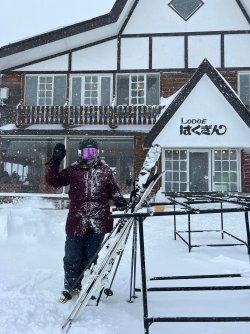
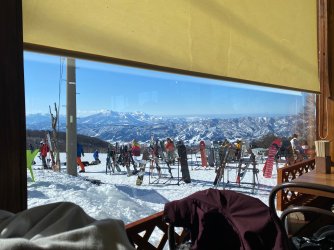
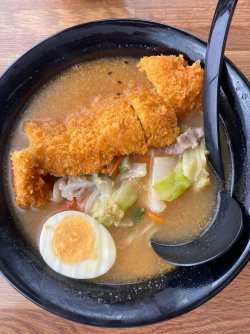
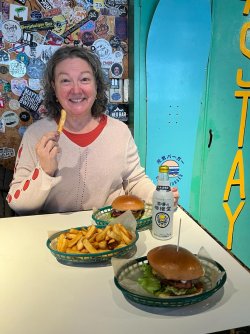
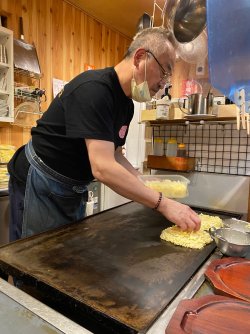
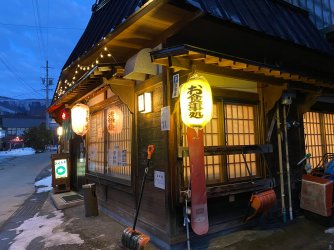
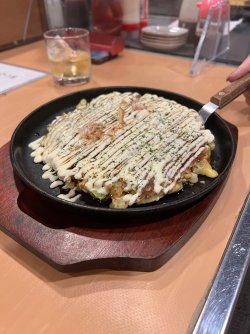
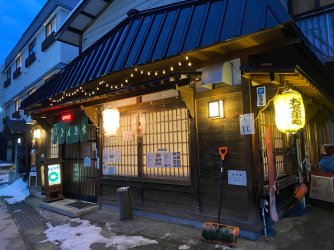
There are lots and lots of small restaurants scattered in the town, but they do fill quickly during the ski season, so as you walk around town, if you see something you like, pop in and make a reservation or ask your hotel to do that for you. You might be lucky to get a walk in if there are only 2 of you, but even that is a big ask given how small these places are.
Next thing, do walk around the hills in the township area - it's beautiful, small restaurants and shops along the roadway and at the end you will find the big village cooking onsen, which is highly atmospheric. This is reserved for use by the local people only, for cooking needs. Also visit the local shrine, if snow conditions permit you to ascend (or more likely descend!) the very steep stairs. It's beautiful.
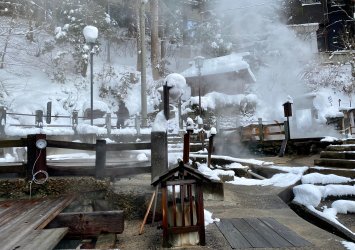
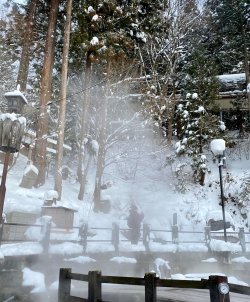
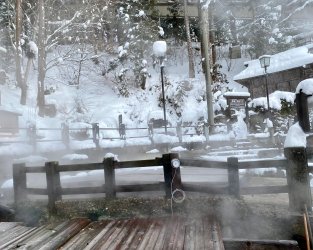
Be sure to visit as many of the town bathing onsens as you can. There are 13 public onsens in the town. These are all free to use (you pay an onsen vistor tax of 500 yen per night included in your accommodation costs). These are NOT the flash, fancy, upmarket onsens you get in hotels or other places, but are authentically local and quite rustic. Some tips:
- toiletries are not provided, so bring your own soap, shampoo, conditioner, body lotion, face cream etc.
- bring your own towel
- be scrupulous about keeping your shoes off the bathing area floors including the area where you take your clothes off. Put your clothes into the cubby holes provided. Shoes will often go on the bottom row, to avoid putting shoe filth into the place where others put their clothes and towels.
- wash your whole body obviously and vigorously (an onsen towel - a long thin scrubber like a bath ball really helps with this) before you get in the bath - this is highly important as it is regarded as filthy to get into the shared bath before you wash. You will likely be given an onsen towel as an amenity in your hotel. If not, you can buy them cheaply at the supermarket/grocery stores in town.
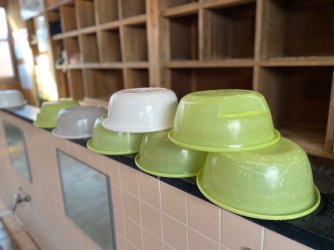
- to wash, use one of the provided bowls. If there is a hot water tap
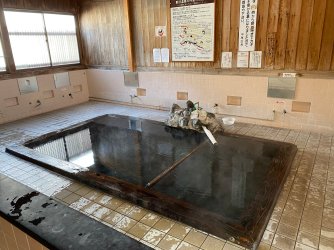
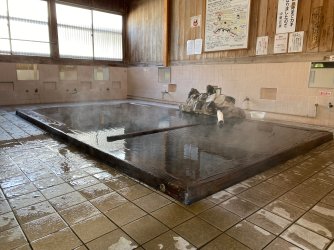
 . If not, scoop out some hot water from the onsen, and add cold water to suit from the taps (you can see these on the walls in the photos below). Move away from the bath edge and pour this water over yourself, soap up, pour more water over to remove the soap and be careful that soapy run off does not splash others, or run into the bath. Repeat as often as you need to. When clean, get in the bath and soak in bliss! Keep your hair up and out of the water. And yes, you will be naked as you do all these things.
- Be quiet - no loud talking, just keep it so that people can zen out. I hear things are a bit different in the men's onsen, but in the ladies, it is always quiet and calm.
- When you finish using the bowl, rinse it out with hot onsen water, tip onto the tiles, and return it to the storage area, turned upside down to drain.
- There is nowhere to use a hair drier at these local style onsens, so take a hair wrap or hat for the cold walk home!
- If you want to meet local people, go to the onsen during the day while all the tourists are out skiing. There is, naturally, a big rush hour from about 4-6.30pm as everyone gets off the mountain, so it can get a bit overcrowded at those times of the day. if you go at other times, you might be the only person there. That's how I got these photos!
- Some of these onsen are really hot! They tend to get cooler the lower down the mountain you go. If you start to feel hot, sit on the side of the onsen for a bit, or use your basin to add a small amount of cold water near where you are sitting - being sure not to put that cold water near anyone else who might not want it. Becareful not to overheat, as people have been known to faint. I always take a bottle of water to drink before I get in, and again after I get out.
- Some of the traditional onsen do not have toilets, so go before you head there, otherwise it can be uncomfortable!
- Don't be afraid, the first time is the hardest and after that it is a lovely calm ritual that really makes your ski legs feel better!
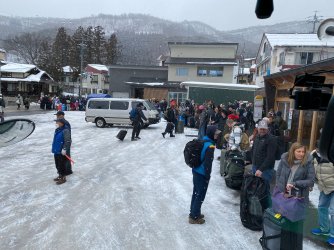
When it is time to leave Nozawa, if you are catching the bus in to Iiyama to get the shinkansen, or on to another resort area such as Madarao, do be aware that there are usually very long lines for the buses. They just keep bringing more buses to suit the number of people who turn up, so you will get a seat eventually, but you may have to wait a while, so allow for that in any time sensitive arrangements. Yes, that line goes all the way around the corner!
Also when we were last there (2024), you still had to pay for the ticket with cash into a ticket machine 500-1000 yen per person, depending on your destination. So many stressed Aussies finding out that they could not just tap their phone!! And it's not that easy to get cash in a hurry in Nozawa. So plan for that too.
Oh writing this is making me very nostalgic for Nozawa Onsen - it's a great place!








 Happy with that.