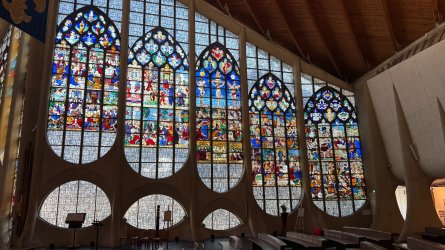
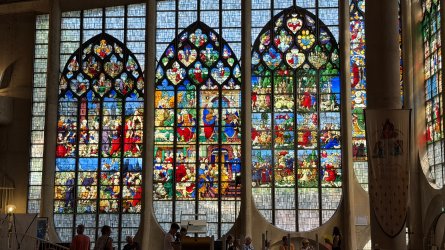
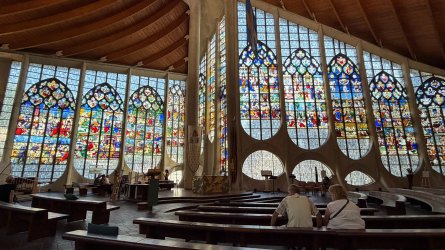
The next day I was flying out in the evening so I had snagged hard-to-get tickets to St Chapelle and Paris Catacombs . Unfortunately, St Chapelle was also closed due to the heat

but the catacombs were still open so off I went on the RER.
As I said, its had to get tickets to the catacombs. Limited time-based entry. I thought they released tickets a week at a time, the week before but fortunately I started watching well beforehand and they were being released day by day a week out. I noticed that 2 days after release there might be a few tickets left for a particular day, but by a day or so later, each day was sold out.
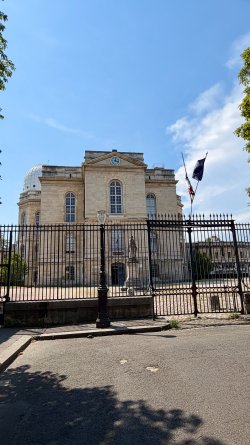
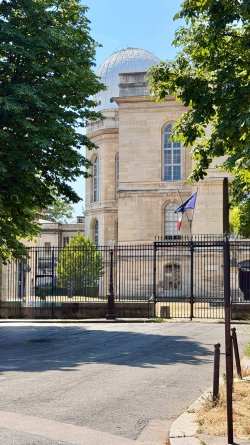
Waiting for my time slot, I sought out the Paris Observatory, founded 1667 by Louis XIV, but it was closed.
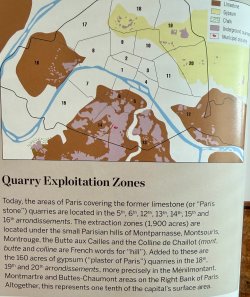
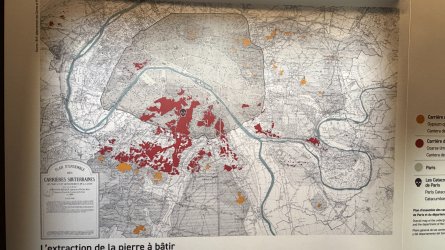
The story of the catacombs is amazing. Limestone for Paris' buildings was excavated from quarries from around Roman times. In the 12th century they went underground, then in the areas outside the city walls. By the 18th century, houses and factories were being built over the underground workings and occasionally there was a cave-in. In 1776 the King established a body to map and study the now-vast underground mine system. The 'Quarry Inspection Unit' still exists today. Further, it was stipulated that the underground tunnels would replicate the roads above them. Today, there are 250km of tunnels.
At the same time, Paris was dotted with ancient cemeteries, particular St Innocents, which was attached to the Hotel Dieu, the hospital. Over the centuries this cemetery became full, then graves & bones were excavated and the bones stored in charnel houses or along the walls of the cemetery. This happened numerous times. In its final 30 years, 90,000 bodies were buried there (and many not-so-buried) and the elevation of the cemetery had increased several metres. The stench carried for miles.
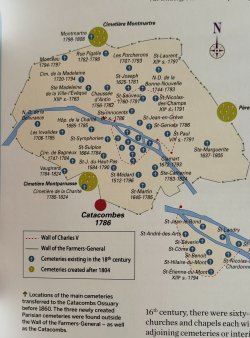
The need to eliminate St Innocents gained urgency from May 31, 1780, when a basement wall in a property adjoining the cemetery collapsed under the weight of the mass grave behind it.
The cemetery was ordered to be closed in 1785 and excavated to a depth of 5 feet and the area converted to a market (Forum des Halles today). of course many other cemeteries were in the same state.
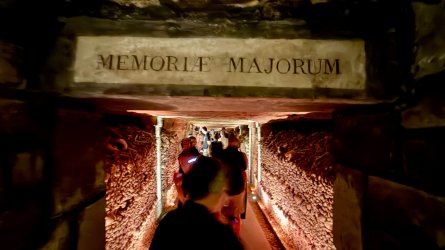
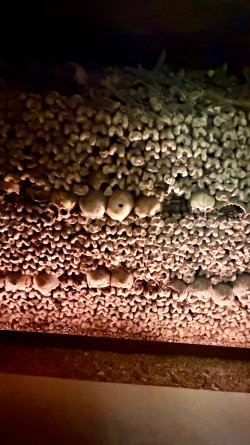
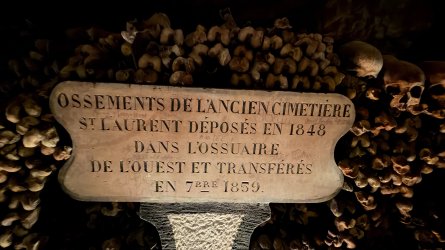
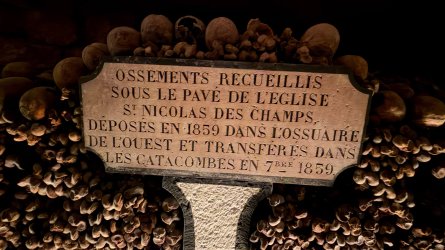
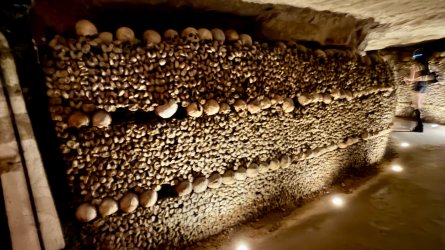
In 1786, bones began to be transferred from the cemeteries and charnel houses to the underground workings, now the Tombe-Issoire. Two million skeletal remains were transferred out of St Innocent cemetery alone and 16 other cemeteries were also cleared between 1792 and 1814.
More cemeteries were cleared in the 1860s and even into the 20th cemeteries, quantities of skeletal remains continued to be transferred as forgotten cemeteries and burials were uncovered.
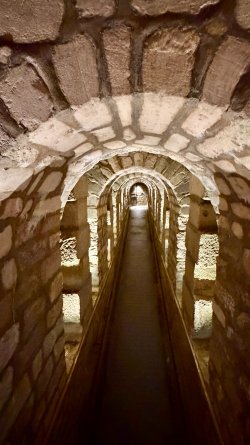
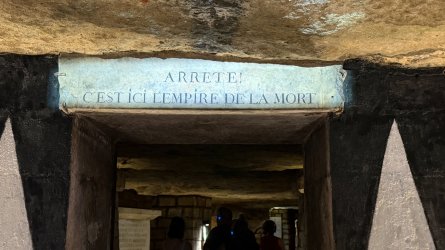
So ... to the catacombs. You descend via steps to about 20m underground.
You first travel along 'Avenue Rene Coty'
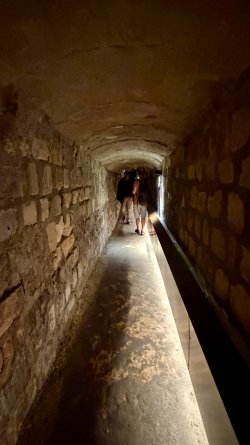
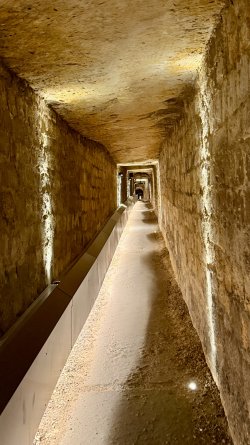
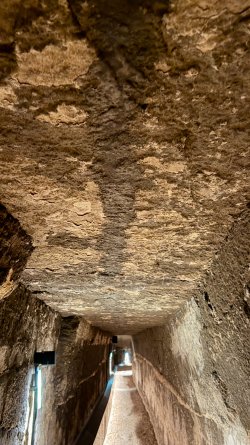
From a hand-out:
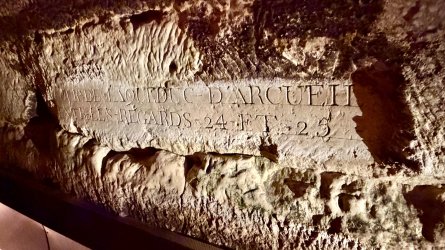
The Arcueil Aqueduct, built between 1613 and 1623 by an order from Marie de Medici, in order to bring water to Paris from springs in Rungis. This stone tunnel ran just below the ground surface, with small manholes interspersed above to provide access to the tunnel. In 1781, a quarry collapsed, causing the waterways to burst and fall in several places, bringing the water supply to fountains to a halt.
A segment spanning 150 metres was then entirely rebuilt by Guillaumot and the quarry was reinforced 20 metres lower.
And here is the marker of the re-inforcement.
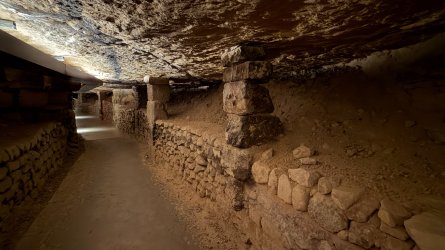
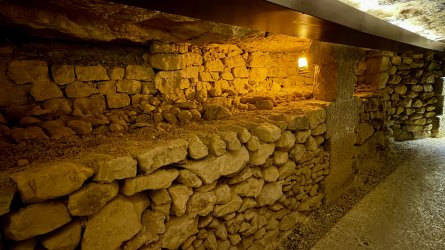
'L'atelier' or 'workshop' - an old quarry almost intact. Pillars in this case constructed after all the rock was removed.