A drive through north-west France

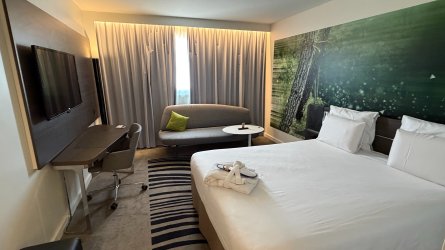
I tried to tell the Grand chancellor Hobart that they didn't need to clean the room every day. It really is a waste
Didn't get anything because they kept cleaning the room everyday.🤣

Accor have a formal program of skipping cleaning - its 'green' you know. ;)

I hang the 'do not disturb' sign on my door full time too (and let the front desk know that I'll collect any laundry from the front desk).
 
The bus gate experience at SYD sounds all too familiar. Priority boarding loses most of its value once everyone is standing together waiting for the same bus. At least the onboard service seems to have made up for it.
 
Elevate your business spending to first-class rewards! Sign up today with code AFF10 and process over $10,000 in business expenses within your first 30 days to unlock 10,000 Bonus PayRewards Points.
Join 30,000+ savvy business owners who:

✅ Pay suppliers who don’t accept Amex
✅ Max out credit card rewards—even on government payments
âś… Earn & transfer PayRewards Points to 10+ airline & hotel partners

Start earning today!
- Pay suppliers who don’t take Amex
- Max out credit card rewards—even on government payments
- Earn & Transfer PayRewards Points to 8+ top airline & hotel partners

AFF Supporters can remove this and all advertisements

The bus gate experience at SYD sounds all too familiar. Priority boarding loses most of its value once everyone is standing together waiting for the same bus. At least the onboard service seems to have made up for it.
Bus gates around the world are always a bit of a zoo.

Fortunately, I’ve only had the one so far ex SYD T1 and I was surprised by the scale of the bus gates! But fortunately, a quick ask and as J PAX escorted to the front of the line.

Unfortunately, no seperate lines for status PAX.

Some places like DOH might throw on a special comfy bus but having already rocked up to the gate earlier than usual (because it’s a bus gate), the special bus doesn’t depart until the regular boarding time…🤷‍♂️
 
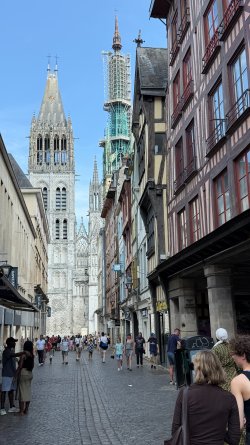
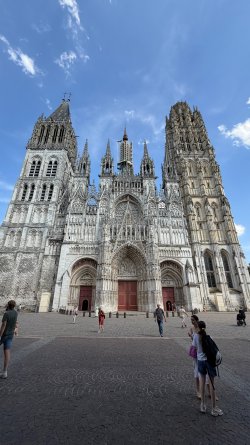
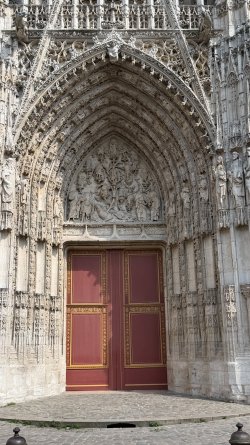
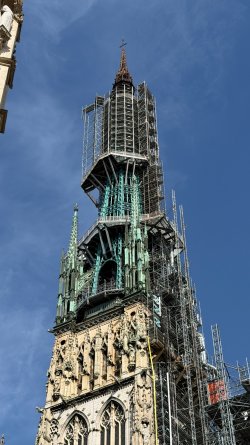
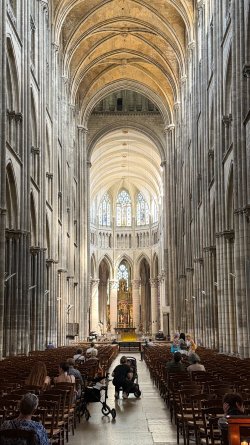
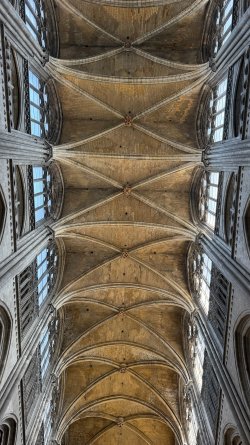
Of course: Primatial Cathedral of Notre-Dame de Rouen. It was cool inside!

It is famous for its three towers, each in a different style. The cathedral, built and rebuilt over a period of more than eight hundred years, has features from Early Gothic to late Flamboyant and Renaissance architecture. It also has a place in art history as the subject of a series of impressionist paintings by Claude Monet, and in architecture history, as from 1876 to 1880 it was the tallest building in the world.

The cathedral was enlarged by St. Ouen in 650, and visited by Charlemagne in 769. However, beginning in 841, a series of Viking raids seriously damaged the cathedral complex.

The Viking leader Rollo became first Duke of the Duchy of Normandy and was baptised in the Carolingian cathedral in 915 and buried there in 933. His grandson, Richard I of Normandy, further enlarged it in 950.

In the 1020s, the archbishop Robert began to rebuild the church in the Romanesque style, beginning with a new choir, crypt and ambulatory, and then a new transept. The Romanesque cathedral was consecrated by the archbishop Maurille on October 1, 1063, in the presence of William, Duke of Normandy, soon to become William the Conqueror after his conquest of England in 1066.

IMG_0249.JPEG

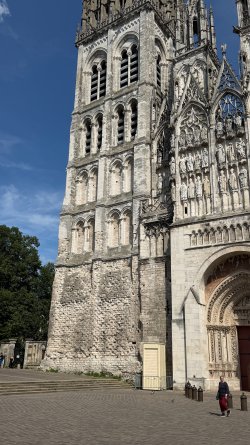
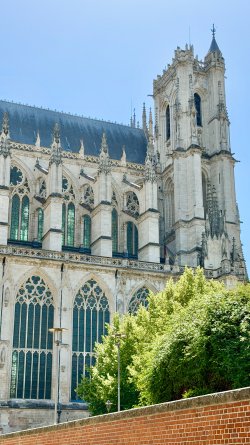
On the left, the Saint Romain tower, begun 1145 with a 15th century top. On the right, the 'Butter tower' constructed between 1488 and 1506. It received its name because donors to the tower were given dispensation to consume butter and milk during Lent.

IMG_0252.JPEG

IMG_0254.JPEG

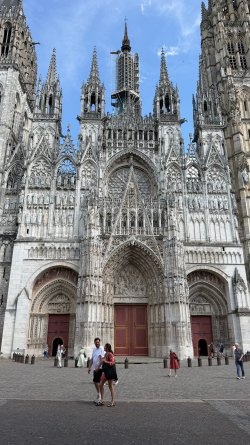
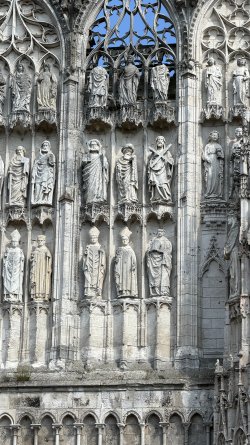
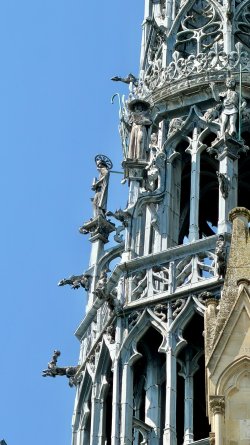
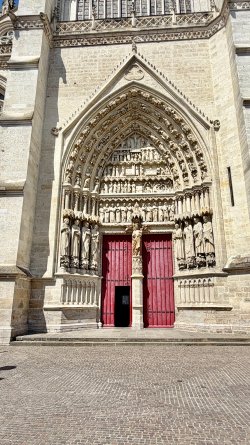
In the 13th century four smaller towers, or tourelles, with spires, were added atop the buttresses that were built to support the west front, two on either side of the central portal below. In the 14th century, to enrich the decoration even further, three gables were attached to the west front below each of the tourelles. The gables were filled with sculpture; over the north portal, statues of the first archbishops, apostles and saints, and on the south, kings and prophets from the Old Testament.

IMG_0251.JPEG

IMG_0253.JPEG IMG_0255.JPEG

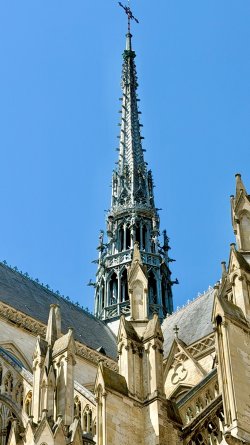
A central lantern tower over the transept is a tradition of Gothic architecture in Normandy. The lantern tower with its flèche, or spire is placed over the transept, almost in the centre of the cathedral, and is 151 meters high, the tallest of the three towers. The first two levels of the lantern tower were built in the 13th century. The original Gothic spire was destroyed by fire in 1514, and rebuilt in 1544 in wood and lead by the master builder Robert Becquet. The next builder, Rouland Le Roux, consolidated the first two levels of the lantern tower and added flamboyant decoration and sculpture.

Another fire in 1822 destroyed the lead and wood spire, which was then replaced, after much controversy, by the architect Jean-Antoine Alavoine with one of iron and copper, finished in 1882. He surrounded the new spire with four smaller spirelets, made of copper. One of these fell during a hurricane in 1999, going through the roof and damaging the choir stalls below.


IMG_0287.JPEG

IMG_0256.JPEG

IMG_0258.JPEG IMG_0285.JPEG
 
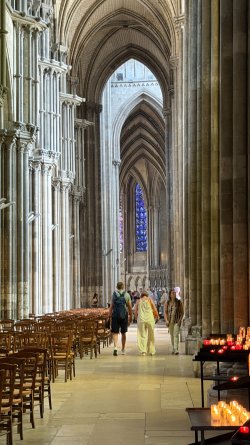
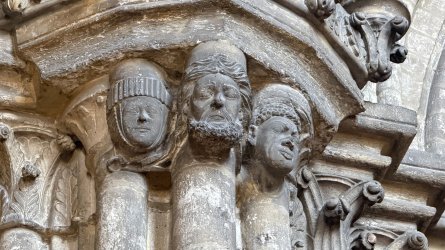
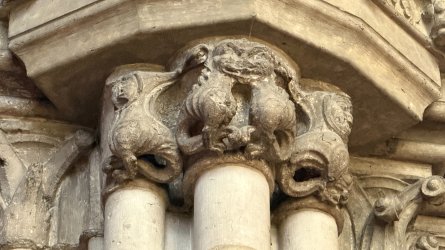
Inside, the usual ornamentation which I admire

IMG_0257.JPEG

IMG_0259.JPEG

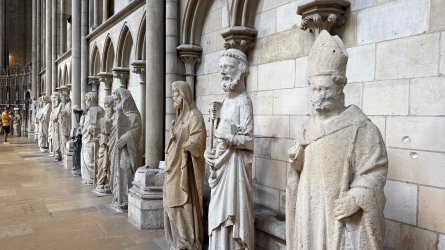
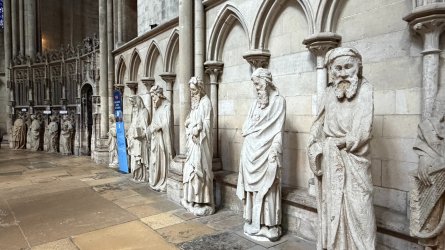
Statues from outside brought inside to protect them

IMG_0260.JPEG

IMG_0262.JPEG

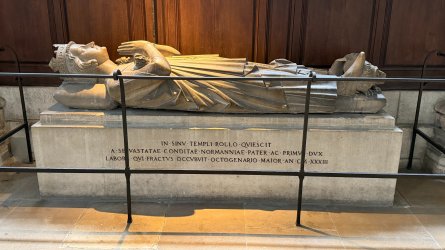
The tomb of Rollo.

Rollo c. 835/870 – 933, was a Viking who, as Count of Rouen, became the first ruler of Normandy, a region in today's northern France. He emerged as a war leader among the Norsemen who had secured a permanent foothold on Frankish soil in the valley of the lower Seine. He was a prominent figure among the Vikings who besieged Paris in 885 and led the ill-fated Siege of Chartres in 911. The latter was nonetheless the catalyst for the consequential Treaty of Saint-Clair-sur-Epte, which saw Charles the Simple, king of West Francia, grant Rollo lands between the river Epte and the sea in exchange for Rollo agreeing to end his brigandage, swear allegiance to Charles, convert to Christianity, and pledge to defend the Seine estuary from other Viking raiders.

The original tomb of Rollo was destroyed during the bombing of 1944, and was replaced by a copy of the tomb of Henry the Young King made in the 19th century. The remains of Rollo and his son William Longsword were transferred from the first cathedral to the Romanesque cathedral in 1063, shortly after it was built, then to the Gothic cathedral when it was completed.

IMG_0261.JPEG

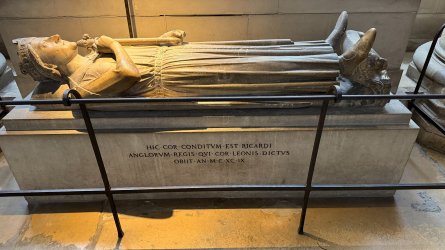
The tomb of Richard the Lionheart (Richard I of England), Duke of Normandy, (died 1199); or at least his heart.

IMG_0273.JPEG

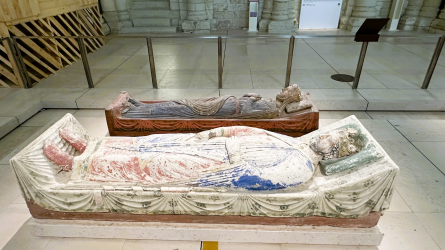
his body was buried at Fontevraud Abbey in Anjou. I visited there in 2025 and wrote on it. Here is the tomb there, but the body isn't there. The French Revolutionaries again ...

1783490038126.png

Richard I got around: his entrails were buried in Châlus (where he died, killed by an arrow wound that got infected). In 2012, scientists analysed the remains of Richard's heart and found that it had been embalmed with various substances, including frankincense, a symbolically important substance because it had been present both at the birth and embalming of Christ.

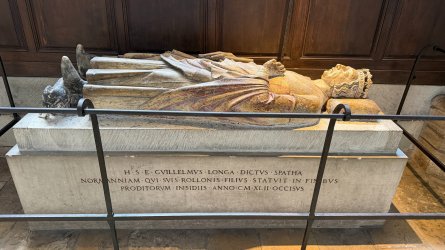
Tomb of Rollo's son, William Longsword

IMG_0278.JPEG

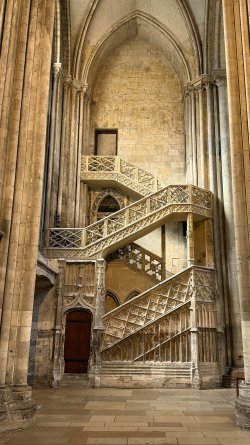
15th-century stairway to the medieval library.

IMG_0281.JPEG

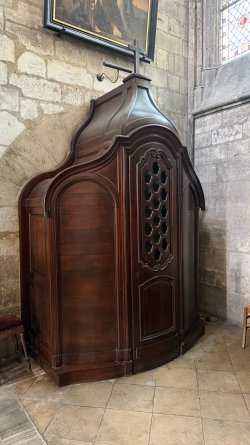
Confessional.

IMG_0282.JPEG

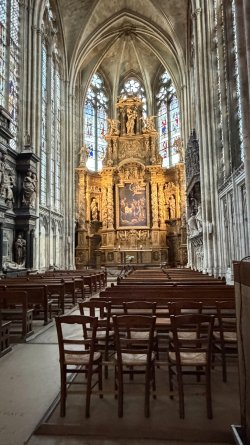
Chapel of the Virgin, built early 1300s.

IMG_0265.JPEG

IMG_0270.JPEG IMG_0269.JPEG
 
Rouen is the site of where Jeanne d'Arc - Joan of Arc - was burned at the stake by the English (as the French are at pains to point out!).

[During the Hundred Years War] On 23 May 1430, Joan accompanied an Armagnac force which sortied from Compiègne to attack the Burgundian camp at Margny, northeast of the town. The attack failed, and Joan was captured; she agreed to surrender to a pro-Burgundian nobleman named Lyonnel de Wandomme, a member of Jean de Luxembourg's contingent, who quickly moved her to his castle at Beaulieu-les-Fontaines, near Noyes. After her first attempt to escape, she was transferred to Beaurevoir Castle. She made another escape attempt while there, jumping from a window of a tower and landing in a dry moat; she was injured but survived. In November, she was moved to the Burgundian town of Arras.
The English and Burgundians rejoiced that Joan had been removed as a military threat. The English negotiated with their Burgundian allies to pay Joan's ransom and transfer her to their custody. Bishop Pierre Cauchon of Beauvais, a partisan supporter of the Duke of Burgundy and the English crown, played a prominent part in these negotiations, which were completed in November. The final agreement called for the English to pay 10,000 livres tournois to obtain her from Luxembourg. After the English paid the ransom, they moved Joan to Rouen, their main headquarters in France. There is no evidence that Charles tried to save Joan once she was transferred to the English.

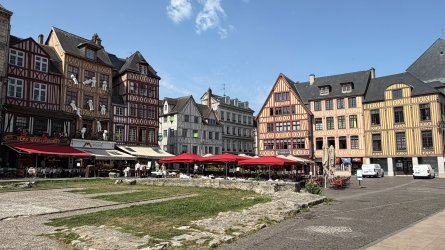
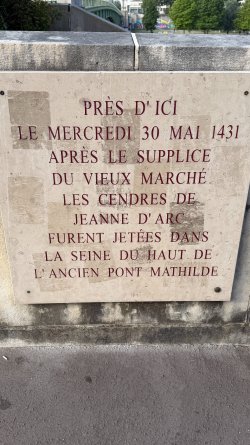
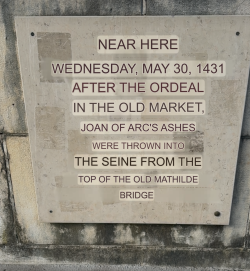
At about the age of nineteen, Joan was executed on 30 May 1431. In the morning, she was allowed to receive the sacraments despite the court process requiring they be denied to heretics. She was then taken to Rouen's Vieux-Marché (Old Marketplace), where she was publicly read her sentence of condemnation. At this point, she should have been turned over to the appropriate authority, the bailiff of Rouen, for secular sentencing, but instead was delivered directly to the English and tied to a tall plastered pillar for execution by burning. She asked to view a cross as she died, and was given one by an English soldier made from a stick, which she kissed and placed next to her chest. A processional crucifix was fetched from the church of Saint-Saveur. She embraced it before her hands were bound, and it was held before her eyes during her execution. After her death, her remains were thrown into the Seine River.

At the Rouen's Vieux-Marché there are the foundation stones of the old Saint-Sauveur church, destroyed during the French Revolution in 1794-1795.

IMG_0423.JPEG

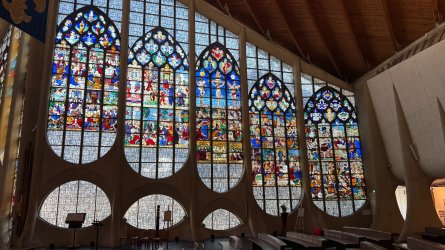
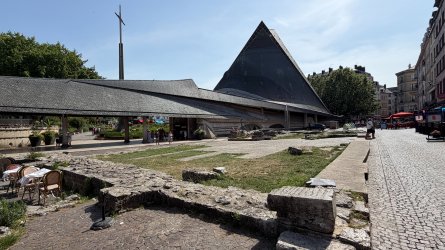
Also, Église Sainte-Jeanne-d'Arc de Rouen, the boat-shaped monument & church built in 1979 to honour Joan of Arc.

IMG_0411.JPEG

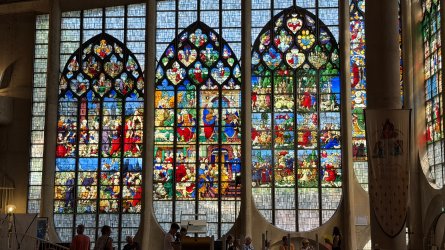
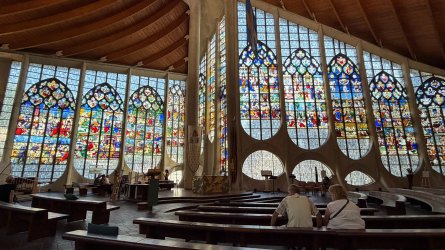
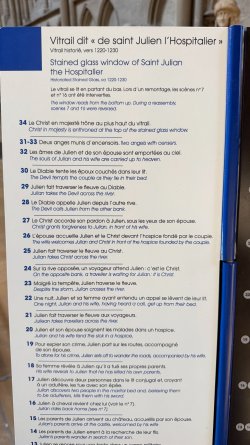
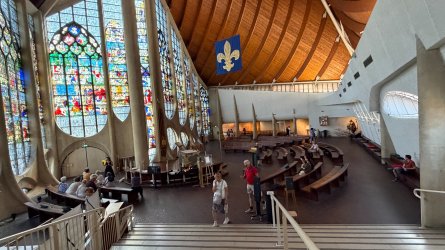
Inside, it features thirteen stained-glass windows , created between 1520 and 1530. They originally came from the chancel of the former Saint-Vincent church. These windows were placed in safekeeping by the Historic Monuments Service in1939 and later placed into this church.

IMG_0415.JPEG

IMG_0416.JPEG

IMG_0417.JPEG

IMG_0419.JPEG

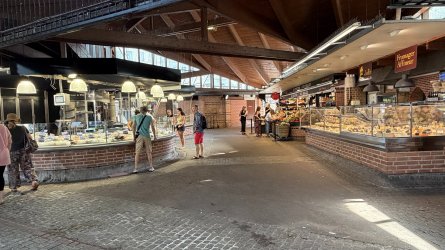
A you exit the church, you can either visit the market

IMG_0425.JPEG

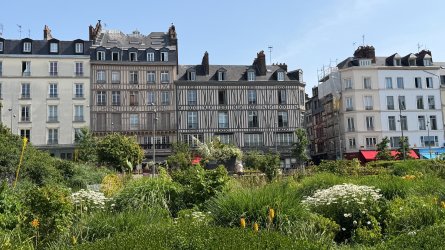
or visit the gardens.

IMG_0414.JPEG

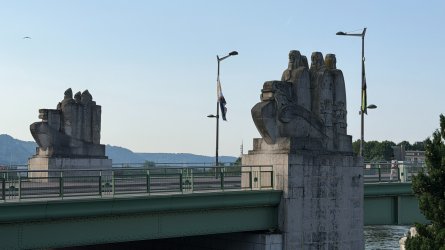
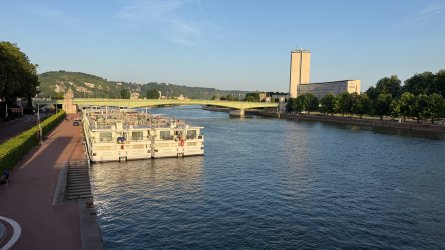
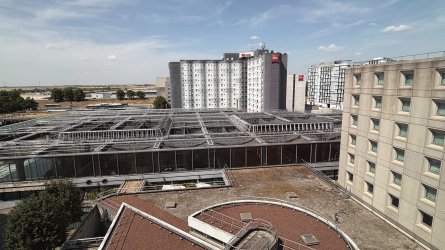
As it happens, right outside the Novotel is the site where:

IMG_0345.JPEG IMG_0346.PNG

IMG_0342.JPEG

IMG_0387.JPEG
 
I left Rouen after 3 nights - 2 full days +, fully satisfied at having gained more understanding about the history of Normandy/France (back to Vikings and before that; plus Hundred Years War). It it wasn't so hot I would have done a lot more!!

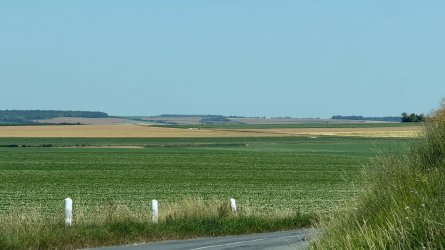
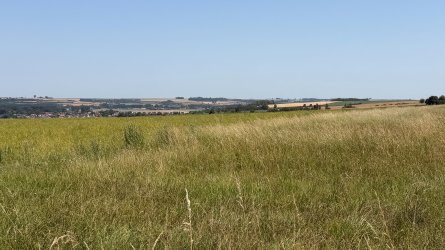
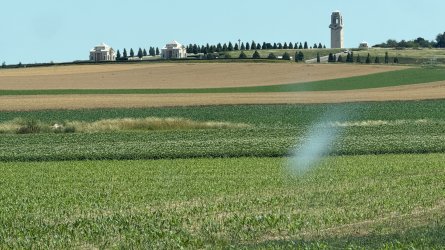
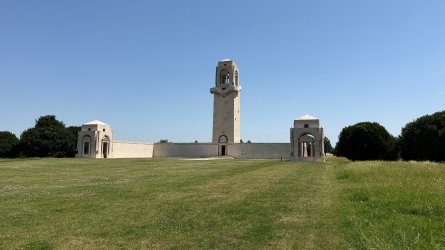
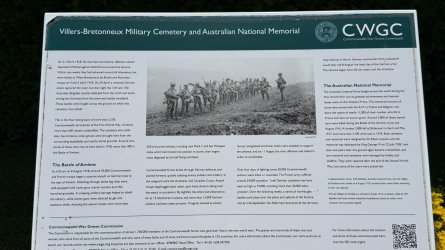
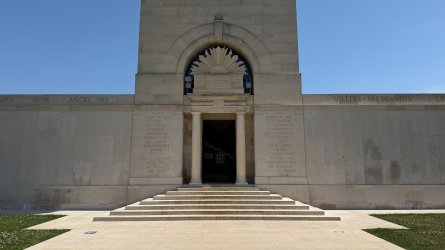
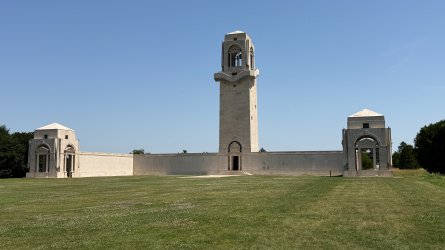
Left the next morning for the Somme battlefields and the Sir John Monash Centre at the Villers-Bretonneux Military Cemetery and Australian National memorial. Hard to imagine the devastation that occurred here over 100 years ago.

IMG_0503.JPEG

IMG_0512.JPEG

IMG_0505.JPEG

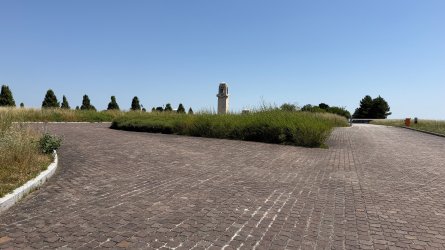
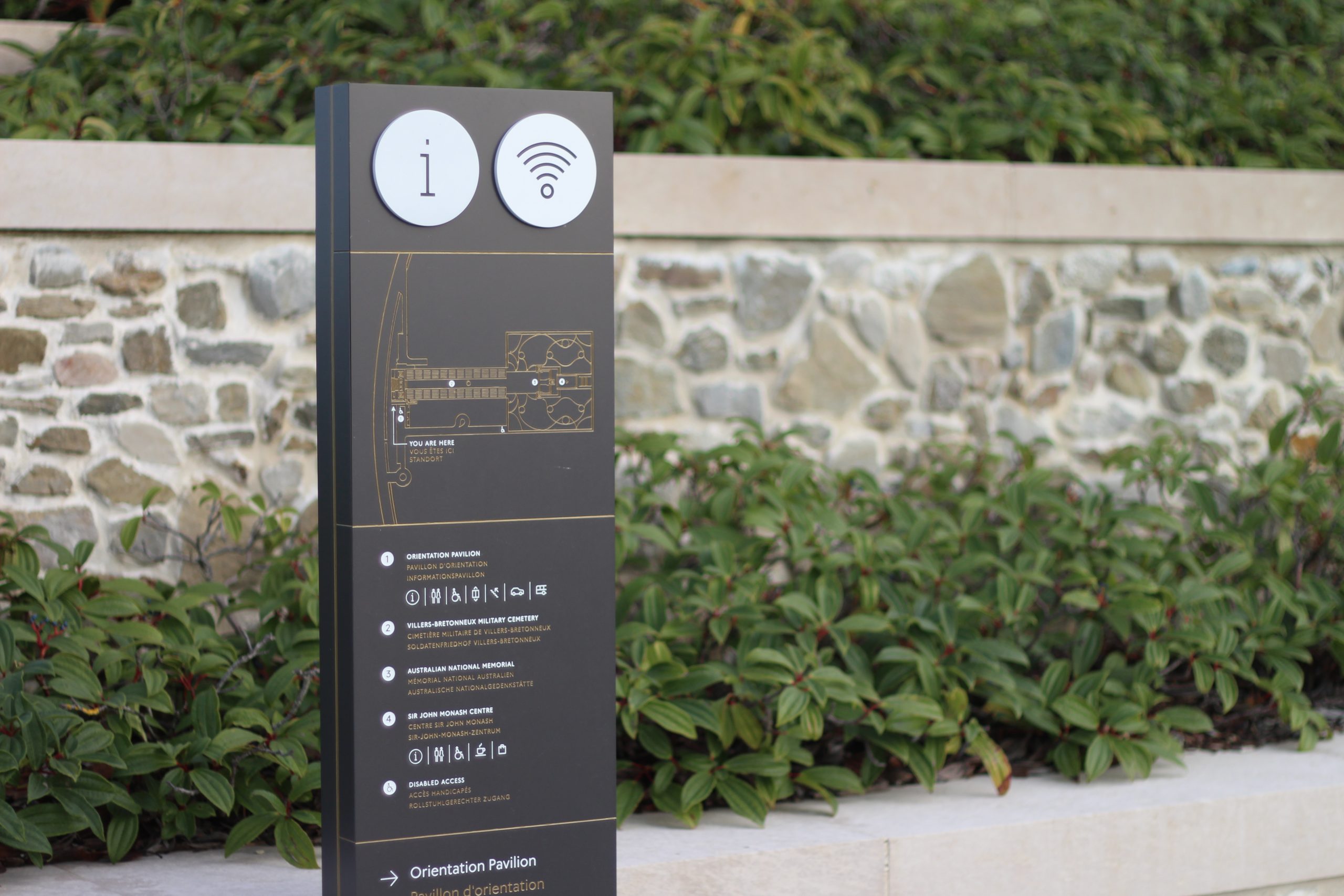
It was probably the heat (36 degrees), but I got annoyed at the SJMC near Fouilloy - it was poorly signed as to where you went after an initial 'info' stop at the bottom of the hill. I found my way up the hill, parking in a weedy spot and walked across a weedy field, through a gate to the better- kept centre grounds. Only 2 other cars there.

IMG_0506.JPEG

IMG_0509.JPEG

IMG_0521.JPEG


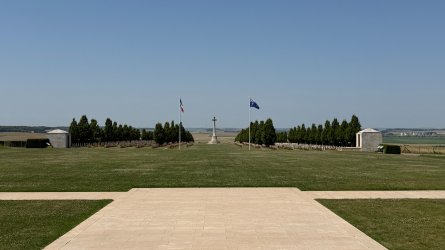
Outlook to the cemetery.

IMG_0510.JPEG

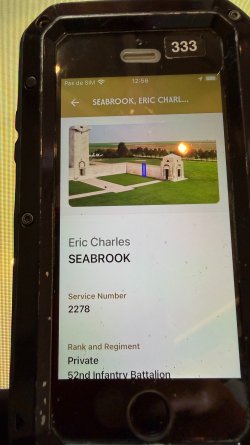
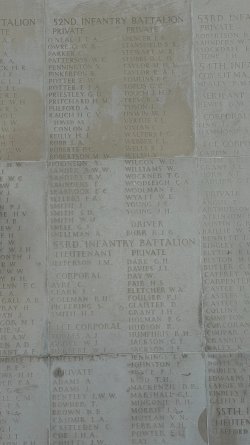
I knew my great-uncle Eric Charles Seabrook didn't have a grave, as eyewitness accounts said 'one moment he was there, then he was gone'. A direct hit by a German shell got him. I had downloaded 2 apps before I got there, but not the right one. The helpful French guy in the centre showed me where he was on the memorial wall. ❤️

IMG_0511.JPEG

IMG_0517.JPEG

IMG_0515.JPEG

IMG_0522.JPEG

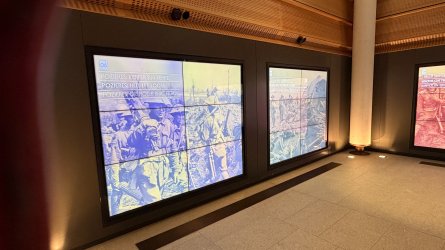
Inside the centre (behind the memorial façade) are extensive exhibitions on the war and campaigns etc. Unfortunately you need headphones/earpieces to follow it, as there are no signs/text explanations. I had ear phones, but just couldn't connect to the app. :mad: I've moaned about this type of thing before.

IMG_0514.JPEG
 
I left Rouen after 3 nights - 2 full days +, fully satisfied at having gained more understanding about the history of Normandy/France (back to Vikings and before that; plus Hundred Years War). It it wasn't so hot I would have done a lot more!!

Left the next morning for the Somme battlefields and the Sir John Monash Centre at the Villers-Bretonneux Military Cemetery and Australian National memorial. Hard to imagine the devastation that occurred here over 100 years ago.

View attachment 513932

View attachment 513938

View attachment 513933

It was probably the heat (36 degrees), but I got annoyed at the SJMC near Fouilloy - it was poorly signed as to where you went after an initial 'info' stop at the bottom of the hill. I found my way up the hill, parking in a weedy spot and walked across a weedy field, through a gate to the better- kept centre grounds. Only 2 other cars there.

View attachment 513934

View attachment 513935

View attachment 513944


Outlook to the cemetery.

View attachment 513936

I knew my great-uncle Eric Charles Seabrook didn't have a grave, as eyewitness accounts said 'one moment he was there, then he was gone'. A direct hit by a German shell got him. I had downloaded 2 apps before I got there, but not the right one. The helpful French guy in the centre showed me where he was on the memorial wall. ❤️

View attachment 513937

View attachment 513941

View attachment 513940

View attachment 513942

Inside the centre (behind the memorial façade) are extensive exhibitions on the war and campaigns etc. Unfortunately you need headphones/earpieces to follow it, as there are no signs/text explanations. I had ear phones, but just couldn't connect to the app. :mad: I've moaned about this type of thing before.

View attachment 513939
Being there for the ANZAC Day service is very special, as the sun rises over those fields.
 
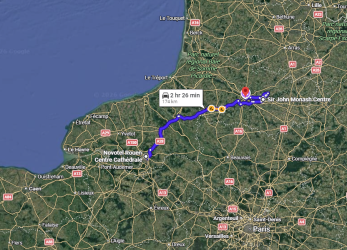
The route from Rouen to Amiens via the Somme

1783511413427.png

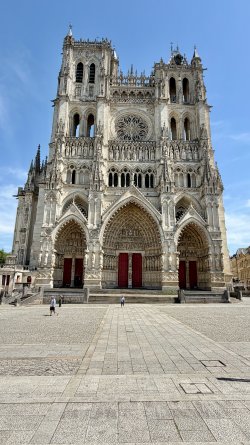
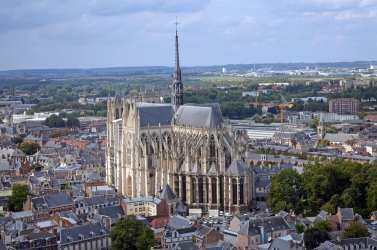
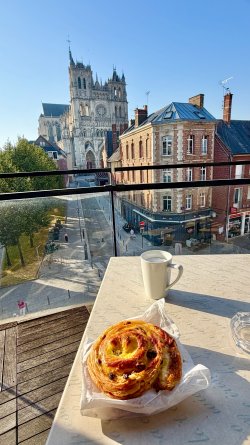
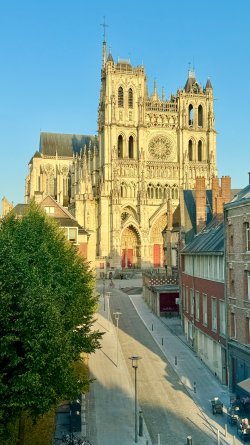
Amiens was my last major stop of this trip, the main attraction being - of course - Amiens Cathedral, always placed in the top 8 or 10 cathedrals in the world.
Stayed in the Mercure, very close to the cathedral - described in the Accor thread.

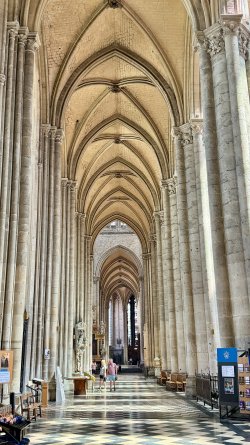
If Chartres wrote the Gothic rulebook, Amiens took it to new heights—literally. One of France's largest churches, this 13th-century marvel is where Gothic architecture really spreads its wings. Built with remarkable consistency over less than a century, it’s perfectly executed from its symmetrical plan to its three-tier interior elevation. The cathedral's audacious structure pushed the boundaries of medieval engineering in pursuit of that most ethereal of qualities: light.

And as it was so hot - +35 degrees, the cathedral was a good place to be!

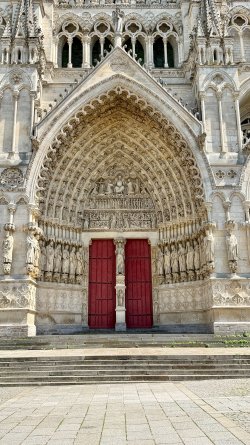
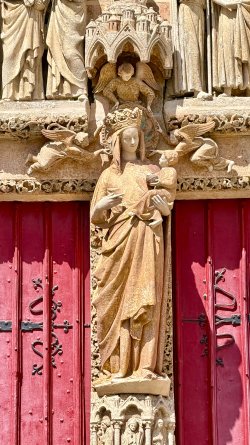
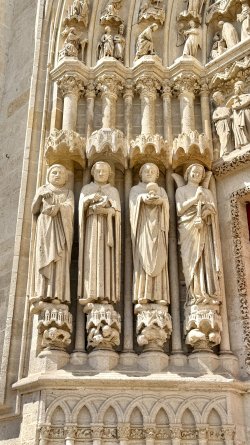
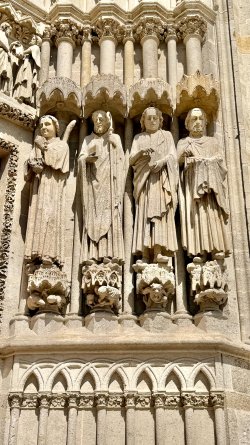
West façade. Below the rose window are 22 life-sized statues of the kings of France. Post revolution - 19th century restoration work.

IMG_0537.JPEG

IMG_0538.JPEG

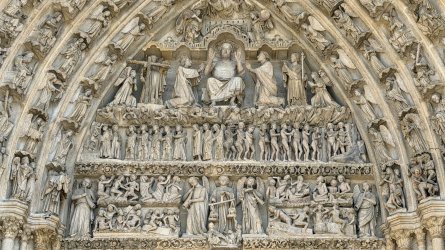
Christ rendering Judgement

IMG_0540.JPEG

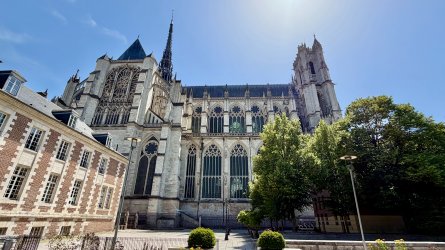
As noted above, the fact that it was built in a very short time frame - 1236 - 1250s for the bulk of the building, means that its remarkably symmetrical and coherent-looking.

You get an idea of how big this place is from a pic in Wikipedia article on the cathedral. The top of the spire, which was put in in 1528 to replace on destroyed by lightning, is 113m high.

1783577074609.png

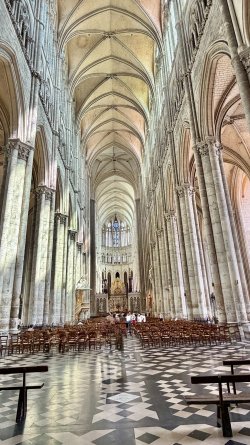
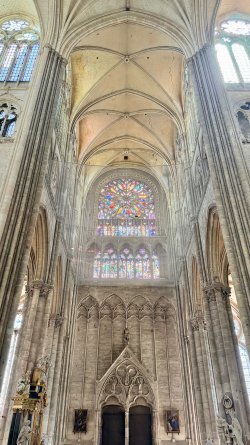
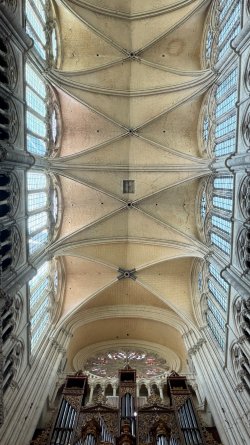
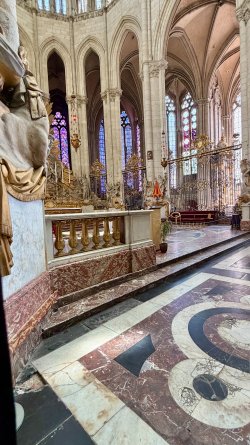
Inside is just massive. The builders were trying to bring in light, so it ended up having a volume of 200,000 cubic metres - double that of Notre Dame in Paris.

IMG_0541.JPEG IMG_0543.JPEG

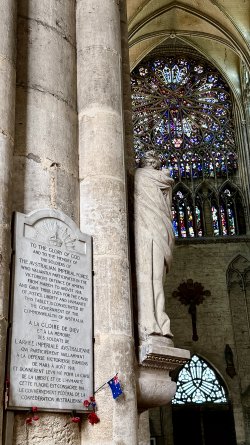
Dotted around the columns are tablets commemorating various allied forces, and French military leaders.

IMG_0549.JPEG

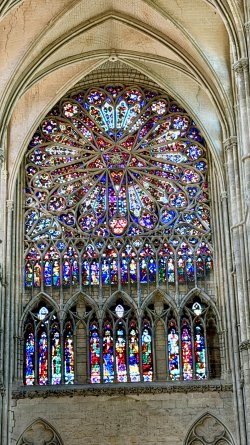
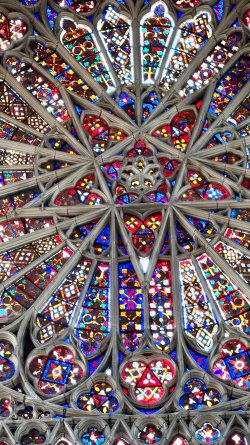
The north transept rose window was a 14th century.

IMG_0550.JPEG IMG_0551.JPEG

South transept rose window - 16th century.

IMG_0580.JPEG

Much of the rest of the stained glass is not original. The glass was removed for protection during both world wars, but a fire in a storehouse in 1920 destroyed a lot of it. You can see the plain glass in the windows - lets so much light in.

IMG_0590.JPEG
 
Last edited:
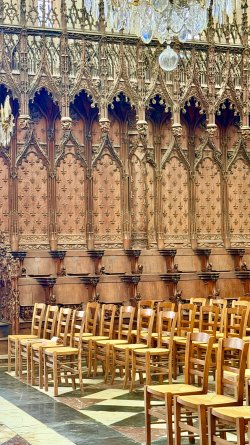
The early 16th century Choir stalls. Work was going on, so I couldn't get close to see the many carved figures in wood.
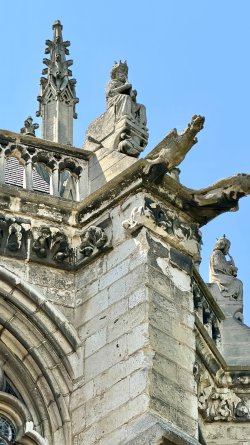
IMG_0569.JPEG

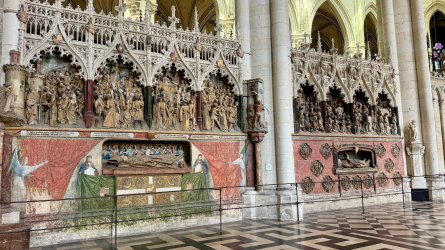
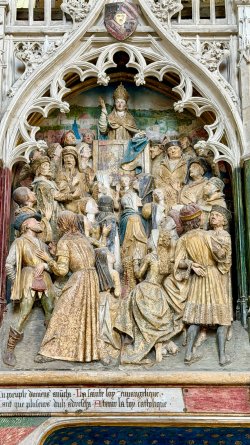
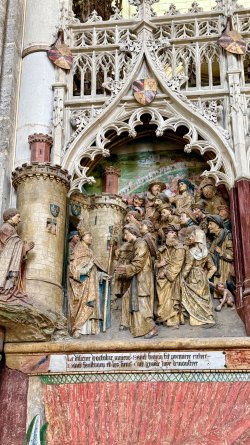
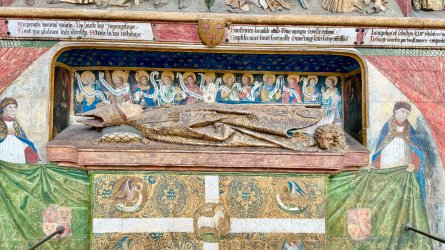
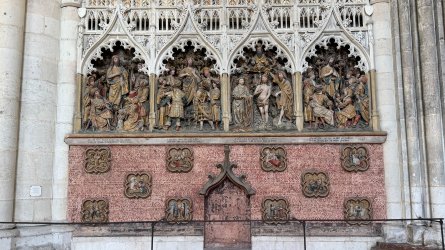
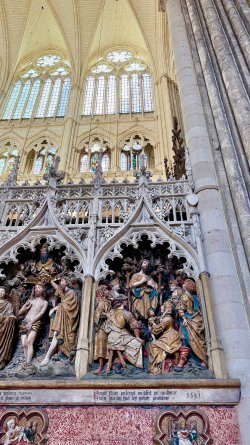
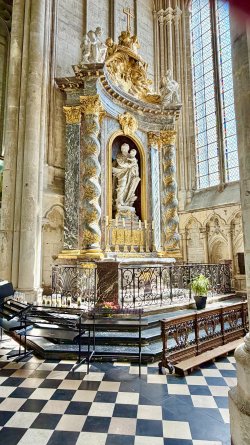
Among the most celebrated art treasures of the cathedral are the polychrome sculptures which are displayed in the ambulatory, on the outer walls of the enclosure of the Choir. They illustrate the lives of Saint Fermin (south side, made between 1490 and 1530) and John the Baptist (north side, made in 1531)). Both subjects were connected with the cathedral; The purported head of John the Baptist was an important relic held in the treasury, and the martyred Saint Fermin was considered the first bishop of Amiens. Another group of polychrome sculpture in the north ambulatory depicts in imaginative fashion Christ's cleansing of the Temple. The tombs of several bishops and other religious figures of the cathedral, also abundantly decorated are found in the lower portions of the enclosure, below the sculptural scenes.
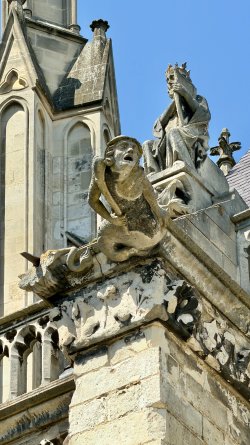

IMG_0553.JPEG


IMG_0554.JPEG IMG_0555.JPEG

Tomb from 1472.

IMG_0556.JPEG

IMG_0578.JPEG

IMG_0579.JPEG

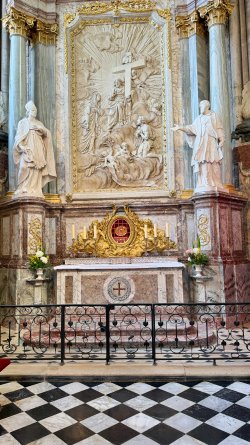
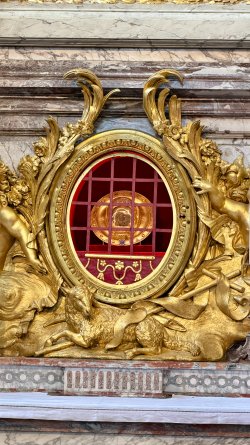
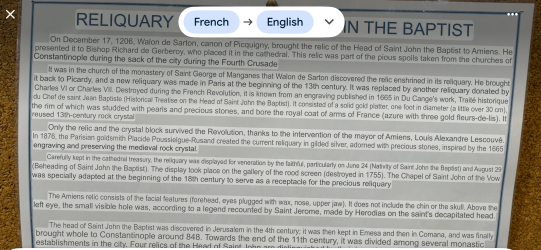
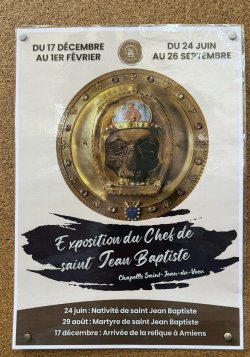
Mention of the cathedral's prize reliquary above - containing the head of John the Baptist.

The initial impetus for the building of the cathedral came from the installation of the reputed head of John the Baptist on 17 December 1206. The head was part of the loot of the Fourth Crusade, which had been diverted from campaigning against the Turks to the sacking of Constantinople, the capital of the Byzantine Empire. A sumptuous reliquary, with the face of the Saint, was made to house the skull. The original reliquary was lost during the Revolution but the skull and its medieval rock cristal shrine were preserved, being hidden by the mayor of Amiens, Louis-Alexandre Lescouvé. In 1876 a new reliquary was made by Placide Poussielgue-Rusand as a copy of the lost original (the aspect of which was known thanks to a 1665 engraving) and is displayed on the north aisle

IMG_0583.JPEG

IMG_0584.JPEG

IMG_0573.PNG

Not always on display, of course; only on special occasions. Umm ... read all about it.

IMG_0572.JPEG

I had booked a tour of the Treasury and to climb the tower, but a couple of days prior I got notice that these were cancelled, due to the heat.

IMG_0561.JPEG

IMG_0568.JPEG

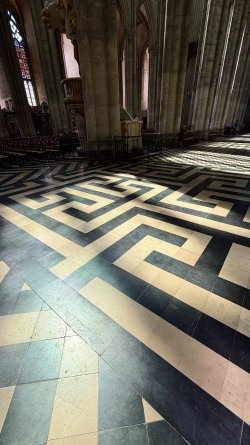
The floor of the cathedral is a labyrinth.

It symbolised the obstacles and twists and turns of the journey toward salvation, but also showed that with determination the journey was possible. On certain religious holidays, pilgrims would follow the labyrinth on their knees. The Amiens labyrinth is 240 meters long and was originally laid out in 1288 by the architect Rene de Cormont. The labyrinth today is an exact copy, made in the 19th century.

IMG_0586.JPEG
 

Become an AFF member!

Join Australian Frequent Flyer (AFF) for free and unlock insider tips, exclusive deals, and global meetups with 65,000+ frequent flyers.

AFF members can also access our Frequent Flyer Training courses, and upgrade to Fast-track your way to expert traveller status and unlock even more exclusive discounts!

AFF forum abbreviations

Wondering about Y, J or any of the other abbreviations used on our forum?

Check out our guide to common AFF acronyms & abbreviations.
Back
Top