




Air Traffic Control Issues

Interesting article in The Times. Excerpts from it:
The air traffic control failure that grounded more than 2,000 flights earlier this week was caused by a military aircraft entering flight data into the system, according to a report.
More than 330,000 passengers travelling to and from UK airports faced disruption as a result of the four-hour system shutdown at National Air Traffic Services (Nats) on Tuesday.
Three days after the system failure, airline schedules were back to normal. Travellers will not receive compensation because the shutdown will probably be considered “extraordinary circumstances” under passenger rights rules, according to the CAA.
The Ministry of Defence said. “We do not believe there’s any indication of an error on the part of the military. This is subject to the live Nats investigation, so it’d be inappropriate for us to comment further while that’s ongoing.

Pax won’t receive compensation, but airlines still had to provide duty of care… accommodation, meals, re-routing at earliest opportunity… which may have involved other carriers (although perhaps unlikely since everything would be full).

I’d expect the airlines to be seeking those costs from the responsible party.
 
Interesting article in The Times. Excerpts from it:
The air traffic control failure that grounded more than 2,000 flights earlier this week was caused by a military aircraft entering flight data into the system, according to a report.
More than 330,000 passengers travelling to and from UK airports faced disruption as a result of the four-hour system shutdown at National Air Traffic Services (Nats) on Tuesday.
Three days after the system failure, airline schedules were back to normal. Travellers will not receive compensation because the shutdown will probably be considered “extraordinary circumstances” under passenger rights rules, according to the CAA.
The Ministry of Defence said. “We do not believe there’s any indication of an error on the part of the military. This is subject to the live Nats investigation, so it’d be inappropriate for us to comment further while that’s ongoing.

The article is wrong. We already have a link to a portal to claim costs from BA.

A shed load of costs and anything above that will be via TI ie the two nights paid for but not enjoyed currently…😡
 
The article is wrong. We already have a link to a portal to claim costs from BA.

A shed load of costs and anything above that will be via TI ie the two nights paid for but not enjoyed currently…😡
The article is behind a paywall… but from what was quoted it is correct in saying pax will not receive compensation. As it’s a UK-based paper they are referring to compensation under UK261. Which won’t apply.

Airlines that did not provide their duty of care could receive claims from passengers who made their own arrangements.
 
Transited through LHR on Thursday - incoming was delayed 45 mins, outgoing 2 hours. But staff being very helpful.
 
Just had update from fam who were inconvenienced by the National ATC issue, last week - they made it to the motogp in time and enjoyed it immensely.
Their luggage arrived - a week later @SYD
Yes, I can only imagine LHR was orders of magnitude more chaotic than LGW.

Still, BA had luggage from ALL cancelled flights returned to the same belt. Basically flight by flight, so not a complete jumble but at least we got our bags there and then, but after about 2hrs waiting…by then surge pricing was in play for hotels. Still kicking myself I didn’t book sooner.
 
Last edited:
Wouldn't air ambulances still need to use SYD during 2300 to 0600?

It's closer to most major hospitals than WSI.
I am talking RPT/Freight, ambos don’t need ATC and already operate outside curfew limitations
 
Wouldn't air ambulances still need to use SYD during 2300 to 0600?
Sorry i was not clear
There are several types of ATC

(a1)Tower control controlling landing and take off at airports
(a2)Ground control -who also operate in the "tower"

(b) Approach control

(c) Enroute control

Closing Tower would not mean there is no ATC control over the Sydney Basin.

I am thinking that in circumstances where ATC is very short, one possibility is to close Tower in curfew- but this is more of a roster rearrangement and might not solve the last minute sickies.
 
Last edited:
Dont forget there are several types of ATC

(a1)Tower control controlling landing and take off at airports
(a2)Ground control

(b) Approach control

(c) Enroute control

Closing Tower would not mean there is no ATC control over the Sydney Basin.

I am thinking that in circumstances where ATC is very short, one possibility is to close Tower in curfew- but this is more of a roster rearrangement and might not solve the last minute sickies.
I’ve forgotten where the divide between Air Services Australia MEL and BNE lies but from memory isn’t the airspace over SYD actually managed from near MEL?

I defer to the experts at what point there’s handoff to SYD for aircraft heading there and summarily those taken off and on route?
 
I’ve forgotten where the divide between Air Services Australia MEL and BNE lies but from memory isn’t the airspace over SYD actually managed from near MEL?
I think you are referring to Enroute control
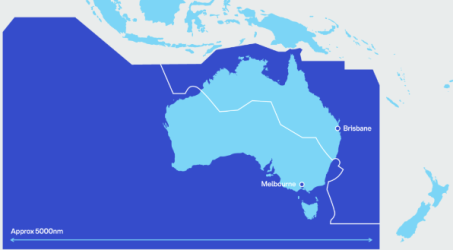
There are 2 FIR managed by 2 AirTraffic Sevrvice centres -Melbourne and Brisbane (apart from the Military)
Melbourne Control manage Enroute airspace over Sydney basin

But when OneSky is implemented, the 2 FIR will be merged into one - and the entire Australian Enroute airspace will be managed by Melbourne Centre.


Screen Shot 2026-09-20 at 8.42.56 am.png
 
Last edited:
I’ve forgotten where the divide between Air Services Australia MEL and BNE lies but from memory isn’t the airspace over SYD actually managed from near MEL?

I defer to the experts at what point there’s handoff to SYD for aircraft heading there and summarily those taken off and on route?
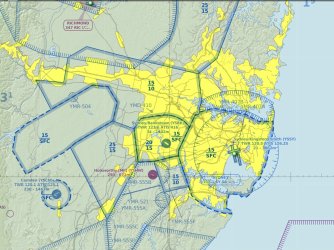
Tower looks after airspace from the harbour to royal national park and out west to over Bankstown up to 1500/2000 feet. Arrivals/Departures are handled from a seperate unit the controls down to Wollongong/Marulan, up to Katoomba and around to the hunter valley.IMG_1341.jpeg
 
I think you are referring to Enroute control
There are 2 FIR managed by 2 AirTraffic Sevrvice centres -Melbourne and Brisbane (apart from the Military)
Melbourne Control manage Enroute airspace over Sydney basin

But when OneSky is implemented, the 2 FIR will be merged into one - and the entire Australian Enroute airspace will be managed by Melbourne Centre.


View attachment 521795
Yes. In a past life I had some peripheral involvement In OneSky.
 
I think you are referring to Enroute control
There are 2 FIR managed by 2 AirTraffic Sevrvice centres -Melbourne and Brisbane (apart from the Military)
Melbourne Control manage Enroute airspace over Sydney basin

But when OneSky is implemented, the 2 FIR will be merged into one - and the entire Australian Enroute airspace will be managed by Melbourne Centre.


View attachment 521795
So OneSky implementation will need extra staff? eg a cohort of older ATCs nearing retirement. It just gets better and better 😟.
 
So OneSky implementation will need extra staff? eg a cohort of older ATCs nearing retirement. It just gets better and better 😟.
Nah, no extra staff when/if it happens (it’s a project of concern). In fact the old Brisbane Area Approach Control Centre will be gutted and made into a mini golf course for ATCs to practice on as they await their pending retirement (I may have made that up)!
 
Read our AFF credit card guides and start earning more points now.

AFF Supporters can remove this and all advertisements

An Australian-domiciled pilot said to me a couple of weeks ago 'there's an element of CFMEU-style tactics in what the Sydney air traffic controllers are doing'.

Sickies appear to peak on Fridays and Saturdays, and during school holidays. Amazing.

No one denies controlling aircraft must be a very stressful, fast paced job. I once worked with a male who was bright, but had applied and been rejected because he couldn't get his head around the multiple types of separation he needed to be able to process.

However many other jobs are arguably equally stressful: paramedics, surgeons, emergency department nurses, train controllers, firemen at times, police, dangling 140 metres above sea level from the Bolte Bridge in Melbourne to remove graffiti painted by Pam The Bird, crane operators on building sites, heavy vehicle and freight train drivers to name a few.

These people signed up for very well remunerated positions in Sydney yet their taking sickies (of which they have an unlimited number available each year) is hugely disadvantaging passengers, some of whom miss international connections as a result, and causing airlines to waste fuel. On occasion, restricted numbers of movements beyond hourly and quarter hour movement limitations may see airline crews having to spend an overnight away from where their roster says they should be.

What justification is for these 'protected species' of ATCs to receive unlimited annual sick leave? I don't know of any other occupation at non-management level that allows this.
Hi Melburnian1.
I respond to your opinion as you touch on a number of issues that I can directly answer.
I’ve been an Air Traffic Controller for 17 years in Australia, but ten years ago I changed careers and went to University to study Paramedicine.
I subsequently worked as an Advanced Care Paramedic in Qld for three years, having previously worked as a Senior Firefighter in QLD for seven years before starting ATC.
Thirty years ago I worked as a commercial pilot in General Aviation.
I can honestly say, in all of my years in frontline emergency services, nothing prepares you for the stress of controlling 30 odd aircraft at any given moment.
In Fire and Ambulance we worked as teams, and could always count on back up on the way when we had any more than two patients or more than a rubbish bin on fire.
In ATC in Australia, we often work as a single controller, with limited ability to get assistance when it hits the fan.
Air Traffic Control in Australia is far more complex, fatiguing, and challenging than I ever experienced as a Paramedic, Firefighter or Commercial Pilot.
 
Hi Melburnian1.
I respond to your opinion as you touch on a number of issues that I can directly answer.
I’ve been an Air Traffic Controller for 17 years in Australia, but ten years ago I changed careers and went to University to study Paramedicine.
I subsequently worked as an Advanced Care Paramedic in Qld for three years, having previously worked as a Senior Firefighter in QLD for seven years before starting ATC.
Thirty years ago I worked as a commercial pilot in General Aviation.
I can honestly say, in all of my years in frontline emergency services, nothing prepares you for the stress of controlling 30 odd aircraft at any given moment.
In Fire and Ambulance we worked as teams, and could always count on back up on the way when we had any more than two patients or more than a rubbish bin on fire.
In ATC in Australia, we often work as a single controller, with limited ability to get assistance when it hits the fan.
Air Traffic Control in Australia is far more complex, fatiguing, and challenging than I ever experienced as a Paramedic, Firefighter or Commercial Pilot.

Thank you Gez. You have a range of experience!

Why then (as documented in 'The Australian' in a recent article) does the number of sick days taken in SYD markedly exceed those taken in BNE and MEL? All three are busy major airports with a 'mix' of airline traffic.
 

Become an AFF member!

Join Australian Frequent Flyer (AFF) for free and unlock insider tips, exclusive deals, and global meetups with 65,000+ frequent flyers.

AFF members can also access our Frequent Flyer Training courses, and upgrade to Fast-track your way to expert traveller status and unlock even more exclusive discounts!

AFF forum abbreviations

Wondering about Y, J or any of the other abbreviations used on our forum?

Check out our guide to common AFF acronyms & abbreviations.
Back
Top