




Winter in Japan for the non-skiing family

Our aim was to catch the 5.20pm shuttle bus back to Yamagata, so made it to the bus stop by around 4.40. Queue was already quite long and we wondered if we would make it aboard. Oddly the bus came early and while we did just make the cut (in jump seats) many did not. But given the strange early arrival of the bus we wondered if there were ghost buses. Untimetabled extra buses which they run when demand was high.

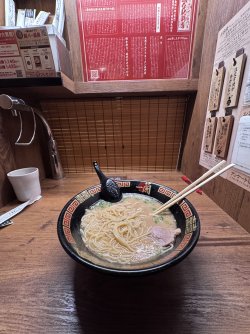
In any case soon were back in Yamagata, which is known as the ramen capital of Japan. There are even posters at the train station and articles in the Guardian indicating the frankly ridiculous amount of ramen eaten in this city. Despite, it would appear that most of the local ramen restaurants close on Sunday nights. So after an unsuccessful hunt for ramen in ramen-town, we returned to Sendai for ramen. Here we introduced ShelleyB-son to the ramen phenomenon that is Ichiran ramen. A chain specialising in tonkotsu ramen but really it’s also about the solo dining experience. Ramen is served in individual booths behind a bamboo blind. Waiters whose face you cannot see take your written order. If you want something extra there is a silent buzzer to press. The whole experience is very quiet and could be totally silent if you wish. Needless to say ShelleyB-son loved it. Good ramen, and allowed to be on his phone over dinner.
IMG_2542.jpeg
 
Day 20 and we were off to visit Chuson-ji, a world heritage listed temple. in Hiraizumi. But we before then, I should mention the breakfast at the Sotetsu Fresa where we are staying in Sendai. The breakfast is a buffet and while ok is not very extensive and has no components that change at all over the days we have been there. Probably most disappointing is the near lack of any fruit.

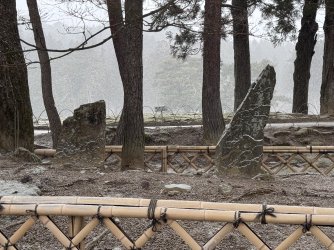
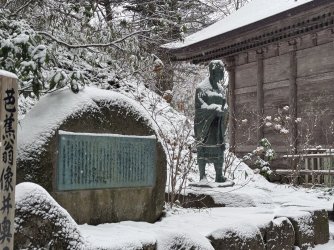
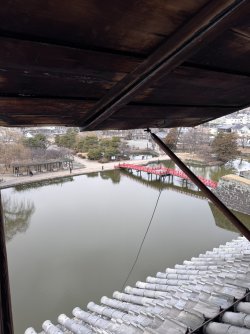
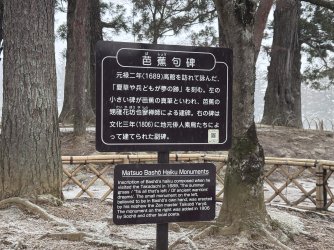
But back to the travel. Hiraizumi is easily reached from Sendai by shinkansen to Ichinoseki then either a local train or a bus to Hiraizumi. For getting there the timing worked well for a train. A quick stop to chat with the lovely people at the travel information centre procured us a map and a plan. Before the star of the show at Chuson-ji, we first planned to visit Motsu-ji temple dates from around the same time as Chuson-ji (around the 12th century) and was as extensive as Chuson-ji. However much of Motsu-ji has been lost by fire and neglect. Still we felt it was worth a visit and we were pleased we did. The temple is a less than 10 minutes walk from the train station. Entry fee was minimal - a few hundred yen- to the lovely grounds which include a large pond. The pond is real focus for the temple grounds, with buildings scattered around. One of the things we enjoyed most was these monuments to Matsuo Basho, a famous haiku poet who travelled these parts and wrote about his travels in the collection “The narrow road to the deep north” in the 17th century. The poem inscribed here is “The grasses in summer/all that is left/of ancient warrior’s dreams”.

IMG_2548.jpeg

IMG_2547.jpeg

IMG_2549.jpeg

IMG_2552.jpeg
 
Elevate your business spending to first-class rewards! Sign up today with code AFF10 and process over $10,000 in business expenses within your first 30 days to unlock 10,000 Bonus PayRewards Points.
Join 30,000+ savvy business owners who:

✅ Pay suppliers who don’t accept Amex
✅ Max out credit card rewards—even on government payments
✅ Earn & transfer PayRewards Points to 10+ airline & hotel partners

Start earning today!
- Pay suppliers who don’t take Amex
- Max out credit card rewards—even on government payments
- Earn & Transfer PayRewards Points to 8+ top airline & hotel partners

AFF Supporters can remove this and all advertisements

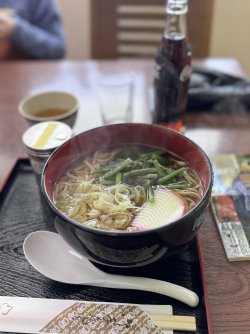
From Motsu-ji we walked to Chuson-ji. The walk is a bit longer than from the station to Motsu-ji, so for those who don’t wish to walk there is a bus. At the bottom of the path up to Chuson-ji there is a car park with a collection of shops and restaurants. In this low season only one restaurant, Isekiya, was open, where we ate some enjoyable soba.

IMG_2553.jpeg

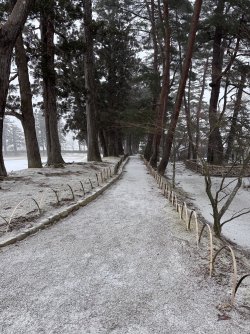
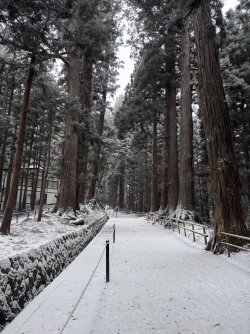
Then back out for the path to the temple grounds. The path up is steep(ish) and lined with cedars. Beautiful if a bit slippery with the snow and ice. One Japanese tourist coming down took a slide just as we were heading up. I asked (in Japanese) was he ok (he was) but he responded in English. Apparently he spent time at the University of Queensland.

IMG_2558.jpeg

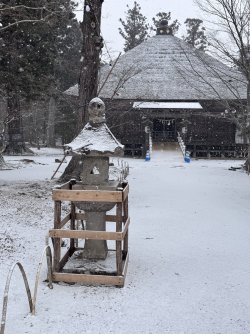
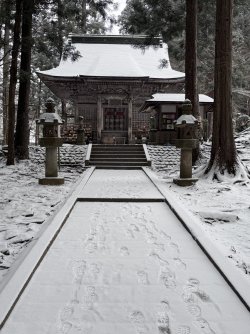
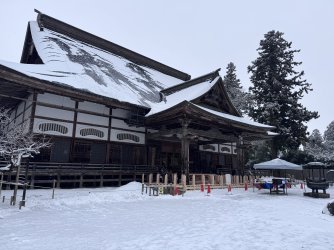
We made is safely up the steep approach, after which it levels out. There are views to south and west. There are numerous buildings, all of which are original. Most are free to visit, with only the museum and the golden temple requiring a ticket. No photos of either allowed I am afraid. The golden temple is amazing, well worth the price admission. The entire temple is covered in gold leaf, and is considered so culturally important it has been moved from its wooden cover to a concrete bunker and is behind glass.

We really enjoyed the whole experience, even ShelleyB-son who I was concerned might be all templed-out by now. The only thing to add was the main hall we entrance was currently undergoing some restoration, so was not looking at its best.

IMG_2557.jpeg

IMG_2560.jpeg

IMG_2562.jpeg

IMG_2564.jpeg

After we had enough of visiting Chuson-ji we tackled the steep path down. It had been snowing all afternoon, so the path was not improved in safety. Luckily there was a solid rope bannister, which helped a lot. The young girl desceding in front of me took a few tumbles but I suspect that was deliberate as it was usually accompanied by giggles. We all made it safely down and then caught the bus from in front of the temple path back to Ichinoseki as the timing worked better than the local train.

Dinner for our last night in Sendai was at izakaya Miraizuki. As it turns out our favourite izakaya from Hachinohe was part of a chain. As Mr ShelleyB was not with us then, we decided to have a meal there. And although it offered nothing new, was still very enjoyable and a reminder that chain restaurants in Japan are in fact very good.
 
Day 21 and for ShelleyB-son and I we are nearing the end of our trip. Onto our final stop, this time at Nagano. The day started a bit annoying. As usual planned to send bags onto next hotel, but despite their assurances on website indicated could only send cash on delivery. This was clearly not going to suit the receiving hotel. There was a Yamato office nearby but would only guarantee arrival in 3 days. While I am sure the yamato person was only being super-conservative and it would have been fine, we decided not to risk it and live with travelling with the bags. Was the first time we had any trouble with luggage services. Of course, our trip would take us through the outskirts of Tokyo, boarding a train that would have likely already been boarded by other travellers taking space on the luggage rack. Luckily our luggage does not meet the definition of oversized, but it would take a bit of space at our feet. In the event, did manage to get space for Sendai to Omiya, but had to live with the bag at our feet from Omiya to Nagano. Ah well, got there in the end.

Arrived in Nagano much too early for check in. Miraculously though, there was a coin locker big enough for all our bags. So bags into locker, and back on the train to a local resort town, Kariuzawa, for some outdoor exploration. Karuizawa is a high end resort town surrounded by mountains and national parks. We were there to visit famous local waterfalls, the Shiraito Falls, which later in the winter will completely freeze. Not likely this early in the season though.

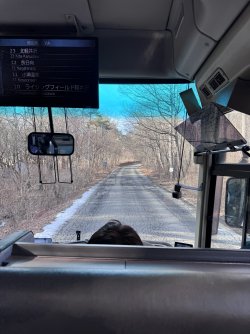
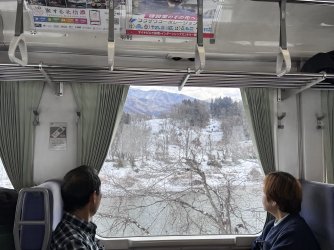
Karuizawa can be reached via shinkansen from Nagano, and then the falls via a local bus. On its way to the falls the bus goes out of town and past what are clearly holiday homes. These homes are used as a summer escape by the affluent of Tokyo. Previously the region was the playground of wealthy foreigners who built many of the homes in Karuizawa, accounting the very European and American feel of the homes.

View from the bus:

IMG_2567.jpeg

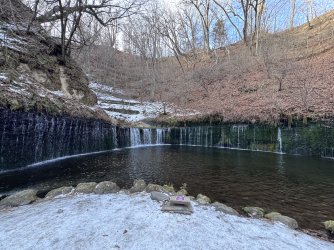
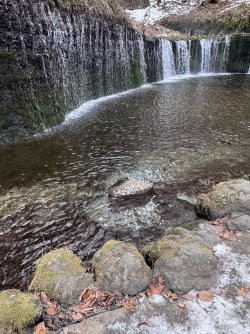
Once off the bus, we walked the lengthy path to the falls - all of perhaps a minute. The falls were sadly, but not unexpectedly, not frozen. But pleasant enough. Outside of winter there would be pleasant walking to do along the many trails in the forest. The falls are interesting as they are actually the source of the Yugawa river. Groundwater rises up here, forming these low but wide falls.
IMG_2568.jpeg

IMG_2569.jpeg
 
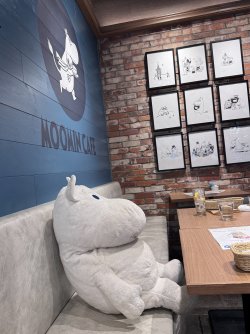
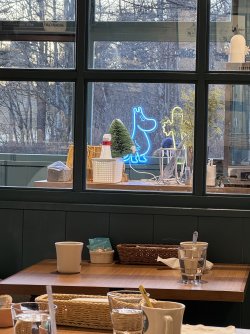
After our short visit, back on the bus and back to Kariuzawa. A short wait for the train was filled in shopping among the high end stores near the station and a visit to the Moomin Cafe.

IMG_2574.jpeg

IMG_2575.jpeg

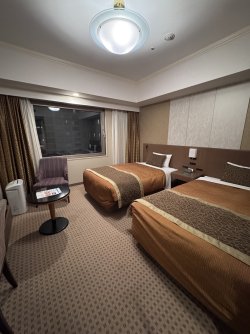
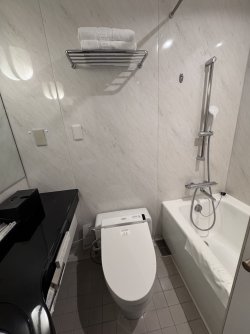
Then back to Nagano and check in to the Metropolitan Hotel Nagano. This hotel chain is owned by JR East and are often found directly attached to train stations, as was the case for Metropolitan Nagano. So an easy walk to the hotel and a quick check in. It was not easy to find decent and conveniently located triple rooms in Nagano, so here we booked two rooms. Not connecting unfortunately, but on the same floor. Our cost for the two rooms (a twin and a single) was 78700 yen (inc tax) for 3 nights.
Some photos of the twin room.

IMG_2582.jpeg

IMG_2580.jpeg
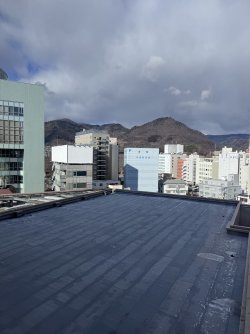
And the view (the next day when it was light). There are alps behind those clouds

IMG_2585.jpeg

For dinner we did not wander far and we were all tired. Steak at the Butcher Grill hit the spot before bed.
 

Become an AFF member!

Join Australian Frequent Flyer (AFF) for free and unlock insider tips, exclusive deals, and global meetups with 65,000+ frequent flyers.

AFF members can also access our Frequent Flyer Training courses, and upgrade to Fast-track your way to expert traveller status and unlock even more exclusive discounts!

AFF forum abbreviations

Wondering about Y, J or any of the other abbreviations used on our forum?

Check out our guide to common AFF acronyms & abbreviations.
Back
Top