




Middle East Airspace Diversions/Cancellations

The risk for ME3 ops right now is real and credible. The incident on Saturday missed an A380 by only a few hundred metres. Every western airline has suspended ops (VS gave it a go but now realise it's not safe). Equating the two is very unhelpful IMO.


The smart ones are taking the bus IMO.
That’s a red herring and not comparing apples with apples.

EK is able to monitor the situation on the ground in real time. European airlines would need to be thinking hours in advance… that is, what will the conditions be when our flight is due to land? Diversion airports readily available to EK, with associated infrastructure may not be applicable to Euro carriers not familiar with the area. Crews would need to be accommodated and booked passengers potentially transported away from DXB to those other places.

EK doesn’t have those constraints.

The bus may not be safer, again, we can’t be assuming the mindset of those who choose to take the bus vs air.
 
The smart ones are taking the bus IMO.
Which is also not without risk.
Many hours in a bus across open deserts come with some risk but yeah probably less risk.
The QR movement to RUH by bus wouldn’t be top of my list though. 8-10hr bus ride across to Riyadh which has been attacked multiple times especially PSAB which is a vitally important base
 
The other issue is how to intepret a risk assessment. Is 1:10000 safe or unsafe?

There’s a matrix. For the regulator and operator, red is unacceptable (sourced from CASA).

1773012581228.png
The individual will decide, depending on the circumstances.

The individual can then decide if they're happy with it, but we don't outsource everything to the customer - we have regulators for this very reason.

That’s a red herring and not comparing apples with apples.

EK is able to monitor the situation on the ground in real time. European airlines would need to be thinking hours in advance… that is, what will the conditions be when our flight is due to land? Diversion airports readily available to EK, with associated infrastructure may not be applicable to Euro carriers not familiar with the area. Crews would need to be accommodated and booked passengers potentially transported away from DXB to those other places.

EK doesn’t have those constraints.

The bus may not be safer, again, we can’t be assuming the mindset of those who choose to take the bus vs air.

Airlines have to be prepared to divert for any reason (medical, mechanical etc) so to suggest this is not readily available to them is incorrect. EK are conducting flights into DXB so the same advance planning is required.

I'm not sure it's a stretch to say a bus, with a much smaller profile than an A380, travelling away from a dense area, not containing 250 tonnes of fuel, has a lower risk.
 
The individual will decide, depending on the circumstances.
Yes. In Australia "material risk" in tort law are risks that a reasonable person in the same circumstances would attach significance to. Not all risks are material of course, but the risk determination ultimately comes down to the individual.
The other side of the coin is that the provider should inform the person of risks that would be material to the person. Its a bit circular.

I had a patient once. I informed him of the risk of a medical procedure. In the end he summarised it as : 'Either Im going to get the complication or I am not. So the risk is 50/50"

There’s a matrix. For the regulator and operator, red is unacceptable (sourced from CASA).
Im not sure about its objectivity. Words such as "catastrophic, hazardous, frequent, occasional" have a large and insurmountable subjective component whatever its defnintion by CASA.
 
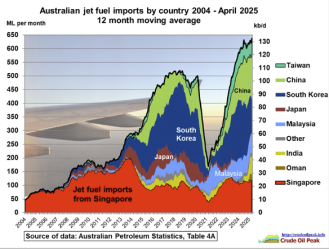
I wonder if some airlines or even the EU will consider flying over Russian & Belarusian airspace if both of the other alternative routes close down. That's if Russia allows it of course. Chinese do this already...
I wonder how much longer Chinese airlines will be flying. China relies heavily on Iran oil.
 
There’s a matrix. For the regulator and operator, red is unacceptable (sourced from CASA).

View attachment 499933


The individual can then decide if they're happy with it, but we don't outsource everything to the customer - we have regulators for this very reason.

Airlines have to be prepared to divert for any reason (medical, mechanical etc) so to suggest this is not readily available to them is incorrect. EK are conducting flights into DXB so the same advance planning is required.

I'm not sure it's a stretch to say a bus, with a much smaller profile than an A380, travelling away from a dense area, not containing 250 tonnes of fuel, has a lower risk.
That risk matrix is not taking into account risk treatment and the application of mitigating actions. Flight safety is of course a top priority, but there are potentially other factors where being on the ground may become more dangerous than getting out. A risk needs to be considered against successfully evacuating 10s of thousands.

Euro airlines could use the diversion airports, of course. But that’s not what is being discussed here. This is using diversion airports as active and operating alternatives to DXB. Busing pax or crews to those airports as necessary. Not the same as a one-off euro airline needing to put down in an emergency and the plane potentially being stranded off base. Or crews being delayed and having replacement crews on standby to operate the flight at short notice.
 
Even if Qantas and the likes are hedged for the next few months, we all know that won't stop them from putting up the prices from rising oil prices early. Question is how long do they wait?

Russian airspace won't happen unless the world removes sanctions from Russia. All EU carriers, plus airlines from Australia, UK, Japan, South Korea and Singapore are banned from entering Russian airspace.
 
Even if Qantas and the likes are hedged for the next few months, we all know that won't stop them from putting up the prices from rising oil prices early. Question is how long do they wait?

Russian airspace won't happen unless the world removes sanctions from Russia. All EU carriers, plus airlines from Australia, UK, Japan, South Korea and Singapore are banned from entering Russian airspace.
Striking a deal with Putin would be akin to trusting the scorpion.
 
That risk matrix is not taking into account risk treatment and the application of mitigating actions. Flight safety is of course a top priority, but there are potentially other factors where being on the ground may become more dangerous than getting out. A risk needs to be considered against successfully evacuating 10s of thousands.

Yes it does (I used to do this in the RAAF). You treat risks to reduce them so far as reasonably practicable - but ultimately the same matrix is used. You might have just reduced the likelihood from remote to improbable.

I only brought this up as the current situation was being compared to flying 737 Maxes, which have been cleared by regulators.

In a military context, a higher risk is accepted in certain situations - and yes it might be the UAE government sees an imperative to get people out (although they're still taking people in if they have connecting flights so I don't think that's the case). But even if that was the case, ethically passengers need to be fully aware of what the risks are. I don't see that in public statements. Putting out statements that there were no incidents at DXB on Saturday, when there quite clearly was, is not being ethical.

Euro airlines could use the diversion airports, of course. But that’s not what is being discussed here. This is using diversion airports as active and operating alternatives to DXB. Busing pax or crews to those airports as necessary. Not the same as a one-off euro airline needing to put down in an emergency and the plane potentially being stranded off base. Or crews being delayed and having replacement crews on standby to operate the flight at short notice.

So you're saying western airlines have cancelled because the logistics is hard? I don't think so, but feel free to believe that.

Im not sure about its objectivity. Words such as "catastrophic, hazardous, frequent, occasional" have a large and insurmountable subjective component whatever its defnintion by CASA.

You are taking something that is inherently subjective and applying an objective and methodical process to it. No, you can't remove all subjectivity, but it's done as much as possible.

There's a clear definition for catastrophic - multiple fatalities and/or loss of asset.

In your example you can't offer a procedure or medication if it's not approved by regulators. Both them and you patient have to approve - and you have to brief your patients on the risks. That's all I'm asking for here.
 
So China exports refined oil, jetfuel included. They need crude oil to refine.

EDIT: That points to there being excess jetfuel supply in China. They only need to restrict export to ensure they have enough supply at home. I hadn't thought that one right through QS.
 
Last edited:
There’s a matrix. For the regulator and operator, red is unacceptable (sourced from CASA).

For people to see for themselves, here is a CASA doc where that matrix is presented and discussed (not the same source as your illustration - eg different formatting).

There are, however, some qualifying words ....
1773017045529.png

The individual can then decide if they're happy with it, but we don't outsource everything to the customer - we have regulators for this very reason.

Sure - what are the UAE regulators (that is, the relevant ones) saying?

DFAT - Oz gov't - is a sort of 'regulator' of Australians travelling and could issue travel advisory - DO NOT TAKE AIRCRAFT OUT OF UAE/QATAR .

But they haven't. Why is that, do you think?

Extracts of current advice (the content of the link will change)

1773017288896.png

Nothing about avoiding airports or even aircraft.

1773017350769.png

That could vaguely be taken as an endorsement to use 'air border crossings' when available!

EDIT deleted.
 
Last edited:
Nothing about avoiding airports or even aircraft.

This bit?

Consider a commercial option to depart if you can secure one and it's safe to travel to the departure point. You should consider recent attacks in your area and that airports and aircraft are more vulnerable to these strikes.

For people to see for themselves, here is a CASA doc where that matrix is presented and discussed (not the same source as your illustration - eg different formatting).

There are, however, some qualifying words ....
View attachment 499947

What's your point? I'm not trying to show you how to do a risk assessment. I'm saying it's a methodical approach, and largely separates real risks from "I don't like the looks of that!". However that matrix is by far the most widely used method.

DFAT - Oz gov't - is a sort of 'regulator' of Australians travelling and could issue travel advisory - DO NOT TAKE AIRCRAFT OUT OF UAE/QATAR .

Nope.
 
I have frequent flyer QF via DOH seats booked to ATH in September,
I am trying to get a new flight just incase.
finding it very difficult at present hoping things change soon need to have a stopgap incase as I am cruising.
 
This bit?

Consider a commercial option to depart if you can secure one and it's safe to travel to the departure point. You should consider recent attacks in your area and that airports and aircraft are more vulnerable to these strikes.

'That bit' does NOT say to 'avoid aircraft' which was what I said. It says, naturally, consider all the risks. There is a difference between a government saying 'DON'T DO THIS' and 'BE REALLY CAREFUL - ITS DANGEROUS'. Clearly in the other bits I quoted and linked to, they are saying get out including by flying, if you are OK with that. All your hair-splitting with CASA and other risk assessment are just red herrings.


Is that some sort of argument? 🤣
 
Yes it does (I used to do this in the RAAF). You treat risks to reduce them so far as reasonably practicable - but ultimately the same matrix is used. You might have just reduced the likelihood from remote to improbable.

I only brought this up as the current situation was being compared to flying 737 Maxes, which have been cleared by regulators.


So you're saying western airlines have cancelled because the logistics is hard? I don't think so, but feel free to believe that.
Presenting the risk matrix is only presenting half the story because you haven’t included the risk treatments.

It’s not that the ‘max’ is safe or not, the point is that regulators can’t always be trusted. Or that government/experts/regulators always know what’s best, or have all the information, as you proposed in another post elsewhere.

Yes, the logistics for Eruo airlines are completely different to EK’s. If a Euro crew has a ground stop for 8 hours, where are they going to get another crew from? EK has them.
 
I have frequent flyer QF via DOH seats booked to ATH in September,
I am trying to get a new flight just incase.
finding it very difficult at present hoping things change soon need to have a stopgap incase as I am cruising.

Prudent to look at alternatives, but if things are continuing like the present in September, flying to Doha will be the least of our worries.

You may need to fork out for a fully refundable back-up. I'd look at Chinese carriers as probably the cheapest option. This is what my Travel Agent found last week when I was seeking an alternative for 1 April. However I went with another option in this case.
 
Read our AFF credit card guides and start earning more points now.

AFF Supporters can remove this and all advertisements

Become an AFF member!

Join Australian Frequent Flyer (AFF) for free and unlock insider tips, exclusive deals, and global meetups with 65,000+ frequent flyers.

AFF members can also access our Frequent Flyer Training courses, and upgrade to Fast-track your way to expert traveller status and unlock even more exclusive discounts!

AFF forum abbreviations

Wondering about Y, J or any of the other abbreviations used on our forum?

Check out our guide to common AFF acronyms & abbreviations.
Back
Top