





You are using an out of date browser. It may not display this or other websites correctly.
You should upgrade or use an alternative browser.
You should upgrade or use an alternative browser.
Grammar Discussions
- Thread starter JessicaTam
- Start date

Beano
Established Member
- Joined
- Jun 5, 2014
- Posts
- 2,307
- Qantas
- Platinum
Rule 6 also has a comment from George Bernard Shaw "It is of no consequence whether he decides to go quickly or to quickly go or quickly to go. The important thing is that he should go at once". (On an editor at the London Times who did not like split infinitives).Rule 6 is 19th C. Startrek resolved the issue.
Rule 3 isdepatabledebatable.
There are lots of rules, missing from the table, I was taught in school; never end a sentence with a preposition. And don't start one with a conjunction.

TheRealTMA
Senior Member
- Joined
- Jul 13, 2012
- Posts
- 8,721
- Qantas
- Platinum
Muse. Churchill "Up with which I will not put!Rule 6 also has a comment from George Bernard Shaw "It is of no consequence whether he decides to go quickly or to quickly go or quickly to go. The important thing is that he should go at once". (On an editor at the London Times who did not like split infinitives).
There are lots of rules, missing from the table, I was taught in school; never end a sentence with a preposition. And don't start one with a conjunction.


Beano
Established Member
- Joined
- Jun 5, 2014
- Posts
- 2,307
- Qantas
- Platinum
World famous quote!Muse. Churchill "Up with which I will not put!

Read our AFF credit card guides and start earning more points now.
AFF Supporters can remove this and all advertisements


Beano
Established Member
- Joined
- Jun 5, 2014
- Posts
- 2,307
- Qantas
- Platinum
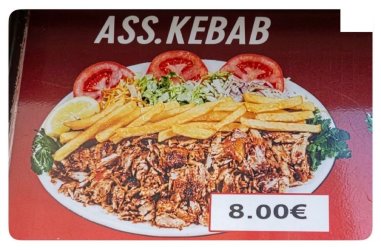
Only on a WENSEDAY (sic) so you are OK.

- Joined
- Jul 8, 2007
- Posts
- 3,426
- Qantas
- Platinum 1
- Virgin
- Red
- Oneworld
- Emerald
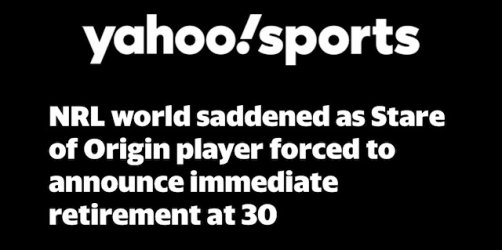
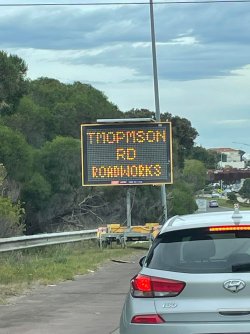
Looks like Yahoo! Sports has created a totally new and interesting sport -:


Groundfeeder
Active Member
- Joined
- Nov 3, 2005
- Posts
- 756
AND, don't start a sentence with "and".Rule 6 also has a comment from George Bernard Shaw "It is of no consequence whether he decides to go quickly or to quickly go or quickly to go. The important thing is that he should go at once". (On an editor at the London Times who did not like split infinitives).
There are lots of rules, missing from the table, I was taught in school; never end a sentence with a preposition. And don't start one with a conjunction.
(oopsy!)
Beano
Established Member
- Joined
- Jun 5, 2014
- Posts
- 2,307
- Qantas
- Platinum
So, the old school rule! Never start a sentence with a conjunction! Yea right!AND, don't start a sentence with "and".
(oopsy!)
Beano
Established Member
- Joined
- Jun 5, 2014
- Posts
- 2,307
- Qantas
- Platinum
That's the school-rule which is old, rather than the rule from the old-school, or does it matter?So, the old school rule! Never start a sentence with a conjunction! Yea right!

- Joined
- Aug 27, 2004
- Posts
- 18,039
- Qantas
- LT Gold
- Virgin
- Red
- Oneworld
- Sapphire
And "with" is not a suitable word to end a sentence with.AND, don't start a sentence with "and".
(oopsy!)
TheRealTMA
Senior Member
- Joined
- Jul 13, 2012
- Posts
- 8,721
- Qantas
- Platinum
Learn Italian. They deal with this efficiently by placement of the adjective before or after the noun which makes the intention clear.That's the school-rule which is old, rather than the rule from the old-school, or does it matter?
Beano
Established Member
- Joined
- Jun 5, 2014
- Posts
- 2,307
- Qantas
- Platinum
This is something up with which I will not put!! ( grammatically correct)And "with" is not a suitable word to end a sentence with.
TheRealTMA
Senior Member
- Joined
- Jul 13, 2012
- Posts
- 8,721
- Qantas
- Platinum
Enough of this fallacy.This is something up with which I will not put!! ( grammatically correct)
" While generally agreeing with many of the points made by Steven Pinker in his article (Whom knows, Review, 16 August), I should point out that in his discussion of prepositions at the end of a sentence, Pinker’s explanation of the witticism attributed to Winston Churchill– “This is pedantry up with which I will not put” – is not correct.
The verb “to put up with” is a phrasal verb (or more accurately phrasal-prepositional), and the elements “up” and “with” are not prepositions or adverbs here; they are particles which are integral parts of the verb and must normally occur in this sequence. This is the reason for the grammatical unacceptability of the witticism.
In addition, the meaning of the verb “to put up with” is not connected with the meanings of its constituents (a phenomenon often found with phrasal verbs) and thus cannot be deduced from them."

The sages up with which we should not put | @guardianletters
Letters: I presume Steven Pinker’s inclusion of the words ‘flouted’, ‘dichotomy’ and ‘refuted’ in his attack on pedantry was not accidental
Further ref: Steven Pinker: 10 'grammar rules' it's OK to break (sometimes)
Beano
Established Member
- Joined
- Jun 5, 2014
- Posts
- 2,307
- Qantas
- Platinum
I understood that! Thanks. But we are at the school class level here!Enough of this fallacy.
" While generally agreeing with many of the points made by Steven Pinker in his article (Whom knows, Review, 16 August), I should point out that in his discussion of prepositions at the end of a sentence, Pinker’s explanation of the witticism attributed to Winston Churchill– “This is pedantry up with which I will not put” – is not correct.
The verb “to put up with” is a phrasal verb (or more accurately phrasal-prepositional), and the elements “up” and “with” are not prepositions or adverbs here; they are particles which are integral parts of the verb and must normally occur in this sequence. This is the reason for the grammatical unacceptability of the witticism.
In addition, the meaning of the verb “to put up with” is not connected with the meanings of its constituents (a phenomenon often found with phrasal verbs) and thus cannot be deduced from them."
The sages up with which we should not put | @guardianletters
Letters: I presume Steven Pinker’s inclusion of the words ‘flouted’, ‘dichotomy’ and ‘refuted’ in his attack on pedantry was not accidentalwww.theguardian.com



Become an AFF member!
Join Australian Frequent Flyer (AFF) for free and unlock insider tips, exclusive deals, and global meetups with 65,000+ frequent flyers.AFF members can also access our Frequent Flyer Training courses, and upgrade to Fast-track your way to expert traveller status and unlock even more exclusive discounts!
AFF forum abbreviations
Wondering about Y, J or any of the other abbreviations used on our forum?Check out our guide to common AFF acronyms & abbreviations.


Currently Active Users
- torks
- ausfox
- rtm
- Harrison_133
- Quickstatus
- Brissy1
- Arkana
- square
- huong1
- aurora_b
- egak
- snooze
- Forg
- LinaLee
- buggy00
- froggerADL
- LionKing
- Radio8tiv
- Beachy55
- dairyfloss
- Kangol
- fafnersbane
- texter
- moa999
- tomlee1986
- Larko1
- Mort
- jrfsp
- Dr Bob
- faller
- AIRwin
- HeavyElectricity
- Dmac59
- Tlee
- kestrel1977
- Stone
- http_x92
- Austman
- drross
- Daver6
- drron
- mcbling
- nancypants
- tgh
- Draco
- Flyerqf
- MEL_Traveller
- SeatBackForward
- mouseman99
Total: 3,061 (members: 81, guests: 2,980)