




Air Traffic Control Issues

An Australian-domiciled pilot said to me a couple of weeks ago 'there's an element of CFMEU-style tactics in what the Sydney air traffic controllers are doing'.

Sickies appear to peak on Fridays and Saturdays, and during school holidays. Amazing.

No one denies controlling aircraft must be a very stressful, fast paced job. I once worked with a male who was bright, but had applied and been rejected because he couldn't get his head around the multiple types of separation he needed to be able to process.

However many other jobs are arguably equally stressful: paramedics, surgeons, emergency department nurses, train controllers, firemen at times, police, dangling 140 metres above sea level from the Bolte Bridge in Melbourne to remove graffiti painted by Pam The Bird, crane operators on building sites, heavy vehicle and freight train drivers to name a few.

These people signed up for very well remunerated positions in Sydney yet their taking sickies (of which they have an unlimited number available each year) is hugely disadvantaging passengers, some of whom miss international connections as a result, and causing airlines to waste fuel. On occasion, restricted numbers of movements beyond hourly and quarter hour movement limitations may see airline crews having to spend an overnight away from where their roster says they should be.

What justification is for these 'protected species' of ATCs to receive unlimited annual sick leave? I don't know of any other occupation at non-management level that allows this.
There seems to be quite a few defamatory assumptions in these comments masquerading as fact

An Australian-domiciled pilot said to me a couple of weeks ago 'there's an element of CFMEU-style tactics in what the Sydney air traffic controllers are doing'.

Sickies appear to peak on Fridays and Saturdays, and during school holidays. Amazing.
An Australian domiciled pilot approaches this from a particular perspective, not least being that they are more frequently exposed to the consequences of ATC shortages than you or I.
No one denies controlling aircraft must be a very stressful, fast paced job. I once worked with a male who was bright, but had applied and been rejected because he couldn't get his head around the multiple types of separation he needed to be able to process.

However many other jobs are arguably equally stressful: paramedics, surgeons, emergency department nurses, train controllers, firemen at times, police, dangling 140 metres above sea level from the Bolte Bridge in Melbourne to remove graffiti painted by Pam The Bird, crane operators on building sites, heavy vehicle and freight train drivers to name a few.
Perhaps, but the potential consequences of one (!) misjudgement by ATC is 800 fatalities.

These people signed up for very well remunerated positions in Sydney yet their taking sickies (of which they have an unlimited number available each year) is hugely disadvantaging passengers, some of whom miss international connections as a result, and causing airlines to waste fuel. On occasion, restricted numbers of movements beyond hourly and quarter hour movement limitations may see airline crews having to spend an overnight away from where their roster says they should be.

I would argue, given the responsibility, that ATCs are, in fact, underpaid. The fact is, that like most employees, their role is viewed as a 'cost' to the business that must be minimised. This is different to the logic which is used to remunerate anyone from CEOs to bond traders who are considered to 'generate revenue' and so can be paid in the tens of millions. But without ATCs there would be no air navigation charge revenues and landing fees etc in the same way that there would be no passengers without pilots, train drivers and bus drivers. The whole system of valuing and rewarding work is completely broken .... but I digress.

How do you know they are taking 'sickies'? What evidence do you have? As far as i am concerned they are reporting sick/unfit for duty. And I would much rather that be the case if they are controlling a flight that I am on

As for crews getting disrupted? That is the safe outcome. Staff in safety critical roles (in this case ATC & Pilots) can have no regard for the consequences of their decisions, the people on aeroplanes etc - and how others will be impacted - they must choose the safest outcome; and if that means reporting unfit for duty, then ... tough.
What justification is for these 'protected species' of ATCs to receive unlimited annual sick leave? I don't know of any other occupation at non-management level that allows this.

What you have to ask is not, why ATCs have these provisions conferred upon them, but why others don't? Do you want your surgeon operating on you when s/he's sick or otherwise distracted or has worked 36hrs straight (it happened); or even your fund manager investing your Superannuation when they are unwell/exhausted? It's macho nonsense to power-on when you're knackered because your performance & decision making degrades - fact. Aviation is as safe as it is because it leads the world in this thinking. That knowledge is being sought by other industries and passed on. We will all be dead one day and our employers will get on just fine without us despite our pretentions otherwise.
 
It certainly isn't a widespread practice by any means.

Unfortunately, sick leave provision is often abused. It's meant for genuine illness, not just because an employee wants to take a day off.

Some jobs requiring shift work see employees swapping hours or days of work with colleagues.

Try certain health funds, banks, insurance companies, tech companies, communication companies, mining companies.

These companies have found by experience that an annual cap makes people feel entitled to take sickies to the limit or “lose it”. Remove the cap and give the manager discretion and you built a trust level that if I am genuinely sick my manager will approve it. There is no longer a target to take off or lose it. It’s no longer an award entitlement but a health benefit.

In the years after introduction in one firm i worked for and got access to the stats, sickleave claims dropped quite dramatically.
 
Last edited:
Elevate your business spending to first-class rewards! Sign up today with code AFF10 and process over $10,000 in business expenses within your first 30 days to unlock 10,000 Bonus PayRewards Points.
Join 30,000+ savvy business owners who:

✅ Pay suppliers who don’t accept Amex
✅ Max out credit card rewards—even on government payments
✅ Earn & transfer PayRewards Points to 10+ airline & hotel partners

Start earning today!
- Pay suppliers who don’t take Amex
- Max out credit card rewards—even on government payments
- Earn & Transfer PayRewards Points to 8+ top airline & hotel partners

AFF Supporters can remove this and all advertisements

An Australian domiciled pilot approaches this from a particular perspective, not least being that they are more frequently exposed to the consequences of ATC shortages than you or I.

Australian-domiciled pilots are in a very good position to know what's actually going on, because they have access to a wide range of individuals who work in aviation.
 
Evidence??

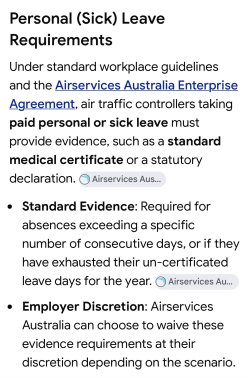
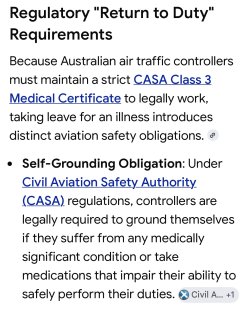
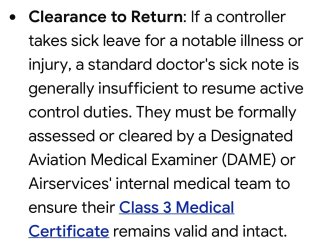
While I am not litigious and vastly prefer all matters to be resolved directly between employers and employees/contractors without the involvement of solicitors, unions or tribunals, it's sufficient of an issue in Australia for law firms to have issued bulletins.

One example:

 
While I am not litigious and vastly prefer all matters to be resolved directly between employers and employees/contractors without the involvement of solicitors, unions or tribunals, it's sufficient of an issue in Australia for law firms to have issued bulletins.

One example:

That is guidance provided to employers from a law firm advertising their wares in the same way that Unions (on behalf of employees) receive guidance to mitigate the misbehaviour of employers

You are accusing ATCs of taking sick leave in circumstances which do not warrant it. What is the specific evidence that you are in possession of that allows you to denigrate the professionalism of ATCs who feel compelled to report unfit for duty?
 
Australian-domiciled pilots are in a very good position to know what's actually going on, because they have access to a wide range of individuals who work in aviation.
I have ‘access’ to many people in the broader industry in which I work, with whom I interact professionally, but I don’t socialise with them.

Access doesn’t guarantee informed comment. I’d be curious to know how the “CFMEU tactics” assessment was arrived at.
 
While I am not litigious and vastly prefer all matters to be resolved directly between employers and employees/contractors without the involvement of solicitors, unions or tribunals, it's sufficient of an issue in Australia for law firms to have issued bulletins.

One example:


How is that specifically relevant to Airservices Australia and ATCs at Sydney?
 
How is that specifically relevant to Airservices Australia and ATCs at Sydney?

It was in response to a question asking for 'evidence' about my general statement that sick leave (across industries) can be abused.

It's a good idea to go back a few posts to see to what a contributor was replying.
 
Question:

Has there been a statistically unusual/improbable amount of ATC sick leave in recent days?

Not sure if I’ve seen any details about this in news reporting so far.

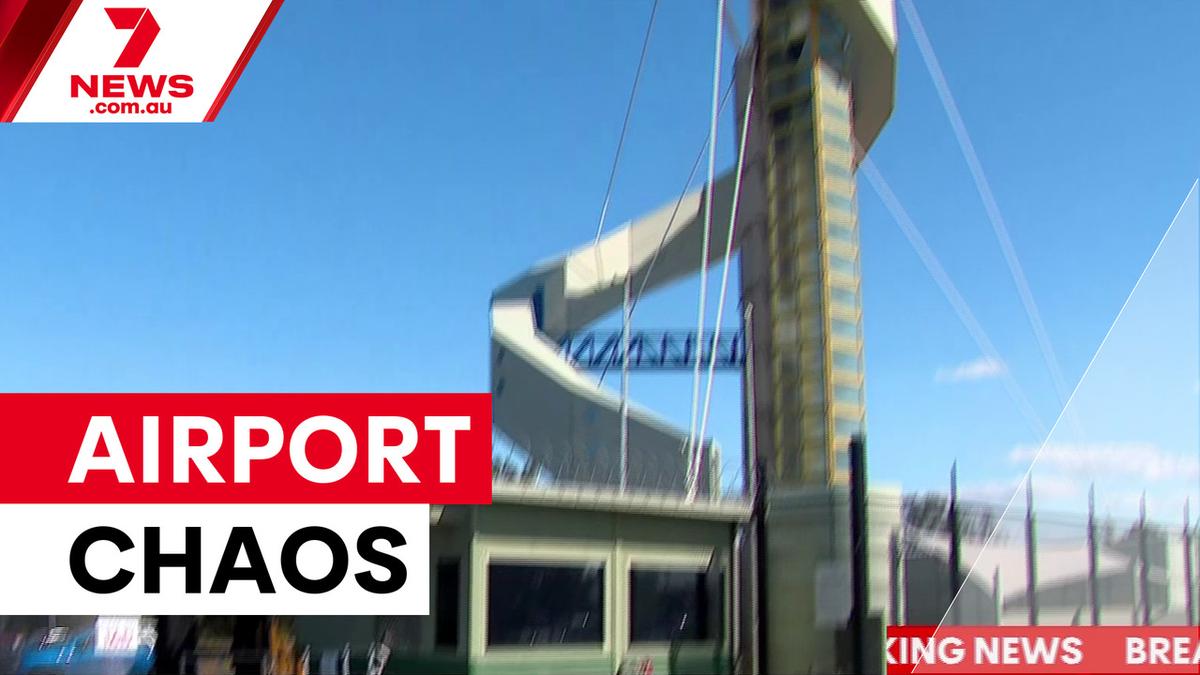
This extract below from Channel 7 news is unfortunately not dated, a problem with many Internet archives initiated by TV news stations (unlike print media that routinely dates its articles) but it is (IIRC) a recent previous occasion (not this weekend) when travellers at Sydney airport were disrupted:


And here's what 7 news stated on its website:

Sydney Airport chaos as controllers call in sick​

Air traffic controllers at Sydney Airport called in sick en masse, forcing flight delays and threatening complete departure cancellations between 3:30-4pm. The staff shortage caused chaos for weekend travellers, with departures initially delayed to four minutes apart before additional controllers were brought in to fill the gap.

--------------------

So there we have it. At least one major media outlet has highlighted the issue.
 
I have ‘access’ to many people in the broader industry in which I work, with whom I interact professionally, but I don’t socialise with them.

Great. In the course of chatting with them, they'd only be human if they told you of both achievements (and more relevantly to the current discussion) problems, and definite or likely causes of the latter.

Socialising with them should provide even more insights - a couple of wines or beers may help.

And how do you know that just because person A is like you and doesn't socialise with person B who works in a different subsector of the same field of employment, that person C doesn't socialise with person B (or D) across subsectors?
 
Last edited:
Air traffic controllers at Sydney Airport called in sick en masse
Cool, do they want to put any context behind that sensationalist statement, or are we simply all meant to fall for it hook, line and sinker?

Honestly, this isn't journalism and it does not prove anything.
 

Become an AFF member!

Join Australian Frequent Flyer (AFF) for free and unlock insider tips, exclusive deals, and global meetups with 65,000+ frequent flyers.

AFF members can also access our Frequent Flyer Training courses, and upgrade to Fast-track your way to expert traveller status and unlock even more exclusive discounts!

AFF forum abbreviations

Wondering about Y, J or any of the other abbreviations used on our forum?

Check out our guide to common AFF acronyms & abbreviations.
Back
Top