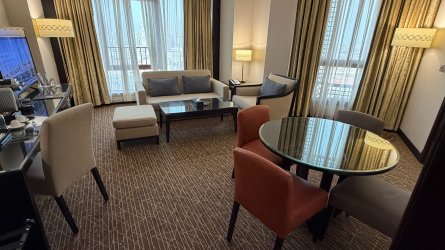
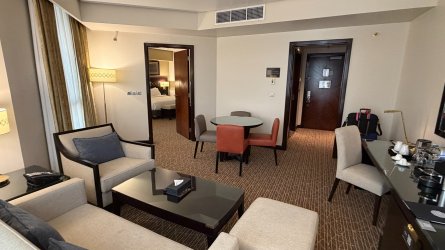
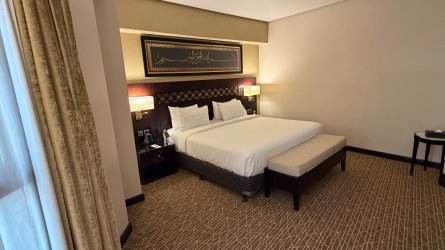
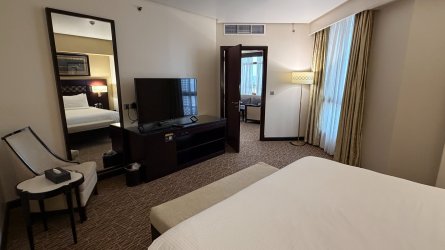
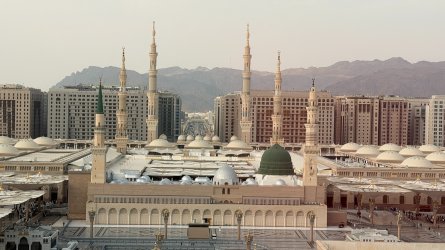
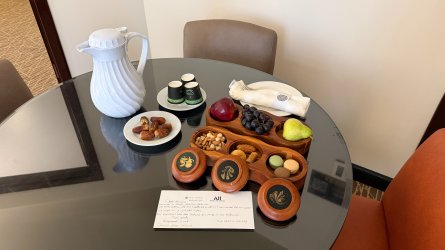
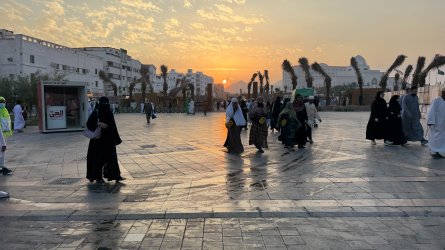
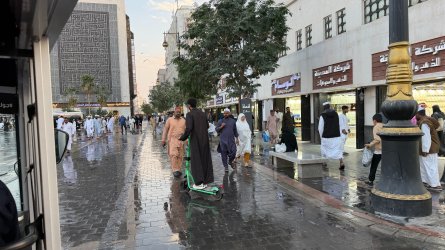
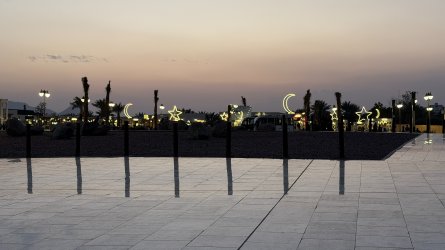
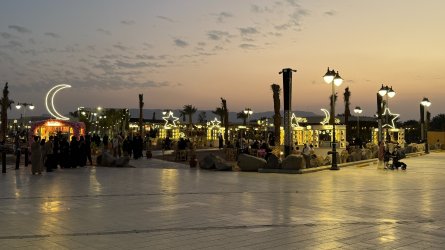
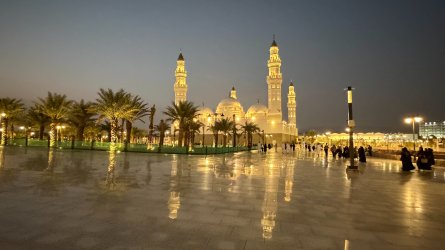
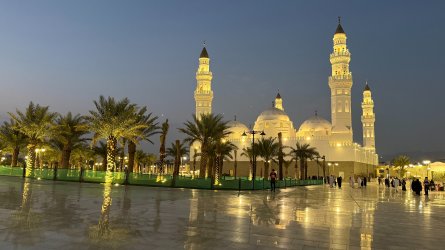
A short stint in Saudi (and QR Doha Stopover)

This today from the BBC.

Whilst they are moving forward I just done everything see a day where it’s open slather.
The friends we have stayed with in Jeddah still maintain that the day will never come where alcohol is freely available in the Kingdom.
Resorts will eventually open up for tourists that serve alcohol but it certainly won’t get to levels like Qatar or others
 
This today from the BBC.
Thanks. It says

Yet despite the ban, for decades, alcohol has circulated out of public view – from homemade brews to imported labels – consumed at private parties, in gated residential compounds, and in well-stocked Saudi homes.

I’ve told the story before. When we visited in 1994, the Australian trade commissioner invited us to dinner at his place. The booze was laid on and he told us that once a year each embassy is allowed to import a container load of booze which was then swapped around all the missions.
 
Next day, I had a 2 hour (on site) tour booked of Hegra - the main focus of my visit to Saudi. It was difficult to decide what type or duration of tour to take beforehand and I think I did OK. Unfortunately we had a group of 5 young Saudi ladies (western dress, some botox lips, one of them vaping on the bus, incessant chatter amongst themselves, incl when the English version of explanations given, selfies, selfies, selfies, no respect for timing - just obnoxious).

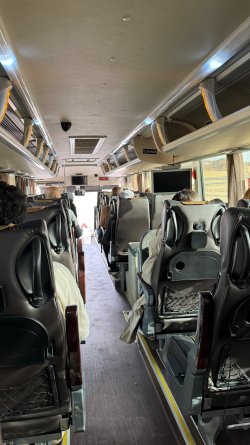
Anyway - the tour started with a pick-up from the Winter Park as before, at 8:30am. Half a coach load. About 20 mins drive to the park entrance where there is a small visitors centre and its a muster point for the actual tours of the site. We got off, and after 5 mins, joined another coach which was already half full. Couples got split up - not ideal. Comfortable 2 door coach, USB A power at the seats.
IMG_2563.JPEG

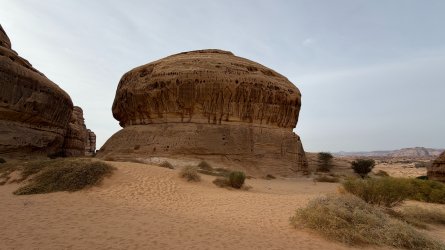
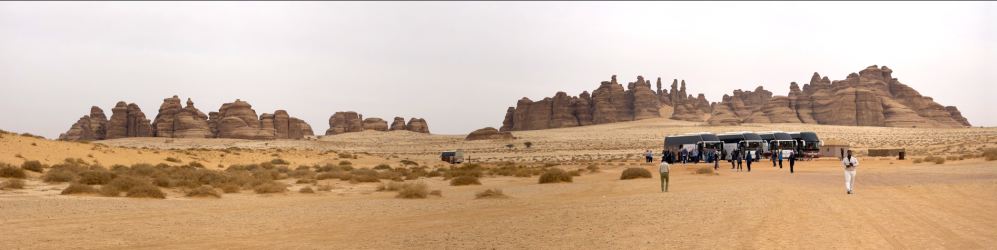
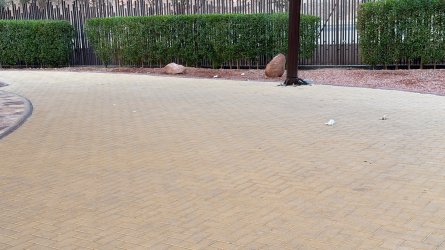
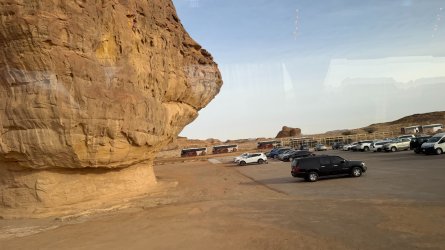
The car park at the visitors centre (concealed) - showing the base of a typical formation there.
IMG_2565.JPEG

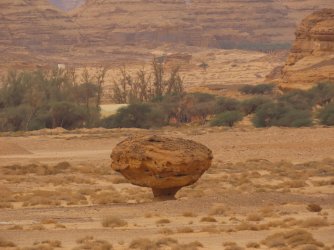
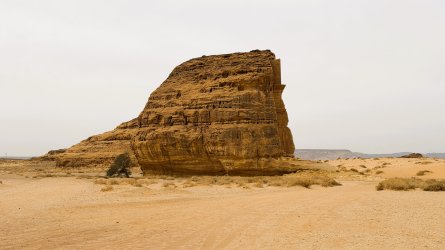
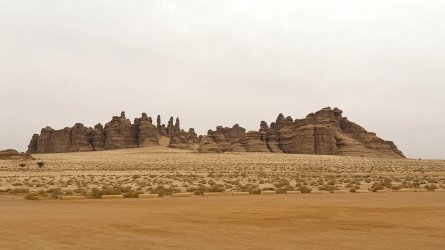
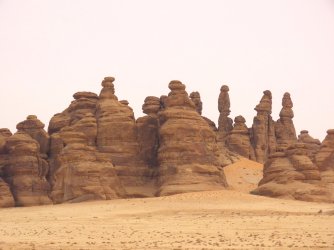
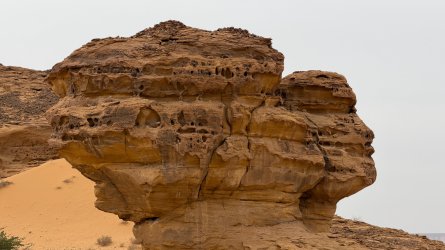
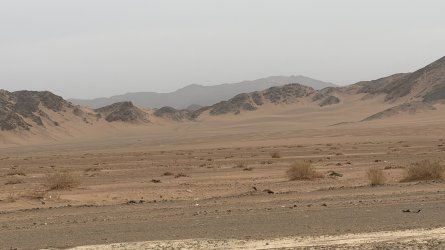
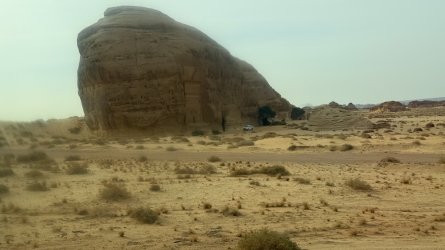
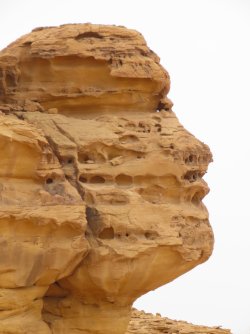
The countryside was fascinating - isolated sandstone rock formations, called inselbergs, from the size of a garage to decent hills, just sticking up out of the sand.

An inselberg
IMG_2571.JPEG

IMG_2574.JPEG

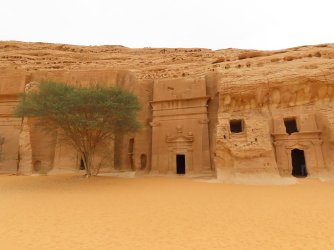
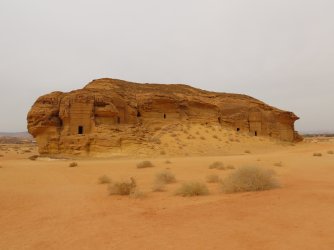
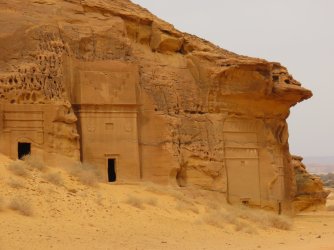
Hegra. Many here would have visited, or know of the magnificent carved tombs at Petra, in Jordan, the main city of the Nabatean empire. The Nabateans occupied northern Arabia and the 'Levant in the 4th-1st centuries BC and rules some very rich trading routes (gold, frankincense and myrrh ... ). I loved Petra and when I found out that Hegra was the second city of the Nabateans (and a bit later than Petra - say, 500BC), and also had rock-cut tombs, I had to visit. Its a UNESCO world heritage site, the first in Saudi Arabia.

In the pics note how just about all the female visitors were without head coverings and most were in western attire (no skirts). This was typical of all the excursions, within hotels and even at the Madinah train station, Jedda Corniche etc.

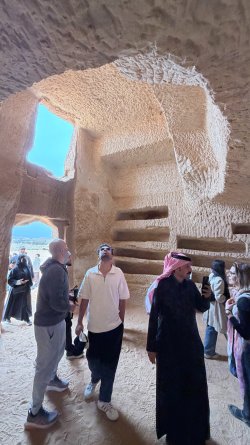
First stop was at Jabel Ithlib ('Ithlib mountain') which hosts a diwan, or dining hall/space.
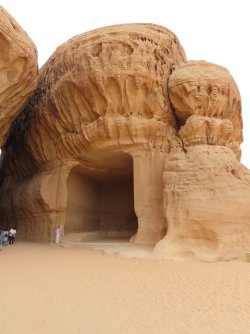
IMG_1122.JPG

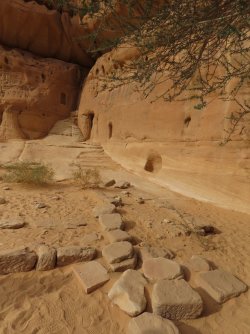
Adjacent to the diwan was a small siq , leading to the remains of a dwelling or other structure. The lady on the right below was out guide - very knowledgeable and answered questions such as on the Nabateans and relationship of here to Petra. There was also a Saudi guy 'safety officer' so pax didn't stray where they shouldn't. We spent about 30 mins at each site.
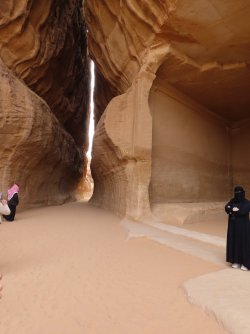
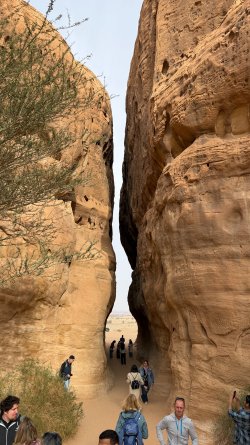
IMG_1121.JPG

IMG_2584.JPEG

IMG_1125.JPG

Two of our lovely local ladies, still clutching the coffees they bought at the Winter Park.
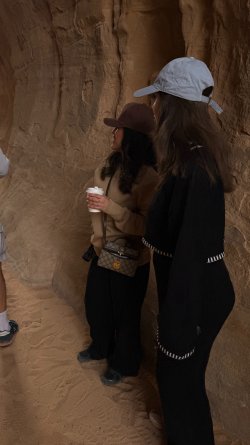
IMG_2582.JPEG

As far as I could tell, al the erosional features were natural.
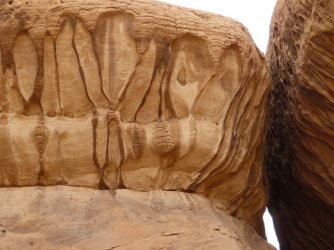
IMG_1127.JPG

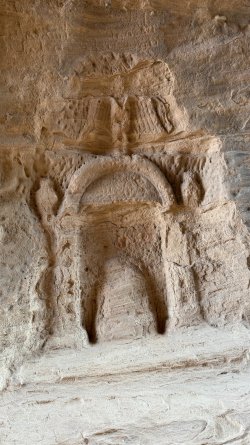
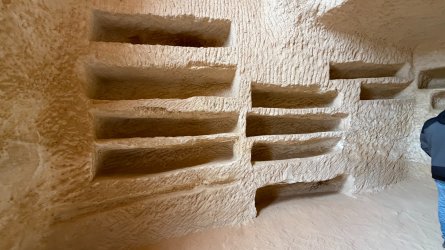
There were inscriptions and niches, presumably for deities.
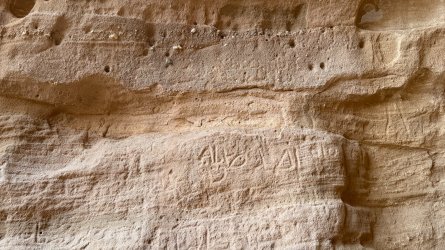
IMG_2580.JPEG

IMG_2583.JPEG

Heading back to the coach. The city of Hegra is in the wide space in the distance.
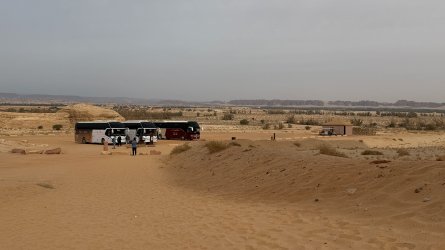
IMG_2586.JPEG
 
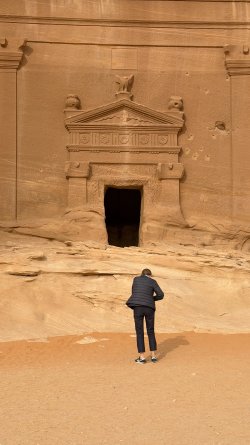
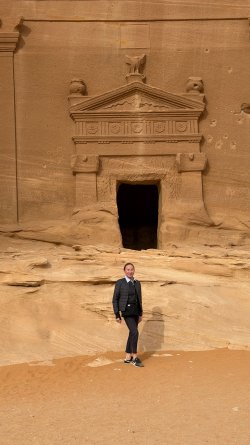
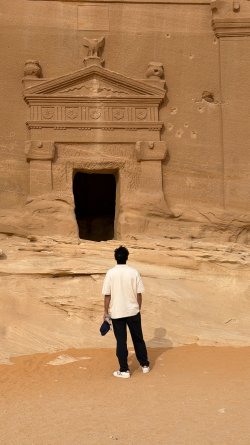
Before I go further, a reminder of the perils of group tours. In the first 3, the group had just arrived and #1 strode forth to get their pic taken in front, then # 2 was contemplating the tomb, which is great, but not when everyone is waiting ... #3 with the camera stick was just oblivious to everyone else, the whole tour.

IMG_2590.JPEG IMG_2591.JPEG

IMG_2592.JPEG IMG_1142.JPG


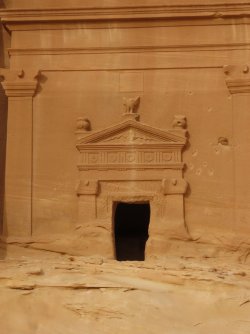
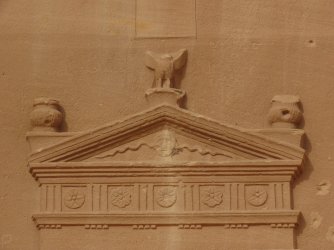
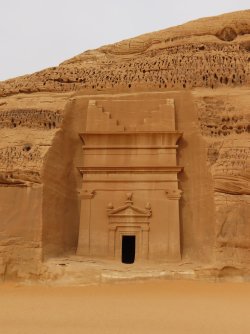
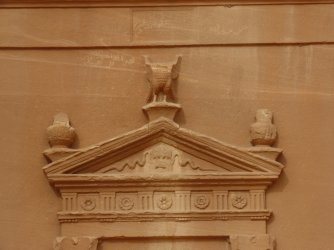
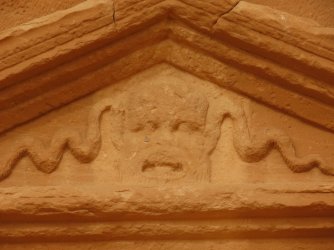
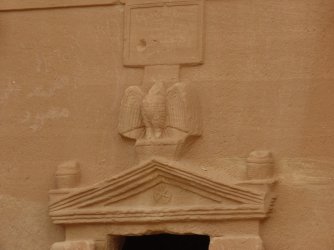
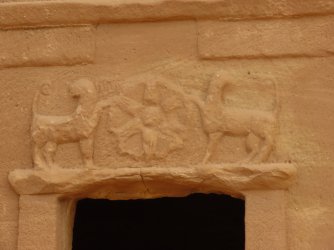
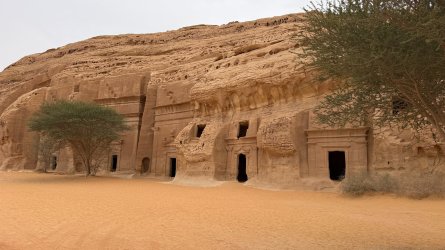
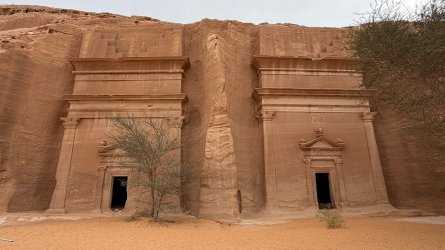
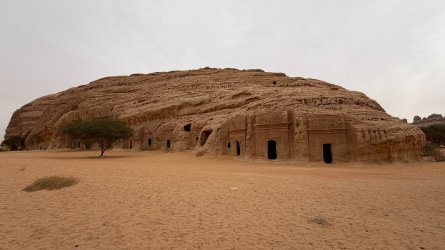
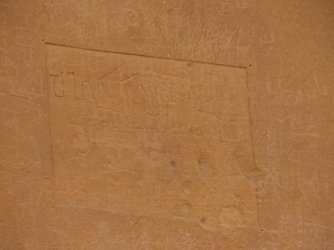
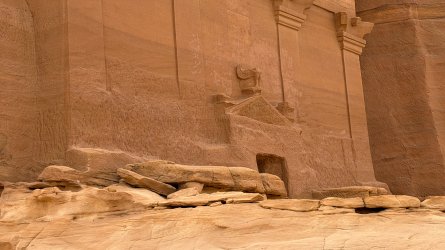
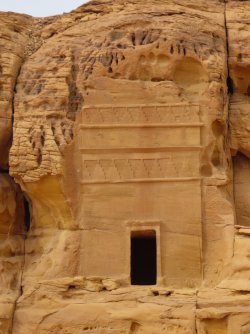
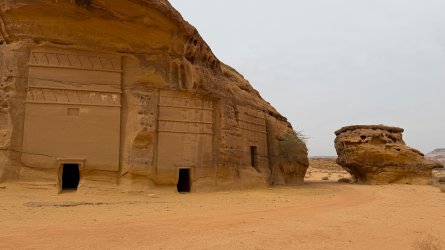
Ahem. So Jabal al Banat. 'Girl's mountain' features 29 tombs mostly for women (there are inscriptions above each about the tomb, in the squares) with some very nice carvings and is one of the larger clusters of tombs. Remember these are all done with hammer and pick, ~500BC, carved in 3D out of the rock. The smoothed surfaces are remarkable. Sorry, gunna to be a pic fest. Apologies for the bandwidth consumption!

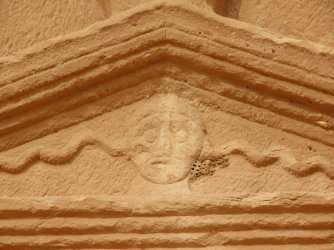
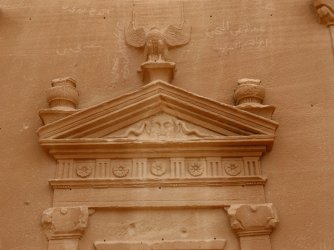
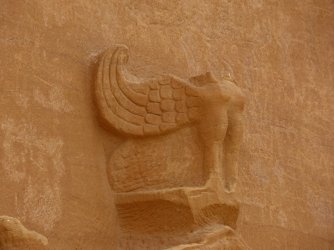
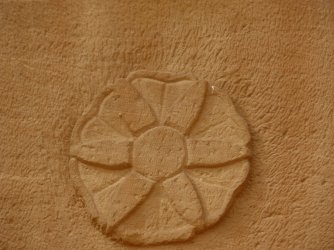
The carvings and emblems are a mix of Nabataean, Greek, and Egyptian styles, representing the mix of the society. The stairs at the tops represent ascension to heaven. Eagles are popular (all missing their heads) as are flowers. Doric (Greek) columns. Snakes protect the dead in the afterlife.

IMG_1132.JPG

IMG_1133.JPG

IMG_1134.JPG


IMG_1136.JPG

IMG_1137.JPG

IMG_1138.JPG

IMG_1141.JPG IMG_1144.JPG

IMG_1148.JPG

IMG_1149.JPG
 
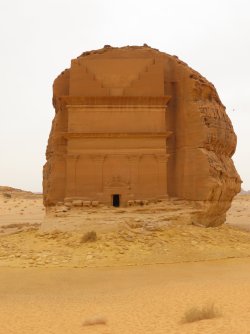
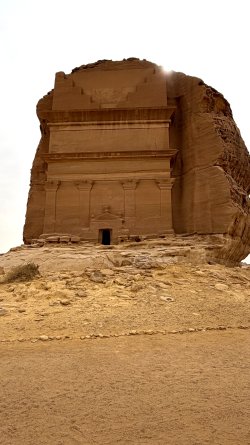
The stops were only 5 minutes apart. Stop 3 was the Tomb of Lihyan, Son of Kuza (Qasr al-Farid - 'lonely castle'), the 'headline' tomb for Hegra - the one in all the pictures.

Some more on it

Qasr al-Farid is characterized by a monumental facade directly carved into a solitary sandstone outcrop. The tomb rises approximately 17 meters in height and is distinguished by its two-story facade. The design integrates elements from Hellenistic, Mesopotamian, and indigenous Nabataean architectural traditions, reflecting the cosmopolitan influences that the Nabataeans absorbed through trade networks extending from the Arabian Peninsula to the Levant and the Mediterranean. The enigmatic Nabataeans were originally a nomadic tribe, but about 2,500 years ago, they began building great settlements and cities which prospered from the first century BCE to the first century CE, including the magnificent city of Petra in Jordan.
First, from the side. You can see from the toe at the right base how much has been taken away

IMG_2627.JPEG

IMG_1156.JPG

IMG_2634.JPEG

Unfortunately it wasn't finished - you can see the rough pick marks at the base, remaining. Noone knows what happened to Lihyan Son of Kuza.

The inscription

IMG_1158.JPG

IMG_2640.JPEG

IMG_1160.JPG
 
Jabal al-Ahmar is a collection of 18 tombs, similar to the others, except in one respect. In 2008, archaeologists discovered an intact tomb, concealed by sand probably for 2,000 years. It contained the wrapped remains of a woman, Hinat. A neclace and other artifacts were also recovered.

This page gives an explanation.

The Jabal al-Ahmar Necropolis in Hegra (Mada'in Salih) in modern-day Saudi Arabia is one of the four necropolis areas to have survived. It contains 18 tombs, some of which were recently uncovered. The remains of a 2,000-year-old Nabatean woman, Hinat, were excavated from one of the tombs. In 60 or 61 CE, Hinat had carved the following message onto a panel above the entrance to her tomb: "This is the tomb which Hinat, daughter of Wahbu, made for herself and for her children and her descendants forever. And no one has the right to sell it or give it in pledge or write for this tomb a lease. And whoever does other than this, his share will revert to his legitimate heir. In the twenty-first year of King Maliku, King of the Nabataeans."

IMG_1163.JPG

IMG_1166.JPG

IMG_1169.JPG

IMG_1164.JPG

IMG_2653.JPEG

And when we turned the other way ...


IMG_2663.JPEG

IMG_1171.JPG
 
Read our AFF credit card guides and start earning more points now.

AFF Supporters can remove this and all advertisements

The bus returned to the visitor centre to drop everyone off, but nobody then knew what to do. There was a mix of maybe 3 busses there at the time. The 'ladies' bought themselves ice creams and made themselves comfortable in some terrace chairs. Some made their way back to the original bus. There, a couple of Americans who were on a schedule went back and roused the ladies and we left for the trip back to the Winter Park.

About 3 hours all up. A longer, private trip would have been better, but too expensive for me as a single.

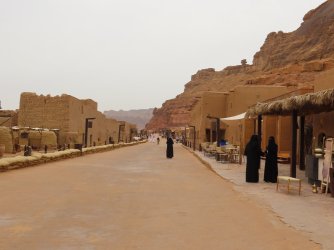
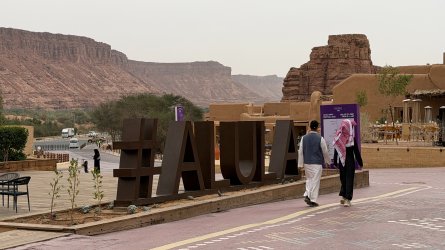
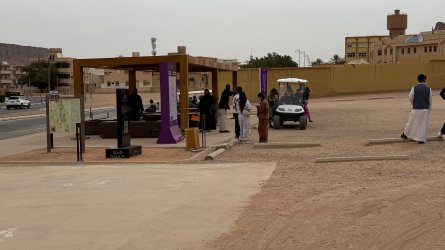
Al Ula old town was on the way back to the hotel, so I stopped there. Like everywhere, the Saudis have it well organised. Parking lots to the north and south with golf buggy transport to get you to the Old Town,

IMG_2685.JPEG

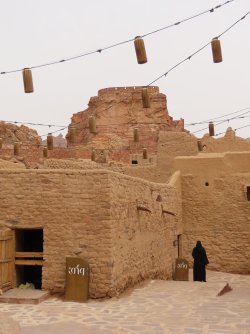
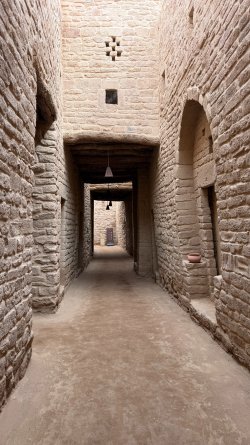
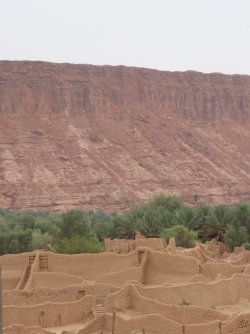
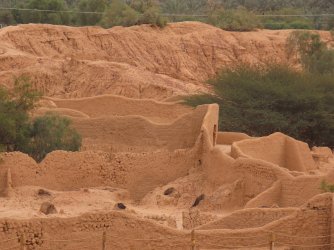
The Old Town dates from the 12th century and lay on the incense trading route and also the pilgrimage route from the Levant to Mecca. Mainly built of mud brick, its badly decomposed but there is an ersatz recreated 'Old Town' tourist trap up above the ruins.

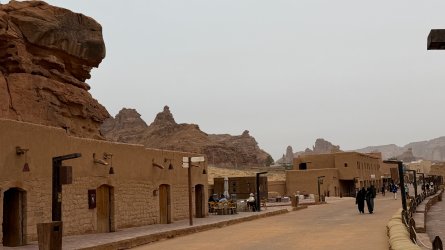
They are trying for the Sedona / Old Pueblo vibe and while there is potential, its too obviously a new tourist trap for it to work.

IMG_1172.JPG IMG_2688.JPEG

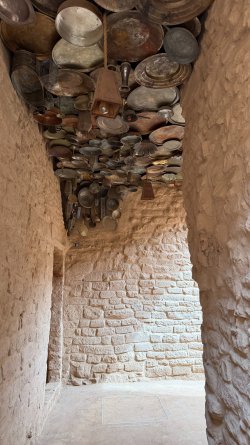
You can enter into the 'old town' - shops within either reconstructed or heavily renovated actual old town, but it was totally unappealing to me.

IMG_1175.JPG

IMG_2692.JPEG IMG_2691.JPEG

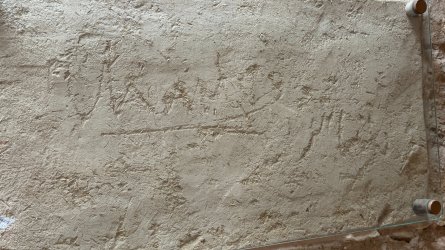
King - then Prince - Charles was here in 2015 - signed his name with a stick.

IMG_2693.JPEG

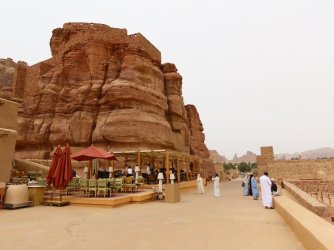
The Fort above the town and, of course, coffee shops. Very few people around.

IMG_1177.JPG

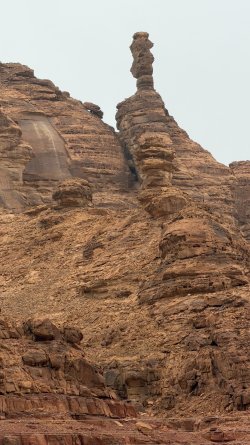
Rock formations around the town

IMG_2707.JPEG

You could see what looks like stabilised old ruins down below, but not accessible, I think.


IMG_1181.JPG IMG_1176.JPG

IMG_2702.JPEG
 
The atmosphere looks very dull. What's the cause?

Don't know. Perhaps the word was around (but I hadn't heard!) that its just a tourist trap. Or maybe the tourist numbers haven't grown yet to properly utilise the place - I think that may be the case.

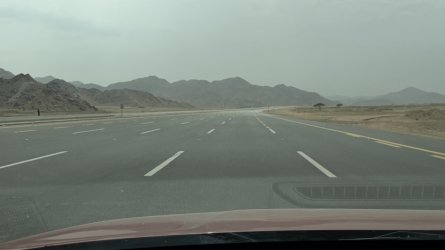
Al Ula has been designated by the Saudis a priority development place (hence the 5 lanes of road leading into it!). There is a 'Royal Commission for Al Ula' to oversee its development and it will become a big destination, especially as women (visiting, at least) can dress and move around relatively freely, unlike before. The Saudi tendency to plan big, open spaces also tends to develop a sense of sterility though.
 
Don't know. Perhaps the word was around (but I hadn't heard!) that its just a tourist trap. Or maybe the tourist numbers haven't grown yet to properly utilise the place - I think that may be the case.

Al Ula has been designated by the Saudis a priority development place (hence the 5 lanes of road leading into it!). There is a 'Royal Commission for Al Ula' to oversee its development and it will become a big destination, especially as women (visiting, at least) can dress and move around relatively freely, unlike before. The Saudi tendency to plan big, open spaces also tends to develop a sense of sterility though.

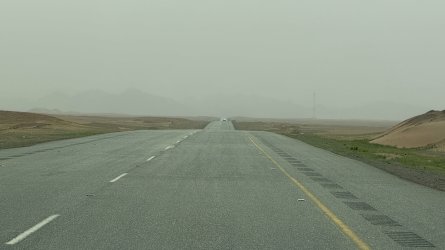
I mean the air atmosphere. It looks foggy.
 
Don't know. Perhaps the word was around (but I hadn't heard!) that its just a tourist trap. Or maybe the tourist numbers haven't grown yet to properly utilise the place - I think that may be the case.

Al Ula has been designated by the Saudis a priority development place (hence the 5 lanes of road leading into it!). There is a 'Royal Commission for Al Ula' to oversee its development and it will become a big destination, especially as women (visiting, at least) can dress and move around relatively freely, unlike before. The Saudi tendency to plan big, open spaces also tends to develop a sense of sterility though.
Mrs Jase wants to stay 4-5 nights at the Banyan Tree and have a decent look around next time.
 

Become an AFF member!

Join Australian Frequent Flyer (AFF) for free and unlock insider tips, exclusive deals, and global meetups with 65,000+ frequent flyers.

AFF members can also access our Frequent Flyer Training courses, and upgrade to Fast-track your way to expert traveller status and unlock even more exclusive discounts!

AFF forum abbreviations

Wondering about Y, J or any of the other abbreviations used on our forum?

Check out our guide to common AFF acronyms & abbreviations.
Back
Top