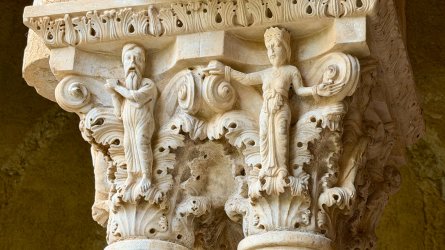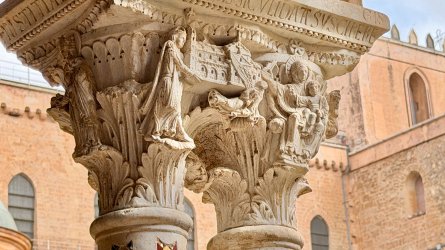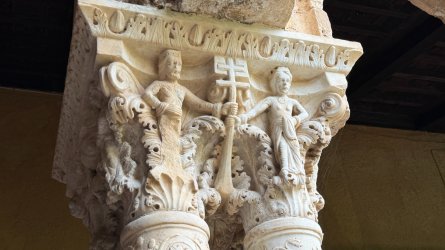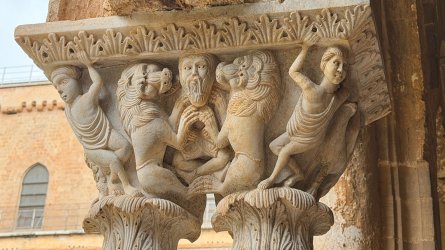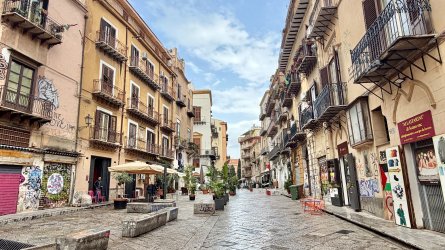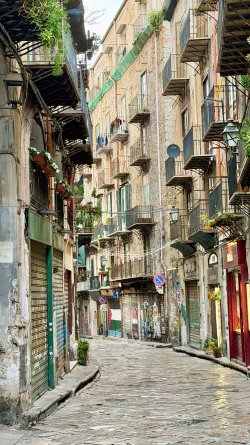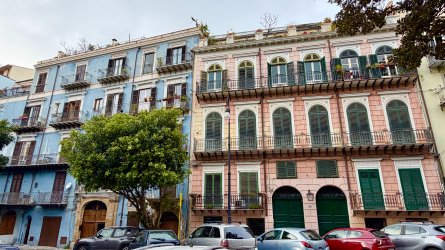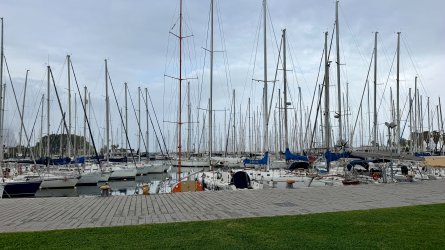




Some island cruising - The Canaries and Sicily, then Milan

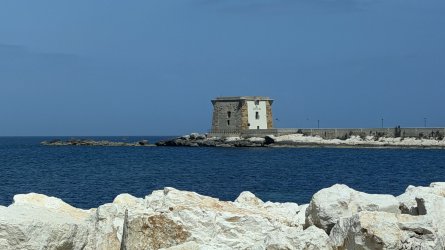
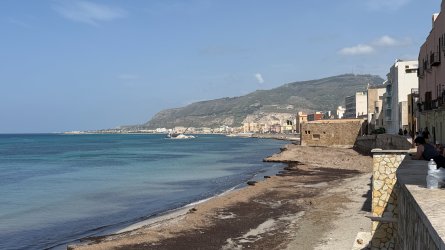
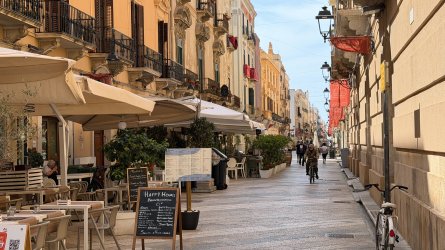
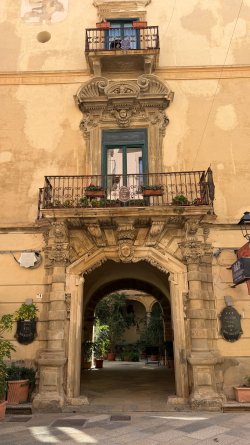
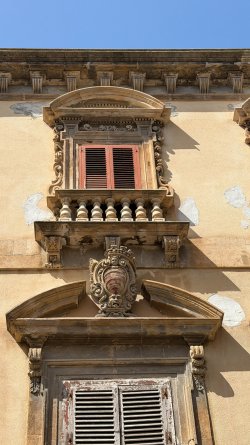
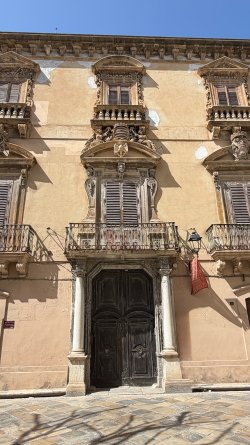
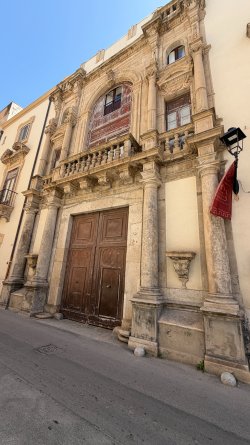
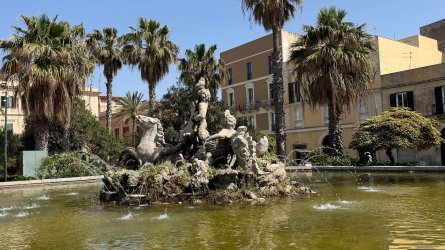
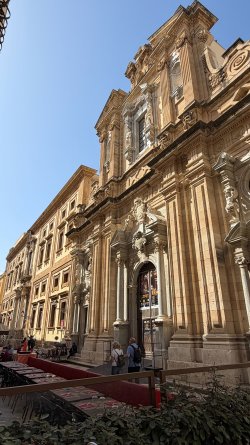
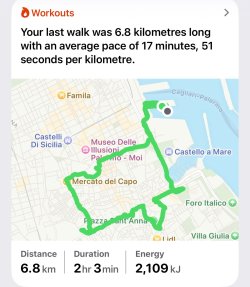
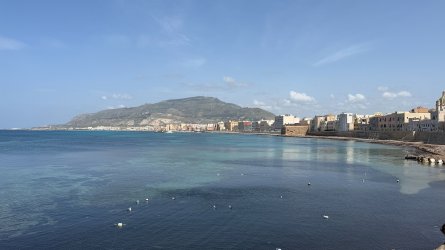
In the afternoon, I took an extended walk around Trapani.

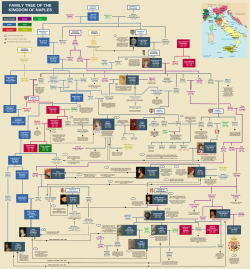
The history of Trapani mirrors that of much of Sicily - the indigenous peoples (Elmyians, here); Greeks; Romans; Ottomans; Normans; Venetians, Aragonese (Spanish); Barbary states; Bourbons; Garibaldi/Italian.

G'won - read it all here. :cool:

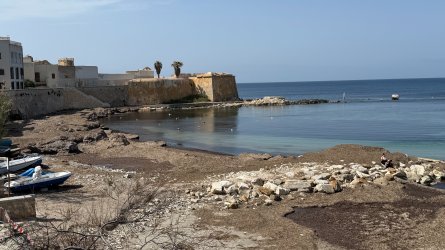
Some of the coastal fortifications passed at the end of the excursion.
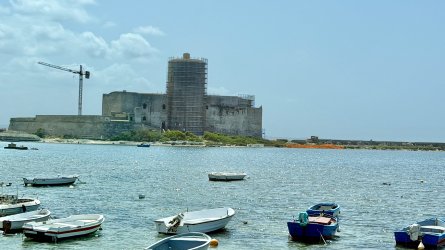
IMG_5534.JPEG IMG_5535.JPEG

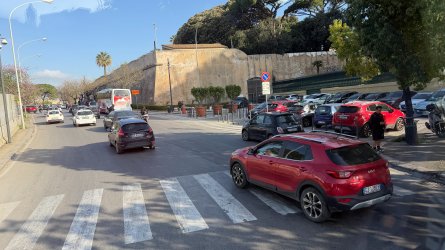
I took along the north-western coastal wall. Unfortunately I completely missed the ancient salt works to the south.
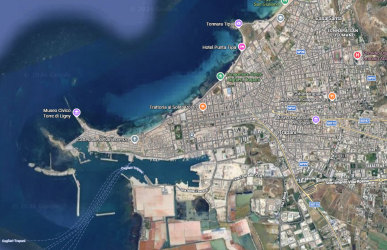
1777536355600.png

IMG_5551.JPEG

IMG_5549.JPEG

IMG_5550.JPEG

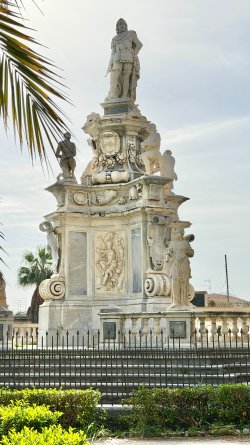
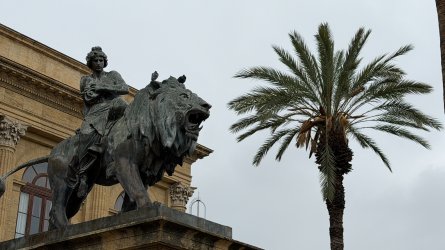
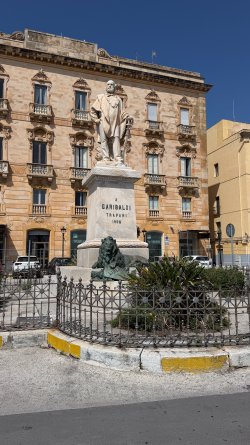
Garibaldi - statues of him everywhere. Father of the unified Kingdom of Italy (1861).
IMG_5539.JPEG
 
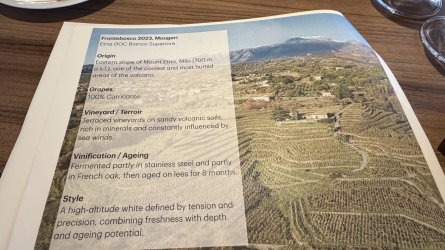
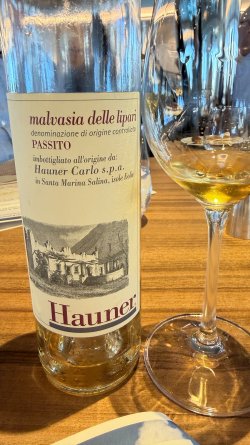
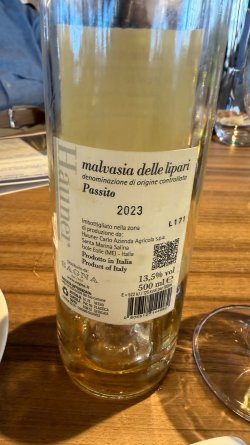
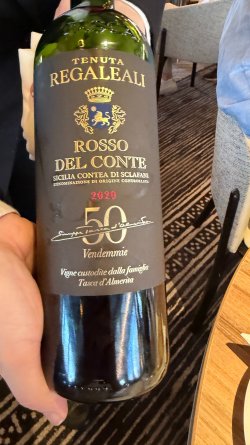
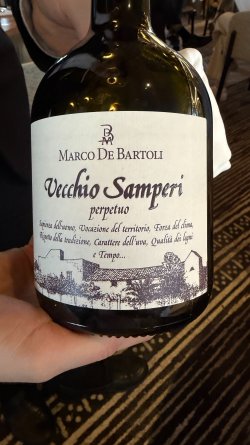
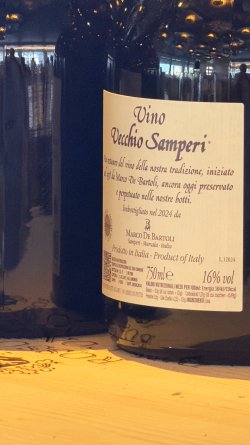
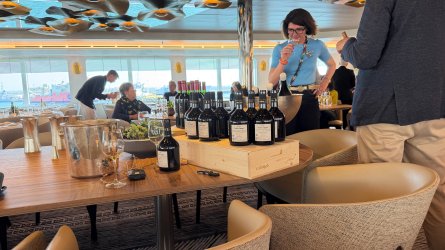
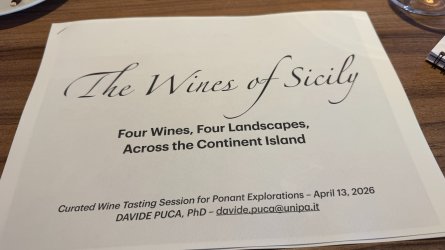
Later in the afternoon, a tasting and explanation of Sicilian wines :) led by the French sommelier lady and the Sicilian wine 'academic' Davide Puca. Some good notes to go with them.
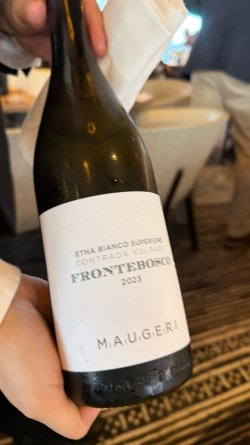
IMG_5587.JPEG

IMG_5589.JPEG

IMG_5590.JPEG

IMG_5591.JPEG

More Malvasia - like the Canaries.
IMG_5595.JPEG IMG_5597.JPEG

IMG_5598.JPEG IMG_5599.JPEG

IMG_5601.JPEG

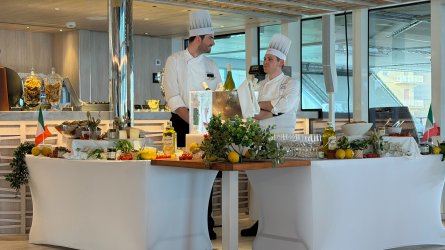
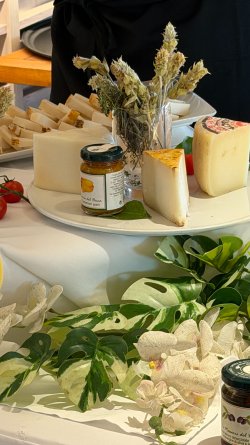
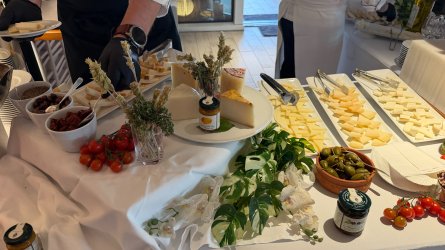
And then, a tasting of cheese as supplied by Ponant's cheese and butter suppliers, Maison Bordier


IMG_5604.JPEG

IMG_5605.JPEG

IMG_5606.JPEG

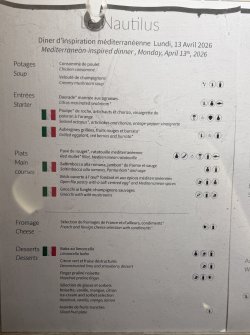
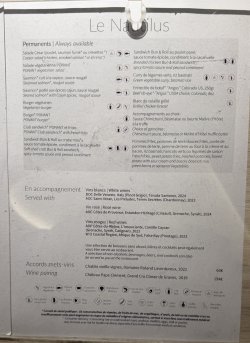
And then dinner!!

IMG_5607.JPEG IMG_5608.JPEG
 
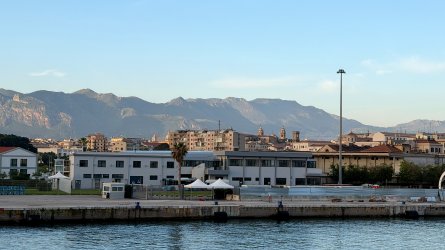
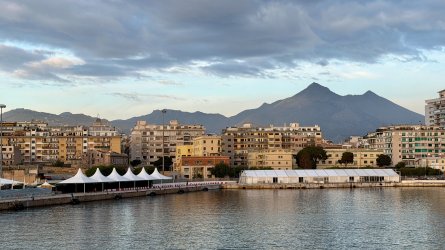
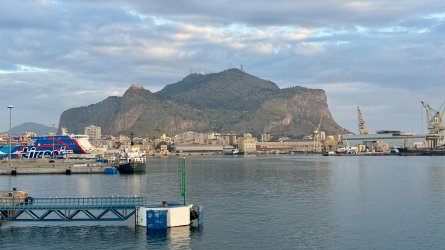
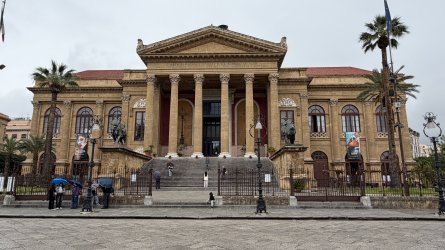
Next morning saw us dock at Palermo - one of the non-volcanic highlights for me. Rain had been forecast - over the past few days there had been a Sirocco - same as the Calima we had in the Canaries - fine sand from the Sahara had been blowing across Sicily. This traditionally brings rain a few days later and this clears the air (and deposits mud on everyone's cars).
So it was a surprise when we docked that both the skies and atmosphere were clear.

IMG_5611.JPEG

IMG_5612.JPEG

IMG_5613.JPEG

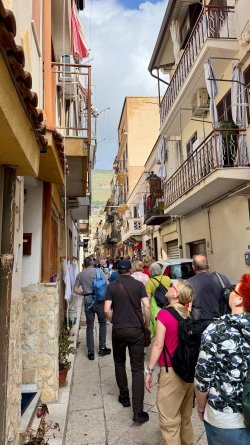
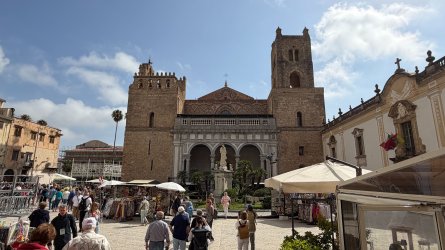
A couple of excursion choices, mine was Palermo and Monreale, the latter I knew nothing of.

The guide was one of the better ones of the tour. A local, but clear English and he told us interesting things and, importantly, shut up when there didn't need to be anything said. Some of them just feel the need to talk constantly.

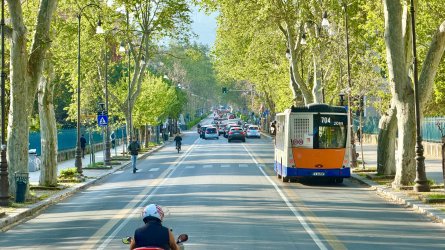
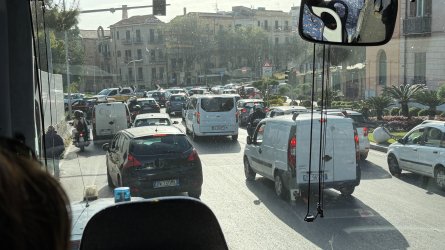
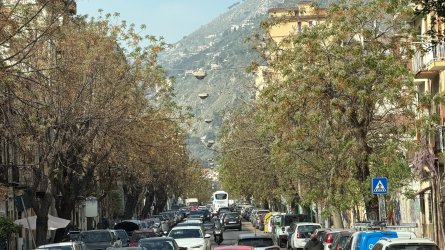
So we hit the road in Palermo, early, but the traffic was still chaotic.

IMG_5616.JPEG

IMG_5618.JPEG

IMG_5620.JPEG

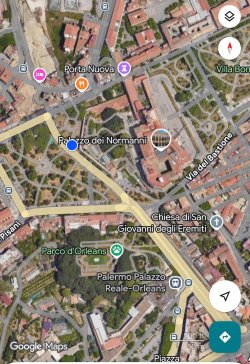
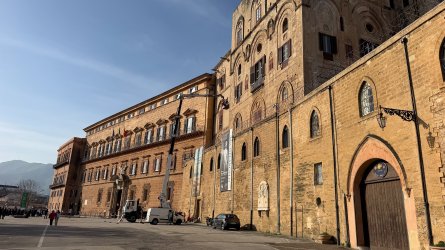
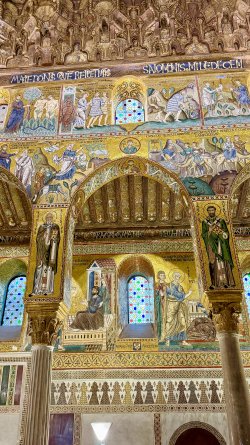
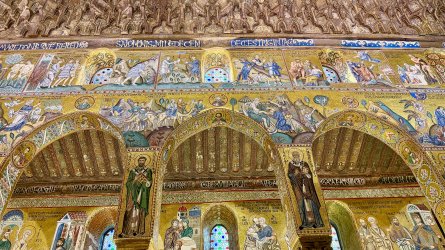
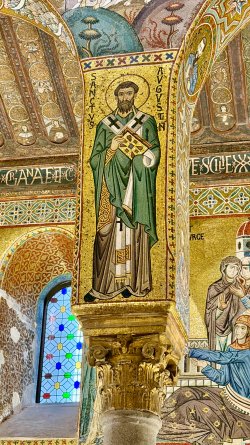
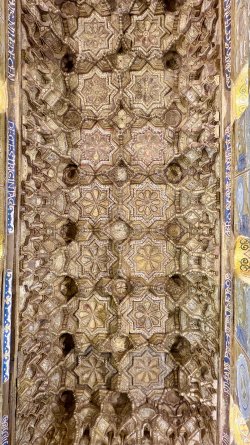
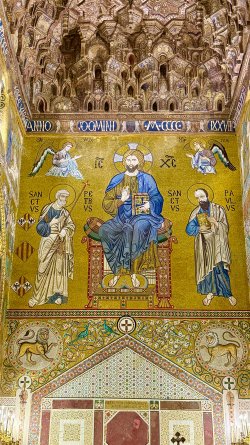
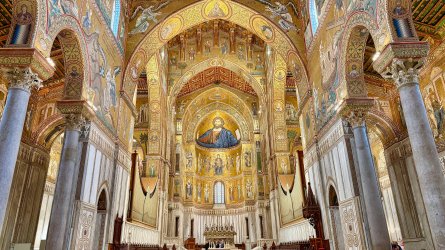
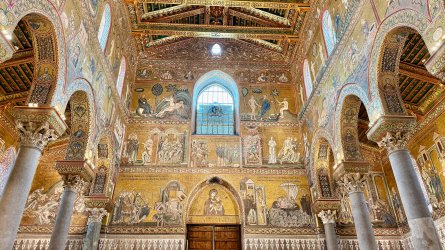
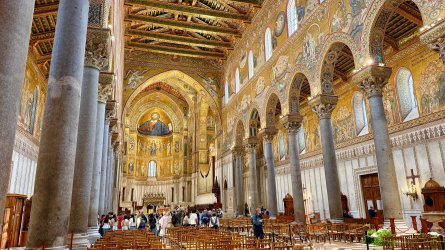
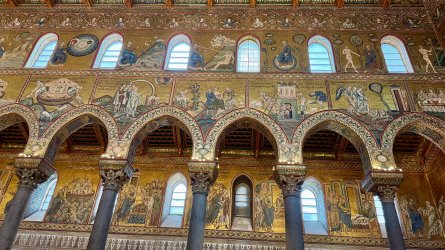
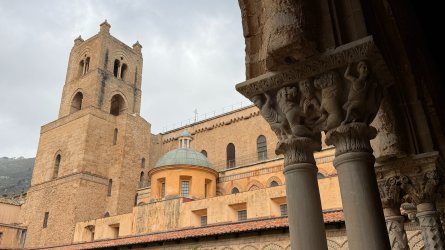
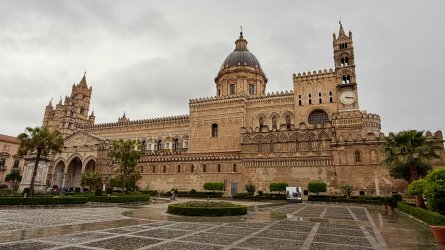
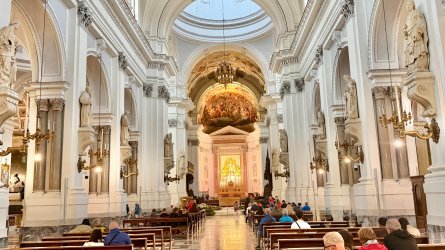
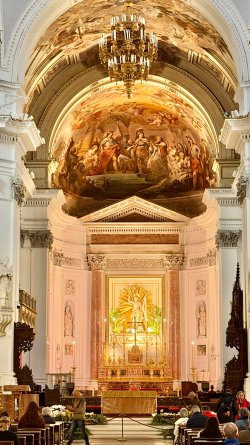
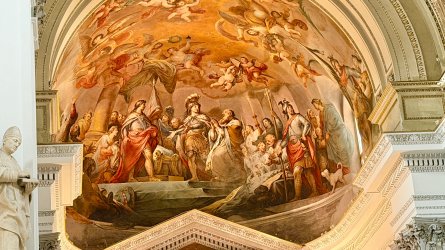
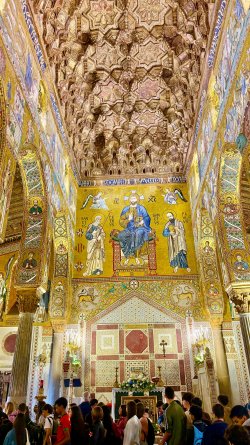
Our destination was the Palazzo dei Normanni 'Palace of the Normans', the oldest royal residence in Europe and the Palatine Capel, which we would go into.

IMG_5621.JPEG

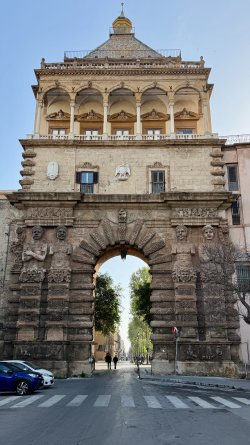
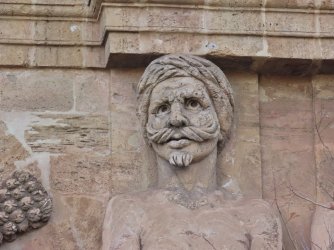
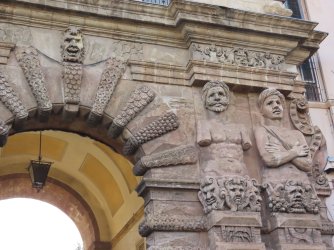
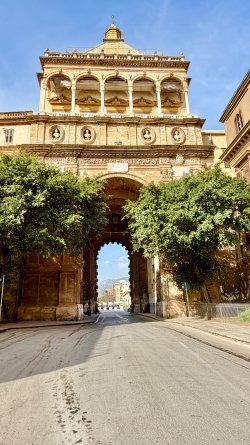
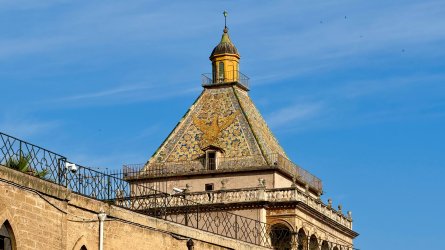
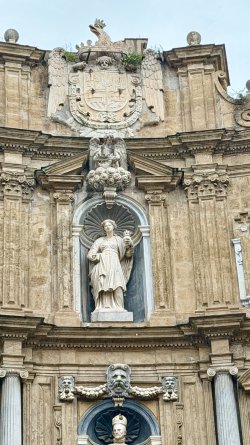
First through the Porta Nuova, built to celebrate Charles V's conquest of Tunis in 1535 and his visit to the capital of the Kingdom of Sicily. The first version was completed in the 1580s. The gate was burned down in 1667 and the current version completed in 1669.

The figures represent the Moors defeated by Charles V.

IMG_5624.JPEG

IMG_5663.JPEG

IMG_5631.JPEG

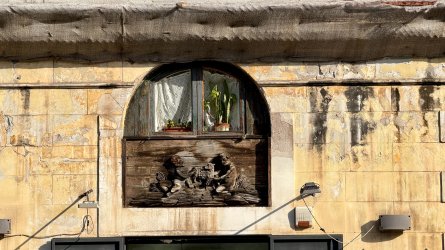
On a building nearby.

IMG_5623.JPEG
 
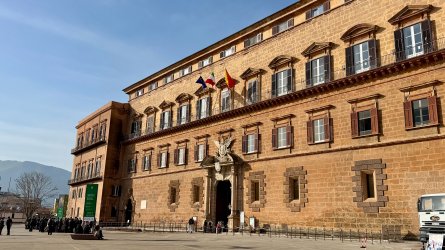
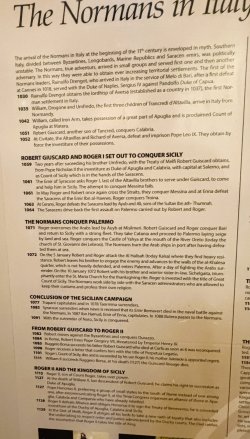
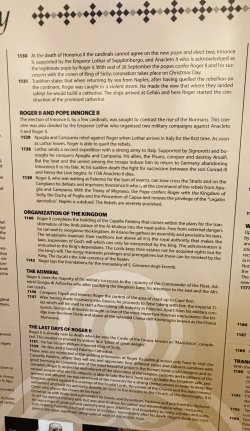
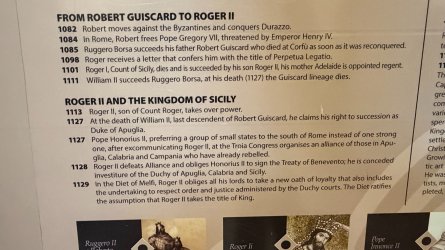
Onwards to the Norman Palace (UNESCO World Heritage), and learning about the wonderfully named King Roger(s) and William 1 (The Mean). Brings together the Muslim period from the mid 800s where Palermo became the capital (they succeeded the Byzantines), the Norman period, after Norman conquest in mid 1000s, the Spanish etc. The front is a bit plain

IMG_5627.JPEG

IMG_5629.JPEG

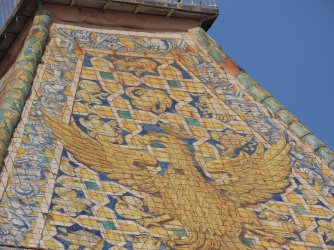
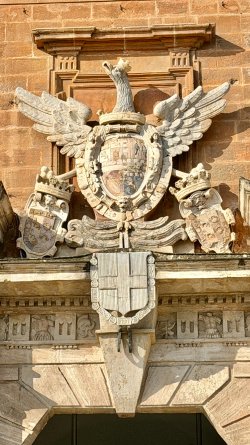
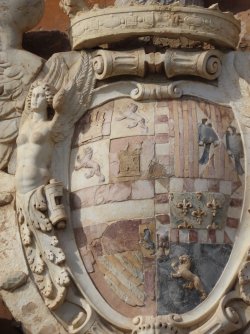
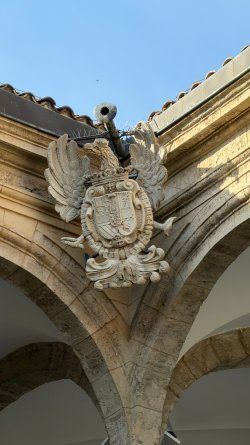
Above the door is the historical coat of arms, crowned eagle of the Aragonese (Spanish) era.

IMG_5633.JPEG

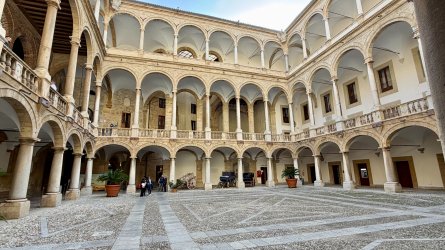
Security entry, then through some of the Aragonese (Spanish) era building, late 1600s.

IMG_5639.JPEG

IMG_5638.JPEG

Wikipedia
Norman Palace, was built on the highest point of the city, above a Punic structure discovered in 1984 beneath the Duke of Montalto Halls. During Arab rule, the earliest nucleus of the building arose between the rivers Kemonia and Papireto, designed with defensive features typical of fortresses. This building was also used during the Roman Byzantine era.

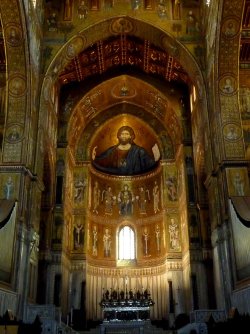
Following the Norman conquest in 1072, the Normans built a new building consisting of a castle, with the function of royal residence and administrative hub. In 1130, after the coronation of Roger II of Altavilla—the first Norman king of Sicily—the Palatine Chapel was constructed, becoming a symbol of norman cultural and christian religious.

The palace's core was marked by four towers and included facilities such as workshops and textile laboratories (nobiles officinae or tiraz). It served as the seat of successive Norman courts, including those of Roger II, William I (known as "the Mean"), and William II ("the Good"), who oversaw a remarkable confluence of diverse cultures.

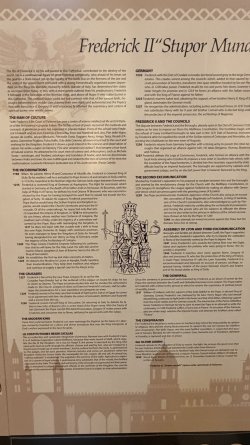
Frederick II, grandson of Roger II and son of Henry VI of Hohenstaufen and Constance of Altavilla, continued this legacy. He played a pivotal role in its administration and in fostering cultural life, notably supporting the Sicilian School of poetry.

After a period of decline during the Angevin and Aragonese rule, the palace was revitalized under the Spanish viceroys in the late 16th century. This phase saw the addition of new architectural elements with both representative and military functions, including the Fountain Courtyard (1584) and the Maqueda Courtyard (1600).

During the Bourbon period, the palace saw further development, particularly in the decoration of the Hercules Hall. Today, the Royal Palace serves as the seat of the Sicilian Regional Assembly.
 
Elevate your business spending to first-class rewards! Sign up today with code AFF10 and process over $10,000 in business expenses within your first 30 days to unlock 10,000 Bonus PayRewards Points.
Join 30,000+ savvy business owners who:

✅ Pay suppliers who don’t accept Amex
✅ Max out credit card rewards—even on government payments
✅ Earn & transfer PayRewards Points to 10+ airline & hotel partners

Start earning today!
- Pay suppliers who don’t take Amex
- Max out credit card rewards—even on government payments
- Earn & Transfer PayRewards Points to 8+ top airline & hotel partners

AFF Supporters can remove this and all advertisements

Become an AFF member!

Join Australian Frequent Flyer (AFF) for free and unlock insider tips, exclusive deals, and global meetups with 65,000+ frequent flyers.

AFF members can also access our Frequent Flyer Training courses, and upgrade to Fast-track your way to expert traveller status and unlock even more exclusive discounts!

AFF forum abbreviations

Wondering about Y, J or any of the other abbreviations used on our forum?

Check out our guide to common AFF acronyms & abbreviations.
Back
Top