





Scarlett
Established Member
- Joined
- Jun 27, 2011
- Posts
- 2,388
- Qantas
- LT Gold
- Virgin
- Platinum
- Star Alliance
- Gold
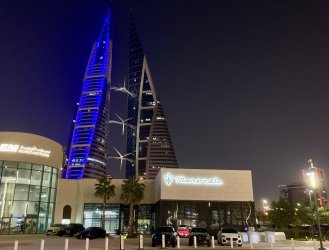
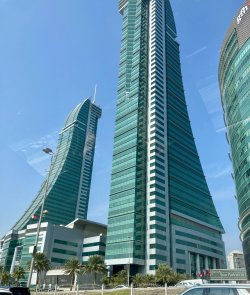
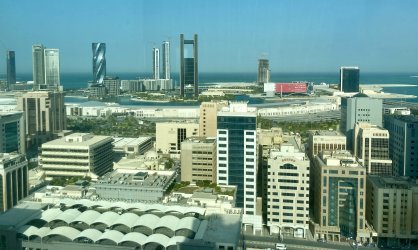
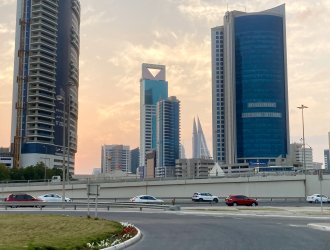
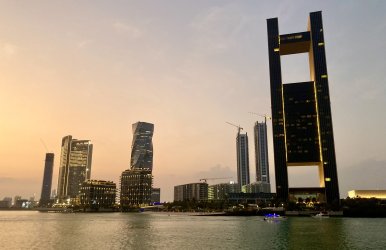
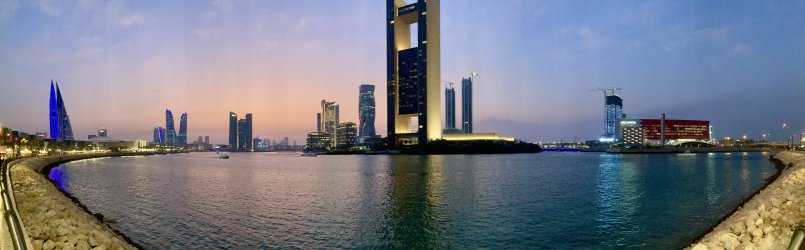
Breakfast was on the 24th floor, so that gave some decent views over the new Bahrain Bay developments.
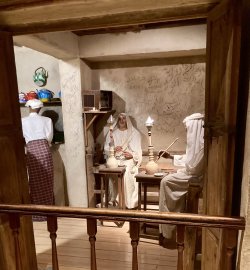
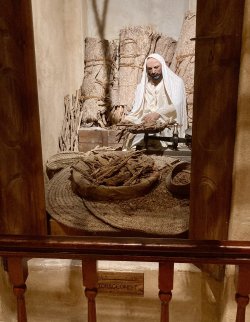
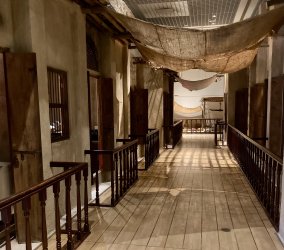
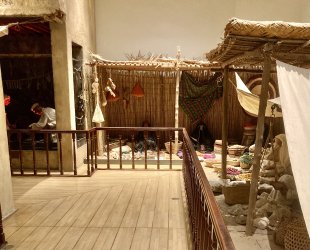
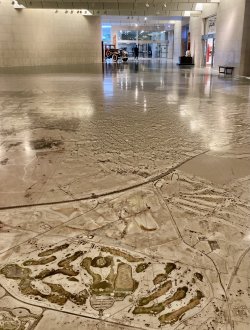
I’d chosen a hotel in the diplomatic district as it was close to the Bahrain National Museum and walked over there after a lazy breakfast and a couple of cups of coffee and some work.
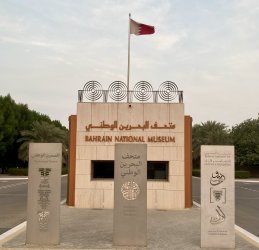
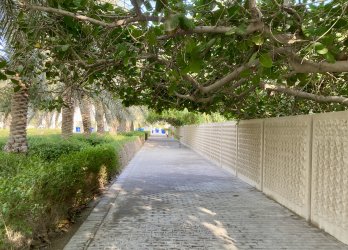
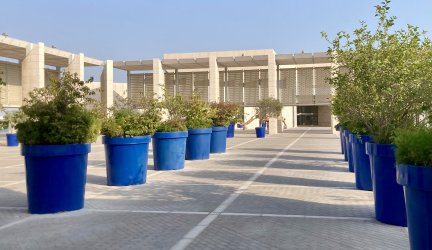
The museum has a large footprint but doesn’t really have overly much on display. Lots of space outside with various sculptures but without any info about them other than artist name. Some might say that the real art is in the eye of the beholder but I prefer to understand the significance of what has been created, or at least something from the artist to understand what they were thinking, commenting on or intending.
Something I hadn’t thought about in the past was the use of small individual burial mounds, which when you do think about it, makes perfect sense as rock was an available resource. Many of these were clustered in a form of a large necropolis and from the study of artefacts included with the burials, some understanding of Bahrains history can be interpreted.
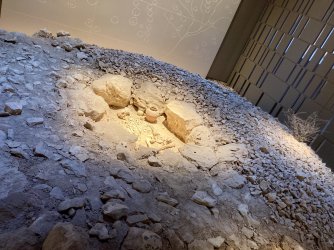
This reconstruction was part of the ‘Dilmun’ period in Bahrain’s history; the era from the 4th millennium BC up to about 350BC. The museum clearly focussed on the role of Bahrain as a trading point between Mesopotamia to the north and the Arabian peninsula, Persia, and out toward India. Not stated, but likely, is that there were many such points all along the Gulf.
After the more indigenous Dilmun period, Bahrain fell under Greek influence and was referred to as Tylos. Alexander the Great never visited (you could just as easily read visited as conquered) Bahrain, Qatar or most of the Arabian Peninsula but the civilisational influence was very strong.
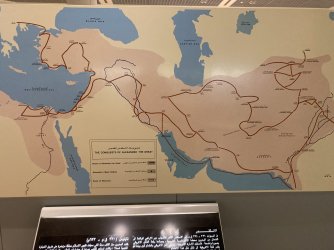
Bahrain was then an early adopter as Islam spread out from the Arabian Peninsula from the time of the prophet AD622 and on.
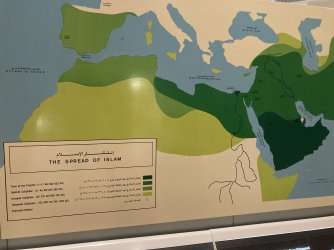
This is the kind of stuff I’m generally most interested in when visiting national museums: why did people settle there; how did their civilisation and culture develop; how has that influenced what can be seen today.
I’d chosen a hotel in the diplomatic district as it was close to the Bahrain National Museum and walked over there after a lazy breakfast and a couple of cups of coffee and some work.
The museum has a large footprint but doesn’t really have overly much on display. Lots of space outside with various sculptures but without any info about them other than artist name. Some might say that the real art is in the eye of the beholder but I prefer to understand the significance of what has been created, or at least something from the artist to understand what they were thinking, commenting on or intending.
Something I hadn’t thought about in the past was the use of small individual burial mounds, which when you do think about it, makes perfect sense as rock was an available resource. Many of these were clustered in a form of a large necropolis and from the study of artefacts included with the burials, some understanding of Bahrains history can be interpreted.
This reconstruction was part of the ‘Dilmun’ period in Bahrain’s history; the era from the 4th millennium BC up to about 350BC. The museum clearly focussed on the role of Bahrain as a trading point between Mesopotamia to the north and the Arabian peninsula, Persia, and out toward India. Not stated, but likely, is that there were many such points all along the Gulf.
After the more indigenous Dilmun period, Bahrain fell under Greek influence and was referred to as Tylos. Alexander the Great never visited (you could just as easily read visited as conquered) Bahrain, Qatar or most of the Arabian Peninsula but the civilisational influence was very strong.
Bahrain was then an early adopter as Islam spread out from the Arabian Peninsula from the time of the prophet AD622 and on.
This is the kind of stuff I’m generally most interested in when visiting national museums: why did people settle there; how did their civilisation and culture develop; how has that influenced what can be seen today.
 )
)