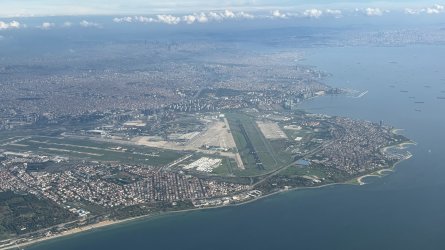
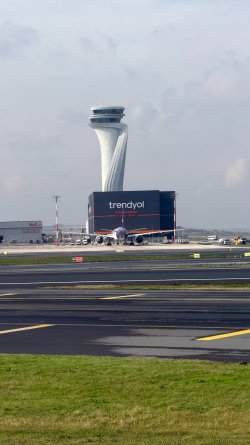
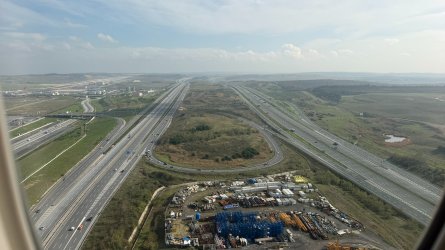
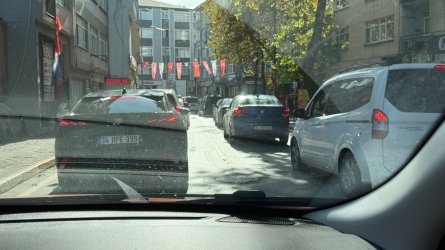
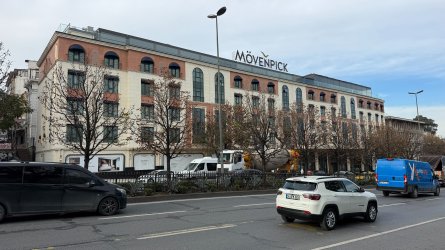
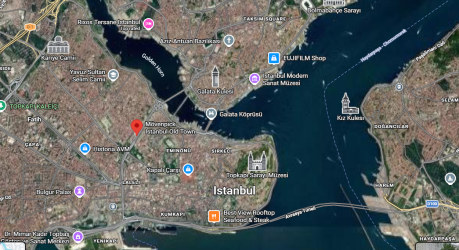
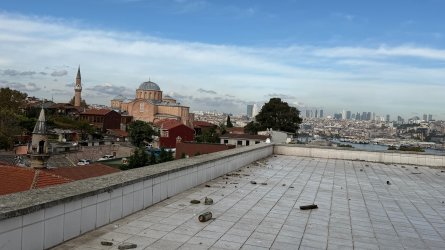
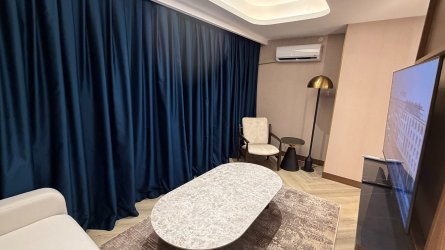
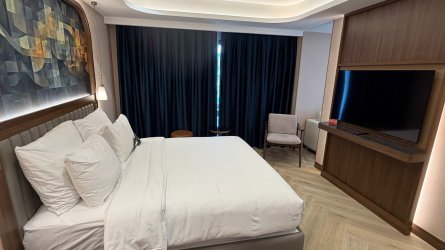
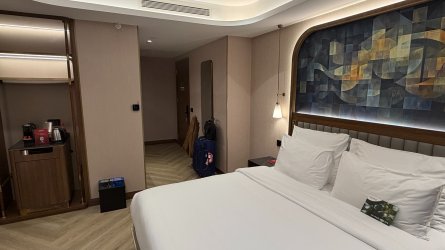
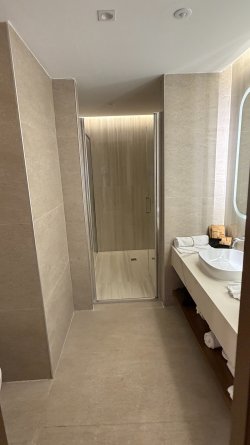
Checked into the hotel about 2pm very jetlagged and outright tired, but had to go out to get some sun and so my usual orientation walk.
I knew that there was a Roman aqueduct very close and ... Oh. we'd better set the scene, as there will lots of Roman, Byzantines and Ottomans in the next few posts.
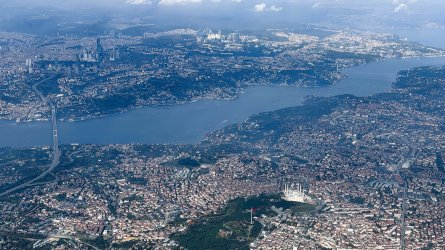
Istanbul was founded approx 660 BCE, when Greek colonists led by Byzas founded Byzantium on the European shore of the Bosporus.
In 330 CE, the Roman emperor Constantine the Great chose the city as his new capital, calling it Constantinople. As the Western Roman Empire collapsed in the fifth century, the city became the heart of the Eastern Roman, or Byzantine, Empire. In the sixth century under Justinian I , it gained its greatest monument, the Hagia Sophia, completed in 537. For nearly a thousand years, Constantinople was one of the largest and wealthiest cities in Europe, protected by massive 'Theodosian' Walls. It endured sieges, plague, and in 1204 the devastating sack by the Fourth Crusade, which left the empire permanently weakened.
On May 29, 1453, Ottoman sultan Mehmed II conquered the city, ending the Byzantine Empire. Mehmed made it his capital and the Hagia Sophia became a mosque, and Topkapı Palace rose as the imperial seat. Over the following centuries, the city flourished as the centre of an empire stretching across three continents, gaining landmarks such as the Süleymaniye Mosque and the Blue Mosque. It was home to Muslims, Christians, and Jews, and was a hub of trade, scholarship, and the arts.
As the Ottoman Empire declined and ultimately collapsed after World War I, Allied forces occupied the city. In 1923, the Republic of Türkiye was founded and Ankara became the capital. The name Istanbul became the official international name in 1930.
Righto. So this aqueduct - The Aqueduct of Valens - was completed in 373 by the Emperor Valens (r. 364–378), so its really a Byzantine aqueduct.
Wikipedia
Initially, the Aqueduct of Valens carried water from springs at Danımandere and Pınarca; the channels from each spring met at Dağyenice. This 4th-century first phase of the system was 268 kilometres long. A second, 5th-century phase added a further 451 kilometres of conduits that took water from Vize, 120 kilometres away from Constantinople.
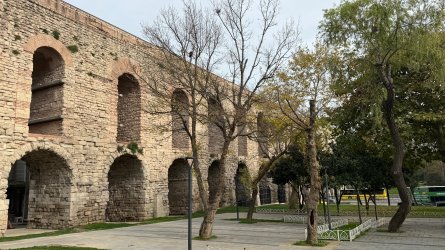
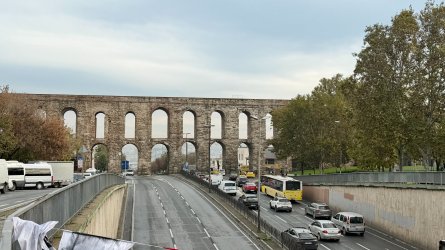
The final and most visible aqueduct bridge in the system survives in the Fatih district of Istanbul, Turkey. Named in Turkish: Bozdoğan Kemeri, lit. 'Aqueduct of Bozdoğan', it is an important landmark in the city, with its arches passing over Atatürk Boulevard (Atatürk Bulvarı). The Bozdoğan Kemeri spans the valley between the hills that are today occupied by the Istanbul University and the Fatih Mosque, formerly the site of the Church of the Holy Apostles. The surviving section is 921 metres long, about 50 metres less than the original length.
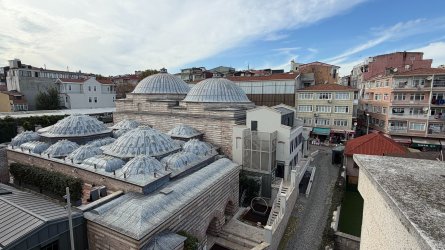
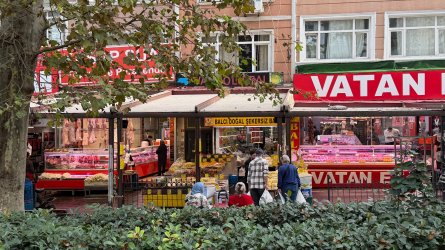
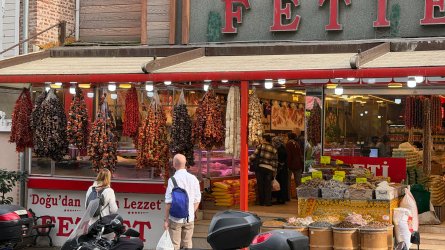
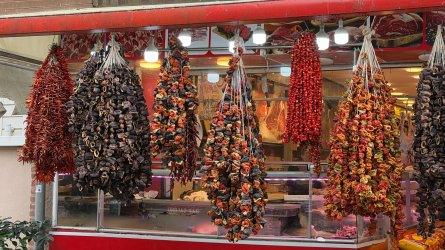
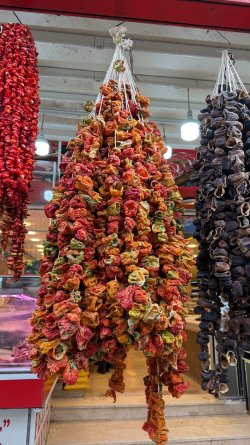
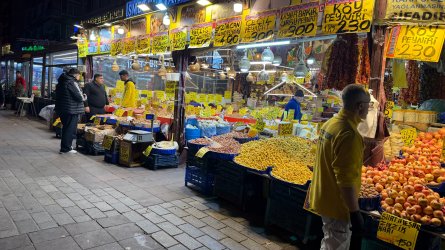
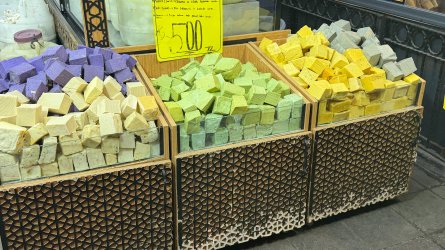
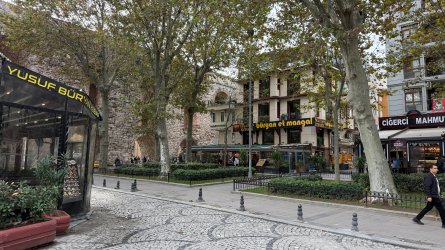
Just behind the hotel, restaurants and a market
The very bust Ataturk Bvd threads through the aqueduct arches
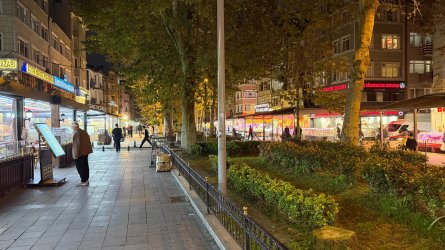
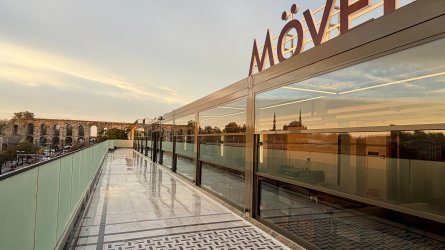
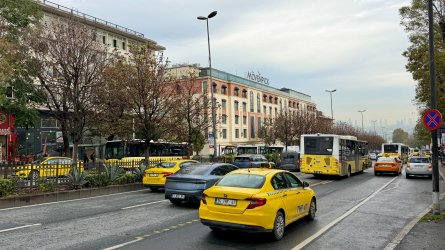
The hotel, with Ataturk Bvd in front
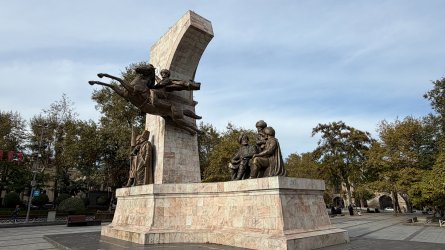
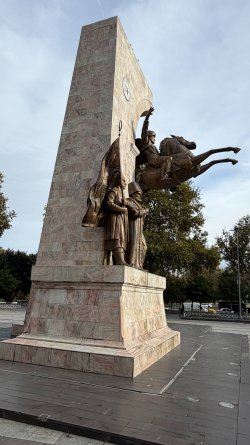
The othetr side of the aqueduct is Fatih Memorial Park, a nice wll-kept space with a striking statue of 15th-century Sultan Mehmed II astrice a horse.












 .