Sorry for the delay. Once I write up the first few days I have a completed week of cruise reports. Another week to go. It's been fabulous so far.
***
Good news. The trip has begun.
Bad news, we are three days in before I have time and energy to report in. And that’s from a Shinkansen bullet train heading north out of Tokyo for a quick trip to Nikko.
Currently at 250 km/h, so my TomTom app assures me.
More on the drama and trouble and years off my life getting to this point later.
***
My Uber app still works. About the only time I use it is for getting to and from airports and it’s been a while. This is stage one of the plan to get me back to elite levels, and the first step is Muhammad in a Toyota.
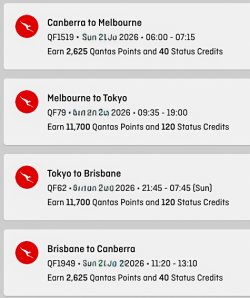
He rolls up, we lift our bags aboard – with the driver's help, five stars right there! – and off to Canberra International Airport, with the international bit still pretty sparse compared to domestic flights to the regular places, such as Melbourne, where we are booked aboard QF97 to Tokyo Narita.
In theory, the airport doesn’t open until 0500, but the Qantas bag drop and International Connections desks are already open. We wait a little, our bags are weighed and tagged – only 17 kilos for me – with boarding passes issued.
We're flying in the comfy seats today and that means that once we get airside, we have access to the better lounge. The one with a view of the carpark rather than the apron, but at least the coffee is good.
“You've just saved two lives!” I inform the barista, and they dutifully smile.
Much needed. I’ve been up since three-ish, getting my carry-on bag full of all the things I’ll need on the voyage or don’t want to hand over to the tender mercies of baggage handlers along the way.
And my light jacket, needed outside in these first days of a Canberra winter, but once swallowed by the global transport system it’s always comfy. I stow that away and roll my sleeves up.
The breakfast offerings are a small step up from those in the regular Qantas Club, but I pass over them. Today is a day where I could have four breakfasts before lunch and I’m getting picky in my old age.
Besides, my normal breakfast is a shortbread biscuit with coffee number one, and I don’t want to begin this trip off with gluttony.
Our flight is called well before six and I feel a tingle of excitement. This thing is happening. It's like that moment at the top of the roller coaster where the steady but safe preparation is complete and from now on one's existence and comfort are in the control of outside forces.
4 June 2026
QF 1519 CBR-MEL VH-X4J A220 "Crimson Rosella"
Scheduled: 0605
Boarding: 0535 Gate 11, seats 2A/C
Pushback: 0605
Takeoff: 0617 to North
Landing: 0710 from East
Gate: 0720
An Airbus 220, sparkling new, and certainly comfy in the plush seats. I stow my gear away and enjoy the view out of the window, such as it is.
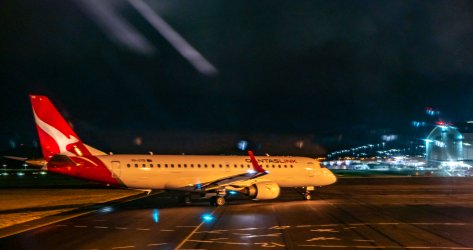
We take off and it’s pretty much overcast – or is that undercast, seeing as how we are above it? – most of the way down to Melbourne. A meal is served, and while my wife tucks in, I wave it away. She is trying to avoid winding up like her mother, frail and tiny in later life, while I am suffering the reverse. I can’t see spending two weeks aboard a cruise ship where the food is neverending as helping me drop a few kilos. Especially given my tendency to gluttony.
I will have to be firm, and if I have a chance at multiple breakfasts, I figure the one offered on the long haul flight will be the best. A coffee or two will see me survive until then.
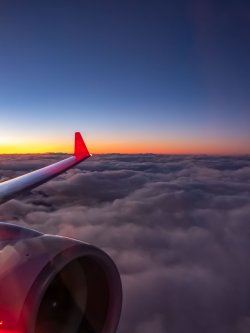
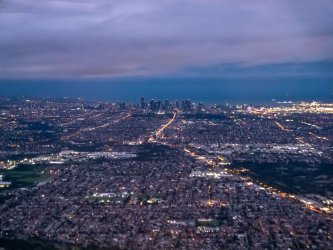
The clouds start to come apart as we come into Melbourne, gliding down onto the cross runway. A few distant views of the city centre, Williamstown and the bay beyond.
They are doing some work on the taxiways and we head into the Qantas domestic area via the International apron, snagging a rear view of an Emirates A380 as we go.
Now things are getting serious. We have a transit time of just over two hours before QF79 to Tokyo. Luggage is checked through, so it’s just the regular dance of security, passport, and boarding pass. I may have an old express pass somewhere – Qantas didn’t give me one in Canberra – but it’s not busy.
My carryon gets the sideways shuffle and the chunky power brick I’ve stowed right at the bottom – for ballast – is hauled out and examined. All good. That power brick has been looked at in security checks from Bangkok to Helsinki and come out okay. I won't be able to use it on the flight, but with in seat power nowadays, I should be fine.
I’ve forgotten a couple of things. My earpods have been left behind and I’ve got a few Zoom meetings scheduled for the middle of the night. I look through the JB Hi-Fi duty free for some cheapie wireless pods. Just part of the friction of travel. Odd items get left behind and so long as they aren’t my passport or wallet, I can generally get by.
After we navigate the shopping mall aspect of the terminal, it’s my job to find the lounge. I usually leave Australia via Sydney and that’s easy enough but here, it’s been a few years.
Not to worry. I follow the signs, we're ushered in, and although I don’t want anything to eat, the bar is open and the bubbly is flowing.
Funny, I can drink booze any time I want at home but I wouldn’t dream of sparkling wine in the morning. On the road, the rules go by the board.
There’s time for a couple, as it happens, and when our flight is called, I’m feeling no pain.
4 June 2026
QF 79 MEL-NRT A333 VH-QPF
Boarding: 0900 Seats 5E/F
Scheduled: 0935
Pushback: 0942
Takeoff: 0952 to North
Landing: 1827 from South
Gate: 1837
Business Class on our A333 is full up. I picked two seats together in the centre, thinking that we would be pretty much sitting together, but the Qantas J seats don’t really work that way. I could have gone for a window and aisle combination and at least had a view out of the window. Oh well. A lot to be aside for having comfy seats and the perks that go with it.
I hand over my box of Ferrero Rocher. It sinks without trace. Sometimes it makes the crew deliriously happy, sometimes it’s not even noticed. A few dollars for me to show some appreciation of the marathon effort the cabin crew put in on their feet while we sit around watching TV.
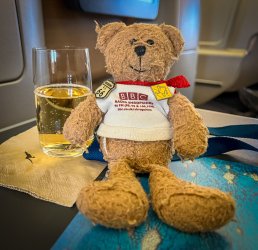
I pose Routebear with a glass of bubbles. Much more of this and I won’t be needing a plane to fly.
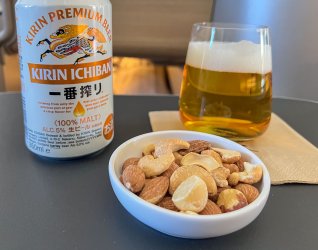
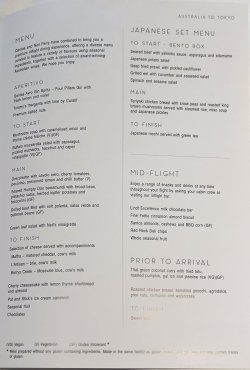
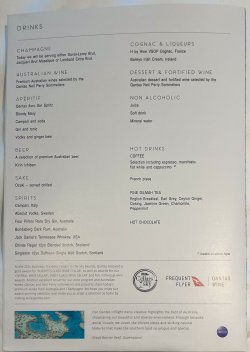
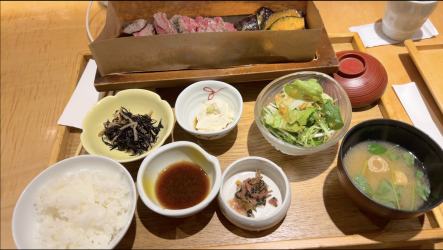
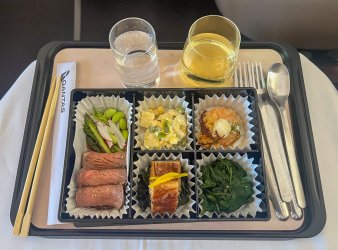
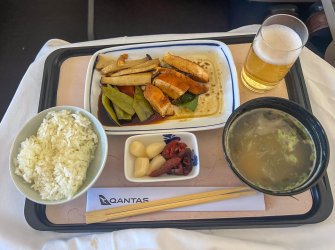
Breakfast is a bento box for starters, full of interesting little morsels. A glass of wine to wash it down and another for the main course, accompanied by rice and miso. Yum.
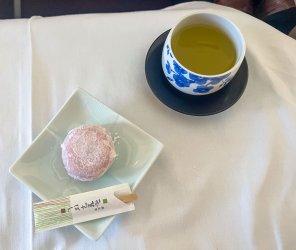
Green tea and a sweet cake with soft red bean curd in the middle. Glorious!
On checking out the movies, I find
Love Actually as one of the choices and I scroll no more. It may be corny and Hugh Grant is probably the world's last choice as a British PM, but I love the complex way the characters and their subplots intertwine. And, of course, it’s a love story, with light and dark threaded throughout. If I could write something as light and frothy and deep and complicated – and commercially successful – I would be very happy.
Thoughts of storylines drift through my mind as I crank the seat horizontal, spread the covers, and take a well-deserved nap after a broken night.
Still hours to go when I wake.
Nuremberg the movie fills the space, apart from the end, where Goering manages to evade execution. Dinner is a little more conventional. Chicken of some sort, washed down with a Japanese beer.
We land before I can finish my movie, though if it hadn’t been for the string of arrival videos, I would have finished with time to spare.
We land a long taxi from the terminal, the light failing as we deplane and enter the artificial light of immigration and baggage claim.
Following advice, we have filled in our arrival cards online and have the QR codes to show immigration. A little misunderstanding when I accidentally put forward my wife's code. I had both on my phone for insurance, you see, and one code looks much like another.
We're set loose land side with our bags. I have two choices for transfer to our hotel in Shinjuku. Limousine Bus or Narita Express. It takes a little time to rule out the bus. That would simply deposit us at Shinjuku Station, a ten minute walk from the hotel.
With a bit of help from the odd official, we find our way downstairs to the railway station where we buy Suica cards and tickets on the Narita Express. This will simply deposit us at Shinjuku Station, like the bus, but I want to buy a Welcome Suica card at JR, and might as well buy the train ticket at the same place.
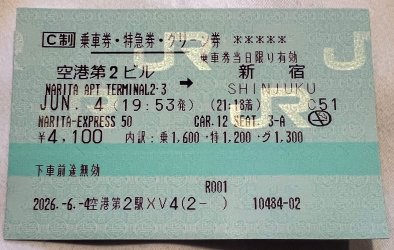
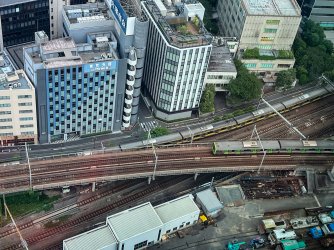
I’m in a bit of a panic to hurry further down to the platform lest we miss our train but as it happens it’s a half-hour or so of standing around on the platform while various local trains whip in, stop for a minute, and whip off again. Security is tight here, wth cameras covering all of the platform, and barriers that prevent unwary passengers falling onto the tracks and didrupting the timetable. The barriers rise only when a train is present. Other platforms, we notice, have gates that open for passengers, and still others have a different system based on self-preservation.
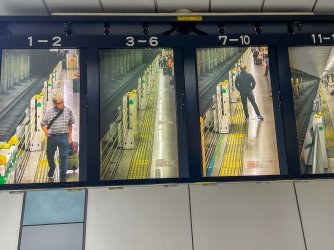
The reserved seat Green Car is my carriage of cautious choice. We have seats, luggage racks, and a night-time view on the hourlong trip in from Narita.
Shinjuku Station is huge. Finding the correct exit turns out to impossible and we walk a kilometre or so along bustling footpaths toward the tower housing the Groove Hotel.
Once at the tower it's more steps to find the correct entrance, and by the time we arrive at the check-in counter we are pretty much beat from the humidity, the crowds, the long day, and the clatter of the wheels.
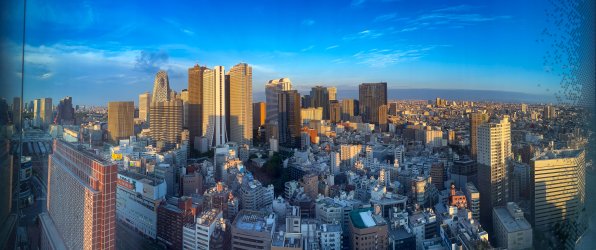
It’s a superb view from the 25th floor, the bathroom is tiny, and good night!
***
Just pulling into Nagasaki as I post this. I'll be interested to see if the fellers chew tobacky, let alone what the women get up to. Stay tuned!






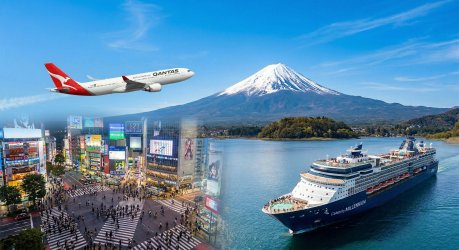


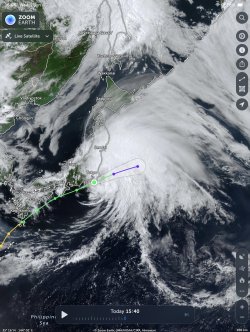
 . Well, that's the plan, Mother Nature likely has other plans.