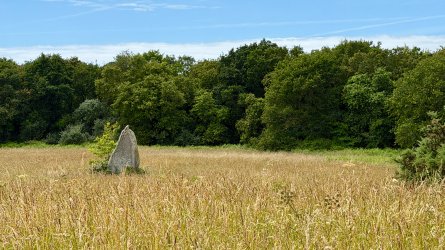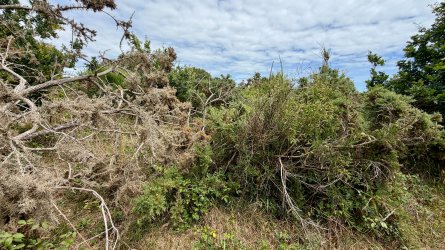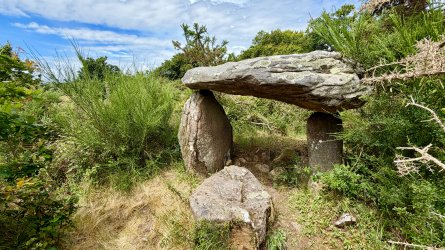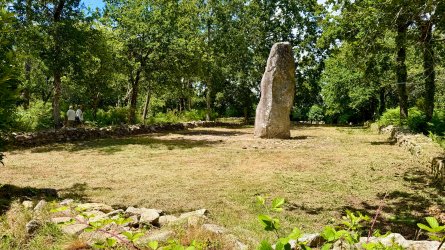
A drive through north-west France

Elevate your business spending to first-class rewards! Sign up today with code AFF10 and process over $10,000 in business expenses within your first 30 days to unlock 10,000 Bonus PayRewards Points.
Join 30,000+ savvy business owners who:

✅ Pay suppliers who don’t accept Amex
✅ Max out credit card rewards—even on government payments
✅ Earn & transfer PayRewards Points to 10+ airline & hotel partners

Start earning today!
- Pay suppliers who don’t take Amex
- Max out credit card rewards—even on government payments
- Earn & Transfer PayRewards Points to 8+ top airline & hotel partners

AFF Supporters can remove this and all advertisements

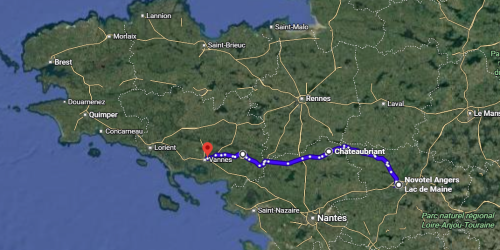
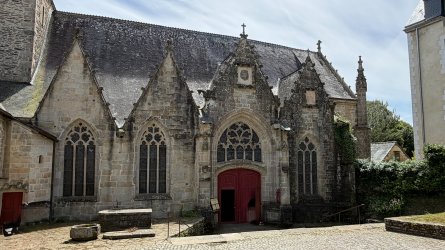
To Vannes today, via Chateaubriant and Rochefort-en-Terre.

1781445783235.png

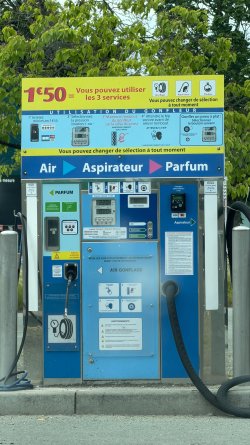
Fuel first - E1.95/litre! but I admired that you can get parfum alongside air in your tires ..

IMG_8583.JPEG

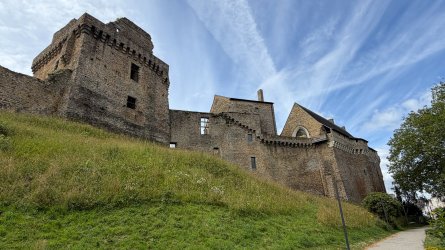
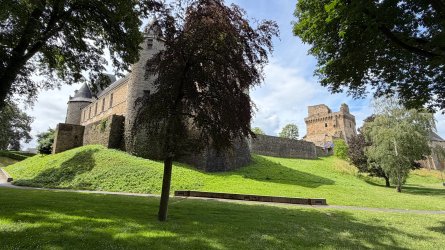
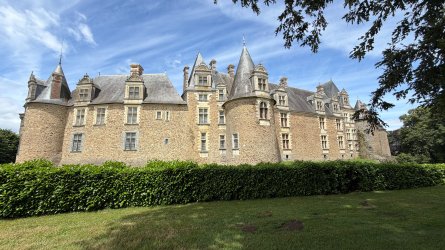
The stop at Chateaubriant was to have a gawk at the Chateau - just a walk around. For a lityyle place, some important history ..

Originally a simple keep, the castle was enlarged and fortified several times during the Middle Ages , while the town of Châteaubriant grew up around it, eventually surrounding itself with ramparts. The lordship of Châteaubriant, raised to a barony in the 12th century , passed to the Dinan and Montfort-Laval families . In 1488, the castle was besieged by King Charles VIII of France during the Mad War , which ended with the defeat of Duke Francis II . The king's marriage to Duchess Anne of Brittany in 1491 diminished the castle's strategic importance. The damaged keep and living quarters were rebuilt and modernized for greater comfort, and then, from 1500 to the 1540s, a "New Castle" was built in the outer bailey, following the principles of Renaissance architecture .

The barony of Châteaubriant passed to the House of Montmorency in the mid- 16th century , then to the House of Condé in the early 17th century . Subject to several sieges during the Wars of Religion (1562-1598), the castle was subsequently neglected by its owners, who rarely visited. After the French Revolution , the castle was sold several times and was finally transformed into an administrative center by the Loire-Inférieure department , which acquired it in 1853.
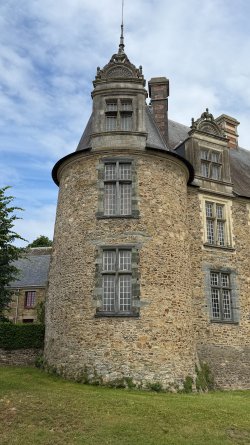
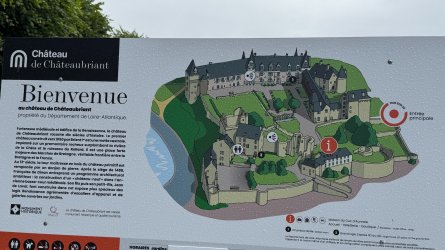
Every council needs its own castle.

IMG_8588.JPEG

IMG_8590.JPEG

IMG_8594.JPEG

IMG_8598.JPEG

IMG_8603.JPEG
 
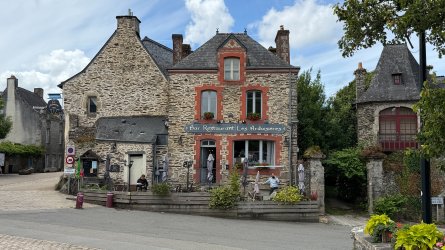
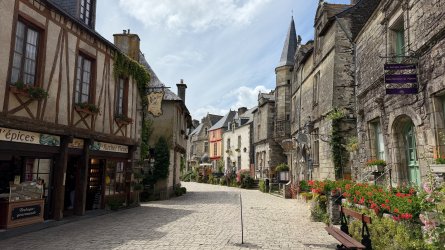
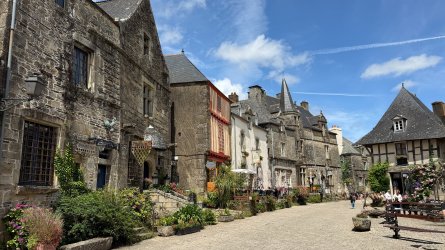
And then Rochefort-en-Terre. Marketed as a Petite Cité de Caractère and one of Les Plus Beaux Villages de France, I was a bit dubious(I mean, everywhere is a charming medieval village ..).

They have it set-up, though. Paid parking .... I could see it would be packed in summer.

IMG_8606.JPEG

I am using iPhone 'clean up' function to remove people in some pics .. no more photobombing!

IMG_8610.JPEG

IMG_8618.JPEG

IMG_8622.JPEG

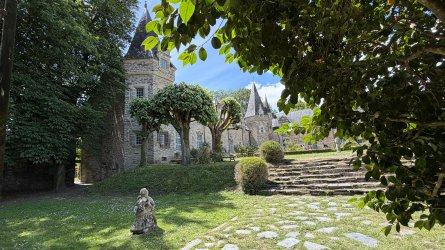
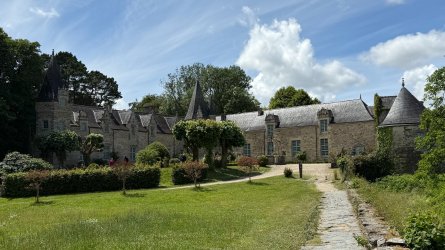
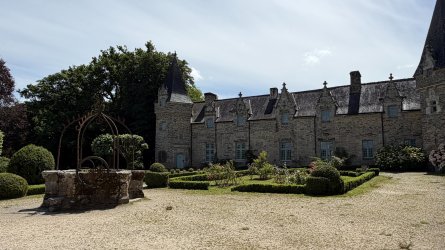
There is a Chateau, of course, but ..

Built in the 12th century, the castle of Rochefort-en-Terre suffered three destructions and only ruins remain. But at the beginning of the 20th century, the American painter Alfred Klots used the outbuildings to transform them into a manor house and quickly made the village a meeting place for artists.
His son Trafford Klots inherited the château and continued to paint there and entertain other visiting artists. After his death his wife gave the building to the French government.[5] In the grounds of the building is the NAIA museum, named after an early-twentieth-century witch who lived in the town. It houses a small collection of fantasy and kinetic art and sculpture.
IMG_8635.JPEG

IMG_8641.JPEG

IMG_8645.JPEG

IMG_8647.JPEG
 
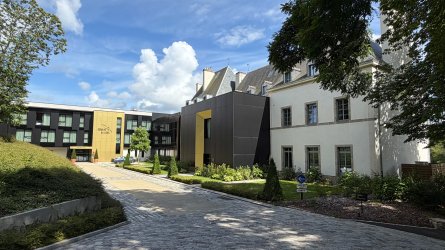
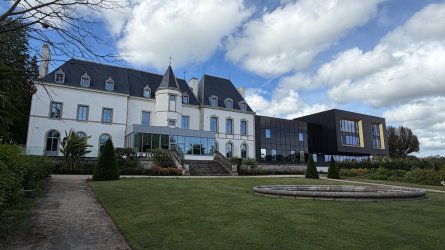
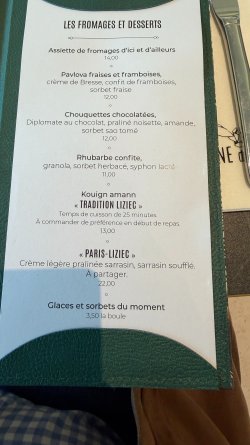
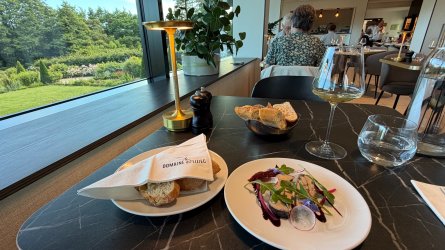
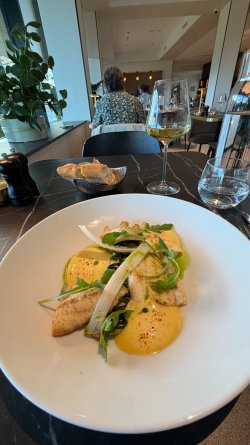
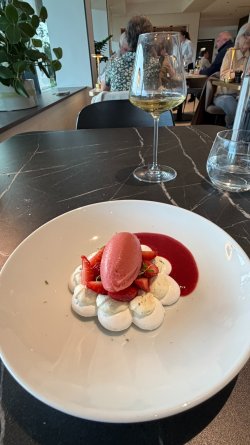
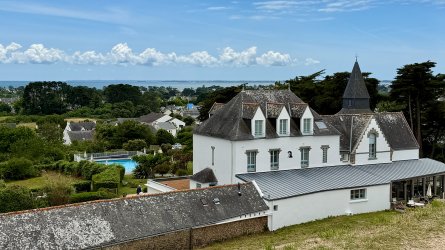
At Vannes, I stayed 2 nights at Domaine du Liziec Vannes - MGallery Collection. I covered this in the Accor thread, but will put it here also as it was such a nice stay.

Converted and added-to large old house.

Reception side - under cover parking

IMG_8666.JPEG

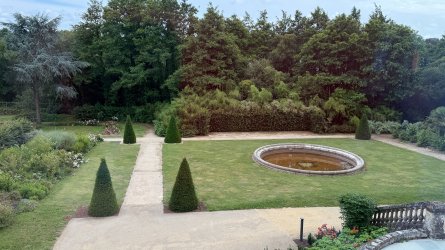
The back - my room was the three right hand windows on the middle floor, old building.

IMG_8667.JPEG

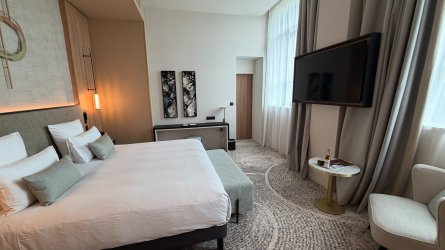
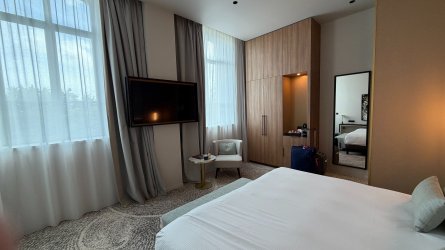
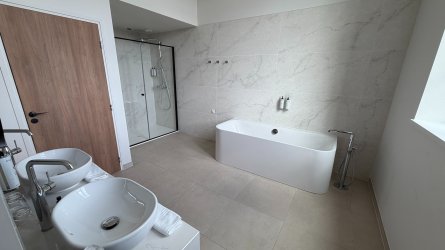
Reception very polished - I was upgraded from a junior suite to a deluxe suite. Very nice - totally gutted and refurbed old building. Central aircon, so they cooled it right down for me. Bit odd that a second-level suite was just the one space (and a HUGE bathroom with HUGE bath). Wifi 40+ Mbps.

IMG_8657.JPEG

IMG_8659.JPEG

IMG_8658.JPEG

View

IMG_8661.JPEG

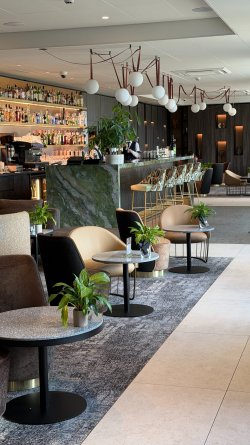
Bar. Staff here - in fact, all the staff were very obliging, although very variable levels of English.

IMG_8668.JPEG

IMG_8669.JPEG
 
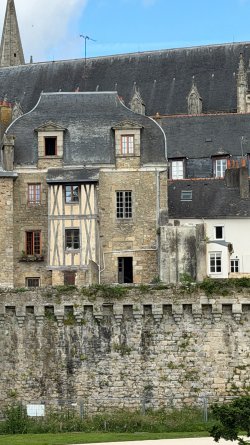
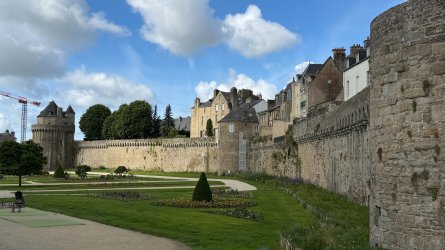
Next morning, to the old town part of Vannes. @Jacques Vert may be disappointed didn't do more in this city, but there was more on the agenda for today, away from town. Q-Park made the positioning easy.

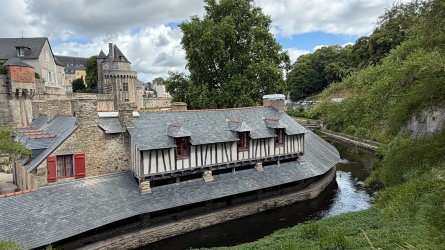
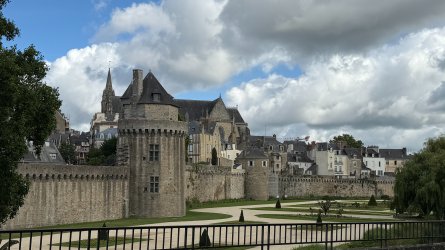
Ramparts of the old city

The ramparts of Vannes are the fortifications erected between the 3rd and 17th centuries to protect the city of Vannes in the Morbihan department of France . Founded by the Romans at the end of the 1st century BC during the reign of Augustus , the civitas Venetorum was forced to protect itself behind a castrum at the end of the 3rd century , even as a major crisis shook the Roman Empire . This first enclosure remained the city's only protection for over a millennium. It was during the reign of Duke John IV , at the end of the 14th century , that the city walls were rebuilt and extended southward to protect the new districts. The Duke wanted to make Vannes not only a place of residence but also a stronghold he could rely on in case of conflict. The area of the walled city was doubled, and the Duke added his fortress of L'Hermine to the new enclosure .
IMG_8696.JPEG

IMG_8697.JPEG

IMG_8699.JPEG

IMG_8701.JPEG

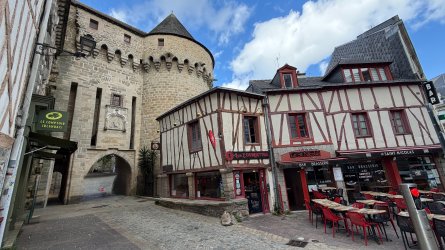
One of the gates to the old town

IMG_8704.JPEG

IMG_8710.JPEG

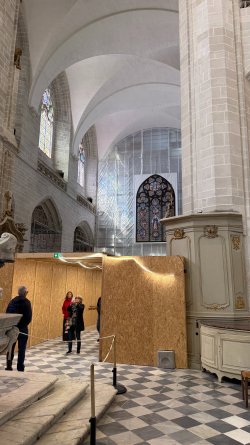
The cathedral was undergoing renovation, so a dead loss

IMG_8716.JPEG

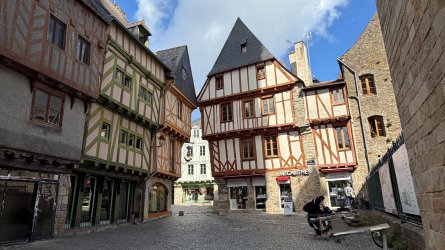
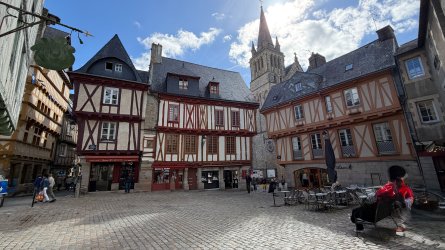
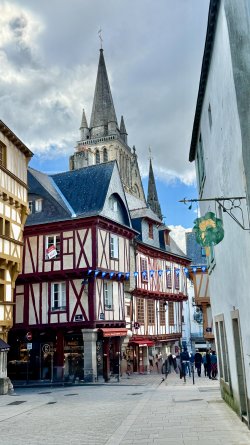
An excellent collection of maisons à colombages

IMG_8723.JPEG

IMG_8724.JPEG

IMG_8727.JPEG

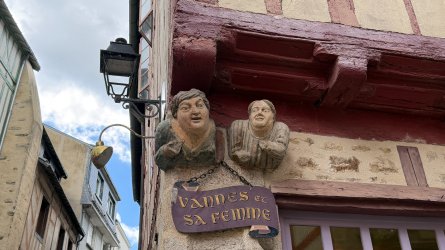
The origin of 16th century Maison de Vannes et sa femmes is a mystery

IMG_8735.JPEG

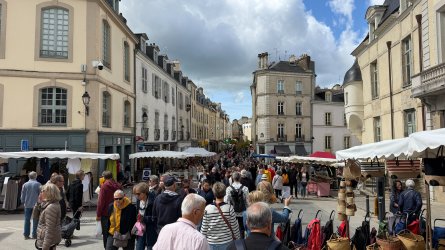
Wednesday, and there was a market - I left through the gate in the distance

IMG_8736.JPEG

IMG_8739.JPEG
 
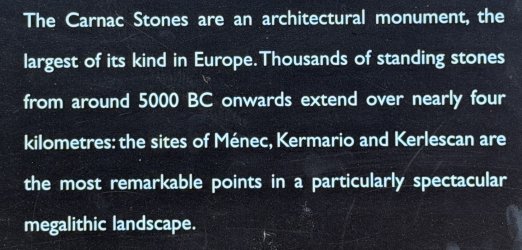
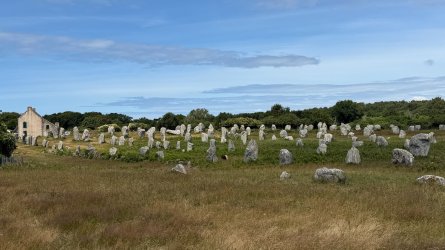
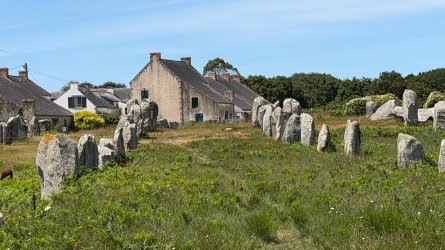
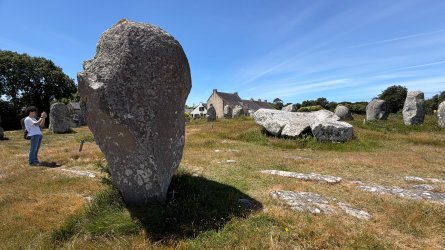
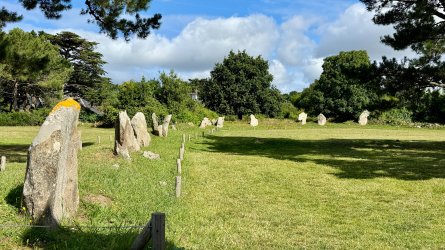
That afternoon, I had a date with some rocks around Carnac - thousands of 'em, as it happens. Brittany is host to thousands of standing stones - megaliths. Some in clusters 'alignments', some isolated 'menhirs'. Also structures in stone - 'dolmens' (marking a burial and sometimes formerly covered by a mound), grave mounds 'tumuli' and circles or enclosures 'cromlech' (but this term can also refer to a dolmen) . All constructed by Neolithic people and the most dense collection in the world.


Dating from about 4,000 - 5,000 BC, so older than Stonehenge, the pyramids etc.

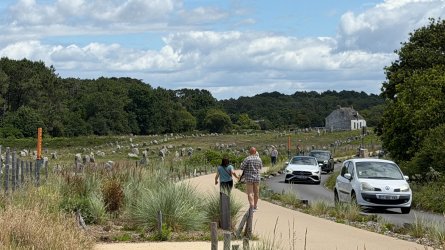
I first visited the major assemblage, where there are 4 or 5 collections. Our guide told us that each area has a dolmen and an enclosure at its head, and larger stones at that end, descending in size towards the toe of the group. But this size reduction isn't systematic - lots of big stones towards the 'smaller' end. In fact there are virtually no consistency. The rows of alignments have different spacings; the number of alignments vary; the direction of alignment of the alignments vary (so this mostly discounts any astronomical purpose). They simply don't know the function of these alignments.

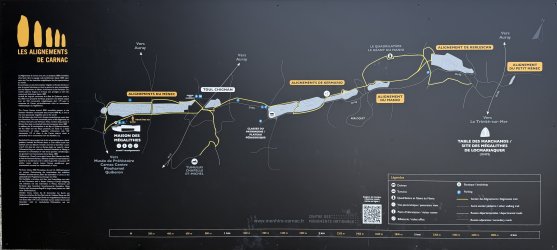
Here is the major groupings at Carnac. I had a 1 hour group guided tour of the largest, Menec zone.

IMG_8742.JPEG

IMG_8743.JPEG

The stones are in-situ granite.

IMG_8744.JPEG

IMG_8745.JPEG

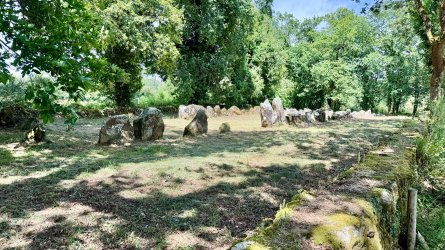
The head of the Menec group. You can only go inside the fence, amongst the stones with a guide.

IMG_8750.JPEG

IMG_8752.JPEG

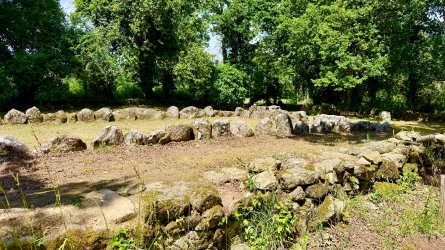
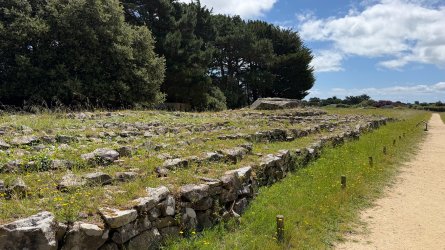
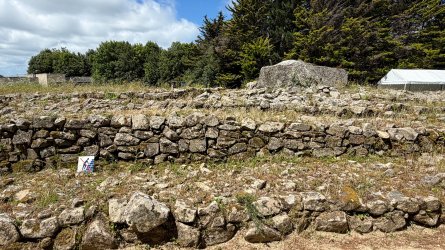
The remains of the enclosure here

IMG_8755.JPEG
 
Last edited:
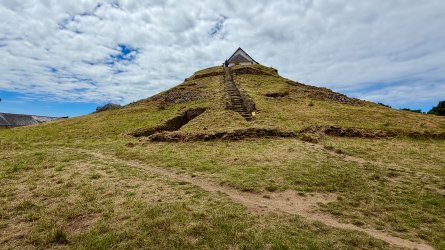
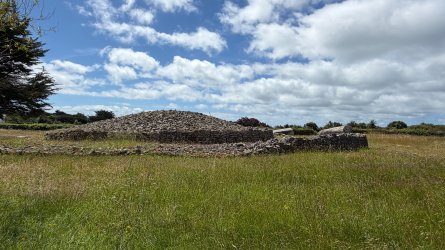
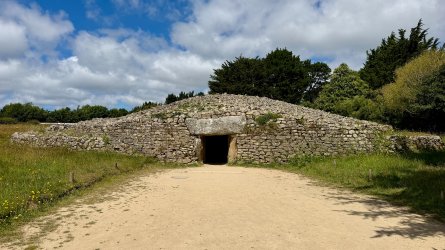
Next stop was in the town of Carnac, the St Michel tumulus.

The Saint-Michel tumulus is a Neolithic burial mound located in Carnac , near the Gulf of Morbihan , in Brittany . It corresponds to the archetype of the "Carnac tumulus," featuring various funerary structures (dolmenic chambers, cists). The central burial chamber, discovered as early as 1862, yielded a rich collection of grave goods.
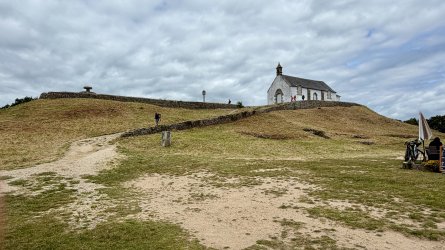
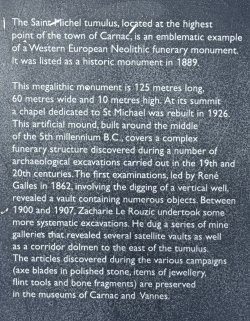
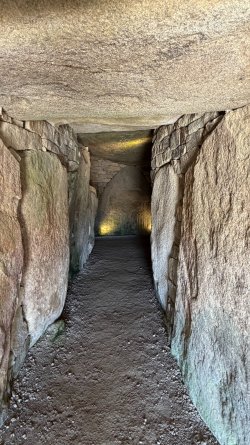
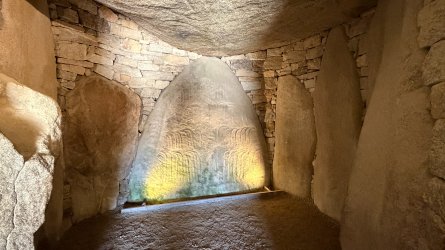
There is a very extensive series of tunnels and chambers within the mound.

IMG_8760.JPEG

IMG_8761.JPEG

IMG_8768.JPEG
There's a hotel right by the mound. View out towards the Quiberon peninsula, next overnight stay.

IMG_8767.JPEG
 
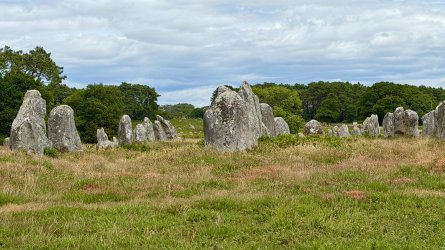
The Kermario group

IMG_8772.JPEG

With its dolmen at its head.

IMG_8773.JPEG

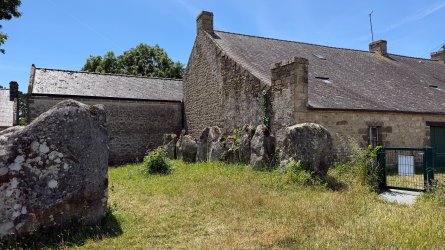
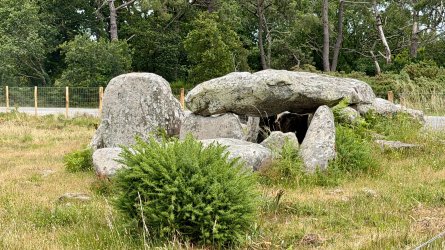
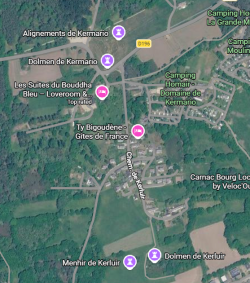
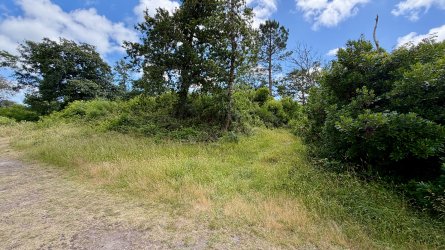
Just to the south was a dolmen and a menhir, so I went looking for them.

1781519786653.png

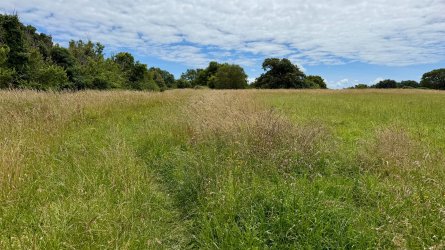
OK; somewhere in there ... Do they have poisonous snakes in France?

IMG_8776.JPEG

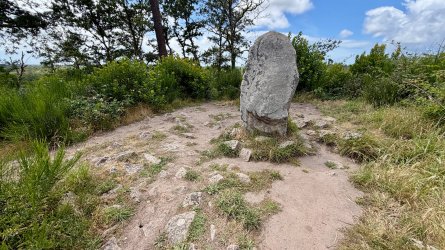
The isolated menhir ...

IMG_8778.JPEG

.. and the dolmen must be in there, somewhere.

IMG_8780.JPEG

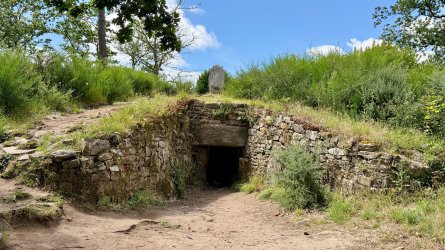
With my best Indiana Jones impersonation, I went into the thicket and found the dolmen.

IMG_8782.JPEG
 
Surprised there are still manual cars for hire. Maybe it is an EU thing
Still, manual driving is "forever" muscle memory.
True... except that if your manual driving muscle memory is from a country that drives on the other side of the road, you can find yourself clutching the door handle when it's time to change gear ;)

Always used to take me a day or 2 of driving in Europe to completely break that habit. Though it's been an eternity since I saw a manual rental car. Makes me kind of nostalgic!
 
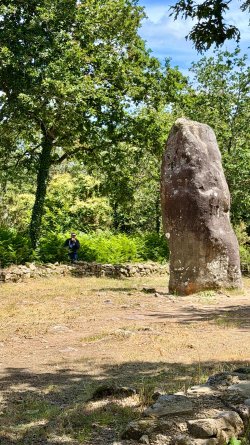
Near the eastern-most Kerlescan group is the 'Gerant du Manio' - the giant. 6.5 m high, an isolated menhir, and a wonder of how it was transported and erected. Note the people in both shots for scale.

IMG_8786.JPEG

IMG_8791.JPEG

nearby a rectangle of stones marking an eroded burial site.

IMG_8788.JPEG

IMG_8789.JPEG
 
Another obscure one - the Kerkado tumulus. Another fair walk from the parking.

One of the earliest in Europe, c4,800BC. A single menhir on top. I wished I had gone inside - carvings in there I found out later.

IMG_8796.JPEG

IMG_8797.JPEG

IMG_8798.JPEG

IMG_8799.JPEG
 
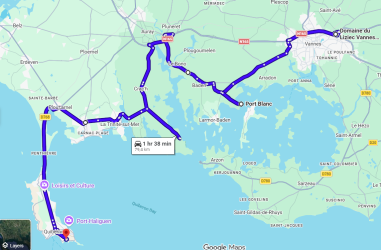
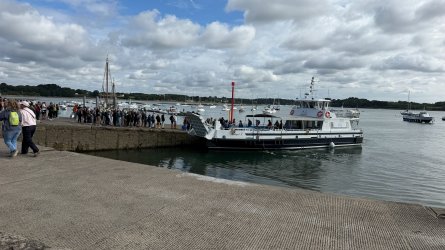
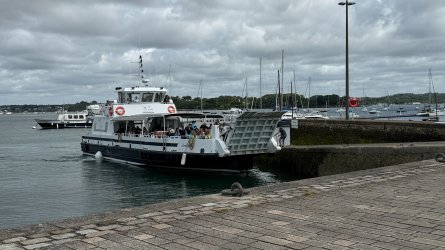
The next day I was off to Queberon, at the end of a peninsula and a sea side holiday town. I had read so much about the beauty of the Golf de Morbihan to the south of Vannes that I decided to have a look. I drove tp Port Blanc and caught the 5 minute ferry (actually, a car barge with seats in the cars area) to the Ile aux Moines, a renowned spot.

1781542638282.png

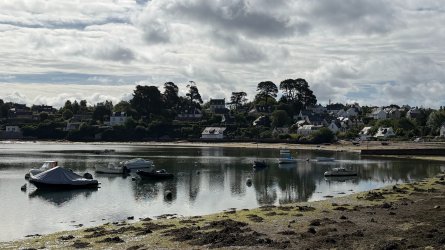
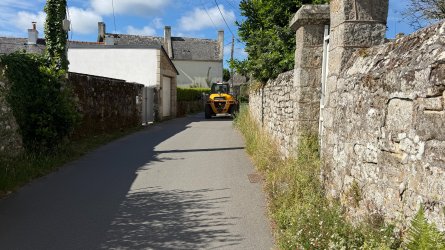
The island was said to be car-free, a lovely place to wander and admire. It was far from car-free, in fact I found it a noisy place, with little local charm and plenty of vehicles in the narrow lanes.

IMG_8817.JPEG

IMG_8823.JPEG

I decided to have a look at the local megaliths, about a 30 min walk from the ferry.

IMG_8827.JPEG

Kergonan - a horseshoe arrangement from 3,500 year BC.

IMG_8831.JPEG

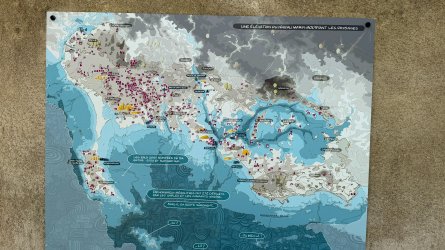
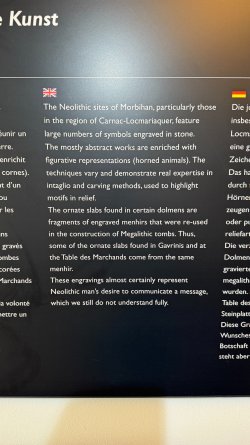
A handy map there of the megaliths of the wider Carnac area

IMG_8832.JPEG

On my walk back, the island was really waking up and there were vehicles everywhere - mainly tradeys and deliveries it seemed.

IMG_8842.JPEG IMG_8843.JPEG

IMG_8857.JPEG

Back on the ferry. A disappointing morning. This place is probably nice if you have a summer place, or want to veg for a week, or have a boat, but as a day trip it was a dead loss for me.

IMG_8859.JPEG
 
Last edited:
Then onto Locmariaquer, a megalithic site (admission charged) renowned for its carvings, at the end of a peninsula (the 1hr 38 mins marker in the map above).

There are several features.

IMG_8860.JPEG

The Tumulus of Eh Grah - a long rectangular platform with a dolmen in the middle - contained a body. Here, I learned the French Monuments people were into 'let it grow'. Everywhere I had noticed that there was no growth management and often the monuments were concealed a bit.

IMG_8864.JPEG


IMG_8865.JPEG

'The merchant's table'
This is an example of a dolmen covered by a cairn. Some of the stones may have come from the alignment of 18 menhirs nearby. The cairn was reconstructed during a restoration by Zacharie Le Rouzic in 1837-1938, and redone in 1991.

IMG_8868.JPEG

IMG_8870.JPEG

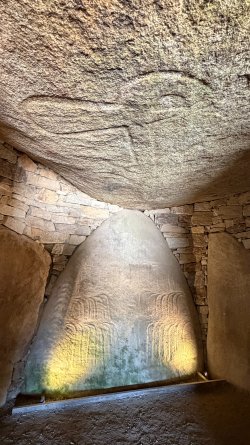
Inside - remarkable

IMG_8872.JPEG

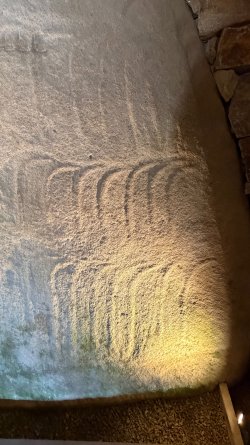
The carvings in the structure are all real and in-situ. The smaller stones between the large uprights are reconstructions.

IMG_8874.JPEG

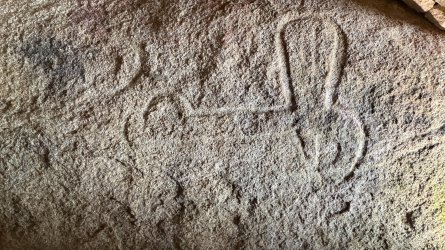
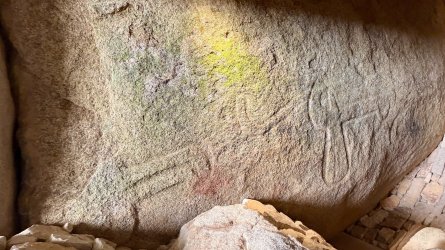
Axes on the roofs are a common carving. The meaning of it all is unknown.

IMG_8878.JPEG

IMG_8875.JPEG

IMG_8876.JPEG

IMG_8880.JPEG

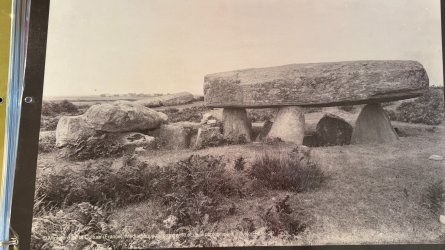
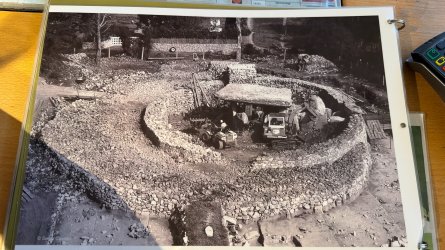
it had been 'renovated' and I wondered how much was intact, so I asked at the desk and they showed me these pics.

As found (hence the name 'merchant's table')

IMG_8892.JPEG

But when excavated, they found: Yes, you'd have to wince at the motorised excavators there! They re0built the stone covering.

IMG_8893.JPEG

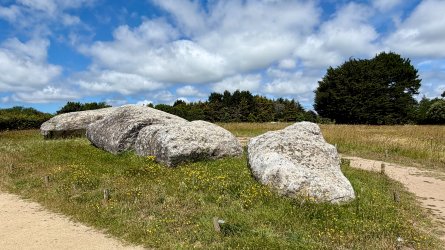
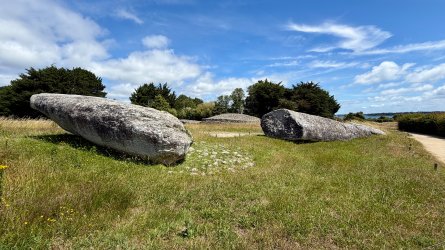
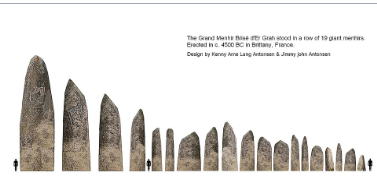
And lastly, another giant that has toppled and broken into 4 pieces. Originally 20m high, the tallest in Europe; 5,000 BC.

IMG_8884.JPEG

IMG_8887.JPEG

It was once part of an alignment, reconstructed in Wikipedia. They can tell by the foundation pits nearby.

1781544435482.png

A worthwhile site to visit.
 
Last edited:

Become an AFF member!

Join Australian Frequent Flyer (AFF) for free and unlock insider tips, exclusive deals, and global meetups with 65,000+ frequent flyers.

AFF members can also access our Frequent Flyer Training courses, and upgrade to Fast-track your way to expert traveller status and unlock even more exclusive discounts!

AFF forum abbreviations

Wondering about Y, J or any of the other abbreviations used on our forum?

Check out our guide to common AFF acronyms & abbreviations.

Currently Active Users

Back
Top