





Nadi - Fiji Jet Fuel Contamination

It doesn’t make the fuel a good conducto
I think that is the key.
Hydrocarbon fuel is an extremely poor electrical conductor - almost zero.

I had a look for some objective data for electrical conductivity
The units are Siemens per metre
Higher number = more conductive = easier to dissipate electrostatic charge

Seawater: 5
Pure Water: 0.000005 =5x10^-6
pure water considered an insulator.

Jet Fuel with antistatic additive 0.00000000005 = 5x10^-11

Jet fuel without additives 0.000000000001 = 1x10^-12 or 5 million times less than pure water.
 
Last edited:
Elevate your business spending to first-class rewards! Sign up today with code AFF10 and process over $10,000 in business expenses within your first 30 days to unlock 10,000 Bonus PayRewards Points.
Join 30,000+ savvy business owners who:

✅ Pay suppliers who don’t accept Amex
✅ Max out credit card rewards—even on government payments
✅ Earn & transfer PayRewards Points to 10+ airline & hotel partners

Start earning today!
- Pay suppliers who don’t take Amex
- Max out credit card rewards—even on government payments
- Earn & Transfer PayRewards Points to 8+ top airline & hotel partners

AFF Supporters can remove this and all advertisements

There are other media suggestions that no Jet fuel was delivered to Fiji between 23 June and 7 August

Sounds like this plus the unusable batch (static electricity) has resulted in the current fuel shortage

Fiji has released from Govt reserves 1.3M litres of Jet fuel to Nadi airport

Qf operated a 737 today
Quick look did not detect scheduled aircraft uplifting fuel elsewhere and FJ operating long haul flights with their a350

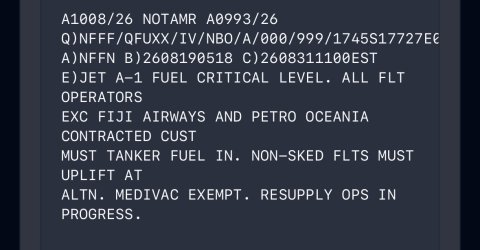
Restrictions continue - see NOTAM

NOTAM A0993/26

IMG_8645.jpeg
 
Last edited:
Fuel builds up static charge when it is pumped because of friction during fuel flow (and this may also happen during tanker or drum transport). That's why fuel tankers (or fuel pumping hydrant systems) and aircraft need to be properly earthed when being refueled to avoid excess static charge and particularly discharge of static which can cause vapours to ignite.

So sounds to me like this fuel has not been properly earthed at some points in its transport and handling and now has built up charge above what can be safely/conveniently discharged by the local infrastructure.

My source: 10 years as a RAAF Fuels Officer. They are right it is very rare - with proper handling, should not happen.
Thank you for that - I’ve been looking all over the net for an explanation of what ‘excess electrical charge’ means in this context, but all the newspaper articles just quote the same phrase and move on.
 
Thank you for that - I’ve been looking all over the net for an explanation of what ‘excess electrical charge’ means in this context, but all the newspaper articles just quote the same phrase and move on.
You’re welcome @t7_ I had a good old walk down memory lane thinking about this.

And welcome to AFF!
 

Become an AFF member!

Join Australian Frequent Flyer (AFF) for free and unlock insider tips, exclusive deals, and global meetups with 65,000+ frequent flyers.

AFF members can also access our Frequent Flyer Training courses, and upgrade to Fast-track your way to expert traveller status and unlock even more exclusive discounts!

AFF forum abbreviations

Wondering about Y, J or any of the other abbreviations used on our forum?

Check out our guide to common AFF acronyms & abbreviations.
Back
Top