





kileskus
Member
- Joined
- Jan 20, 2019
- Posts
- 182
Samarkand, part one
Sergey Yesenin, the brilliant Russian lyric poet, used his trip to Samarkand in 1921 as his main foray to the East to inspire his series of poems called the Persian Songs. It's an ideal vision of the Orient, too idealised to take seriously now, but that was what he escaped to from the turmoil of revolutionary Russia and his own personal life. One of my favourite poems from that cycle begins:
Never have I set eyes on the Bosphorus.
So please do not ask me what it's like.
I have seen the fair sea in your glances.
With a shimmering blue flame alight.
(Translation not mine this time - here is a wonderful lyrical translation by Peter Tempest.)
Yesenin never did set foot in Iran or Turkey. He had four marriages, with one to an American dancer 18 years older than him, before committing suicide at age 30.
One could ask if the blue flame was not just the imagined sea, but directly inspired by the blue of Samarkand.
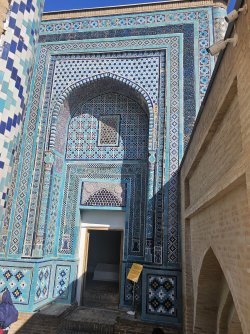
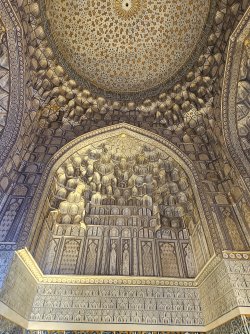
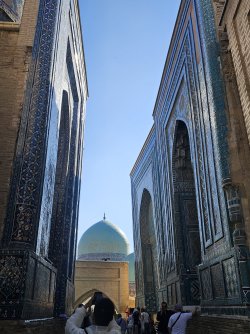
I headed to the Shah-i-zinda necropolis after arriving, sleep-deprived:
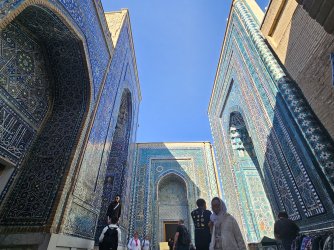
The complex is made up of many structures spanning the 11th to 19th centuries, including several mausoleums both from Tamerlane's reign and the following Timurid period.
Then I had to do boring stuff.
Laundry - Samarkand, despite its population of 600,000 and endless tourists, does not have a self-service laundromat. I went to a dry cleaners who does 1 kg of clothes for $5 - and returned them to me folded as well.
SIM card - I had bought an e-sim but the signal was pretty weak even in parts of the city and overall it was just slow. Plus it was quite expensive - about $40 for 5 GB. As my 5 GB has run out I decided to get a local SIM card. The national mobile carrier here is called Uztelekom. There are a lot of stalls unofficially selling SIM cards, but I decided to go to a licensed outlet.
Plugged Uztelekom into Google Maps and got the Samarkand branch. I expected it to look like a Vodafone store, with lots of phones in glass cases and a section for SIM cards, but it looked like a Centrelink office. Take a number and sit down.
Legally, you need to have your passport registered when you activate a SIM card, which is why I didn't go to the unofficial stalls around the city. If you've been in the country longer than 3 days, you are also required to be registered by your accommodation provider with the Ministry of Internal Affairs. Make sure you ask your hotel for the registration slip. You can be asked for it when you leave the country, and in this case they needed it and my passport to give me a SIM card.
It was 15 GB for $8, and it's fast and reliable so I can now Google about the stuff I see when I'm out and about. I imagine it would've been easier if I'd gotten it in Tashkent, but got there in the end.
The last order of business was seeing a dentist. I am not sure if this topic is of interest to anyone, but since I've overshared about my personal life already, I'll go ahead.
My filling chipped off a few days ago and it's starting to cause problems. This is unfortunate timing because I don't want to get dental work done here but don't want to wait until I get back to NZ.
From my research, the biggest concerns with dental tourism is sterilisation of equipment, just like getting a tattoo overseas. Of course the cost of dental work here is orders of magnitude lower than in Aus/NZ but saving a few hundred/thousand dollars just to get hepatitis C is a Very Bad Idea.
The former USSR countries produce many times more dentists per capita than in Australia. This is a holdover from the Soviet medical education system where dentistry is the easiest stream of med school to enter, and there are essentially no caps on graduates the same way our medical student numbers are limited, for example. There are also low regulatory standards for starting a private dental clinic.
Hence you will see the ubiquitous stomatologiya signs on your travels in this region, but they might not be up to the standards we have back home.
I found a clinic that used gold standard sterilisation and the whole thing went well if not a little casual - booked the appointment via Telegram, went there with no reception to register at, just waited until the dentist came to get me, and then at the end I paid him in cash directly. But the actual work seemed very professional, and it was the head dentist himself not his junior staff who saw me. He didn't even charge me a tourist tax - it was $30 for the whole thing, which is actually on the lower end of Uzbek prices.
So, if you do find yourself in need of emergency dental care in the post-USSR countries, just make sure you get in touch with them via Telegram/Whatsapp first and ask about their sterilisation techniques. Have Google Translate ready when you get there, and then sit back, relax, and pretend you enjoy the flight.
I checked into my hotel after. The Western chain hotels are eye-wateringly expensive here, with the Accor ones being at least $400 a night. The local 4-star hotels are in the $100-150 range and I went with the Medina Hotel.
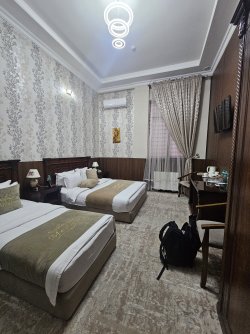
The room was quite spacious
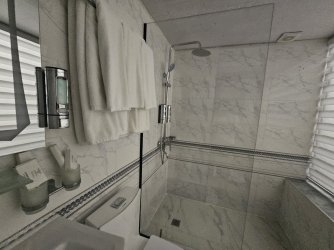
As was the bathroom
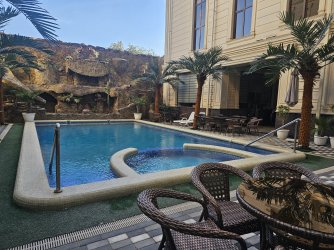
There was a pool, too.
The gym, however, was extremely lacking, and the hotel restaurant wasn't open when I tried to get dinner, so I went to my local shawarma joint instead. Still not bad though given the rate I paid.
At sunset I went to the Bibi Khanym mosque, built by Tamerlane in 1400 for his favourite wife.
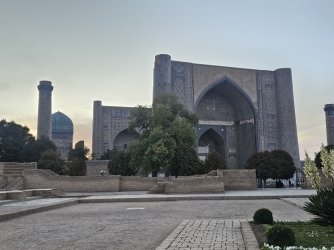
At 40 m tall this eclipses the buildings I saw in Bukkhara, and in general everything in historical Samarkand is taller. I find myself taking more photos from a distance to try to capture everything without warping. If anyone has tips on how to photograph tall buildings, especially wide ones, that would be appreciated. I find trees challenging too - stepping back 50 m would theoretically get the whole building in a shot, but then there's a tree in front of you.
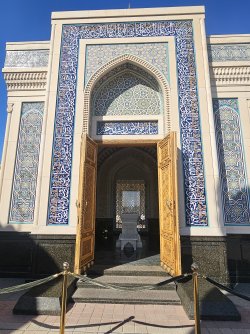
Her mausoleum is directly opposite:
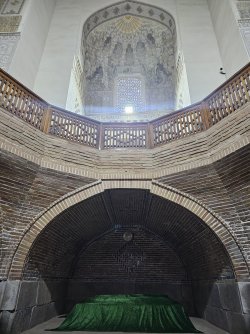
It must be nice being the favourite consort.
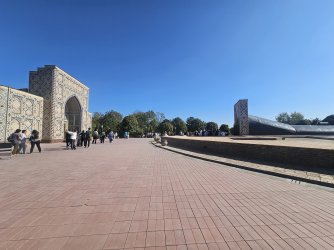
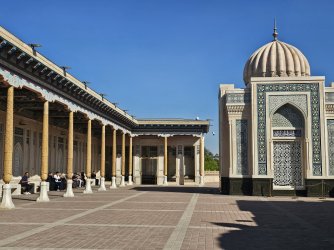
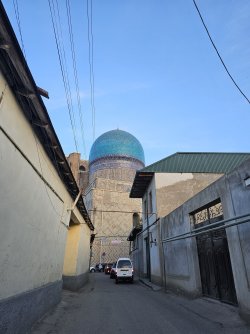
When I was still in high school and hadn't seen anything outside of Canada, Australia, and China (where I'd briefly lived as a kid), I remember seeing on my Facebook feed an article about a photographer who turned his back on famous landmarks. I've had this philosophy in my mind ever since, and I try to take photos of the areas surrounding the landmarks I visit. In Bukhara, it was a lot of parking lots or ambiguous empty spaces. For the Bibi Khanym mosque, it was this:
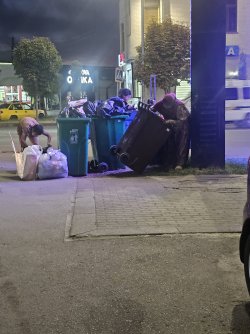
Went back to the hotel after the sun had set and found a mother and her two kids, one of them driving a buggy, going through the bins outside...
Sergey Yesenin, the brilliant Russian lyric poet, used his trip to Samarkand in 1921 as his main foray to the East to inspire his series of poems called the Persian Songs. It's an ideal vision of the Orient, too idealised to take seriously now, but that was what he escaped to from the turmoil of revolutionary Russia and his own personal life. One of my favourite poems from that cycle begins:
Never have I set eyes on the Bosphorus.
So please do not ask me what it's like.
I have seen the fair sea in your glances.
With a shimmering blue flame alight.
(Translation not mine this time - here is a wonderful lyrical translation by Peter Tempest.)
Yesenin never did set foot in Iran or Turkey. He had four marriages, with one to an American dancer 18 years older than him, before committing suicide at age 30.
One could ask if the blue flame was not just the imagined sea, but directly inspired by the blue of Samarkand.
I headed to the Shah-i-zinda necropolis after arriving, sleep-deprived:
The complex is made up of many structures spanning the 11th to 19th centuries, including several mausoleums both from Tamerlane's reign and the following Timurid period.
Then I had to do boring stuff.
Laundry - Samarkand, despite its population of 600,000 and endless tourists, does not have a self-service laundromat. I went to a dry cleaners who does 1 kg of clothes for $5 - and returned them to me folded as well.
SIM card - I had bought an e-sim but the signal was pretty weak even in parts of the city and overall it was just slow. Plus it was quite expensive - about $40 for 5 GB. As my 5 GB has run out I decided to get a local SIM card. The national mobile carrier here is called Uztelekom. There are a lot of stalls unofficially selling SIM cards, but I decided to go to a licensed outlet.
Plugged Uztelekom into Google Maps and got the Samarkand branch. I expected it to look like a Vodafone store, with lots of phones in glass cases and a section for SIM cards, but it looked like a Centrelink office. Take a number and sit down.
Legally, you need to have your passport registered when you activate a SIM card, which is why I didn't go to the unofficial stalls around the city. If you've been in the country longer than 3 days, you are also required to be registered by your accommodation provider with the Ministry of Internal Affairs. Make sure you ask your hotel for the registration slip. You can be asked for it when you leave the country, and in this case they needed it and my passport to give me a SIM card.
It was 15 GB for $8, and it's fast and reliable so I can now Google about the stuff I see when I'm out and about. I imagine it would've been easier if I'd gotten it in Tashkent, but got there in the end.
The last order of business was seeing a dentist. I am not sure if this topic is of interest to anyone, but since I've overshared about my personal life already, I'll go ahead.
My filling chipped off a few days ago and it's starting to cause problems. This is unfortunate timing because I don't want to get dental work done here but don't want to wait until I get back to NZ.
From my research, the biggest concerns with dental tourism is sterilisation of equipment, just like getting a tattoo overseas. Of course the cost of dental work here is orders of magnitude lower than in Aus/NZ but saving a few hundred/thousand dollars just to get hepatitis C is a Very Bad Idea.
The former USSR countries produce many times more dentists per capita than in Australia. This is a holdover from the Soviet medical education system where dentistry is the easiest stream of med school to enter, and there are essentially no caps on graduates the same way our medical student numbers are limited, for example. There are also low regulatory standards for starting a private dental clinic.
Hence you will see the ubiquitous stomatologiya signs on your travels in this region, but they might not be up to the standards we have back home.
I found a clinic that used gold standard sterilisation and the whole thing went well if not a little casual - booked the appointment via Telegram, went there with no reception to register at, just waited until the dentist came to get me, and then at the end I paid him in cash directly. But the actual work seemed very professional, and it was the head dentist himself not his junior staff who saw me. He didn't even charge me a tourist tax - it was $30 for the whole thing, which is actually on the lower end of Uzbek prices.
So, if you do find yourself in need of emergency dental care in the post-USSR countries, just make sure you get in touch with them via Telegram/Whatsapp first and ask about their sterilisation techniques. Have Google Translate ready when you get there, and then sit back, relax, and pretend you enjoy the flight.
I checked into my hotel after. The Western chain hotels are eye-wateringly expensive here, with the Accor ones being at least $400 a night. The local 4-star hotels are in the $100-150 range and I went with the Medina Hotel.
The room was quite spacious
As was the bathroom
There was a pool, too.
The gym, however, was extremely lacking, and the hotel restaurant wasn't open when I tried to get dinner, so I went to my local shawarma joint instead. Still not bad though given the rate I paid.
At sunset I went to the Bibi Khanym mosque, built by Tamerlane in 1400 for his favourite wife.
At 40 m tall this eclipses the buildings I saw in Bukkhara, and in general everything in historical Samarkand is taller. I find myself taking more photos from a distance to try to capture everything without warping. If anyone has tips on how to photograph tall buildings, especially wide ones, that would be appreciated. I find trees challenging too - stepping back 50 m would theoretically get the whole building in a shot, but then there's a tree in front of you.
Her mausoleum is directly opposite:
It must be nice being the favourite consort.
When I was still in high school and hadn't seen anything outside of Canada, Australia, and China (where I'd briefly lived as a kid), I remember seeing on my Facebook feed an article about a photographer who turned his back on famous landmarks. I've had this philosophy in my mind ever since, and I try to take photos of the areas surrounding the landmarks I visit. In Bukhara, it was a lot of parking lots or ambiguous empty spaces. For the Bibi Khanym mosque, it was this:
Went back to the hotel after the sun had set and found a mother and her two kids, one of them driving a buggy, going through the bins outside...