Cruise across the Mediterranean - Athens to Malaga, via Valletta

Contrasting with the site, the museum at Knossos was excellent.

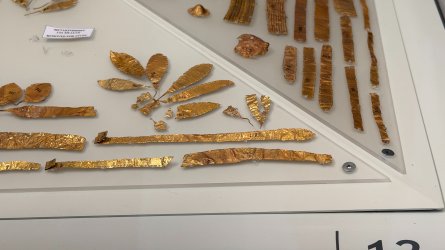
Gold head decorations

IMG_3622.JPEG

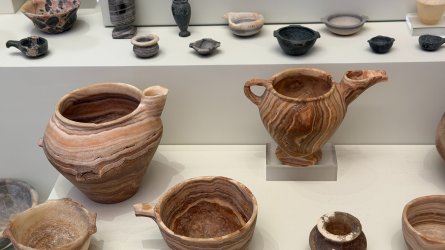
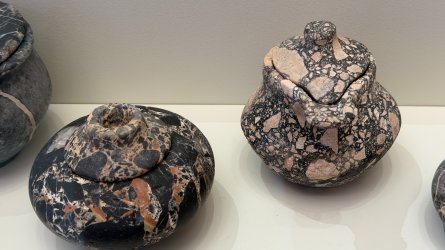
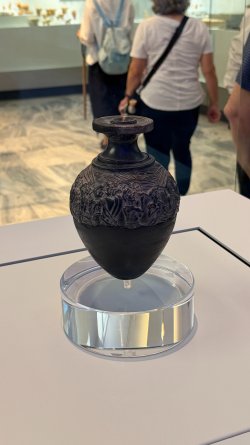
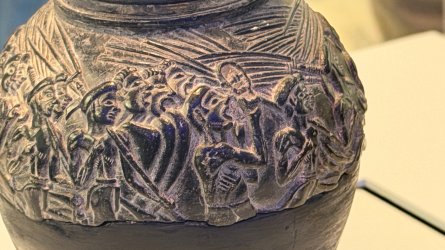
Stone jars for funerary use, 2600-1900BC

IMG_3624.JPEG

IMG_3625.JPEG

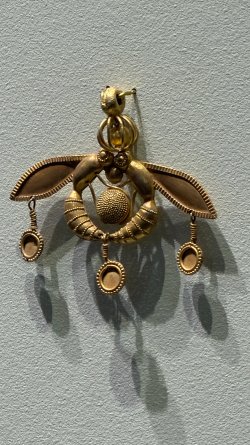
The bee pendant - two bees holding a drop of honey in their mouths. From a necropolis at Malia, ~1750BC

IMG_3630.JPEG

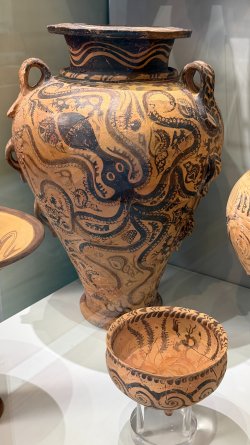
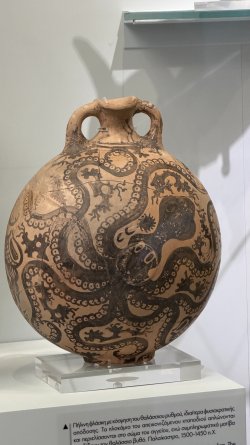
Clay vessels in what they call 'marine' motifs, Zakros, ~1500BC


IMG_3642.JPEG

IMG_3643.JPEG


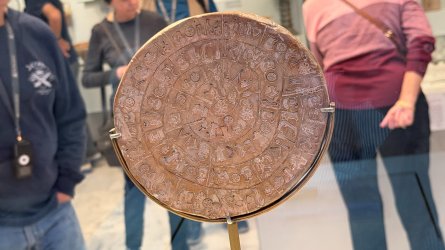
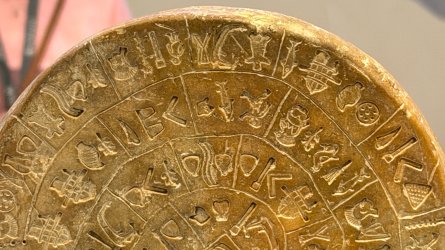
And a show-stopper. The 'Phaistos disc' a fired clay disc containing undeciphered script/symbols. found at the Minoan Phaistos palace, dating from about 1700BC. It isn't Linear A, the other undeciphered Minoan script.


IMG_3648.JPEG

IMG_3650.JPEG

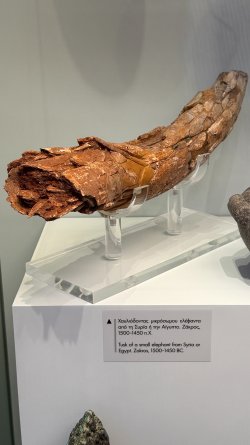
An elephant tusk ryton

IMG_3651.JPEG
 
Elevate your business spending to first-class rewards! Sign up today with code AFF10 and process over $10,000 in business expenses within your first 30 days to unlock 10,000 Bonus PayRewards Points.
Join 30,000+ savvy business owners who:

✅ Pay suppliers who don’t accept Amex
✅ Max out credit card rewards—even on government payments
✅ Earn & transfer PayRewards Points to 10+ airline & hotel partners

Start earning today!
- Pay suppliers who don’t take Amex
- Max out credit card rewards—even on government payments
- Earn & Transfer PayRewards Points to 8+ top airline & hotel partners

AFF Supporters can remove this and all advertisements

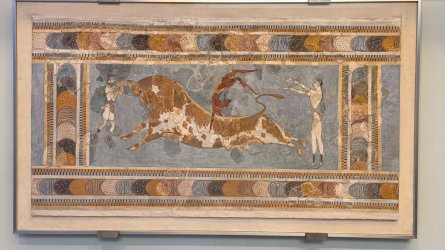
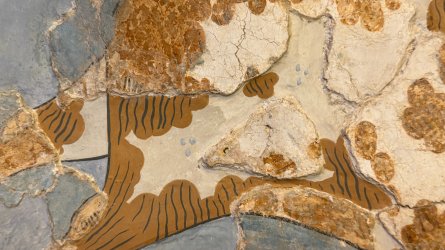
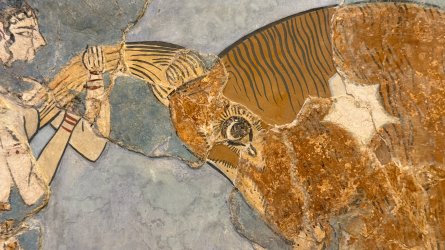
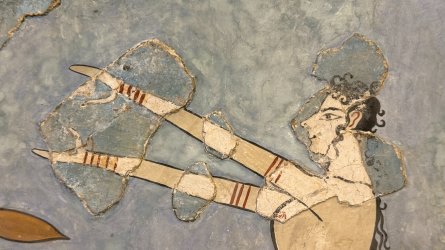
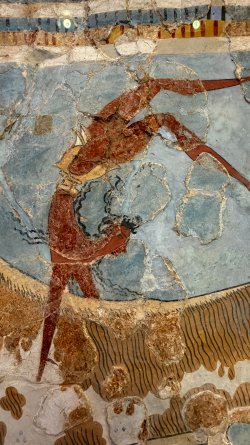
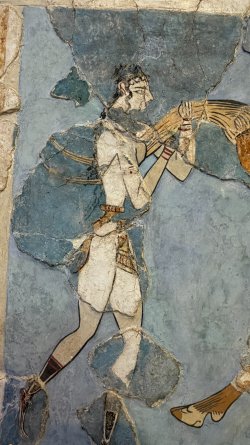
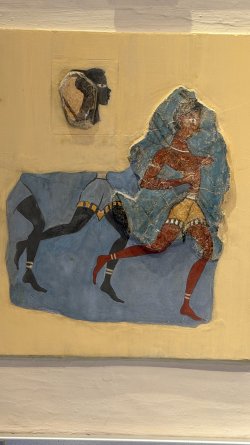
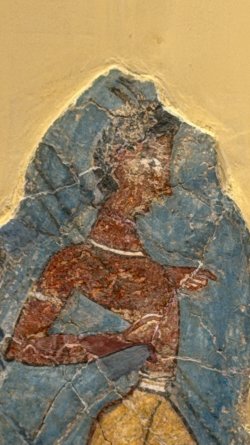
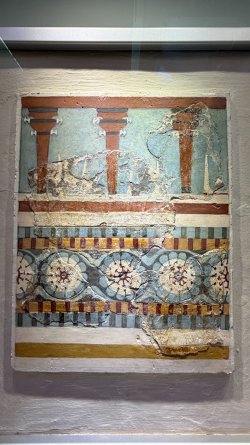
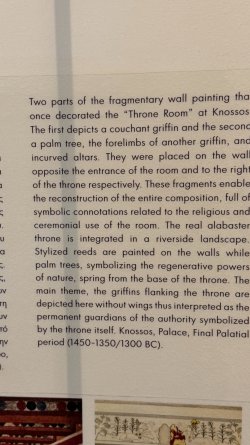
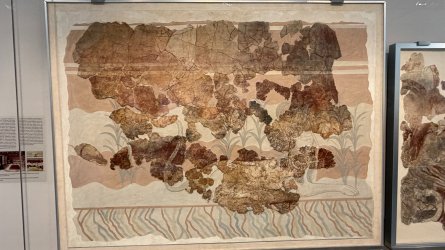
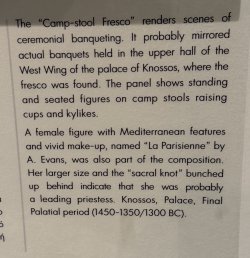
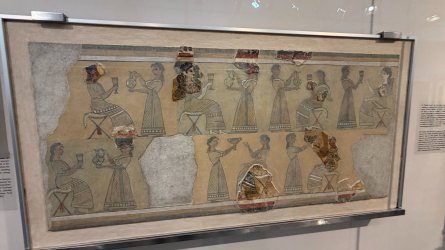
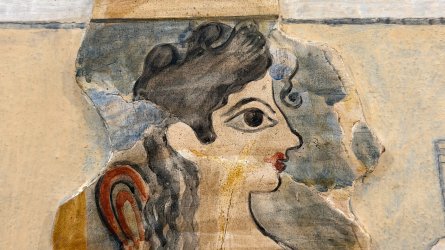
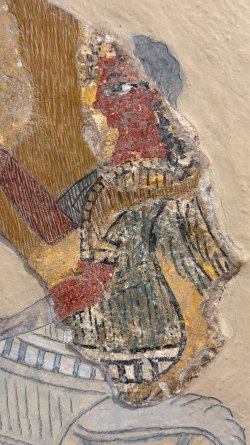
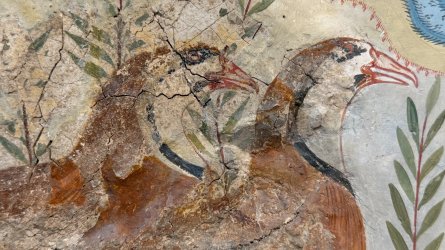
They have some of the famous frescos from the Minoan palaces, but on closer inspection, they are fragments (a good collection of them), with gaps filled in - not to try to be fake, just to complete the picture.

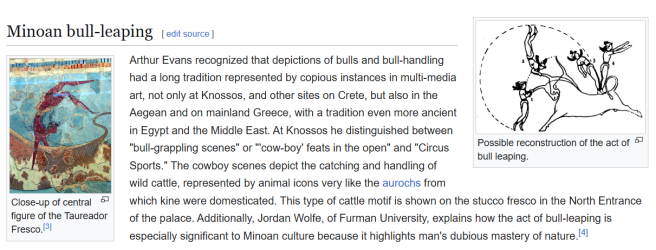
This is famous - the bull-leaping (although the guide made it sound like bull-lipping). The guy on the bull's back is thought to be hurdling over the bull as it charged towards him.

Wikipedia:

The Bull-Leaping Fresco is the most completely restored of several stucco panels originally sited on the upper-story portion of the east wall of the Minoan palace at Knossos in Crete. It shows a bull-leaping scene. Although they were frescos, they were painted on stucco relief scenes. They were difficult to produce. The artist had to manage not only the altitude of the panel but also the simultaneous molding and painting of fresh stucco. The panels, therefore, do not represent the formative stages of the technique. In Minoan chronology, their polychrome hues – white, pale red, dark red, blue, black – exclude them from the Early Minoan (EM) and early Middle Minoan (MM) Periods. They are, in other words, instances of the "mature art" created no earlier than MM III. The flakes of the destroyed panels fell to the ground from the upper story during the destruction of the palace, probably by earthquake, in Late Minoan (LM) II. By that time the east stairwell, near which they fell, was disused, being partly ruinous.
1795017166795.png

IMG_3654.JPEG

IMG_3655.JPEG

IMG_3656.JPEG

IMG_3657.JPEG

IMG_3659.JPEG

IMG_3660.JPEG
 
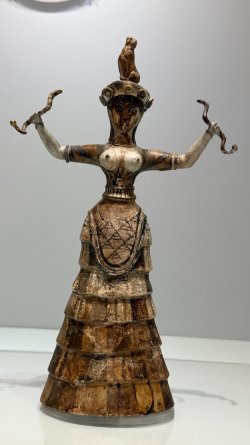
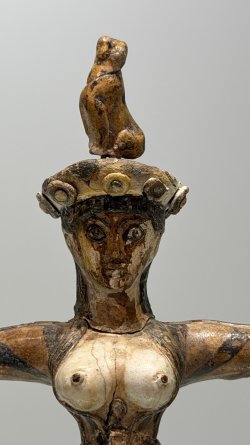
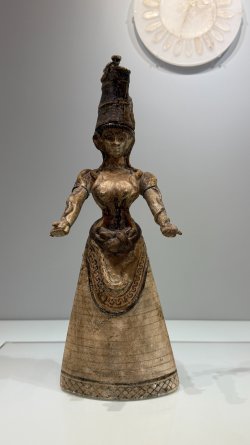
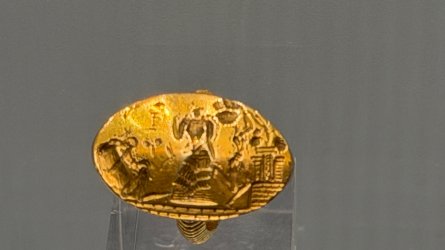
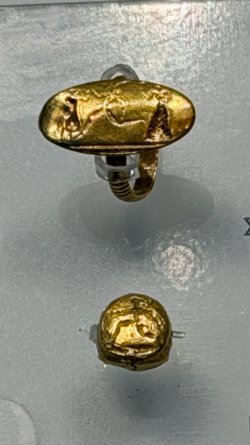
Left: depictions of sports on gold signet rings, 1700-1450 BC. Right a Goddess, similar age

IMG_3662.JPEG IMG_3675.JPEG

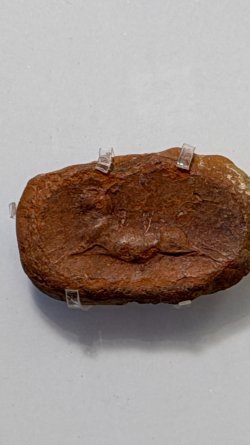
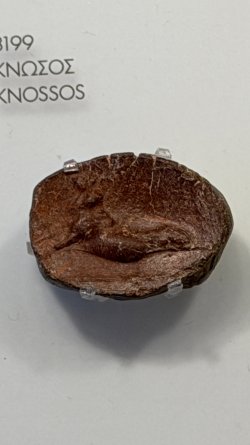
Fired clay seal impressions

IMG_3663.JPEG IMG_3665.JPEG

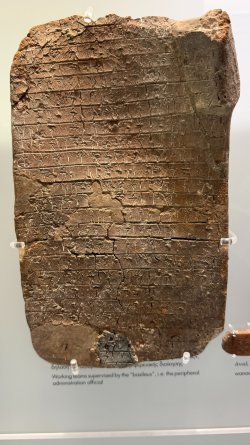
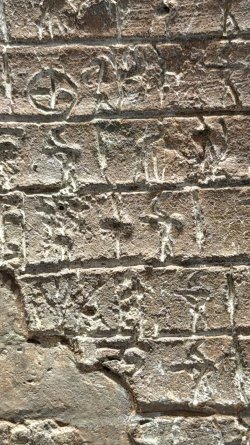
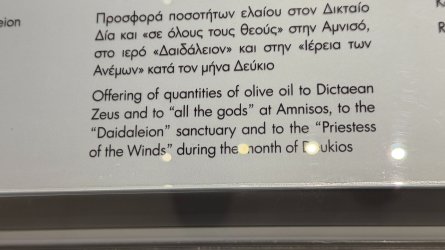
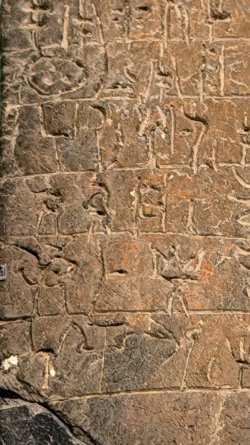
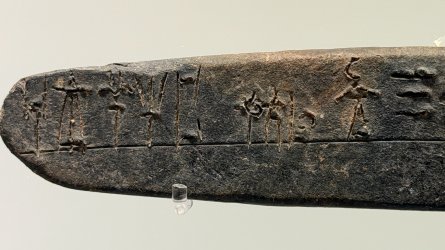
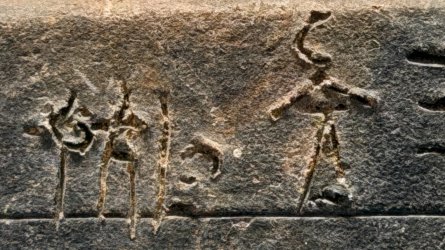
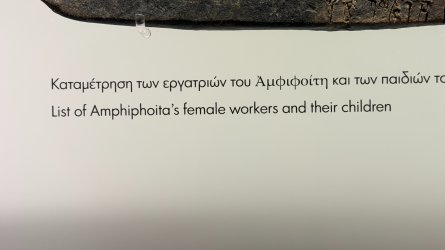
Linear B was the writing system for Mycenaean Greek, the earliest known form of the Greek language, roughly from the 15th to the 12th century BCE. Most signs stand for a syllable, not a single sound. It also has pictographic signs for commodities and objects (wheat, wine, sheep, chariots, vessels), plus numerals, mostly used in inventories. It was adapted from Linear A, which recorded the still-undeciphered Minoan language.

It was found at Knossos, plus Mycenae and elsewhere.

Arthur Evans discovered the tablets at Knossos around 1900, and for decades the language was unknown. Alice Kober did crucial analytical work in the 1940s but it was Michael Ventris, an architect and amateur cryptographer, who cracked it in 1952 by realising the language was an early Greek.

IMG_3688.JPEG

IMG_3689.JPEG

IMG_3690.JPEG

IMG_3691.JPEG


IMG_3693.JPEG

IMG_3694.JPEG


IMG_3692.JPEG
 
Just arrived Algeria; Starlink off so wifi slowed & probably a halt to posting.

Yikes! Had a lecture on how the French treated the Algerians! Lucky if we get away unscathed (kidding).

We get a cruise visa, but cops come aboard and do full immigration thing, and we are escorted by a policeman everywhere we go, and we can't go anywhere except with the group.

#112
 
Thank the lord for Captains Cook and Phillip. The French weren't far behind and if they settled Australia we might be still part of France.
 
We get a cruise visa, but cops come aboard and do full immigration thing, and we are escorted by a policeman everywhere we go, and we can't go anywhere except with the group.

Actually, all the busses had to travel together, escorted by a couple of cop cars. So the whole tour runs to the timing of the slowest person. We lost 25 minutes out of 3.5 hours on the first stop, waiting for the last group on site (we arrived together) :mad:
 
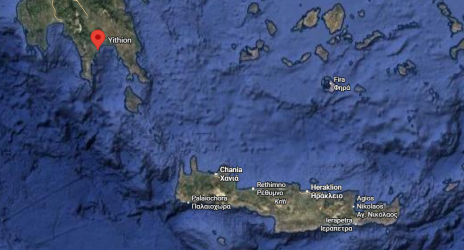
Overnight, we sailed on smooth seas from Heraklion to Gytheio on the Peloponnese mainland
1795332294911.png

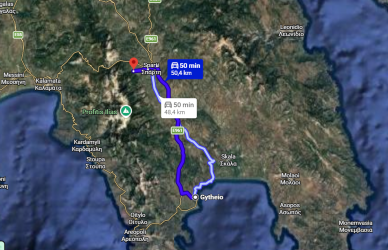
And from there a one hour drive to Mystras, via (modern day) Sparti.
1795332474782.png

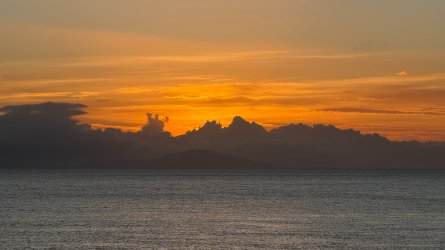
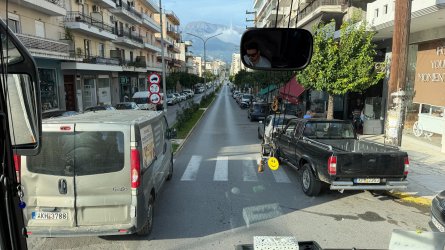
Dawn and drive through Gytheio

IMG_3823.JPEG IMG_3824.JPEG

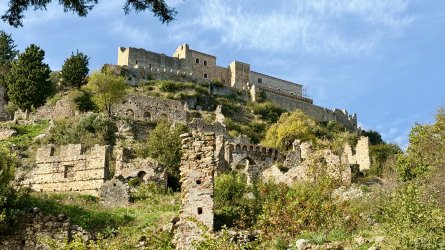
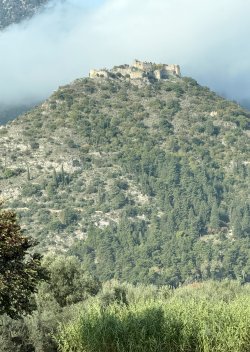
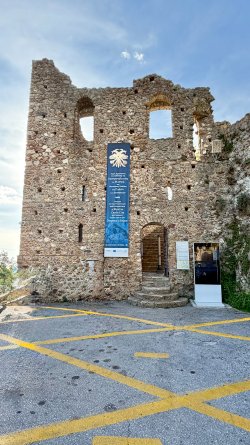
Approaching Mystras we see Mount Taygetus, and the fort built in 1249 by William II de Villehardouin, Prince of Achaea, a Frankish crusader who had conquered much of the Peloponnese after the Fourth Crusade. His rule was short-lived: after his defeat and capture at the Battle of Pelagonia in 1259, he ceded Mystras, along with other fortresses (such as Mycenae), to the Byzantine Empire as part of his ransom in 1262.
IMG_3826.JPEG

I was glad to finally reach the Mystras UNESCO world heritage site and our Greek guide, although a lovely knowlegable lady with good english, talked for the entire hour, non stop and very quickly with incredible and useless detail.
IMG_3831.JPEG

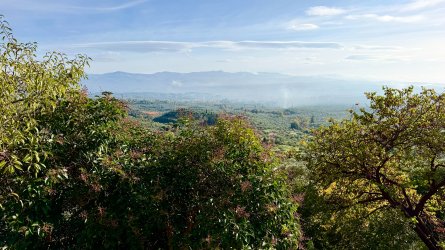
We could look down on old Sparta (A city-state of fierce warriors and a competitor to Athens). We didn't visit that archeological site, which I regretted. White smoke from the annual burning of olive branches, permitted at this time of year.
IMG_3833.JPEG

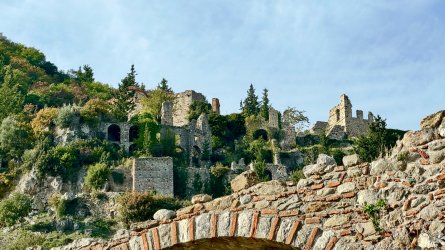
Walkin g through the lower part of the town, looking up to the ruins of the lower town.
IMG_3835.JPEG

IMG_3836.JPEG

Under Byzantine control, Mystras became the seat of the Despotate of the Morea, usually governed by a son or brother of the emperor. As Constantinople shrank under Ottoman pressure, Mystras grew in importance, reaching its height in the 14th and 15th centuries. The city developed a distinct cultural identity, with a Palaiologan-era artistic revival visible in its frescoes and a lively intellectual life. . The last Byzantine emperor, Constantine XI Palaiologos, was crowned at Mystras in 1449 before traveling to Constantinople, where he died when the city fell in 1453.

Mystras itself held out until 1460, when it surrendered to Mehmed II. It remained under Ottoman control, with an interlude of Venetian rule from 1687 to 1715, during which the settlement prospered economically, particularly through silk. The Ottomans regained the Morea in 1715. The town suffered further during the Russian-backed Orlov revolt of 1770, when Albanian irregulars devastated much of the area.

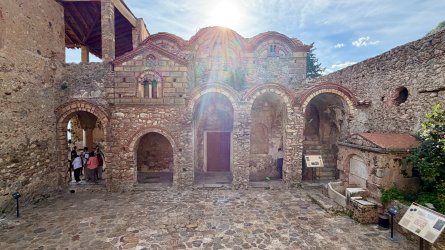
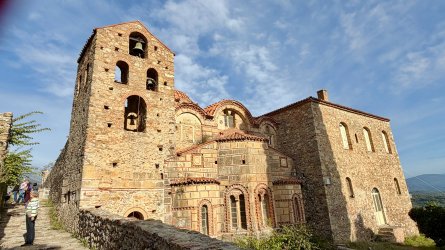
The first stop on our walking tour, and I think the most important was the Holy Metropolitan Church of Saint Demetrius. The church was founded around 1291 shortly after the Byzantines had consolidated their hold on Mystras. It is a hybrid structure. The original building was a three-aisled basilica, but in the 14th century a gallery with a dome-covered upper level was added, turning the church into a cross-in-square design on the upper floor. The exterior is notable for its multi-tiered roofline, with the domes and later bell tower. The bell tower is a Western-style addition, reflecting the Frankish influence in the region.
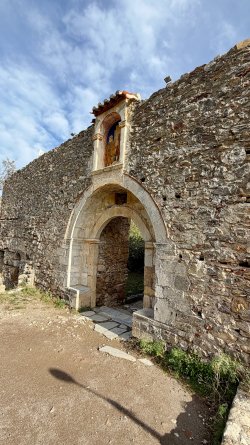
IMG_3838.JPEG

IMG_3840.JPEG

Saint Demetrius. Traditionally, Demetrius was a young Roman official or officer in Thessalonica, from a Christian family. He is said to have openly professed and preached Christianity despite the imperial ban. Arrested on the Emperor's orders, he was imprisoned and then killed, usually described as being speared to death in his cell.

A famous episode involves Nestor (Nestor!!), a Christian gladiator who is said to have defeated the emperor's favourite champion, after receiving Demetrius's blessing in prison. Galerius had Nestor executed, and Demetrius soon followed. The story has often been treated as a later embellishment, but it became a staple of Demetrius's iconography.
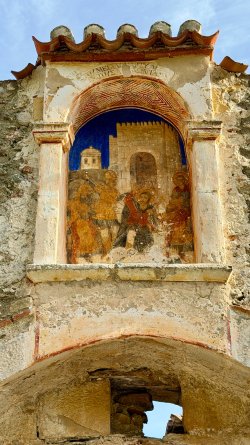
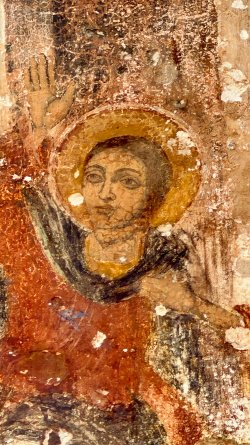
IMG_3841.JPEG IMG_3842.JPEG

The 13th century church. Original.
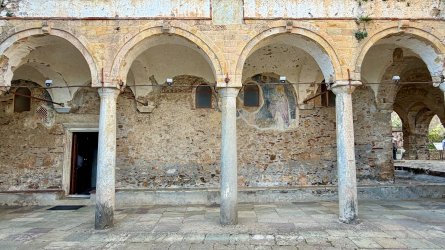
IMG_3844.JPEG

IMG_3848.JPEG

IMG_3850.JPEG
 
Last edited:

Become an AFF member!

Join Australian Frequent Flyer (AFF) for free and unlock insider tips, exclusive deals, and global meetups with 65,000+ frequent flyers.
AFF members can also access our Frequent Flyer Training courses, and upgrade to Fast-track your way to expert traveller status and unlock even more exclusive discounts!

AFF forum abbreviations

Wondering about Y, J or any of the other abbreviations used on our forum?

Check out our guide to common AFF acronyms & abbreviations.
Back
Top