- Joined
- Nov 12, 2012
- Posts
- 32,291
- Qantas
- Platinum
- Virgin
- Gold
- Star Alliance
- Gold


AFF Supporters can remove this and all advertisements
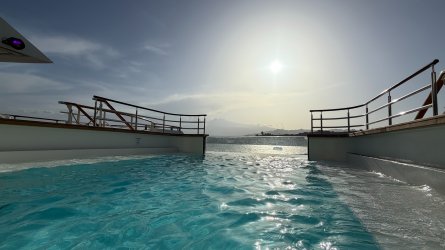
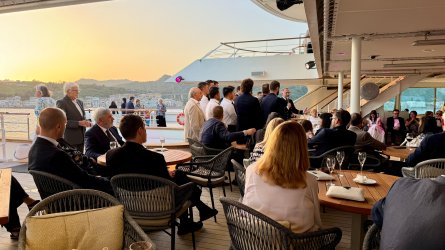
At first I couldn't believe that lack of people in your first photos.


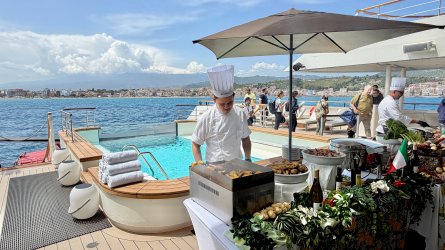
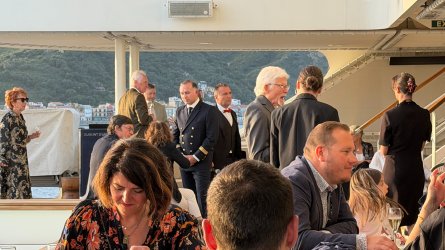
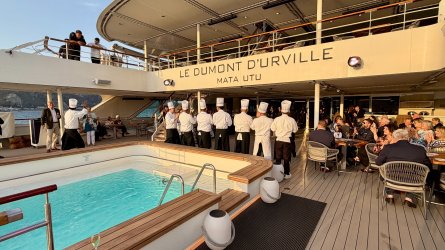
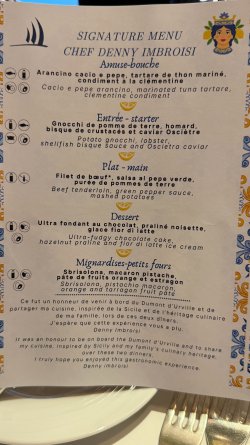
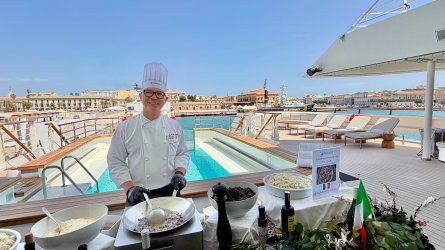
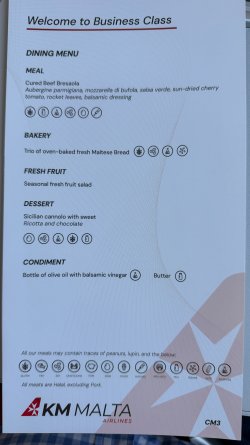
Nice menu.The day was not yet done - this was the second-last night, so they had the 'Celebrity chef dinner' - I wrongly said a previous dinner was this. Presiding over the oven was Danny Imbroisi, "Best Italian Chef in Paris". Maybe, but I thought un-necessary - we had a perfectly good head cook. The Celebrity didn't speak English (yeah, right).
View attachment 506413 View attachment 506415
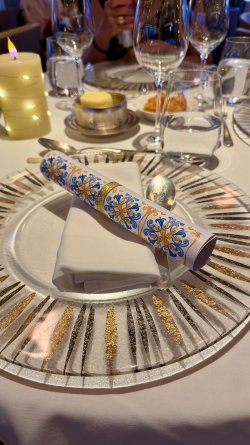
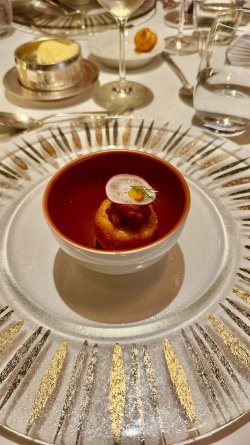
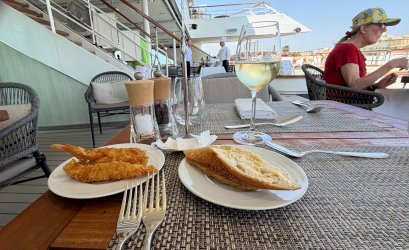
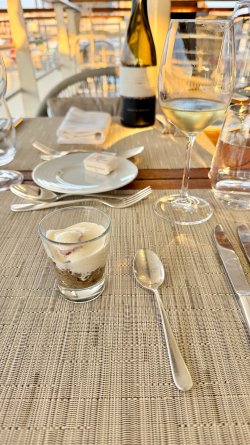
Amuse bouche
View attachment 506416
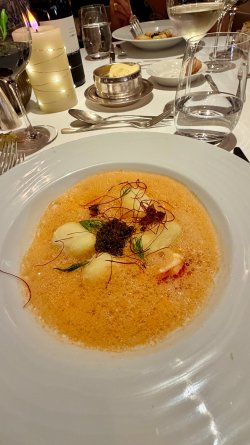
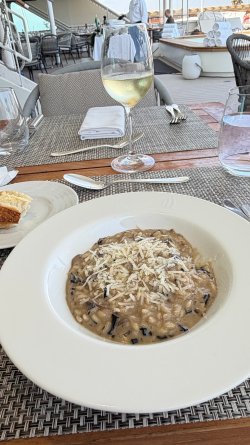
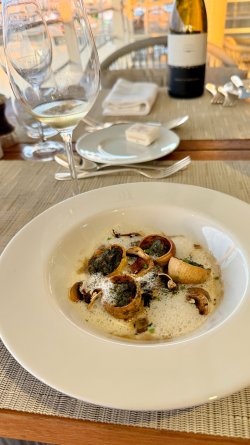
Set wines for the galas are different from the regular days. Entrée - potato gnocchi and shellfish (and foam - a Celebrity Chef has gotta use foam).
View attachment 506414 View attachment 506418
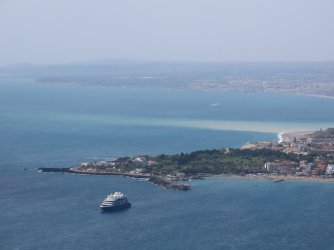
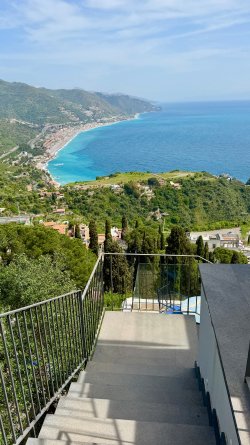
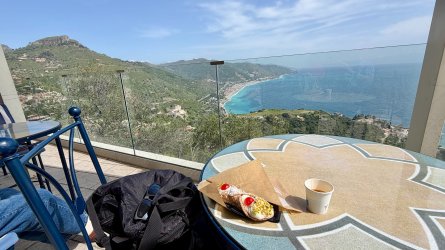
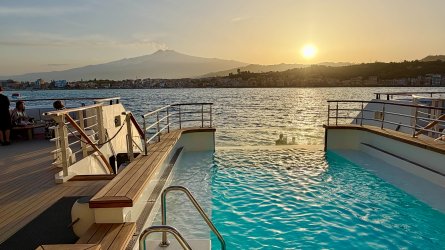
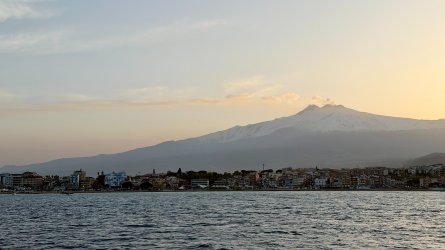
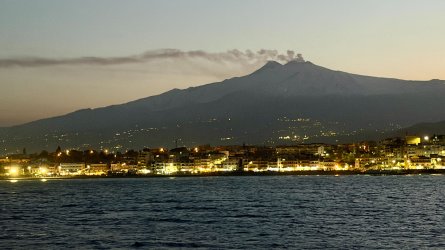
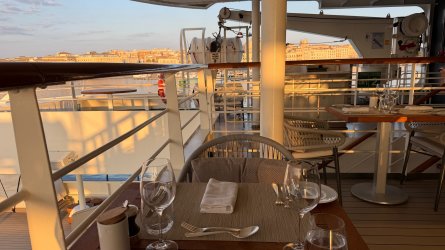
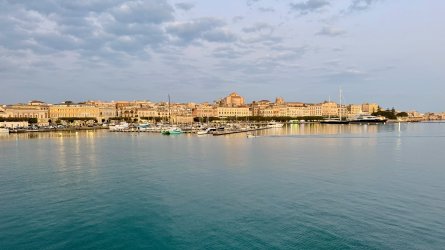
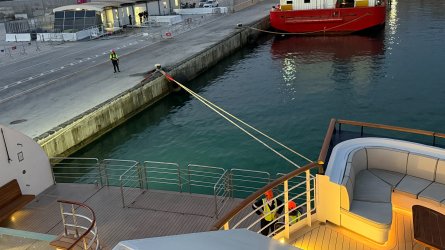
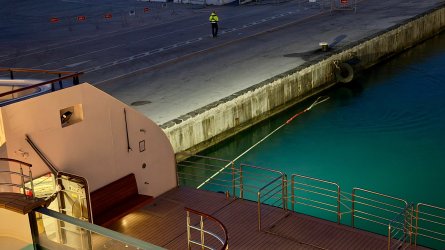
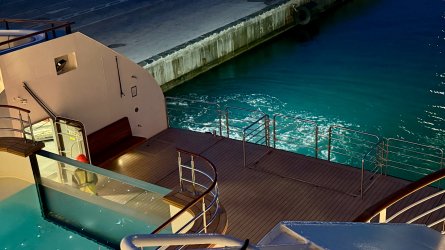
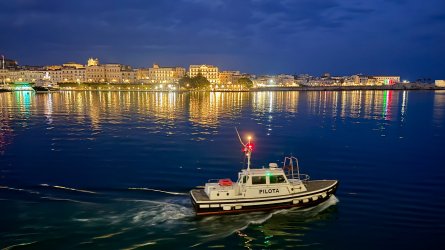
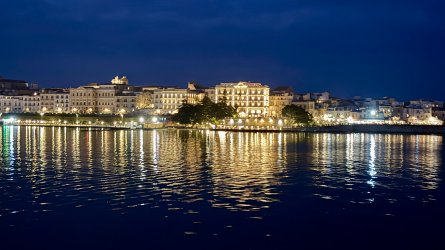
I ducked out a few times to keep an eye on the view - of equal interest to me as the fancy dinner.
View attachment 506417
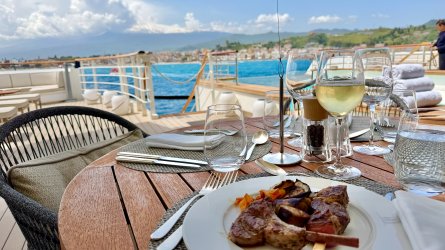
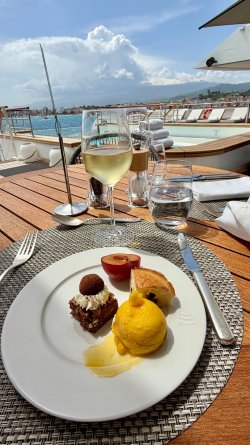
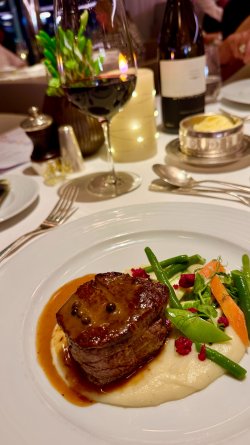
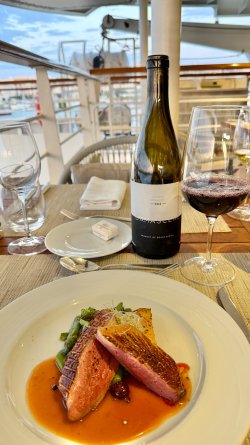
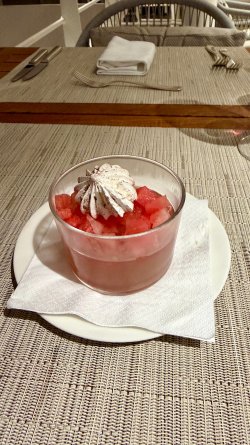
Mains Beef tenderloin. Dessert of 'ultra-fudgy' chocolate cake
View attachment 506419 View attachment 506421
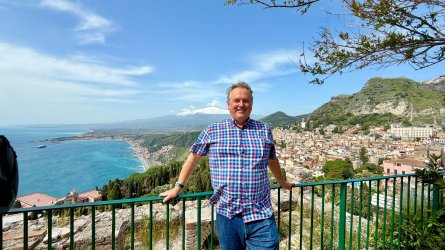
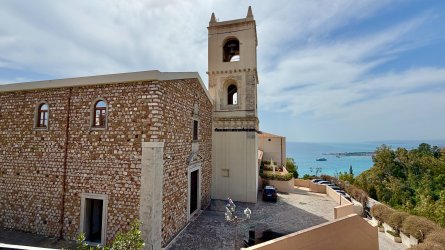
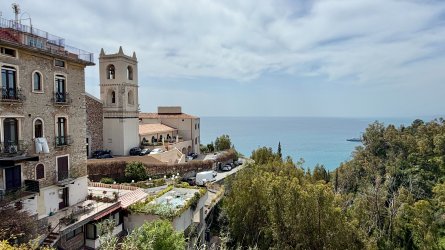
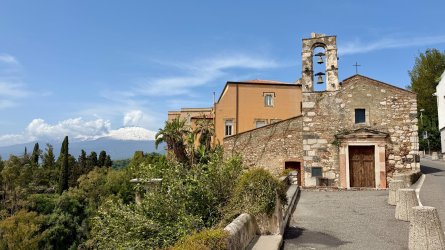
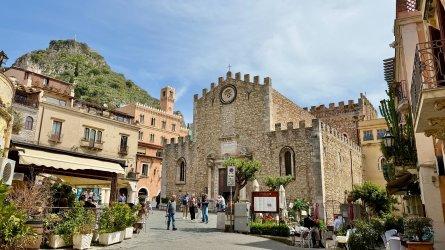
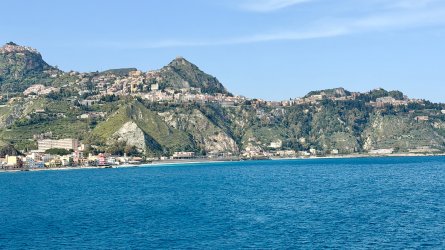
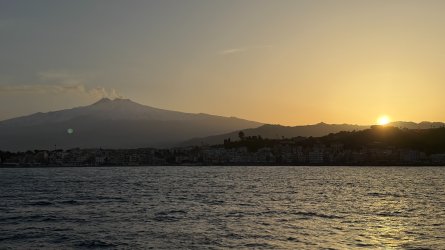
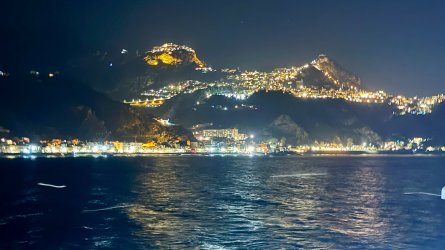
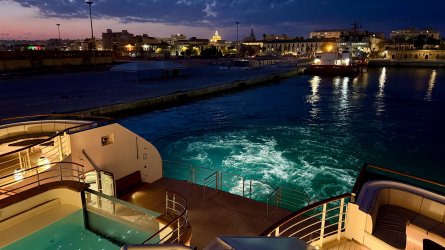
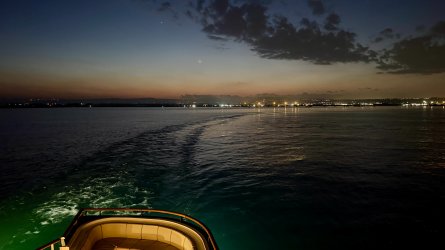
And finally, night over Taormina. A fantastic day and certainly made up for the disappointment of Stromboli.
View attachment 506422


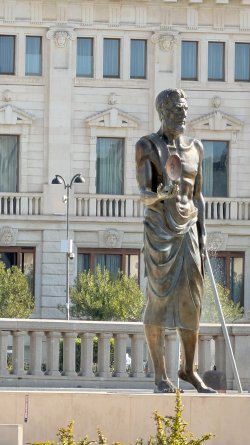
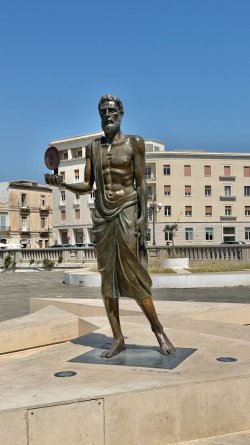
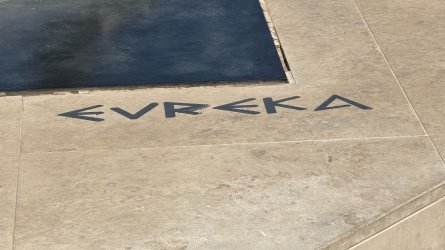
Archimedes of Syracuse was an Ancient Greek mathematician, physicist, engineer, astronomer, and inventor from the city of Syracuse in Sicily. Although few details of his life are known, based on his surviving work, he is considered one of the leading scientists in classical antiquity, and one of the greatest mathematicians of all time. Archimedes anticipated modern calculus and analysis by applying the concept of the infinitesimals and the method of exhaustion to derive and rigorously prove many geometrical theorems, including the area of a circle, the surface area and volume of a sphere, the area of an ellipse, the area under a parabola, the volume of a segment of a paraboloid of revolution, the volume of a segment of a hyperboloid of revolution, and the area of a spiral.
Archimedes' other mathematical achievements include deriving an approximation of pi (π), defining and investigating the Archimedean spiral, and devising a system using exponentiation for expressing very large numbers. He was also one of the first to apply mathematics to physical phenomena, working on statics and hydrostatics. Archimedes' achievements in this area include a proof of the law of the lever, the widespread use of the concept of center of gravity, and the enunciation of the law of buoyancy known as Archimedes' principle. In astronomy, he made measurements of the apparent diameter of the Sun and the size of the universe. He is also said to have built a planetarium device that demonstrated the movements of the known celestial bodies, and may have been a precursor to the Antikythera mechanism. He is also credited with designing innovative machines, such as his screw pump, compound pulleys, and defensive war machines to protect his native Syracuse from invasion.
Archimedes died during the siege of Syracuse, when he was killed by a Roman soldier despite orders that he should not be harmed. Cicero describes visiting Archimedes' tomb, which was surmounted by a sphere and a cylinder that Archimedes requested be placed there to represent his most valued mathematical discovery.


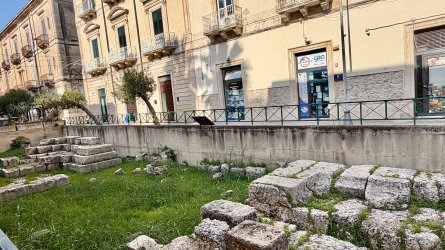
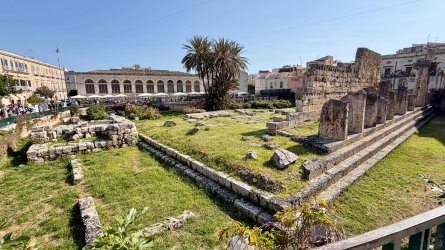
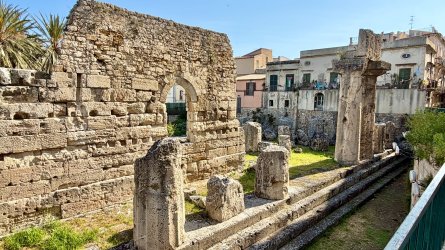
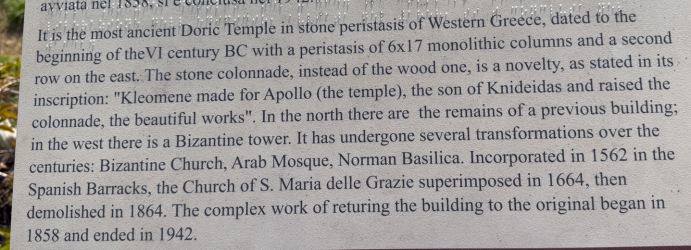
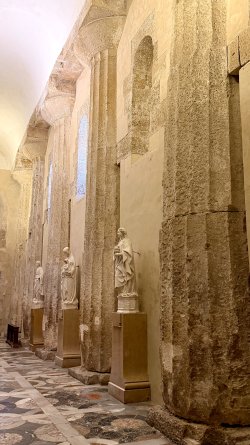
Dating to the 6th century B.C., this temple the most ancient Doric temples in Sicily, and among the first with the layout consisting of a peripteros of stone columns. This layout became standard for Greek temples. The temple underwent several transformations: closed during the persecution of pagans in the late Roman Empire, it was a Byzantine church, from which period the front steps and traces of a central door are preserved, and then an Islamic mosque during the Emirate of Sicily. After the Norman defeat of the Saracens, it was reconsecrated at the Church of the Saviour, which was then incorporated into a 16th-century Spanish barracks and into private houses, though some architectural elements remained visible.
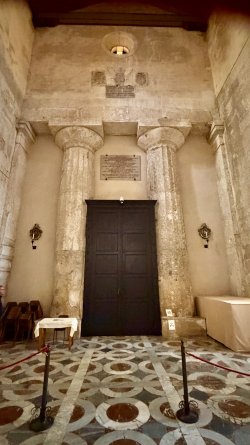


The great Greek Temple of Athena was built in the 6th century BC. The temple was a Doric edifice with six columns on the short sides and 14 on the long sides. Plato and Athenaeus mention the temple, and the looting of its ornament is mentioned by Cicero, in 70 BC, as one of the crimes of the governor Verres.[2]
Archeological site excavations by Paolo Orsi in 1907–1910 show the Greek temple to have been built on even older foundations, and uncovered a wealth of archaic and pre-Hellenic artefacts. Many are held by the Museo archeologico regionale Paolo Orsi in Syracuse.
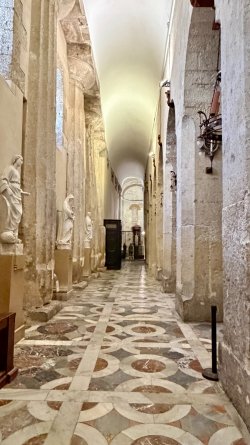
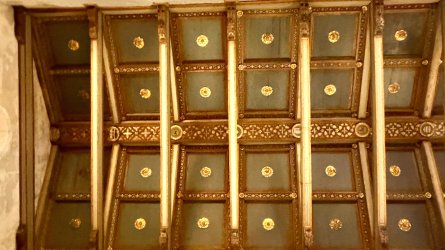
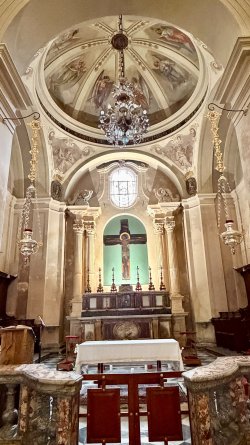
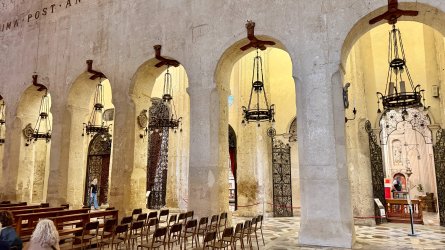
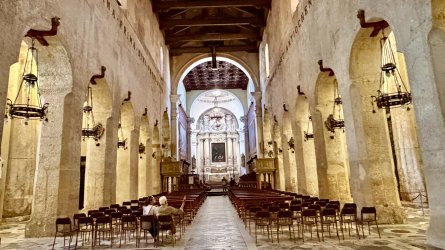
The present cathedral was constructed by Saint Bishop Zosimo of Syracuse in the 7th century. The battered Doric columns of the original temple were incorporated in the walls of the current church. They can be seen inside and out. The building was converted into a mosque in 878, then converted back after the Norman count Roger I of Sicily retook the city in 1086. The roof of the nave is of Norman origin, as well as the mosaics in the apses.
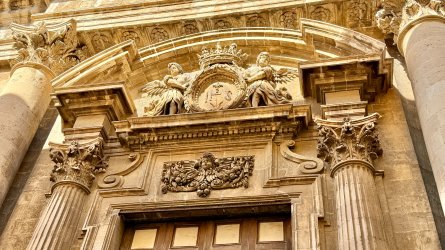
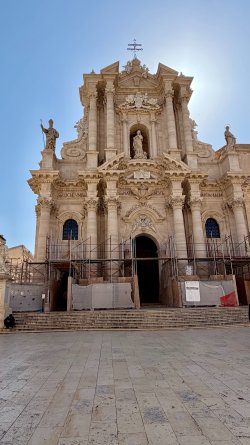
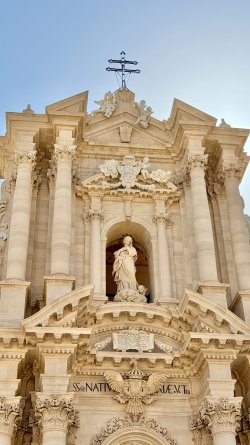
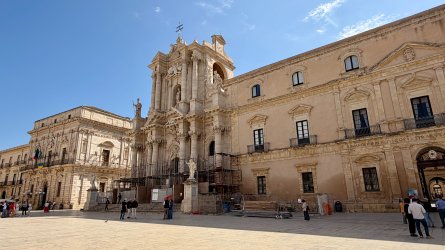
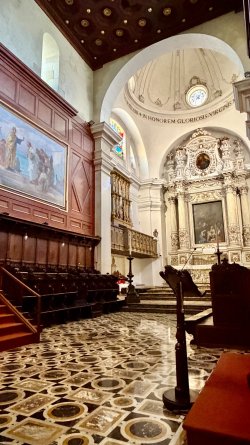
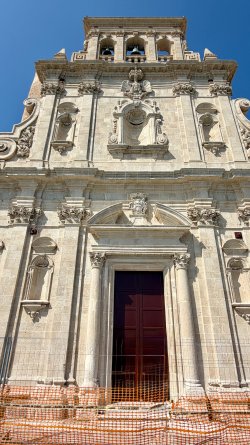
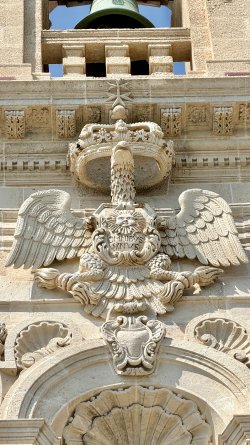
As part of the increased building activity after the 1693 Sicily earthquake, the cathedral was rebuilt and the façade redesigned by architect Andrea Palma in 1725–1753. The style is classified as High Sicilian Baroque, a relatively late example. The double order of Corinthian columns on the façade provide a classic example of carved Acanthus leaves in the capitals. Sculptor Ignazio Marabitti contributed the full-length statues on the façade.
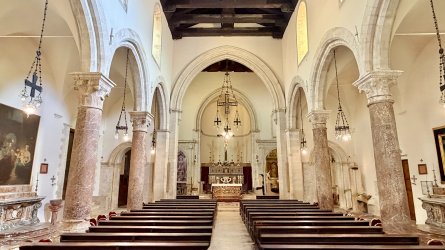
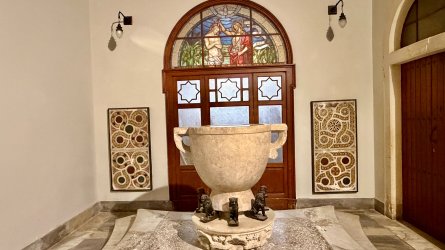
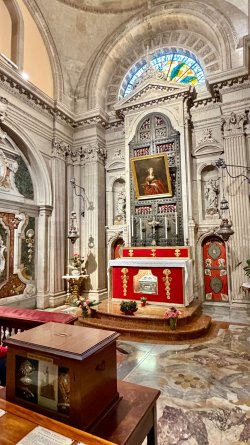
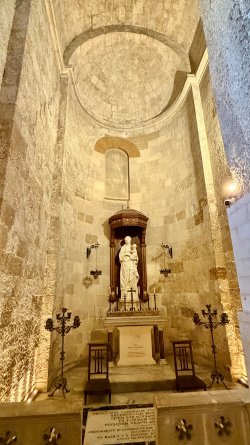
The interior of the church, a nave and two aisles, combine rustic walls and Baroque details. Features include a font with marble basin dating from the 12th or 13th century, a ciborium (an altar canopy) designed by architect Luigi Vanvitelli, and a statue of the Madonna della Neve ("Madonna of the Snow", 1512) by Antonello Gagini.